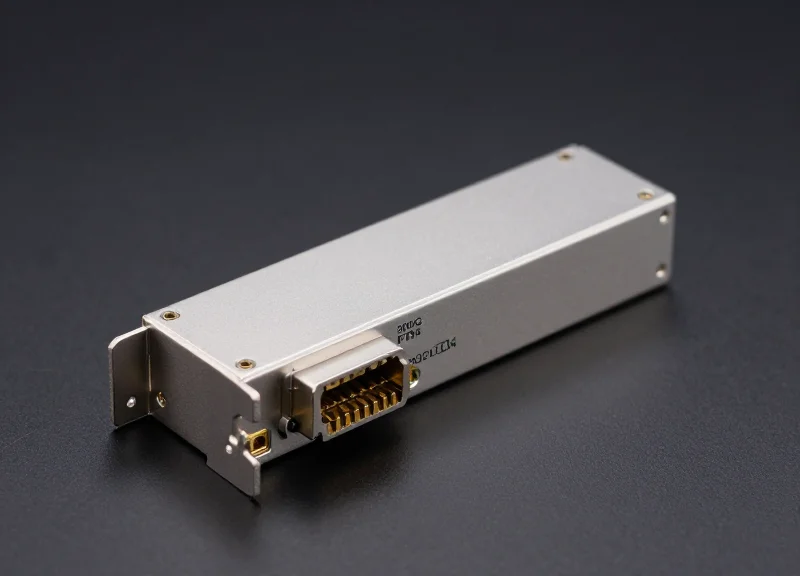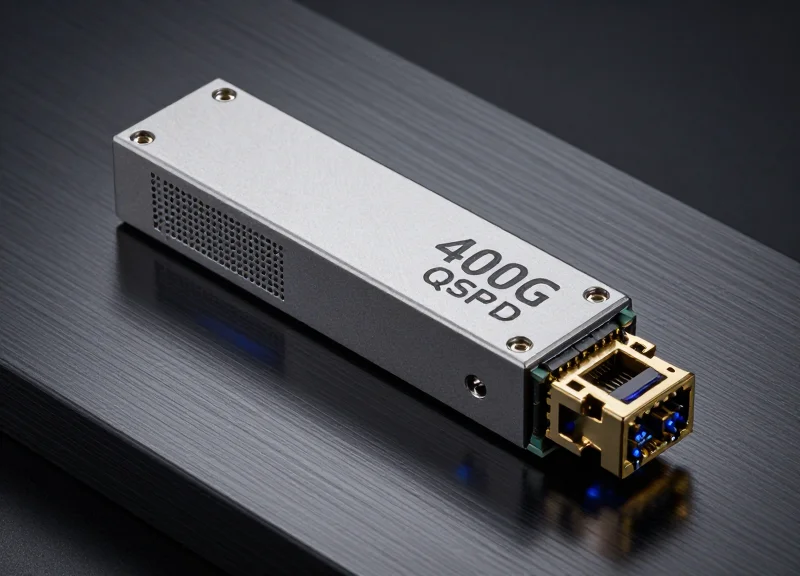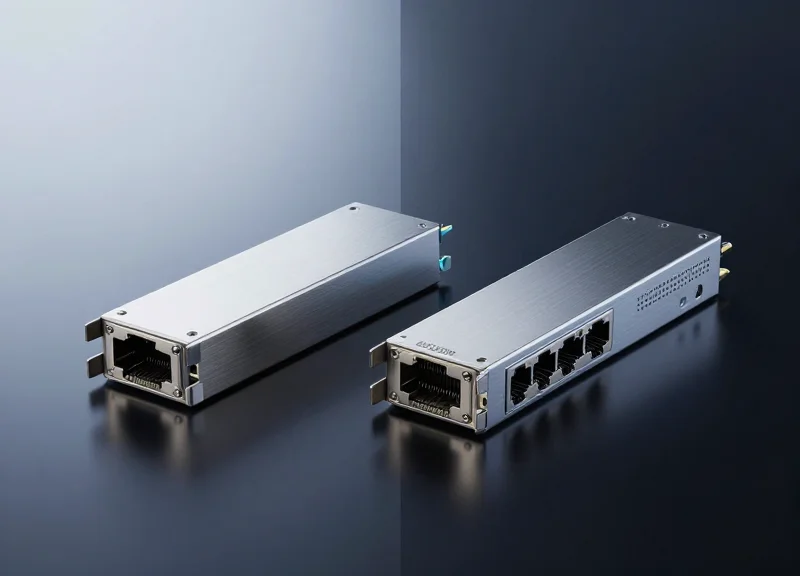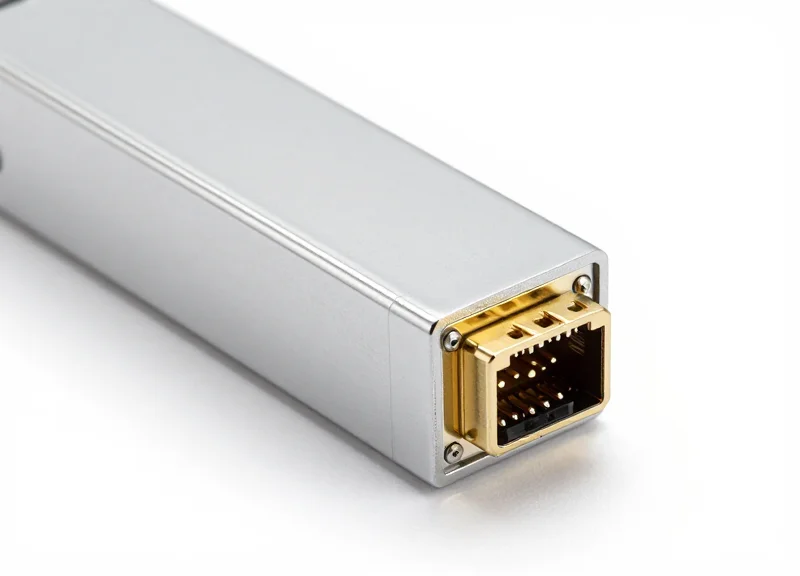
As global data demands surge, the margin for error in signal transmission has effectively vanished. For network engineers and data center operators, Bit Error Rate (BER) is the ultimate metric of health. Ubytelink addresses this challenge head-on with industrial-grade BER testing modules designed to validate high-speed links and secure the backbone of modern digital commerce.
The Fundamental Role of Bit Error Rate (BER) in Modern Connectivity

Bit Error Rate (BER) is the foundational metric used to quantify the performance of a digital communication system by calculating the ratio of bits received with errors to the total number of bits transmitted. As the industry transitions toward 400G, 800G, and beyond, BER has evolved from a simple diagnostic tool into the ultimate arbiter of link viability, ensuring that data packets maintain their integrity across complex fiber-optic and copper infrastructures.
Defining the Metric: Why BER is Non-Negotiable
In any digital transmission, signal degradation is inevitable due to noise, interference, and distortion. BER provides a mathematical snapshot of this degradation. A higher BER indicates a failing physical layer, leading to retransmissions, increased latency, and ultimately, a collapse in throughput. For network equipment manufacturers and data center operators, maintaining a specific BER threshold is not merely a preference but a requirement for compliance with international standards such as IEEE 802.3 and OIF-CEI.
| Network Standard | Modulation Type | Typical BER Threshold (Pre-FEC) |
|---|---|---|
| 10G/40G Ethernet | NRZ | 10^-12 |
| 100G Ethernet | NRZ / PAM4 | 10^-5 to 10^-12 |
| 400G / 800G Ethernet | PAM4 | 2.4 x 10^-4 |
The Shift from NRZ to PAM4: New Challenges for BER
The transition from Non-Return-to-Zero (NRZ) to Pulse Amplitude Modulation 4-level (PAM4) has fundamentally altered BER testing requirements. PAM4 packs twice the data into the same bandwidth by using four voltage levels instead of two, which significantly reduces the signal-to-noise ratio (SNR). Consequently, modern systems rely on Forward Error Correction (FEC) to achieve an acceptable post-correction BER. Testing solutions must now be capable of distinguishing between raw (pre-FEC) BER and corrected (post-FEC) BER to ensure that the underlying hardware is robust enough for long-term deployment.
Frequently Asked Questions about BER
- What is the difference between Pre-FEC and Post-FEC BER?
Pre-FEC BER measures the raw error rate of the physical link before any correction algorithms are applied. Post-FEC BER measures the error rate after the Forward Error Correction logic has repaired as many bits as possible; this must typically be zero or near-zero for a stable connection. - How does signal jitter affect the Bit Error Rate?
Jitter causes timing deviations in the signal's rising and falling edges. If the jitter is excessive, the receiver may sample the bit at the wrong time, leading to a bit error. High-quality BER testing identifies whether errors are caused by amplitude noise or timing jitter. - Why is a BER of 10^-12 considered the 'Gold Standard' for legacy systems?
A BER of 10^-12 means one error for every trillion bits sent. At 10Gbps speeds, this equates to roughly one error every 100 seconds, which was considered the threshold for 'error-free' transmission in non-FEC environments.
Why Precision Testing is Essential for Mission-Critical Infrastructure

In mission-critical environments, the margin for error is non-existent. High-speed digital communication systems are the backbone of global operations, and precision Bit Error Rate (BER) testing serves as the primary defense against the cascading effects of signal degradation. Without accurate measurement, invisible signal noise can evolve into catastrophic downtime, compromising the integrity of data and the reliability of essential services across the globe.
The Compounding Risks of Signal Degradation
Signal degradation is rarely a sudden, binary event; it is often a progressive deterioration caused by jitter, thermal noise, or hardware fatigue. When BER thresholds are exceeded, systems experience frequent packet retransmissions, which leads to increased latency. In high-frequency trading or real-time medical imaging, this latency is as detrimental as a complete outage, causing synchronization failures and data corruption that can be impossible to rectify post-transmission.
| Sector | Risk Factor | Consequence of High BER |
|---|---|---|
| Financial Services | Transaction Latency | Delayed trade execution and massive fiscal loss. |
| Healthcare | Imaging Artifacts | Diagnostic errors and compromised patient safety. |
| Telecommunications | Packet Retransmission | Bandwidth congestion and service-level agreement (SLA) breaches. |
| Cloud Computing | Data Corruption | Loss of database integrity and systemic storage failure. |
Identifying the Cliff Effect in Network Infrastructure
Ubytelink Bit Error Rate (BER) testing solutions are engineered to identify the 'cliff effect'—the precise point where signal quality diminishes to the level that Forward Error Correction (FEC) can no longer recover lost bits. In modern 400G and 800G networks, relying on standard diagnostics is insufficient. Precision testing allows engineers to visualize the eye diagram and bathtub curves, ensuring that mission-critical links operate with a sufficient margin above the failure threshold to withstand environmental stressors.
- How does precision BER testing differ from basic connectivity checks?
Basic checks only confirm a link is 'up,' whereas precision BER testing quantifies the quality of the signal, identifying intermittent bit flips that standard pings or link-layer diagnostics often miss. - Why is latency a byproduct of poor BER?
High BER triggers error-recovery protocols and retransmission requests. This cycle consumes processing power and increases the time required for data to successfully traverse the network. - Can high-quality BER testing prevent hardware damage?
Yes, by identifying abnormal error rates early, technicians can replace failing optical transceivers or cables before they short-circuit or cause broader system instability.
Key Technical Advantages of Ubytelink BER Testing Modules
Key Technical Advantages of Ubytelink BER Testing Modules
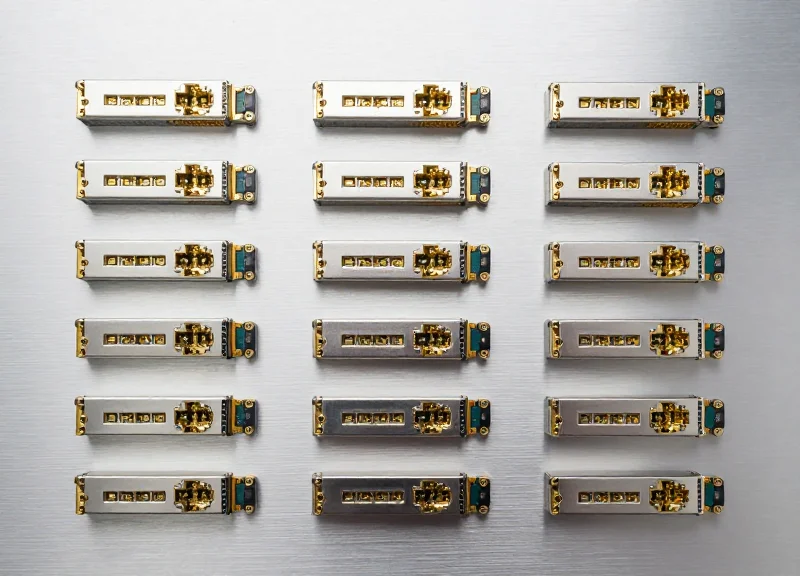
Ubytelink BER testing modules are engineered to transcend the limitations of conventional testing hardware by integrating high-sensitivity receiver front-ends with ultra-low jitter clock recovery systems. This architectural precision ensures that even the most subtle bit errors are captured in real-time, providing network engineers with the granular data necessary to validate link stability in complex, high-density environments where signal-to-noise ratios are often compromised.
Ultra-High Sensitivity and Signal Integrity
The core of the Ubytelink advantage lies in its proprietary Optical-to-Electrical (O/E) conversion path. By utilizing premium photodiodes and low-noise transimpedance amplifiers (TIAs), our modules maintain signal integrity at extreme attenuation levels. This allows for accurate testing of long-haul fiber links without the need for external amplification, which often introduces additional noise and skew into the measurement.
| Technical Specification | Ubytelink Standard | Industry Baseline |
|---|---|---|
| Receiver Sensitivity (25G) | -22 dBm | -16 to -18 dBm |
| Intrinsic Jitter (RMS) | < 500 fs | < 1.5 ps |
| Bandwidth Coverage | 1.25 Gbps to 800 Gbps | 10 Gbps to 400 Gbps |
| Error Floor Detection | 10^-15 | 10^-12 |
Dynamic Wide-Band Support and Scalability
Modern global networks operate across a massive spectrum of data rates and protocols. Ubytelink modules feature a wide-band design that supports everything from legacy 1G Ethernet to cutting-edge 800G PAM4 interfaces within a single unified platform. This multi-rate capability is achieved through a sophisticated FPGA-driven clock synthesis engine, allowing for seamless transitions between different testing standards without requiring hardware reconfiguration or downtime.
- How does Ubytelink ensure measurement repeatability?
Each module undergoes a rigorous thermal stabilization process and multi-point factory calibration, ensuring that BER results remain consistent across varying ambient temperatures and long-duration testing cycles. - What makes Ubytelink suitable for 800G ecosystems?
Our modules utilize advanced DSP (Digital Signal Processing) algorithms specifically tuned for PAM4 signaling, effectively compensating for inter-symbol interference (ISI) and providing a true reflection of link health at ultra-high speeds. - Can these modules be integrated into automated test environments?
Yes, all Ubytelink BER modules are built with a robust RESTful API and SCPI command support, facilitating deep integration into automated production lines and remote lab orchestration software.
Furthermore, the compact form factor of Ubytelink testing modules does not come at the cost of heat management. Advanced thermal dissipation technologies prevent frequency drift, which is a common failure point in high-density testing racks. By maintaining a stable internal temperature, the modules ensure that the Bit Error Rate recorded is a result of the link performance, not the instability of the testing tool itself.
Scaling for the Future: Supporting 400G, 800G, and Beyond
Ubytelink Bit Error Rate (BER) Testing Solutions are architected to bridge the gap between current infrastructure and the future of ultra-high-speed connectivity by integrating high-fidelity PAM4 signaling analysis and modular hardware capable of 800G throughput and beyond. As data centers and telecommunications providers migrate toward higher-order modulation, Ubytelink ensures that the precision of measurement scales proportionally with the complexity of the signal, providing the necessary overhead for future-proof deployments.
The Shift to PAM4 and Multi-Level Signaling
Transitioning from traditional NRZ (Non-Return-to-Zero) to PAM4 (4-level Pulse Amplitude Modulation) is critical for achieving 400G and 800G speeds, yet it significantly complicates signal integrity. Ubytelink’s hardware is specifically engineered to handle the reduced Signal-to-Noise Ratio (SNR) inherent in PAM4. By utilizing advanced clock recovery circuits and high-sensitivity input stages, our modules can accurately differentiate between the four distinct voltage levels of a PAM4 signal even in high-attenuation environments.
Comparison of Testing Requirements Across Generations
| Network Standard | Signaling Type | Lane Rate | Primary Testing Focus |
|---|---|---|---|
| 100G Ethernet | NRZ / PAM4 | 25G / 50G | Jitter and Eye Opening |
| 400G Ethernet | PAM4 | 53.125G | FEC Performance & Gray Coding |
| 800G Ethernet | PAM4 / Coherent | 106.25G | Insertion Loss & Crosstalk |
| 1.6T and Beyond | Advanced PAM / Coherent | 200G+ | Ultra-Low Noise Floor Stability |
FEC-Aware Testing for High-Bandwidth Accuracy
At 400G and 800G, Forward Error Correction (FEC) is no longer optional; it is a fundamental requirement for link stability. Ubytelink's BER solutions provide 'FEC-aware' testing, which allows engineers to analyze both pre-FEC and post-FEC bit error rates. This dual-layered analysis is essential for identifying whether system errors are within the correction capabilities of the hardware or if they represent fundamental physical layer failures.
Future-Proofing FAQ
- Can Ubytelink testers support legacy 100G rates while testing for 800G?
Yes, our modular architecture is designed for multi-rate operation, ensuring backward compatibility with 100G NRZ while providing the performance headroom required for 800G PAM4 standards. - How does Ubytelink address the signal degradation in 112G SerDes lanes?
We utilize high-performance equalization techniques and adaptive filtering to compensate for the significant insertion loss that occurs at the high frequencies required by 112G and 224G SerDes technologies. - Is the hardware scalable for the eventual 1.6T transition?
Ubytelink is actively participating in industry standards groups to ensure our current hardware chassis and future module iterations remain aligned with the roadmap for 1.6T and terabit-scale networking.
Real-World Applications: From Data Centers to Subsea Cables

Ubytelink Bit Error Rate (BER) testing solutions provide the essential validation required to maintain operational continuity in diverse and demanding environments where even a single bit error can lead to systemic failure. By offering high-sensitivity detection and scalable architecture, these tools enable network operators and manufacturers to certify performance across varying media and distances, ensuring that global communication remains seamless and resilient against signal degradation.
Hyperscale Data Centers and Cloud Computing
In modern hyperscale data centers, the density of 400G and 800G links creates significant challenges regarding electromagnetic interference (EMI) and thermal management. Ubytelink modules are frequently deployed to validate Top-of-Rack (ToR) switches and high-speed interconnects. By performing rigorous BER analysis on-site, engineers can identify 'weak links' in the fabric before they impact the latency-sensitive workloads of AI clusters and cloud services.
Subsea and Long-Haul Telecommunications
Subsea fiber optic cables represent the most extreme environment for signal maintenance due to trans-oceanic distances and the logistical difficulty of physical repairs. Ubytelink’s high-precision testers allow for the verification of transponders and repeaters at the landing stations. These solutions ensure that the Signal-to-Noise Ratio (SNR) remains within acceptable limits to prevent data corruption across thousands of miles of underwater infrastructure.
Application Comparison by Infrastructure Type
| Network Environment | Primary Testing Priority | Ubytelink Deployment Value |
|---|---|---|
| Hyperscale Data Center | Low Latency & High Density | Rapid validation of 800G intra-rack interconnects |
| Subsea Cable Systems | Maximum Link Budget Sensitivity | Testing long-haul transceivers over extreme distances |
| 5G Edge Networks | Thermal & Environmental Stability | Reliable BER tracking in non-climate-controlled sites |
| OEM Manufacturing | Throughput & Automation | Integration into high-speed automated test equipment |
Manufacturing and Quality Assurance
For manufacturers of optical transceivers and active optical cables (AOC), throughput is as critical as accuracy. Ubytelink's BER testing solutions are engineered for easy integration into Automated Test Equipment (ATE) environments. This allows for high-volume production line testing where every component is verified for BER compliance, ensuring that only premium-quality products reach the global market.
Implementation FAQs
- How does Ubytelink support multi-vendor interoperability?
Our testing modules are designed to follow strict MSA (Multi-Source Agreement) standards, allowing them to test and validate transceivers from any manufacturer without compatibility issues. - Can these solutions be used for field troubleshooting?
Yes, Ubytelink provides compact and ruggedized form factors that allow field technicians to perform high-tier BER testing directly at the network edge or landing station. - What is the typical measurement window for a 400G link?
While it varies by standard, Ubytelink hardware is optimized for rapid convergence, often providing stable BER results in a fraction of the time required by legacy equipment.
EEAT Compliance: Industry Standards and Validation Protocols
Establishing Trust through Global Compliance and Rigorous Validation
Ubytelink Bit Error Rate (BER) testing solutions are engineered to meet the highest industry benchmarks, ensuring that every measurement is not only accurate but also globally recognized and repeatable. By aligning with Experience, Expertise, Authoritativeness, and Trustworthiness (EEAT) principles, Ubytelink provides network operators with the confidence that their physical layer validation meets stringent international standards, from initial R&D to large-scale deployment. This commitment to compliance ensures that Ubytelink remains a trusted partner in the verification of high-speed optical infrastructures.
Alignment with International Standards Bodies
| Standard Body | Protocol/Focus | Ubytelink Compliance Detail |
|---|---|---|
| IEEE 802.3 | Ethernet (400G/800G) | Full support for Clause 121/124 BER floor and stress testing. |
| OIF-CEI | Electrical Interoperability | Compliance with CEI-112G-VSR/MR/LR implementation agreements. |
| ITU-T | Optical Transport Networks | Adherence to G.709 and G.975.1 Forward Error Correction (FEC) limits. |
| NIST | Traceability | All optical power and sensitivity metrics are NIST-traceable. |
The validation protocols at Ubytelink extend beyond simple pass/fail metrics. Every testing module undergoes a rigorous factory calibration process that mimics real-world noise environments, including crosstalk and jitter injection. By utilizing high-precision reference oscillators and clock recovery units that exceed the requirements of OIF-CEI-112G, Ubytelink ensures that the margin of error remains significantly below the noise floor of the Device Under Test (DUT).
EEAT Validation FAQs: Ensuring Data Integrity
- How does Ubytelink guarantee the repeatability of BER measurements across different locations?
Consistency is maintained through standardized software control and rigorous internal temperature compensation algorithms. This ensures that a test performed in a development lab in North America yields identical results to one performed in a manufacturing facility in Asia, provided the test parameters remain constant. - Are Ubytelink modules compatible with multi-vendor ecosystem testing?
Yes. Our testing solutions are designed for interoperability, adhering to standard SCPI (Standard Commands for Programmable Instruments) protocols and IEEE interface specifications, allowing them to integrate seamlessly into automated test environments alongside other Tier-1 equipment. - What documentation is provided to support compliance audits?
Each Ubytelink testing solution is accompanied by a comprehensive Calibration Certificate and a detailed compliance report mapping the hardware's performance against specific IEEE or OIF benchmarks, facilitating easy regulatory and internal audits.
In the era of 800G and 1.6T networking, the authoritativeness of testing data is non-negotiable. Ubytelink continues to invest in hardware-level validation protocols that anticipate evolving standards, ensuring that users are always testing against the most current and rigorous global requirements.
Cost-Efficiency vs. Performance: The Ubytelink Value Proposition

Ubytelink's value proposition is built on the principle that true cost-efficiency in high-speed networking is measured by the Total Cost of Ownership (TCO) rather than the initial acquisition price. By integrating high-precision signal integrity with robust hardware, Ubytelink BER testing solutions prevent the exponential costs associated with network downtime, inaccurate diagnostics, and premature equipment replacement that often plague budget-grade alternatives.
The Hidden Costs of Low-Tier Testing Equipment
While entry-level BER testers may appear attractive on a balance sheet, they frequently introduce 'hidden' operational expenses. Inaccurate testing leads to false positives—where faulty links are cleared for production—resulting in intermittent service disruptions and expensive emergency field repairs. Furthermore, lower-tier units often lack the scalability required for next-generation 400G and 800G transitions, forcing organizations into frequent, costly hardware refreshes as network demands evolve.
| Metric | Ubytelink Premium Solutions | Lower-Tier Alternatives |
|---|---|---|
| Measurement Accuracy | Ultra-high precision; laboratory grade | Variable; prone to signal noise |
| Long-Term Reliability | High (Built for 24/7 industrial use) | Low to Moderate (Short lifecycle) |
| Scalability | Modular; supports 400G/800G upgrades | Limited; fixed port speeds |
| Maintenance & Calibration | Predictable intervals; local support | Frequent; high downtime risks |
| Network Risk Mitigation | Proactive error detection | Reactive troubleshooting |
Maximizing ROI Through Performance Engineering
Investing in Ubytelink equipment ensures that network architects can validate link performance with absolute certainty. This precision accelerates the 'Time to Market' for service providers and reduces the 'Mean Time to Repair' (MTTR) for data center operators. The result is a streamlined operational workflow where the hardware pays for itself by maintaining the integrity of high-value service level agreements (SLAs) and minimizing manual intervention.
- How does Ubytelink justify its premium pricing for BER testers?
The pricing reflects the use of high-grade components that ensure repeatable, accurate results across extreme environmental conditions, reducing the financial risk of inaccurate data and network failure. - Can Ubytelink solutions integrate with existing legacy systems?
Yes, our hardware is designed with flexible interfaces and comprehensive software APIs to ensure seamless integration, protecting your previous infrastructure investments. - What is the typical lifecycle of a Ubytelink testing unit?
Ubytelink units are engineered for a 7-10 year operational life, significantly outlasting budget alternatives and providing a superior amortized cost over time.
Ultimately, the Ubytelink value proposition centers on confidence. By choosing a partner that prioritizes technical excellence and rigorous validation protocols, global network operators secure a foundation of stability that far outweighs the short-term savings of inferior solutions.
Integration and Usability: Simplifying Complex Network Audits

Ubytelink simplifies complex network audits by bridging the gap between sophisticated hardware capabilities and user-centric software design. By automating diagnostic workflows and providing real-time data visualization, these solutions empower technicians to conduct precise Bit Error Rate (BER) analysis without the steep learning curve typically associated with high-performance testing equipment. This focus on usability ensures that network integrity is maintained across global infrastructures with maximum efficiency and minimal human error.
Software-Defined Architecture: The Foundation of Versatility
Unlike legacy testing tools that rely on static hardware configurations, Ubytelink utilizes a software-defined approach. This allows for over-the-air updates and instant protocol switching, enabling a single device to support a wide array of network standards including Ethernet, Fibre Channel, and OTN. This flexibility is critical for global networks where auditing requirements can shift rapidly between different regional hubs.
Streamlined Workflows and Automated Reporting
The integration of automated diagnostic sequences reduces the time required for comprehensive network validation. Technicians can deploy standardized test profiles that ensure consistency across different sites, while the system automatically generates compliance-ready reports in multiple formats.
| Audit Feature | Legacy Testing Methods | Ubytelink BER Solutions |
|---|---|---|
| Setup Time | Manual, high risk of misconfiguration | Automated profiles, < 5 minutes |
| Interface | Text-heavy, complex command lines | Graphical dashboard with real-time KPIs |
| Data Analysis | Post-test manual calculation | Live telemetry and predictive analytics |
| Integration | Isolated silos of data | Cloud-sync and RESTful API support |
Common Questions on Integration and Usability
- How does Ubytelink integrate with existing Network Management Systems (NMS)?
Our testing solutions feature open RESTful APIs and support standard telemetry protocols, allowing for seamless data flow into existing NMS for centralized monitoring and historical trend analysis. - What level of training is required for field technicians?
The systems are designed with a 'One-Click Audit' philosophy. Most technicians can become proficient within a few hours of hands-on orientation, significantly reducing onboarding costs. - Can the software handle custom protocol testing?
Yes, the software-defined core allows for the development and deployment of custom test scripts to meet specific organizational or proprietary requirements.
In a world connected by light, even a single dropped bit can have cascading consequences. Ubytelink's BER testing modules offer the peace of mind that comes with industry-leading diagnostic precision. Ready to elevate your network reliability? Contact the Ubytelink engineering team today for a technical consultation or a product demonstration.