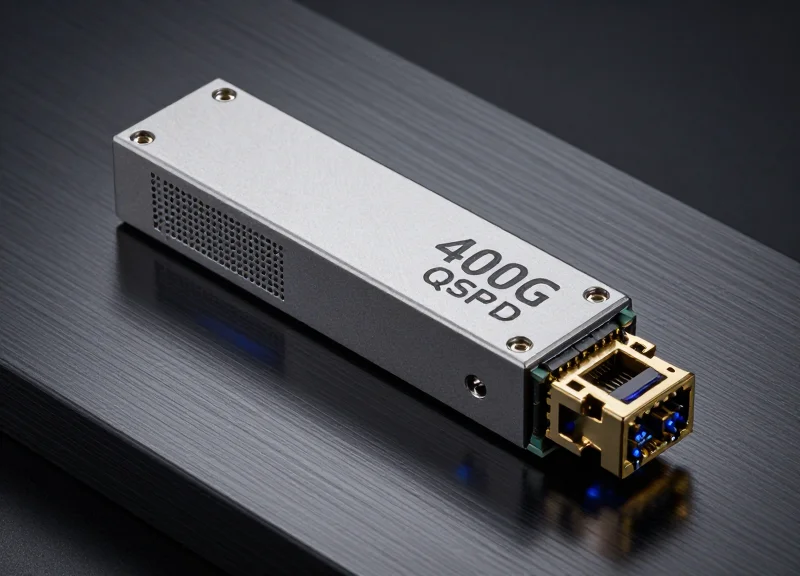
As global data traffic grows exponentially, data center operators face the daunting task of scaling infrastructure without compromising on reliability. The choice between QSFP56 and QSFP56-DD (Double Density) form factors represents a critical junction in network design. Ubytelink addresses these challenges by providing industry-leading optical modules engineered for the highest standards of performance and thermal efficiency. This guide breaks down the core differences and helps you select the right solution for your mission-critical connectivity needs.
Defining the Standard: What is QSFP56 and QSFP56-DD?
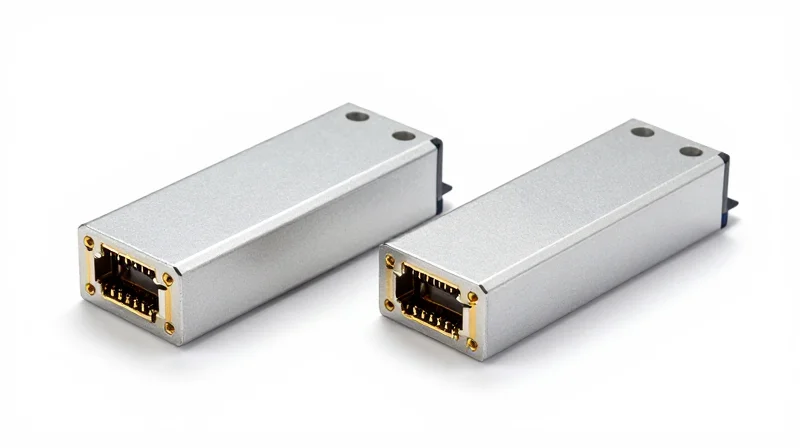
Defining the Standard: What is QSFP56 and QSFP56-DD?
QSFP56 and QSFP56-DD are advanced iterations of the Quad Small Form-factor Pluggable (QSFP) interface, specifically designed to meet the massive bandwidth requirements of hyperscale data centers and enterprise core networks. While both utilize Pulse Amplitude Modulation 4-level (PAM4) technology to increase data throughput, they differ significantly in their lane density and total capacity, with QSFP56 serving the 200G ecosystem and QSFP56-DD acting as the cornerstone for 400G infrastructure.
QSFP56: The 200G Efficiency Benchmark
QSFP56 represents the next logical step after QSFP28. By upgrading the modulation from Non-Return-to-Zero (NRZ) to PAM4, QSFP56 can transmit 50Gbps per lane across four electrical lanes. This configuration results in a total aggregate bandwidth of 200Gbps. It provides a balanced solution for operators looking to double their network speed without undergoing a complete architectural overhaul, maintaining the familiar four-lane structure of previous QSFP generations.
QSFP56-DD: Double Density for 400G Scaling
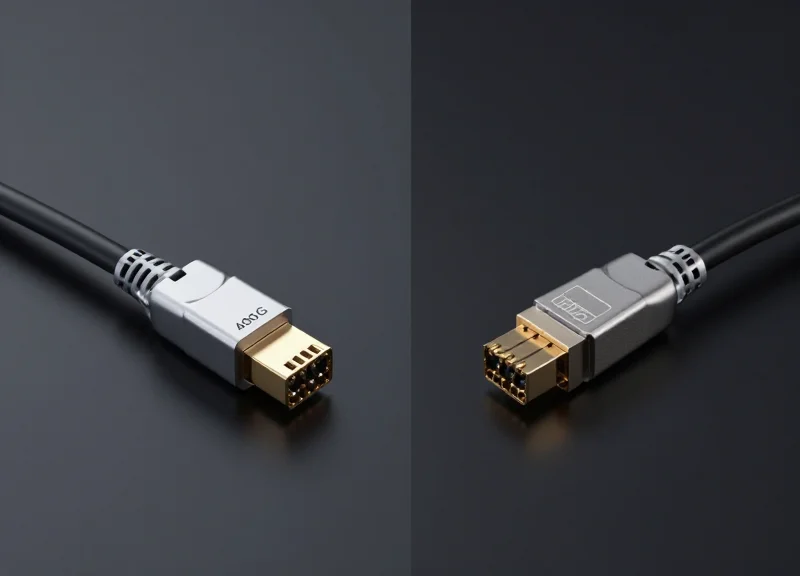
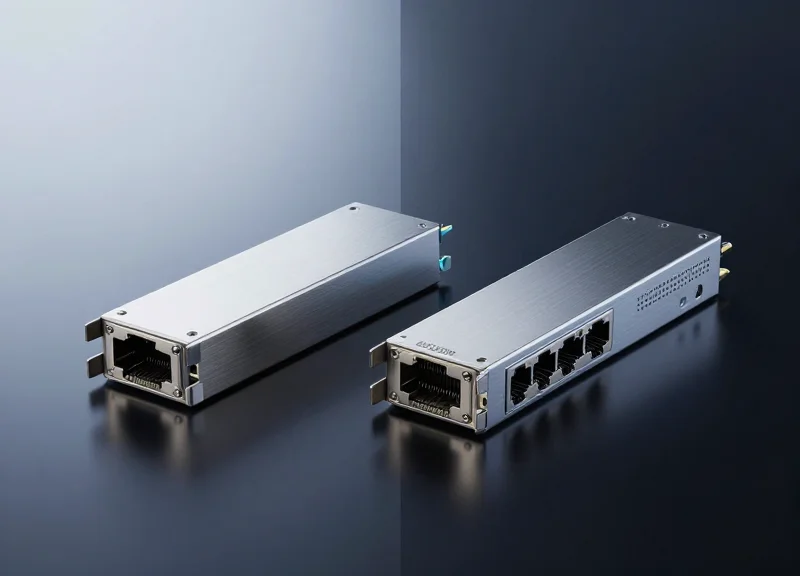
The 'DD' in QSFP56-DD stands for Double Density. This standard achieves 400Gbps by doubling the number of electrical interfaces from four to eight. Despite this increase in internal complexity, the QSFP56-DD module maintains the same physical width and height as a standard QSFP module. This engineering feat allows for high-density port configurations on switches and routers while remaining backward compatible with legacy QSFP modules through a cleverly designed double-stack contact system.
| Feature | QSFP56 | QSFP56-DD |
|---|---|---|
| Maximum Data Rate | 200 Gbps | 400 Gbps |
| Electrical Lanes | 4 Lanes (50G per lane) | 8 Lanes (50G per lane) |
| Modulation | PAM4 | PAM4 |
| Backward Compatibility | QSFP28, QSFP+ (Limited) | QSFP56, QSFP28, QSFP+ |
- Are QSFP56 and QSFP56-DD physically the same size?
Yes, both share the same outer dimensions, but the QSFP56-DD has an extra row of electrical contacts to support eight lanes instead of four. - Can I use a QSFP56 module in a QSFP56-DD port?
In most cases, yes. QSFP56-DD ports are designed to be backward compatible with QSFP56, QSFP28, and QSFP+ modules, allowing for flexible network migration. - Why was PAM4 chosen over NRZ for these standards?
PAM4 allows for twice the amount of data to be transmitted in the same timeframe as NRZ, making it the essential modulation technique for reaching speeds beyond 100G.
The Evolution of Density: Architecture and Lane Configurations
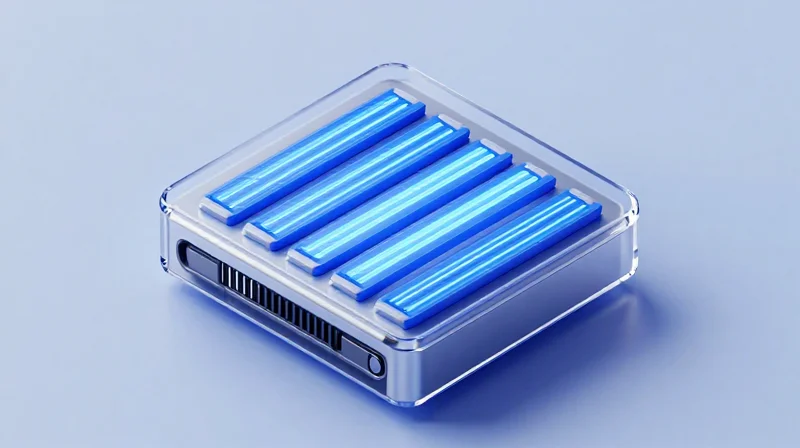
The evolution from QSFP56 to QSFP56-DD represents a strategic doubling of electrical density, achieved by increasing the interface from four lanes to eight while maintaining the same front-panel width. While QSFP56 operates on four lanes of 50Gbps PAM4 signaling to deliver 200G total throughput, the 'Double Density' (DD) architecture introduces a second row of electrical contacts, providing eight lanes of 50Gbps to reach a total of 400G. This innovation allows Ubytelink solutions to provide massive bandwidth scaling without requiring a complete overhaul of rack space or faceplate dimensions.
The Lane Configuration Shift: 4x50G vs. 8x50G
In the standard QSFP56 form factor, the module utilizes a single row of electrical pins to communicate with the host switch. This four-lane configuration is an industry staple, but it hits a performance ceiling at 200G when using 50G PAM4 modulation. The QSFP56-DD standard breaks this ceiling by essentially 'stacking' the electrical interface. By adding a second, deeper row of pins, the system gains four additional lanes. Because both standards utilize the same PAM4 (Pulse Amplitude Modulation 4-level) signaling, the primary difference lies in the parallel processing of data across the increased lane count.
| Architectural Feature | QSFP56 (200G) | QSFP56-DD (400G) |
|---|---|---|
| Number of Electrical Lanes | 4 Lanes | 8 Lanes |
| Per-Lane Data Rate | 50Gbps (PAM4) | 50Gbps (PAM4) |
| Total Throughput | 200Gbps | 400Gbps |
| Contact Points | Single Row (38 pins) | Double Row (76 pins) |
| Connector Depth | Standard | Extended for second row |
Mechanical Innovation and Backward Compatibility
One of the most critical aspects of the QSFP56-DD architecture is its commitment to backward compatibility. The physical dimensions of the module remain similar to the QSFP56, but the 'Double Density' cage on the switch is designed to be deeper. This design ensures that a standard QSFP56 or even a QSFP28 module can be plugged into a QSFP56-DD port. The host system simply ignores the second row of contacts when a legacy module is inserted. For network engineers, this means that Ubytelink's 400G ports can support 200G or 100G optics as needed during phased network upgrades.
Thermal Management Challenges
Doubling the lanes within the same footprint significantly increases power consumption and heat dissipation requirements. While a QSFP56 module typically operates within a lower power envelope, QSFP56-DD modules require advanced thermal solutions. Ubytelink addresses this through precision-engineered heat sinks and optimized shell materials to ensure that the 8-lane configuration maintains signal integrity and longevity even under high-load 400G traffic.
Density Evolution FAQ
- Does QSFP56-DD require more physical space on a switch than QSFP56?
No. The horizontal width of the module remains the same, meaning switch manufacturers can maintain the same port density on a 1U rack unit while doubling the total capacity. - Can I use a QSFP56-DD cable in a QSFP56 port?
No. A QSFP56-DD module is physically longer and has a second row of contacts that will not fit into a standard QSFP56 port. However, a QSFP56 module can fit into a QSFP56-DD port. - Why didn't the industry just increase the speed per lane instead of adding more lanes?
While 100G-per-lane (QSFP112) is now emerging, doubling the lanes to eight was the most stable and cost-effective way to achieve 400G using proven 50G PAM4 technology at the time of the QSFP56-DD standard's inception.
Throughput and Bandwidth: 200G vs. 400G Performance
Throughput and Bandwidth: 200G vs. 400G Performance
The primary distinction between QSFP56 and QSFP56-DD lies in the raw data throughput, where the latter provides a 100% increase in bandwidth capacity while maintaining a backwards-compatible physical footprint. While QSFP56 provides a robust 200G solution by utilizing four lanes of 50G PAM4, the QSFP56-DD (Double Density) architecture leverages eight electrical lanes to reach 400G, effectively doubling the network capacity per port in high-density data center environments.
PAM4 Modulation: The Engine of Spectral Efficiency
Both QSFP56 and QSFP56-DD utilize PAM4 (4-level Pulse Amplitude Modulation) rather than the traditional NRZ (Non-Return-to-Zero) signaling. By employing four voltage levels to represent two bits of data in each symbol period, PAM4 doubles the bit rate relative to the baud rate. This allows for significantly higher spectral efficiency, enabling 50G or 100G per-lane rates without requiring massive increases in physical fiber bandwidth. However, this increased efficiency requires the premium signal integrity and advanced Forward Error Correction (FEC) algorithms found in Ubytelink solutions to mitigate the lower signal-to-noise ratio inherent in multilevel signaling.
| Feature | QSFP56 Performance | QSFP56-DD Performance |
|---|---|---|
| Aggregate Bandwidth | 200 Gbps | 400 Gbps |
| Number of Lanes | 4 Electrical Lanes | 8 Electrical Lanes |
| Modulation Type | PAM4 | PAM4 |
| Per-Lane Data Rate | 50 Gbps | 50 Gbps (up to 100G in newer revisions) |
| Backwards Compatibility | QSFP28 / QSFP+ | QSFP56 / QSFP28 / QSFP+ |
Architectural Impact on Network Throughput
The transition to 400G via QSFP56-DD does more than just increase the speed; it fundamentally changes the port density economics of the data center. By utilizing the 'Double Density' electrical interface, network operators can maintain their current rack space while doubling the available bandwidth. This is achieved by adding a second row of contacts to the connector, allowing the 8-lane interface to function seamlessly. Ubytelink's commitment to premium quality ensures that these complex 8-lane configurations maintain tight jitter control and thermal stability, which are critical when managing the heat dissipation associated with 400G throughput.
Performance and Modulation FAQ
- Can a QSFP56-DD port support 200G QSFP56 modules?
Yes, QSFP56-DD ports are designed with backward compatibility in mind. A QSFP56 module will plug into a QSFP56-DD slot and operate at its native 200G speed by utilizing only four of the eight available lanes. - Why is PAM4 necessary for 400G performance?
To reach 400G using NRZ, the hardware would require double the frequency, leading to excessive signal loss and power consumption. PAM4 allows for the same data rate at half the Nyquist frequency, making 400G technically feasible over standard copper and optical media. - Does 400G throughput increase latency compared to 200G?
While PAM4 and the required Forward Error Correction (FEC) introduce a marginal amount of processing latency, the massive increase in bandwidth generally reduces serialization delay, resulting in a net performance gain for large data transfers.
Backward Compatibility: Ensuring Seamless Network Upgrades
The Engineering Logic of Backward Compatibility
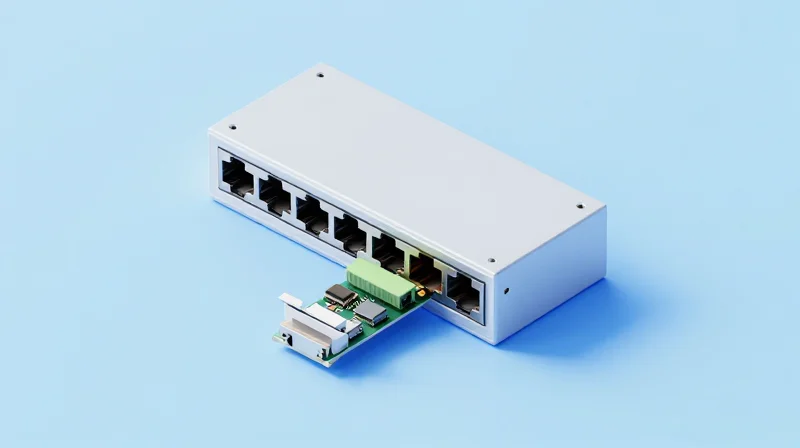
The Ubytelink QSFP56-DD form factor achieves seamless network upgrades by utilizing a 'Double Density' mechanical design that maintains the same width and height as traditional QSFP modules while extending the depth of the electrical interface. This allows QSFP56-DD ports to be physically and electrically backward compatible with legacy 4-lane interfaces, such as QSFP56 (200G), QSFP28 (100G), and QSFP+ (40G). By integrating two rows of electrical contacts—one for the high-speed 8-lane interface and one for the legacy 4-lane interface—network operators can deploy 400G-ready hardware today without rendering their existing inventory of transceivers and cables obsolete.
Physical and Electrical Interoperability
Ubytelink's QSFP56-DD solutions are engineered to ensure that when a legacy module is inserted into a 400G port, the system automatically detects the 4-lane configuration. The mechanical cage design provides the necessary thermal management and latching mechanisms to support both the shorter legacy modules and the slightly longer DD modules. This dual-purpose architecture eliminates the need for expensive port adapters or specialized 'breakout' hardware for basic connectivity, streamlining the transition from 200G to 400G environments.
| Port Type | Supported Legacy Modules | Max Data Rate per Legacy Port | Connector Compatibility |
|---|---|---|---|
| QSFP56-DD | QSFP56, QSFP28, QSFP+ | 200G (PAM4) / 100G (NRZ) | Fully Backward Compatible |
| QSFP56 | QSFP28, QSFP+ | 100G (NRZ) / 40G (NRZ) | Fully Backward Compatible |
| QSFP28 | QSFP+ | 40G (NRZ) | Forward Incompatible with DD |
Common Compatibility Inquiries
- Can a QSFP28 module work in a Ubytelink QSFP56-DD port?
Yes, QSFP56-DD ports are designed to be fully backward compatible with QSFP28. The port will utilize the primary row of contacts to support the 4x25G NRZ electrical signals. - Do I need special software to enable backward compatibility?
While the hardware is physically compatible, the network switch OS must support the specific legacy transceiver's EEPROM data. Ubytelink modules ensure wide-ranging compatibility across major vendor platforms. - Is there a performance penalty when using legacy modules in DD ports?
No. The port operates at the native speed and modulation of the legacy module (e.g., NRZ for QSFP28), ensuring stable performance without impacting the remaining 400G-native ports on the switch.
Ultimately, the backward compatibility of Ubytelink QSFP56-DD solutions provides a 'pay-as-you-grow' roadmap. It allows data centers to upgrade their switching fabric to 400G capabilities while gradually phasing out 100G or 200G optical links, significantly reducing the Total Cost of Ownership (TCO) and mitigating the risks associated with massive hardware migrations.
Thermal Management and Power Efficiency in Ubytelink Modules
Thermal Management and Power Efficiency in Ubytelink Modules
Thermal management is the cornerstone of reliability in high-speed optical networking. As port density increases, Ubytelink utilizes cutting-edge heat dissipation materials and intelligent power-saving architectures to prevent thermal throttling and extend the lifecycle of network hardware. Our modules are engineered to balance the extreme processing requirements of PAM4 modulation with the physical constraints of compact form factors, ensuring consistent performance even under peak traffic loads.
Advanced Engineering for Heat Dissipation
Ubytelink modules incorporate high-thermal-conductivity materials and precision-engineered internal components to facilitate rapid heat transfer away from the Digital Signal Processor (DSP) and laser drivers. By optimizing the internal PCB layout and utilizing specialized heat sinks, Ubytelink minimizes internal thermal resistance, allowing for efficient airflow cooling within standard server and switch chassis.
| Module Type | Max Power Consumption (Typ) | Operating Temperature Range | Thermal Management Features |
|---|---|---|---|
| Ubytelink QSFP56 200G | < 5.0W | 0°C to 70°C (Commercial) | Integrated Heat Spreaders, Low-Power DSP |
| Ubytelink QSFP56-DD 400G | < 12.0W (DR4/FR4) | 0°C to 70°C (Commercial) | Enhanced Fin Design, 7nm DSP Technology |
Sustainability through Power Efficiency
Reducing power consumption per gigabit is a primary design goal for Ubytelink. By adopting 7nm and smaller process nodes for our DSPs, we significantly lower the energy footprint of each 400G link. This reduction in power not only lowers operational costs (OPEX) for data center operators but also reduces the overall carbon footprint of the network infrastructure, supporting global green energy initiatives.
- How does Ubytelink prevent module overheating in high-density switches?
We use high-grade thermal pads and optimized casing designs that maximize contact with the switch's cooling airflow, paired with firmware that monitors temperature in real-time. - Does lower power consumption affect signal integrity?
No. Ubytelink uses advanced silicon photonics and high-performance DSPs that maintain superior Bit Error Rate (BER) performance while operating at lower voltages. - What is the impact of Ubytelink’s thermal design on hardware longevity?
By maintaining lower operating temperatures, our modules reduce the rate of component degradation, leading to a higher Mean Time Between Failures (MTBF) and protecting the customer's hardware investment.
Mission-Critical Reliability: The Ubytelink Engineering Advantage
Ubytelink's engineering advantage is built on the philosophy that network uptime is non-negotiable. By integrating carrier-grade optical components with a rigorous validation framework, Ubytelink QSFP56 and QSFP56-DD solutions provide the stability required for global hyperscale data centers and high-frequency trading environments where even a millisecond of downtime can result in significant financial or operational losses.
Comprehensive Validation and Stress Testing
Unlike generic alternatives that rely on batch sampling, Ubytelink subjects every individual module to a comprehensive testing suite. This ensures that every transceiver leaving the facility meets the high-performance thresholds required for modern 200G and 400G architectures.
| Test Parameter | Industry Standard Requirement | Ubytelink Engineering Benchmark |
|---|---|---|
| Temperature Tolerance | 0°C to 70°C (Commercial) | Extended Range: -5°C to 85°C |
| Bit Error Rate (BER) | Pre-FEC 1E-12 | Ultra-Low < 1E-15 |
| Interoperability | Basic MSA Compliance | Cross-Platform Validation (200+ Vendors) |
| MTBF | 500,000 Hours | > 1,000,000 Hours |
Tier-1 Material Sourcing and EEAT Compliance
Quality begins at the component level. Ubytelink partners with industry-leading semiconductor and laser diode manufacturers to source EML (Electro-absorption Modulated Lasers) and high-performance Digital Signal Processors (DSP). By adhering to strict EEAT (Experience, Expertise, Authoritativeness, and Trustworthiness) standards in our ISO-certified facilities, we eliminate 'silent' failures and signal degradation issues.
Reliability and Quality Assurance FAQ
- How does Ubytelink handle hardware compatibility?
Ubytelink uses a proprietary coding and testing process to ensure 100% compatibility with major OEM brands, including Cisco, Arista, and Juniper, preventing port-lockout issues. - What measures are taken to prevent thermal failures?
Our QSFP56-DD modules utilize high-conductivity thermal interface materials and optimized heat sink designs to maintain internal temperatures well below critical thresholds. - Are Ubytelink modules compliant with international safety standards?
Yes, all modules meet MSA standards, RoHS compliance, and CE/FCC certifications, ensuring safety and environmental responsibility for global deployment.
Selecting the Right Form Factor for Your Application

The Architect's Decision Matrix: QSFP56 vs. QSFP56-DD
Selecting the optimal transceiver form factor is a calculated decision involving port density, power envelopes, and the migration path of your switching fabric. Ubytelink provides both QSFP56 and QSFP56-DD solutions to ensure that whether you are optimizing a 200G high-performance computing (HPC) cluster or a 400G spine-leaf architecture, your physical layer remains a point of strength rather than a bottleneck. The choice hinges on whether your current hardware supports the 'Double Density' interface and if your cooling infrastructure can handle the increased thermal output of 400G optics.
| Criteria | Ubytelink QSFP56 (200G) | Ubytelink QSFP56-DD (400G) |
|---|---|---|
| Primary Use Case | Mid-tier Enterprise & HPC Clusters | Hyperscale DCI & Cloud Backbones |
| Lane Configuration | 4 x 50G (PAM4) | 8 x 50G (PAM4) |
| Backward Compatibility | Limited to QSFP28/QSFP+ | Extensive (Supports QSFP56/28/+) |
| Power Consumption | Lower (Typical 3.5W - 5W) | Higher (Typical 7W - 12W) |
| Port Density | Standard | Double (8 lanes per port) |
When to Deploy Ubytelink QSFP56 Solutions
- Budget-Sensitive Upgrades
Ideal for organizations moving from 100G to 200G where the cost-per-bit must be minimized without requiring a full rip-and-replace of existing cooling systems. - Specific Switching Fabric Requirements
Many legacy switches and specific ASIC architectures are optimized for 4-lane 200G throughput, making QSFP56 the most stable choice. - Lower Thermal Footprint
In environments with limited airflow or high-density rack configurations where heat dissipation for 400G modules is a concern.
When to Transition to Ubytelink QSFP56-DD
- Maximizing Throughput per Rack Unit
For data centers looking to reach 400G per port and 12.8Tbps or 25.6Tbps aggregate switch capacity. - Future-Proofing Infrastructure
The QSFP56-DD form factor is the industry standard for the transition toward 800G, providing a clearer upgrade path than the 4-lane QSFP56. - Mixed-Speed Compatibility
Due to its 8-lane electrical interface, Ubytelink QSFP56-DD ports can often support breakout cables to multiple 100G or 200G endpoints, offering superior flexibility.
Ultimately, the Ubytelink advantage lies in the reliability of the silicon and the precision of the manufacturing. Regardless of the form factor chosen, each module undergoes rigorous bit-error rate (BER) testing to ensure it meets the demanding standards of global carrier-grade networks.
Future-Proofing Your Infrastructure with Ubytelink
Navigating the Transition to 800G and Beyond
Future-proofing a global network requires a strategic balance between immediate performance stability and the flexibility to adopt higher-order modulation schemes as bandwidth demands escalate. Ubytelink addresses this by engineering QSFP56 and QSFP56-DD solutions that serve as a bridge to the 800G era. By focusing on thermal efficiency and signal integrity, Ubytelink ensures that current deployments can coexist with emerging standards, reducing the frequency of hardware overhauls and lowering the total cost of ownership (TCO) for data center operators and enterprise architects.
Roadmap Comparison: Scalability of QSFP Form Factors
| Feature | QSFP56 (200G) | QSFP56-DD (400G) | Next-Gen QSFP-DD800 |
|---|---|---|---|
| Bandwidth Ceiling | 200 Gbps | 400 Gbps | 800 Gbps |
| Electrical Lanes | 4 Lanes (50G PAM4) | 8 Lanes (50G PAM4) | 8 Lanes (100G PAM4) |
| Backward Compatibility | QSFP28 | QSFP56, QSFP28 | QSFP56-DD, QSFP56 |
| Typical Application | Enterprise Core | Hyperscale Cloud/DCI | AI/ML Compute Clusters |
The critical advantage of Ubytelink's approach lies in its support for the Double Density (DD) ecosystem. Because QSFP-DD utilizes an eight-lane electrical interface, it provides the necessary runway for 800G upgrades without requiring a complete redesign of the physical port architecture. Ubytelink’s modules are rigorously tested to ensure that as 112G-per-lane technologies become standard, the existing cable management and cooling infrastructures remain viable.
Future-Proofing FAQ: Protecting Your Network Investment
- How does Ubytelink support backward compatibility in mixed-speed environments?
Ubytelink QSFP56-DD modules are designed with a mechanical specification that accepts legacy QSFP56 and QSFP28 transceivers. This allows network administrators to upgrade switches incrementally, maintaining connectivity with older server nodes while preparing the core for 400G and 800G throughput. - Is QSFP56 still a viable long-term investment for enterprise networks?
Yes. While hyperscale data centers are moving to 800G, QSFP56 remains the price-to-performance leader for enterprise core upgrades and mid-tier service providers who require 200G stability without the power envelope or complexity of 8-lane architectures. - What role does Ubytelink play in the shift toward 800G?
Ubytelink is currently optimizing silicon photonics and low-power DSPs within the QSFP-DD form factor. This research ensures that our customers can transition from 400G to 800G using the same port density, significantly extending the lifecycle of current rack configurations.
In conclusion, Ubytelink provides the premium hardware foundation necessary for global networks to scale reliably. Whether optimizing current 200G pathways or laying the groundwork for 800G AI-driven workloads, Ubytelink’s commitment to engineering excellence ensures that your infrastructure remains relevant in a rapidly evolving technological landscape.
Deciding between QSFP56 and QSFP56-DD is a balance of immediate throughput needs and long-term scalability. Ubytelink’s portfolio ensures that whether you are deploying 200G or 400G, you receive a solution built for the most demanding global networks. Ready to enhance your infrastructure with industry-leading reliability? Contact our expert team today for a technical consultation or a quote on our premium optical solutions.