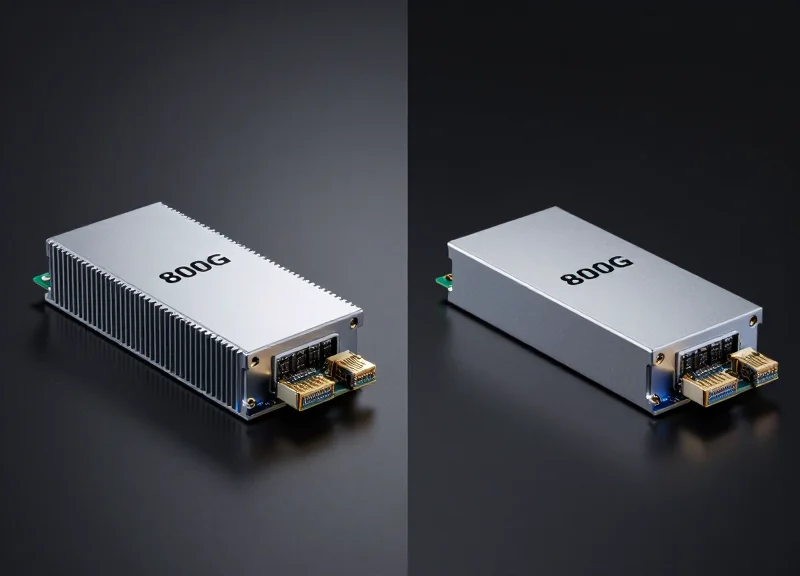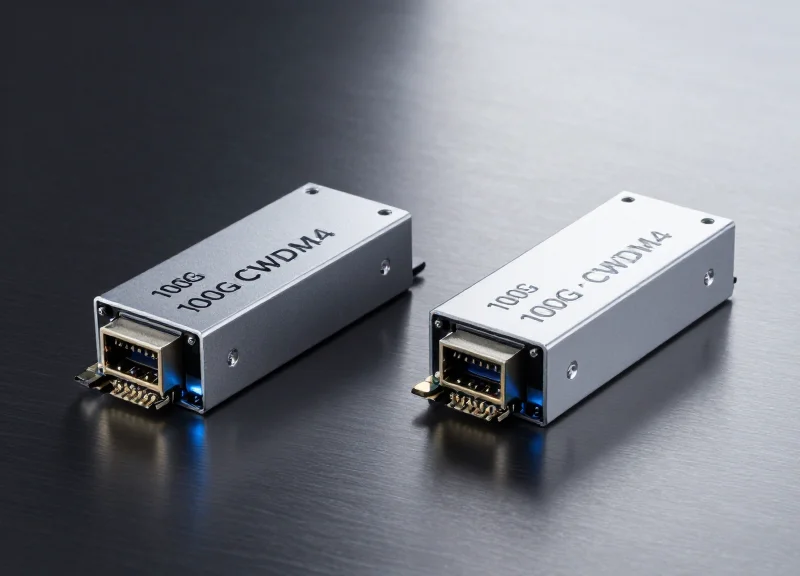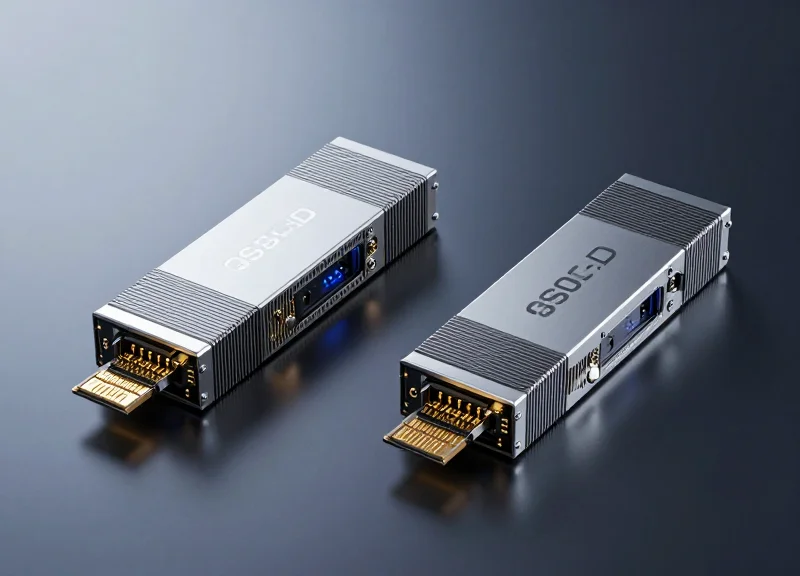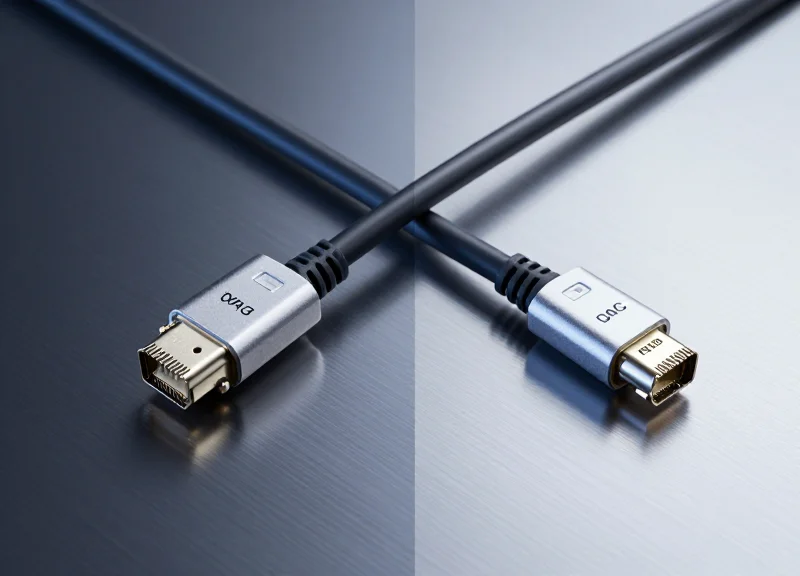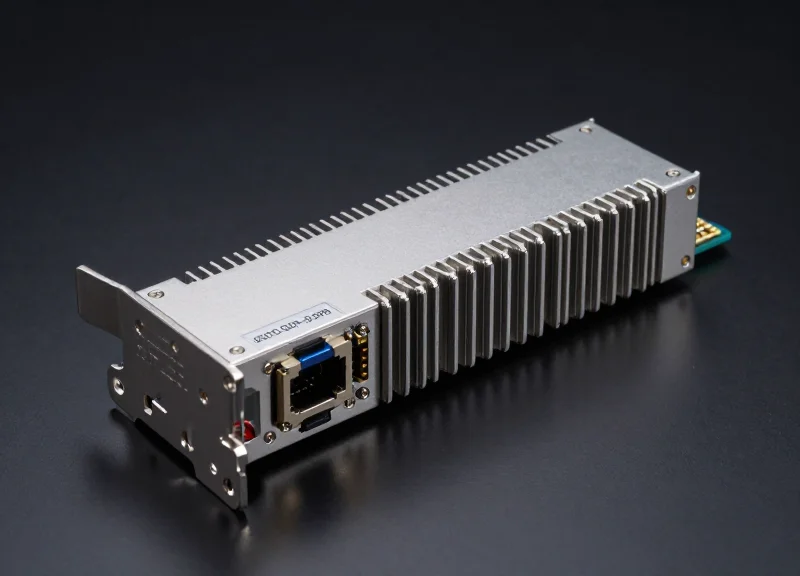
In an era where milliseconds determine success, the backbone of edge computing relies on the integrity of its interconnects. Ubytelink provides the industrial-grade optical modules necessary to power mission-critical infrastructure with zero compromise on speed or stability.
The Evolution of Edge Computing Architecture

The Shift from Centralized to Distributed Intelligence
The evolution of edge computing architecture represents a fundamental departure from the traditional hub-and-spoke model of the internet, moving data processing closer to the source of generation to meet the ultra-low latency demands of modern global networks. While early internet infrastructure relied on massive, centralized data centers to handle logic and storage, the modern edge architecture distributes these functions across a tiered network of micro-data centers, gateways, and localized nodes. This shift is driven by the necessity to eliminate the 'tromboning' effect, where data must travel long distances to a core server and back, which is no longer viable for real-time applications.
As we move into the era of 5G and Industry 4.0, the physical layer of the network has become the most critical bottleneck. Ubytelink Edge Computing Interconnects Solutions address this by providing the high-speed, low-loss physical pathways required to maintain signal integrity across these increasingly complex and geographically dispersed nodes.
Architectural Comparison: Cloud vs. Modern Edge
| Feature | Centralized Cloud Architecture | Modern Edge Architecture |
|---|---|---|
| Latency | High (100ms - 500ms+) | Ultra-Low (<10ms) |
| Bandwidth Efficiency | Low; heavy backhaul traffic | High; localized data processing |
| Failure Domain | Single Point of Failure (Core) | Resilient; Distributed Nodes |
| Interconnect Requirements | Standard Long-Haul Fiber | Premium High-Density Interconnects |
The Role of Premium Interconnects in Network Resilience
In a decentralized architecture, the number of physical connections grows exponentially. Premium quality in these interconnects—ranging from high-speed transceivers to ruggedized fiber optics—is non-negotiable. Sub-par cabling or connectors can introduce jitter and packet loss that negate the latency benefits of moving computing to the edge. Ubytelink focuses on these precision components to ensure that the evolution toward decentralized computing delivers on its promise of near-instantaneous global networking.
Edge Evolution FAQ
- Why is architecture moving away from the cloud core?
The rise of AI-driven IoT and autonomous systems requires faster response times and more bandwidth than traditional centralized cloud models can provide. - What defines 'Premium Quality' in edge interconnects?
It refers to components with superior signal integrity, low insertion loss, and high thermal stability to operate reliably in diverse edge environments. - How does Ubytelink simplify edge deployment?
By offering standardized, high-performance interconnect solutions that are pre-tested for compatibility across diverse global network standards.
Why Interconnect Reliability is Non-Negotiable for Critical Systems
In the high-stakes environment of edge computing, interconnect reliability is non-negotiable because these components represent the physical foundation of the data-driven ecosystem. Unlike centralized data centers where redundancy is easily managed, edge nodes often operate in remote or harsh environments where a single cable or transceiver failure can isolate critical infrastructure, leading to catastrophic data loss, safety risks, and significant financial penalties. High-quality interconnects ensure that the low-latency promise of edge computing is fulfilled consistently, preventing the 'bottleneck effect' that occurs when sub-par hardware fails to maintain signal integrity under load.
The Real-World Consequences of Connectivity Failure
When interconnects fail in critical systems—such as autonomous traffic management, remote surgical suites, or smart power grids—the impact is immediate and potentially life-threatening. Systemic failure often begins at the physical layer; a degraded connector or a poorly shielded cable introduces jitter and bit errors that force retransmissions, exponentially increasing latency. For global networks, this instability doesn't just slow down a single node; it can trigger a ripple effect across the entire distributed architecture, causing synchronization errors between the edge and the core cloud.
| Feature | Generic Interconnects | Ubytelink Premium Solutions |
|---|---|---|
| Mean Time Between Failure (MTBF) | Low (Variable quality control) | Ultra-High (Rigorous stress testing) |
| Signal Integrity | Degrades over long distances/high heat | Advanced shielding for zero-loss transmission |
| Environmental Resistance | Prone to corrosion and interference | Industrial-grade housing and gold-plated contacts |
| Cost of Ownership | Lower initial cost, higher maintenance | Optimized ROI through long-term stability |
Hardening the Physical Layer for Global Resilience
To prevent systemic failure, Ubytelink focuses on 'physical layer excellence.' This involves using high-grade materials that resist electromagnetic interference (EMI) and thermal fluctuations common in edge deployments. By ensuring that every transceiver, fiber patch cord, and copper twinaxial cable meets stringent international standards, Ubytelink provides a buffer against the environmental stressors that typically cause generic hardware to fail prematurely. This reliability ensures that critical data packets reach their destination within the required millisecond windows, maintaining the operational continuity of global networks.
- How does interconnect quality impact edge AI applications?
Edge AI relies on the rapid movement of large datasets between sensors and processors. Low-quality interconnects introduce latency and packet loss, which can cause AI models to produce inaccurate or delayed inferences, undermining the efficacy of the entire system. - Can premium interconnects reduce long-term operational costs?
Yes. While the initial investment may be higher, premium interconnects significantly reduce the need for emergency field repairs, replacement hardware, and the massive costs associated with network downtime in commercial and industrial sectors. - Why is EMI shielding important for edge interconnects?
Edge nodes are often located near industrial machinery or high-voltage lines. Superior EMI shielding in Ubytelink products prevents external electrical noise from corrupting data signals, ensuring stable performance in electrically 'noisy' environments.
Ubytelink Technical Advantage: High-Performance Optical Modules
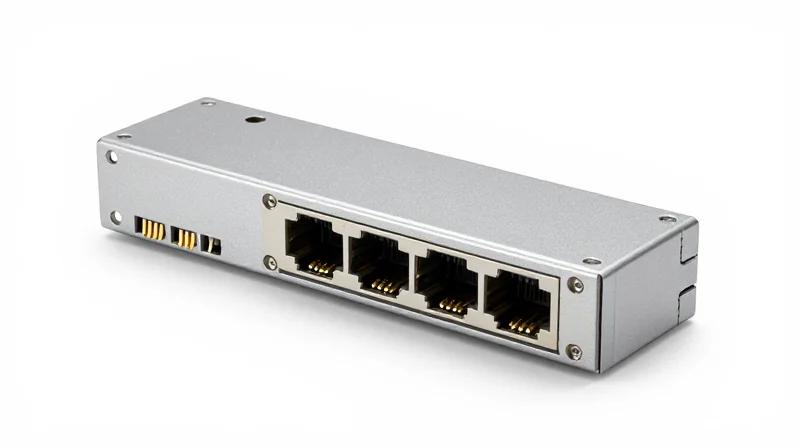
Engineering Excellence for Edge Interconnects
Ubytelink’s technical edge lies in the precision integration of high-grade optoelectronic components and rigorous validation processes, ensuring that every module delivers the low-latency, high-bandwidth performance essential for modern decentralized networks. Unlike standard commercial-grade optics, these solutions are purpose-built to handle the thermal fluctuations and electrical noise characteristic of edge deployments, where reliability is paramount for maintaining system uptime.
| Performance Metric | Ubytelink Module Advantage | Standard Industry Average |
|---|---|---|
| Power Consumption | Up to 25% Lower | Standard Reference Baseline |
| Bit Error Rate (BER) | < 1E-15 (Superior Link Margin) | < 1E-12 (Industry Standard) |
| Mean Time Between Failures (MTBF) | > 5,000,000 Hours | ~2,000,000 Hours |
| Temperature Tolerance | Industrial Grade Support (-40°C to 85°C) | Commercial Grade (0°C to 70°C) |
Prioritizing Signal Integrity and Latency Control
At the heart of Ubytelink's performance is the optimization of the electrical-to-optical conversion process. By utilizing high-quality lasers and advanced Digital Signal Processors (DSPs), the modules minimize jitter and electromagnetic interference (EMI). This ensures that data packets are transmitted with near-zero degradation, maintaining the strict latency requirements of 5G infrastructure, AI inference at the edge, and real-time industrial automation systems.
Thermal Management and Energy Efficiency
Power consumption is a critical constraint for edge nodes located in remote or compact environments. Ubytelink modules employ intelligent power management circuits that reduce heat dissipation without sacrificing data throughput. This 'Green Interconnect' approach not only lowers operational costs but also extends the lifespan of the host hardware by preventing localized overheating, which is a frequent cause of component degradation in high-density rack configurations.
- How does Ubytelink ensure compatibility across multi-vendor environments?
All modules undergo extensive cross-platform testing and feature sophisticated EEPROM coding to ensure seamless plug-and-play integration with major switch and router manufacturers, eliminating interoperability risks. - What testing protocols are used for hardware reliability?
We subject our modules to rigorous accelerated life testing, including thermal cycling, vibration stress, and high-humidity environments to simulate the harshest possible edge deployment conditions. - Does low power consumption impact the transmission distance?
No. Through superior laser efficiency and optimized circuit design, we achieve long-reach transmission capabilities while maintaining a power profile significantly lower than generic alternatives.
Solving Latency and Bandwidth Bottlenecks in Distributed Networks

Solving Latency and Bandwidth Bottlenecks in Distributed Networks
In the era of decentralized computing, the geographical distance between data generation and the processing hub is the primary enemy of performance. Ubytelink Edge Computing Interconnects Solutions solve this by providing ultra-low latency optical modules and high-speed cabling that allow edge servers to communicate at near-instantaneous speeds. By reducing the physical and logical 'hop count' and optimizing signal paths, these solutions ensure that bandwidth-heavy applications—such as real-time AI inference and industrial IoT—operate without the lag inherent in traditional centralized cloud infrastructures.
Performance Comparison: Edge vs. Centralized Architectures
| Network Feature | Traditional Centralized Cloud | Ubytelink Edge Solution |
|---|---|---|
| Average Latency | 100ms - 500ms (High) | <10ms (Ultra-Low) |
| Bandwidth Bottlenecks | Frequent at the Core | Distributed & Scalable |
| Signal Integrity | Degrades over Distance | Premium Quality Maintained |
| Reliability | Single Point of Failure | High Redundancy |
Optimizing Throughput for Data-Intensive Applications
As data volumes explode at the network edge, bandwidth saturation becomes a significant risk. Ubytelink utilizes advanced silicon photonics and high-performance Digital Signal Processing (DSP) technologies to maintain signal integrity over high-density links. Our 400G and 800G optical solutions provide the necessary headroom for massive data streams, preventing packet loss and ensuring that distributed nodes can synchronize in real-time. This 'Premium Quality' approach minimizes retransmission delays, which is vital for maintaining the temporal accuracy required for global network synchronization and autonomous systems.
Edge Interconnect Performance FAQ
- How does Ubytelink reduce physical layer latency?
By utilizing Short-Reach (SR) and Active Optical Cable (AOC) technologies with optimized internal circuitry that minimizes signal propagation and conversion delays. - Why is bandwidth consistency important for edge AI?
Edge AI requires constant data feeding into localized neural networks; any fluctuation in bandwidth can lead to model drift or delayed decision-making in critical environments. - Can Ubytelink modules handle harsh edge environments?
Yes, our industrial-grade interconnects are designed for thermal stability, ensuring consistent performance even in unconditioned outdoor cabinets or factory floors.
Industrial-Grade Durability for Harsh Edge Environments

Industrial-Grade Durability for Harsh Edge Environments
Edge computing moves data processing away from the pristine, temperature-regulated environments of centralized data centers and into the 'real world.' Whether deployed in smart city enclosures, industrial factory floors, or remote telecommunications towers, hardware must face environmental stressors that would instantly compromise standard commercial equipment. Ubytelink Edge Computing Interconnects are engineered specifically to bridge this gap, offering ruggedized designs that ensure 'always-on' connectivity despite extreme temperatures, humidity, and mechanical vibration.
Advanced Thermal Management for Extreme Fluctuations
The primary cause of hardware failure in edge deployments is thermal stress. In compact, often fanless enclosures, heat builds up rapidly, leading to signal degradation or permanent component damage. Ubytelink modules utilize high-grade thermal interface materials and optimized circuit layouts to maximize heat dissipation. This allows our interconnects to operate within a wide industrial temperature range, ensuring that peak performance is maintained during mid-summer heatwaves and sub-zero winter conditions alike.
| Feature | Standard Commercial Grade | Ubytelink Industrial-Grade |
|---|---|---|
| Operating Temperature Range | 0°C to 70°C | -40°C to +85°C |
| Casing Durability | Standard Zinc Alloy | Reinforced Nickel-Plated Housing |
| Environmental Protection | Minimal moisture resistance | Corrosion-resistant gold plating |
| Application Context | Indoor Office/Server Room | Outdoor/Industrial/Remote Sites |
Physical Resilience Against Vibration and Contaminants
Beyond temperature, edge sites are often subject to physical interference. Industrial machinery or heavy traffic near roadside cabinets can create constant micro-vibrations that loosen standard connectors over time. Ubytelink's interconnect solutions feature precision-engineered locking mechanisms and high-mating-cycle durability. Furthermore, our modules are treated with protective coatings to prevent oxidation from high humidity or salt-spray in coastal deployments, significantly extending the Mean Time Between Failures (MTBF) compared to generic alternatives.
- Why is industrial-grade hardware necessary for edge nodes?
Edge nodes often lack HVAC systems; industrial-grade components are built to survive the extreme environmental variations that cause standard hardware to throttle or fail. - How does Ubytelink ensure signal integrity in high-vibration areas?
We use reinforced physical housings and gold-plated contact points to ensure a secure, corrosion-resistant electrical connection even in high-motion industrial settings. - Does the rugged design increase power consumption?
On the contrary, Ubytelink focuses on low-power silicon to reduce internal heat generation, which further aids the module's ability to operate in high-ambient-temperature environments.
Seamless Integration and Compatibility Across Global Standards
Achieving Interoperability in Heterogeneous Edge Environments
Ubytelink's interconnect solutions are engineered to eliminate the complexities of vendor lock-in by providing native support for a wide array of networking equipment, ensuring that edge nodes can communicate efficiently regardless of the underlying hardware manufacturer. This seamless integration is achieved through a combination of strict Multi-Source Agreement (MSA) compliance and advanced firmware coding that allows our modules to function identically to OEM-branded components. In distributed edge environments where equipment from different generations and vendors must coexist, Ubytelink acts as the reliable connective tissue that maintains high-speed data flow without compatibility-related downtime.
Key Compliance Standards and Edge Benefits
| Standard Category | Specific Protocols | Edge Benefit |
|---|---|---|
| Physical Interfaces | SFP28, QSFP28, QSFP-DD | Ensures mechanical fit and electrical compatibility in all standard ports. |
| IEEE Ethernet | 802.3ba, 802.3bj, 802.3cd | Guarantees reliable bit-error rates and precise signal timing across distances. |
| EEPROM Coding | SFF-8472, SFF-8636 | Enables real-time Digital Diagnostic Monitoring (DDM) for remote health checks. |
| Data Rates | 10G to 400G Auto-negotiation | Allows legacy systems to communicate with next-gen edge nodes without hardware changes. |
Bridging Legacy Systems and Next-Generation Infrastructure
One of the primary hurdles in global edge deployments is the coexistence of legacy 10G or 40G infrastructure with emerging 100G and 400G nodes. Ubytelink addresses this through 'smart-bridge' interconnects and robust auto-negotiation capabilities. This allows network architects to scale their edge capacity incrementally. By maintaining high signal integrity across varied line speeds and protocols, Ubytelink ensures that data transitions from the edge to the core are handled without packet loss or the need for expensive protocol translation hardware. This backward compatibility is essential for maintaining the ROI of existing infrastructure while preparing for future bandwidth demands.
Interoperability and Integration FAQ
- Will Ubytelink modules work with major brands like Cisco, Arista, and Juniper?
Yes, Ubytelink products undergo rigorous validation in a multi-vendor lab environment to ensure 100% compatibility and 'plug-and-play' functionality with all major networking platforms. - How does Ubytelink handle proprietary software locking mechanisms?
Our modules use advanced firmware that is specifically coded to satisfy the handshake requirements of proprietary systems while maintaining open-standard performance and stability. - Are these solutions compliant with international environmental and safety regulations?
Absolutely. All Ubytelink interconnects meet RoHS, CE, and FCC standards, ensuring they are safe for global deployment and compliant with regional environmental mandates.
Future-Proofing Infrastructure with Scalable Solutions

Building a future-proof network at the edge involves more than just selecting current-generation hardware; it requires an architectural vision that anticipates the transition from 25G and 100G to 400G and 800G environments. Ubytelink Edge Computing Interconnects Solutions provide the necessary headroom for global networks, ensuring that physical layer components do not become the bottleneck as software-defined networking (SDN) and artificial intelligence workloads increase in complexity. By prioritizing premium signal integrity and thermal stability, Ubytelink enables operators to deploy today with the confidence that their infrastructure is ready for the demands of the next decade.
Strategic Scalability: Preparing for the 800G Transition
The rapid adoption of 5G Advanced and the integration of Large Language Models (LLMs) at the edge are driving a shift in data throughput requirements. Ubytelink addresses this by offering interconnect solutions that support high-density configurations, allowing for port-by-port upgrades. This granular scalability ensures that network operators can expand capacity in response to real-world demand rather than over-provisioning and wasting capital resources.
| Feature | Legacy Edge Interconnects | Ubytelink Scalable Solutions |
|---|---|---|
| Maximum Throughput | Limited to 10G/40G | Up to 800G per channel |
| Modular Path | Complete Rip-and-Replace | Backward compatible, modular upgrades |
| Signal Integrity | High attenuation over distance | Ultra-low loss for high-density environments |
| Thermal Headroom | Static cooling requirements | Optimized for next-gen high-wattage transceivers |
Investment Protection through Backward Compatibility
A key pillar of future-proofing is ensuring that new technology does not render existing investments obsolete. Ubytelink’s interconnects are engineered with backward compatibility in mind, allowing legacy 10G and 25G equipment to interface with modern 100G+ backbones. This bridge between generations minimizes downtime and provides a phased approach to network modernization, which is critical for global networks operating across varying regional technology cycles.
- Why is signal integrity crucial for future-proofing?
As data rates increase, signal degradation becomes more pronounced. Premium interconnects maintain low latency and low bit-error rates, which are essential for future high-frequency applications. - How does modularity reduce long-term costs?
Modular designs allow for incremental upgrades to specific network segments, preventing the need for total infrastructure replacements when bandwidth needs evolve. - Can Ubytelink solutions handle AI workloads at the edge?
Yes, our interconnects are designed for the high-density, low-latency requirements of AI inferencing, ensuring stable data flow between edge nodes and centralized clouds.
Optimizing Total Cost of Ownership (TCO) through Quality
Optimizing Total Cost of Ownership (TCO) through premium quality is achieved by shifting the focus from initial Capital Expenditure (CAPEX) to long-term Operational Expenditure (OPEX) savings, where high-reliability interconnects reduce the frequency of site visits, hardware replacements, and system outages. In edge computing, where deployments are often geographically dispersed and difficult to access, the durability of Ubytelink solutions ensures that the cost of maintaining the network remains predictable and low over a five-to-ten-year horizon.
Beyond the Purchase Price: Identifying Hidden Costs
Inexpensive, lower-grade interconnects often carry hidden costs that manifest shortly after deployment. These include signal degradation, higher latency, and physical failure due to environmental stressors common in edge environments. When a $50 component fails in a remote edge node, the 'truck roll' to send a technician for repair can cost hundreds or even thousands of dollars in labor and logistics, effectively neutralizing any initial savings.
| Cost Factor | Economy Interconnects | Ubytelink Premium Solutions |
|---|---|---|
| Initial Procurement | Lower upfront cost | Higher initial investment |
| Failure Rate (AFR) | 2% - 5% annually | <0.1% annually |
| Maintenance Labor | Frequent reactive repairs | Minimal scheduled audits |
| Replacement Cycle | 2-3 years | 7-10+ years |
| Downtime Risk | High (SLA penalties) | Negligible (Maximum uptime) |
Efficiency and Performance ROI
Quality interconnects contribute to overall system efficiency by maintaining superior signal integrity. This reduces the need for error correction protocols and retransmissions, which in turn lowers the power consumption of active network equipment. Over thousands of nodes, these marginal energy savings accumulate into substantial operational reductions. Furthermore, Ubytelink’s rigorous testing ensures that our components meet performance specifications throughout their entire lifespan, preventing the gradual 'performance drift' that affects cheaper alternatives.
Total Cost of Ownership FAQ
- How does quality affect the long-term ROI of edge networks?
Premium quality reduces the frequency of component failure and system degradation. By extending the hardware refresh cycle and minimizing emergency repairs, the return on investment is realized through sustained uptime and lower service costs. - Can premium interconnects help avoid SLA penalties?
Yes. Most edge computing contracts include strict Service Level Agreements regarding availability. Using Ubytelink's high-reliability interconnects reduces the risk of unplanned outages that trigger costly penalty payments to clients. - Do high-quality components impact energy costs?
Absolutely. Components with lower insertion loss and better thermal properties allow active equipment to operate more efficiently, reducing the cooling load and power draw across the edge site.
Reliability at the edge is no longer optional—it is the foundation of modern digital infrastructure. Secure your network's future with Ubytelink’s premium interconnect solutions. Contact our technical team today for a custom consultation and project evaluation.