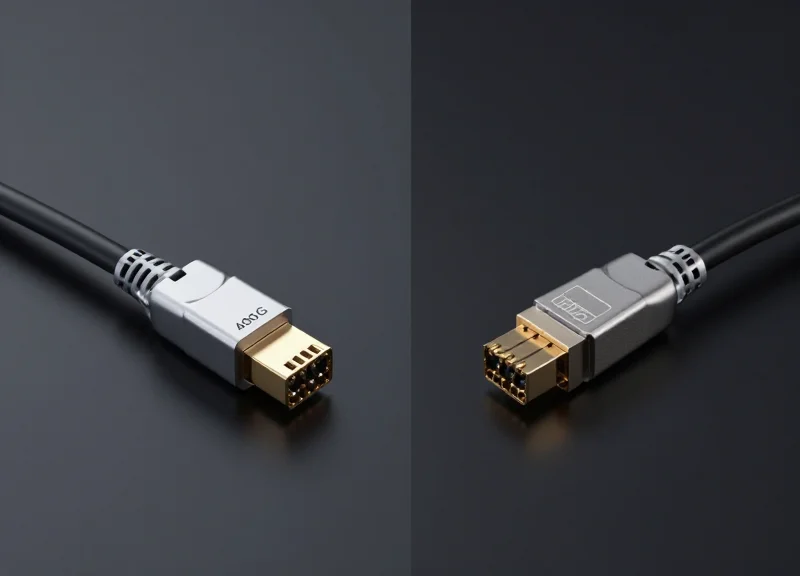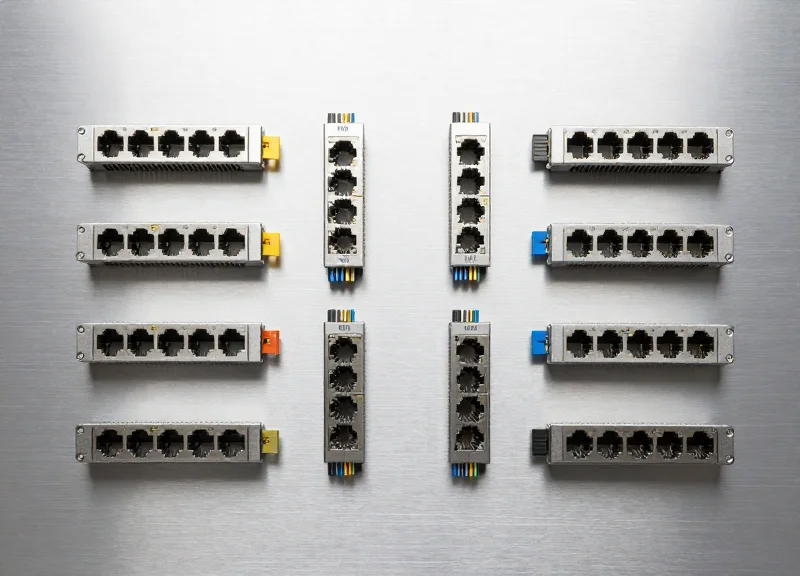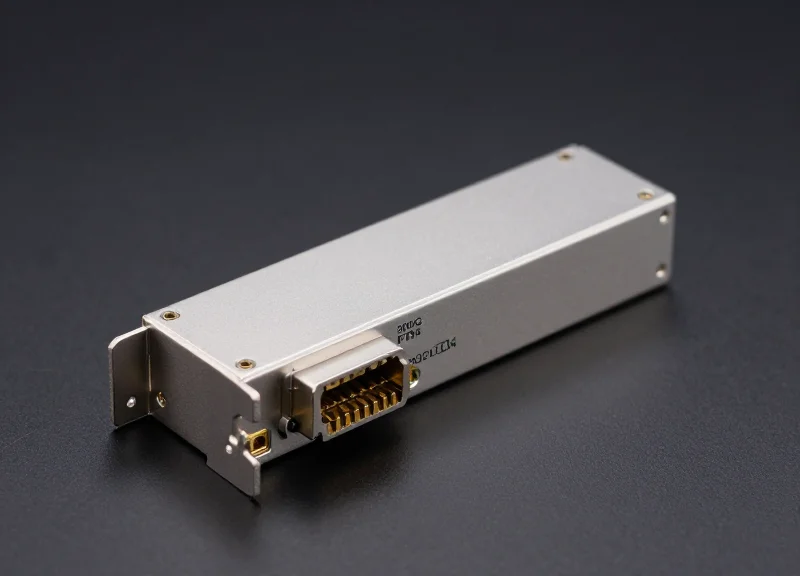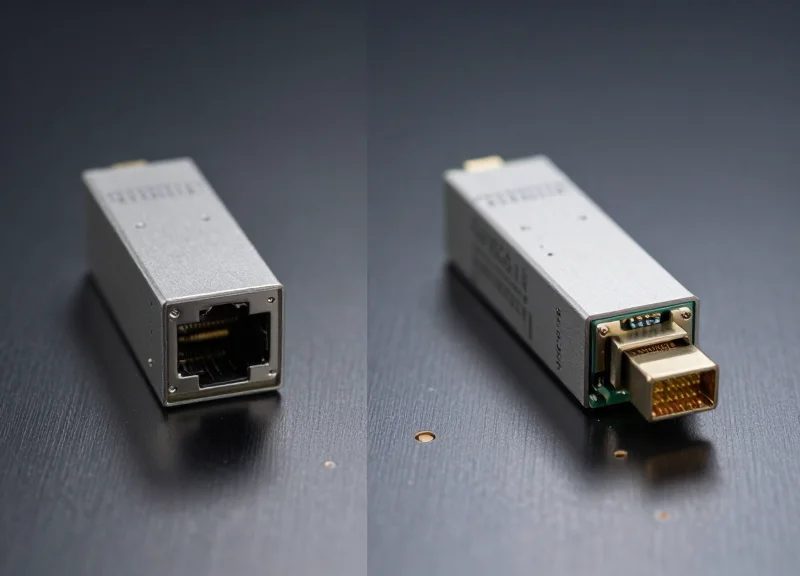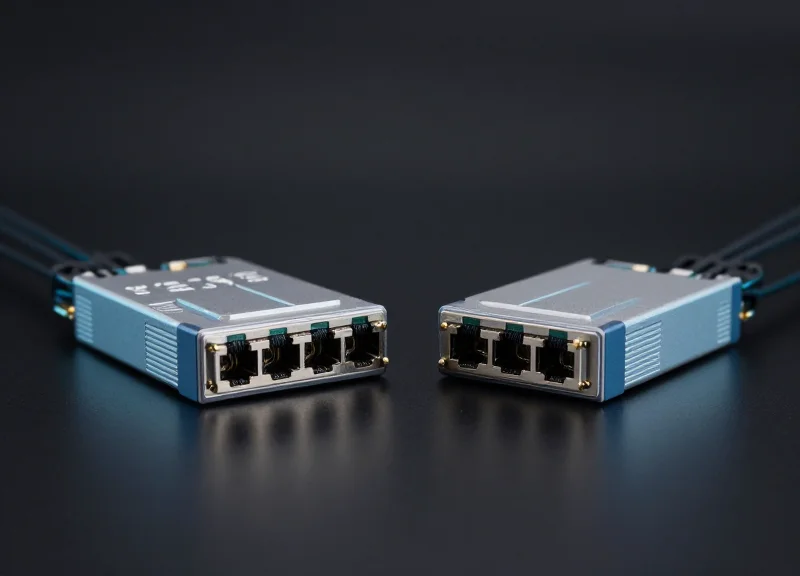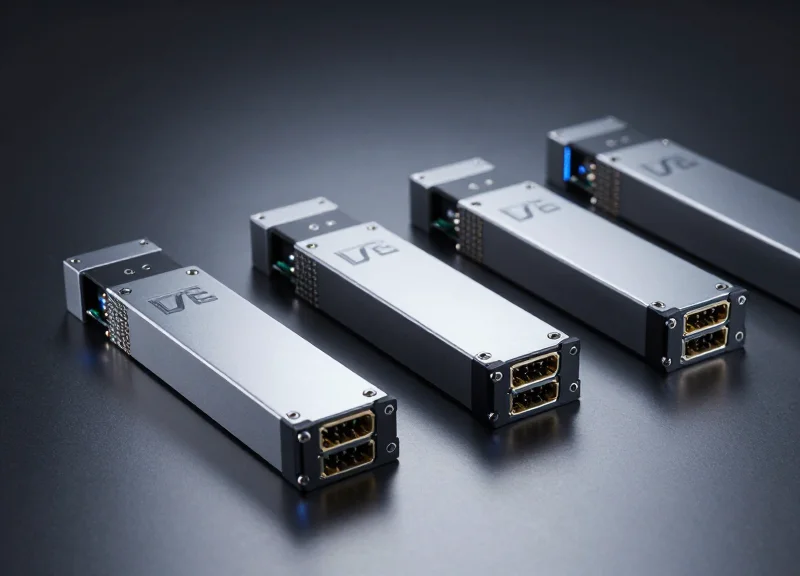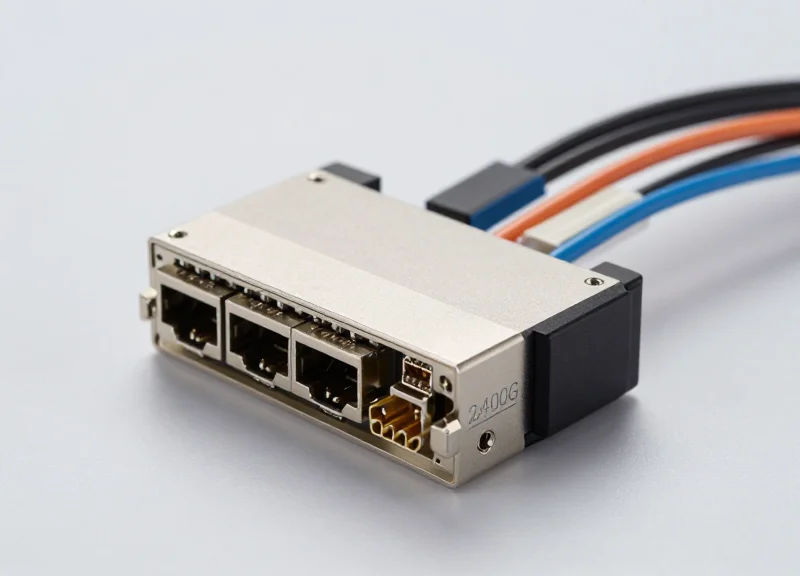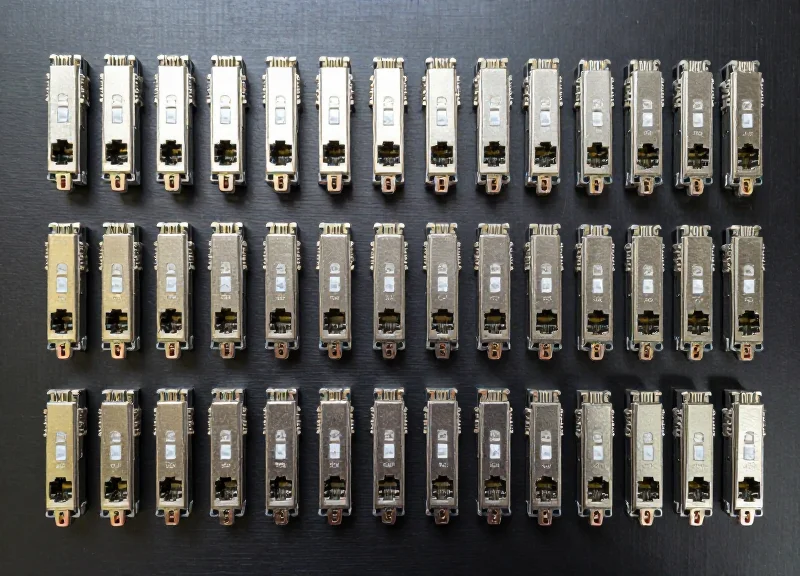
As data centers and enterprise networks demand higher bandwidth, the shift toward 10GbE over existing copper infrastructure has become a strategic priority. SFP+ to RJ45 copper modules offer a bridge between high-speed SFP+ ports and traditional Cat6a/7 cabling. For businesses looking to scale, sourcing these components at wholesale prices is not just a cost-saving measure—it is a competitive advantage. Ubytelink provides the expertise and manufacturing capacity to deliver high-performance transceivers tailored to your specific network requirements.
Understanding the Demand for SFP+ to RJ45 10GBASE-T Modules
Understanding the Demand for SFP+ to RJ45 10GBASE-T Modules
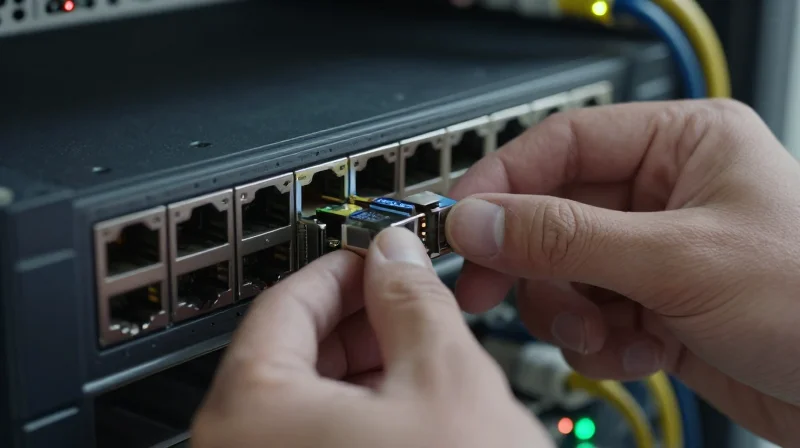
The demand for SFP+ to RJ45 10GBASE-T copper modules is driven by their unique ability to provide a high-speed upgrade path for existing copper-based network architectures without requiring a full transition to fiber optics. These transceivers allow data centers and enterprises to achieve 10Gbps throughput over standard Cat6a or Cat7 cabling, effectively extending the lifecycle of current structured cabling investments while meeting the rigorous bandwidth needs of modern server virtualization and high-performance computing.
Comparing 10G Interconnect Technologies
| Feature | 10GBASE-T SFP+ (Copper) | SFP+ SR (Optical) | SFP+ DAC (Direct Attach) |
|---|---|---|---|
| Max Reach | 30m - 80m | 300m (OM3) / 400m (OM4) | 7m |
| Cable Type | Cat6a / Cat7 | Multimode Fiber | Twinax Copper |
| Typical Latency | ~2.6 microseconds | ~0.1 microseconds | ~0.3 microseconds |
| Power Consumption | ~2.0W - 2.5W | ~1.0W | ~0.1W |
Why Wholesale and Bulk Pricing Matters in 2026
As organizations scale their Top-of-Rack (ToR) and Leaf-Spine architectures, the per-port cost becomes a critical factor in the Total Cost of Ownership (TCO). Bulk procurement of 10GBASE-T modules allows for significant capital expenditure savings. In 2026, the market has stabilized, allowing wholesale buyers to negotiate custom quotes that include specific compatibility coding for major vendors like Cisco, Arista, and Ubiquiti, ensuring seamless integration across heterogeneous hardware environments.
- Can these modules work with existing Cat5e cables?
While they may function at 1G or 2.5G speeds over Cat5e, 10Gbps speeds generally require Cat6a or Cat7 to maintain signal integrity and reach the maximum rated distance. - Why do copper modules generate more heat than fiber?
The 10GBASE-T standard requires complex Digital Signal Processing (DSP) to cancel crosstalk and echo over copper pairs, which inherently consumes more power and generates more thermal output than simple optical conversion. - Is auto-negotiation supported?
Yes, high-quality SFP+ to RJ45 modules typically support 10/100/1000Mbps and 2.5G/5G/10G multi-rate negotiation, making them ideal for mixed-speed environments.
The Economics of Wholesale: Why Bulk Purchasing Wins in 2026
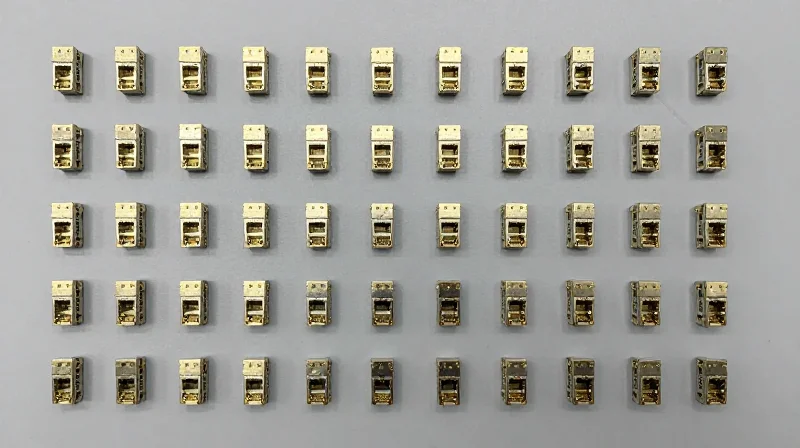
In 2026, the primary driver for wholesale SFP+ to RJ45 copper transceiver adoption is the significant reduction in capital expenditure (CAPEX) without a proportional sacrifice in link quality or reliability. As 10GBASE-T technology matures, the manufacturing efficiencies at scale allow wholesalers to offer volume discounts that drastically undercut traditional retail markups and the inflated premiums associated with original equipment manufacturers (OEMs). By sourcing in bulk, enterprises can bridge the gap between expensive fiber infrastructure and existing copper cabling at a fraction of the cost.
The Financial Landscape: OEM Retail vs. Bulk Wholesale
| Procurement Model | Avg. Unit Price (USD) | Minimum Order Quantity | Relative Savings |
|---|---|---|---|
| Brand-Name OEM Retail | $150 - $280 | 1 Unit | Baseline |
| Standard Online Retail | $45 - $65 | 1 Unit | 65% - 75% |
| Wholesale Bulk (50+ units) | $32 - $42 | 50 Units | 80% - 85% |
| Custom Volume Quotes | Negotiable | 100+ Units | Maximized ROI |
Strategic Total Cost of Ownership (TCO) Advantages
Beyond the initial purchase price, bulk acquisition simplifies logistical overhead and spares management. Purchasing a unified batch of wholesale modules ensures that network administrators receive consistent firmware revisions across their entire infrastructure, which significantly reduces the time spent on troubleshooting and compatibility testing. Furthermore, the lower cost-per-unit enables organizations to maintain a robust on-site inventory of 'cold spares,' ensuring that critical 10GBASE-T links can be restored instantly without the delays associated with individual retail shipping cycles or supply chain volatility.
Wholesale Procurement FAQ
- Why is there such a massive price gap between OEM and wholesale modules?
OEMs price transceivers as high-margin proprietary accessories to support their hardware ecosystems. Wholesale vendors provide MSA-compliant modules produced in the same facilities, focusing on volume-based distribution rather than brand-name premiums. - Can wholesale SFP+ to RJ45 modules be custom-coded for different brands?
Yes. Most reputable wholesale providers offer custom coding services, allowing a single bulk order to be partitioned for compatibility with multiple switch brands like Cisco, Arista, Juniper, and Dell. - What is the typical lead time for a custom wholesale quote?
In 2026, custom quotes are usually generated within 24 hours. Depending on the volume and customization requirements, shipping for bulk orders typically ranges from 3 to 7 business days.
Technical Specifications: Reach, Power, and Latency

Technical Specifications: Reach, Power, and Latency
Optimizing a 10G network over copper requires a rigorous evaluation of the SFP+ to RJ45 transceiver's ability to balance signal integrity with thermal constraints. Unlike fiber optics, 10GBASE-T technology relies heavily on Digital Signal Processing (DSP) to counteract electromagnetic interference and signal attenuation over twisted-pair cabling. For wholesale buyers, the selection process pivots on three primary technical pillars: the physical reach (standard 30m vs. enhanced 80m), the power consumption envelope (typically 1.6W to 2.5W), and the microsecond-level latency overhead inherent in copper PHY chips.
Transmission Distance and Cable Requirements
The reach of a copper SFP+ module is strictly governed by the category of the cable and the power efficiency of the transceiver chipset. While standard 10GBASE-T was originally designed for short-reach switch-to-server links, 2026 wholesale offerings have expanded the utility of these modules to include mid-range enterprise distances.
| Module Type | Max Distance | Cabling Category | Typical Application | ||||
|---|---|---|---|---|---|---|---|
| Standard SFP+ Copper | 30 Meters | Cat6a / Cat7 | Top-of-Rack (ToR) Switching | ||||
| Enhanced Reach SFP+ | 80 Meters | Cat6a / Cat7 | End-of-Row (EoR) / Inter-floor | Legacy 10G Support | 100 Meters | Cat6a (limited speed) | Network Retrofitting |
Power Consumption and Thermal Management
Power dissipation is the most significant challenge when deploying SFP+ to RJ45 modules in high-density environments. Early iterations of these transceivers often exceeded 3W per port, leading to thermal shutdowns in switches with limited cooling. Current wholesale-grade modules utilize 28nm or finer CMOS processes to drive power consumption down to the 1.6W–1.9W range. When purchasing in bulk, it is vital to verify that the modules support 'Low Power Consumption' modes, which reduce the heat load on the switch's backplane and extend the Mean Time Between Failures (MTBF) of the network hardware.
Latency and Performance Metrics
In the hierarchy of 10G connectivity, copper transceivers sit between Direct Attach Cables (DAC) and Optical Fiber in terms of latency. Because 10GBASE-T uses complex encoding (64B/66B) and PAM16 modulation, it introduces roughly 2.0 to 3.0 microseconds of latency per link. While this is negligible for standard enterprise data traffic and storage area networks (SAN), it is a critical specification to monitor for high-frequency trading or real-time high-performance computing (HPC) clusters.
- Does the 80m reach affect the data rate?
No, the module maintains a full 10Gbps throughput; however, the power draw may increase slightly to maintain signal integrity over the longer distance. - Can I use Cat5e with these wholesale modules?
Cat5e is not recommended for 10G speeds. While it may link up at shorter distances, it will suffer from excessive Bit Error Rates (BER). Cat6a is the industry standard for reliable 10GBASE-T performance. - Are these modules backward compatible?
Most high-quality wholesale SFP+ to RJ45 modules are 'Multi-Gig' compatible, supporting 10G, 5G, 2.5G, and 1G auto-negotiation.
OEM and ODM Solutions: Customizing Your Network Hardware
For large-scale enterprise deployments and specialized data center environments, off-the-shelf SFP+ to RJ45 modules often fall short of meeting specific architectural or branding requirements. OEM (Original Equipment Manufacturer) and ODM (Original Design Manufacturer) solutions provide the necessary flexibility to customize hardware at the source, ensuring that every unit in a bulk wholesale order is logically, physically, and electrically optimized for its intended environment.
Distinguishing Between OEM and ODM for SFP+ Modules
Understanding the distinction between OEM and ODM is critical when requesting custom quotes for wholesale 10GBASE-T transceivers. While both paths offer customization, they serve different strategic goals depending on whether your priority is brand identity or technical innovation.
| Feature | OEM (Original Equipment Manufacturer) | ODM (Original Design Manufacturer) |
|---|---|---|
| Design Ownership | Manufacturer owns the design. | Client and Manufacturer co-develop design. |
| Customization Level | Moderate: Branding, labeling, and firmware. | High: PCBA layout, power profiles, and reach. |
| Time-to-Market | Faster deployment (existing designs). | Longer (requires R&D and prototyping). |
| Ideal For | Resellers and established system integrators. | Innovators with unique hardware requirements. |
Ubytelink Customization: Labeling, Firmware, and Beyond
Ubytelink provides a comprehensive suite of customization services for SFP+ to RJ45 modules, allowing wholesale buyers to bypass the compatibility hurdles often found in generic hardware. Our processes ensure that each module is recognized by your specific switch or router as a native component.
- Custom Firmware Coding
We can write specific EEPROM codes to ensure 100% compatibility with vendors like Cisco, Juniper, Arista, and Mellanox, preventing 'unsupported transceiver' errors. - Private Labeling & Branding
Wholesale orders can be delivered with custom laser-etched labels, unique part numbers, and serialized tracking that matches your inventory management system. - Hardware Modifications
For specific industrial use cases, we can adjust power consumption profiles or modify the physical housing to meet higher thermal dissipation requirements.
Frequently Asked Questions Regarding Custom Orders
- What is the Minimum Order Quantity (MOQ) for custom OEM labels?
MOQs typically start at 50 to 100 units for basic labeling, though larger batches offer significant cost-per-unit reductions. - Can you provide custom firmware for multi-vendor environments?
Yes, we can produce 'multi-coded' modules that work across different switch brands within the same network fabric. - How long does a custom ODM project take to ship?
Standard OEM orders (firmware/labels) take 1-2 weeks, while full ODM hardware modifications may require 4-8 weeks for R&D and testing.
Ensuring Universal Compatibility and EEPROM Coding
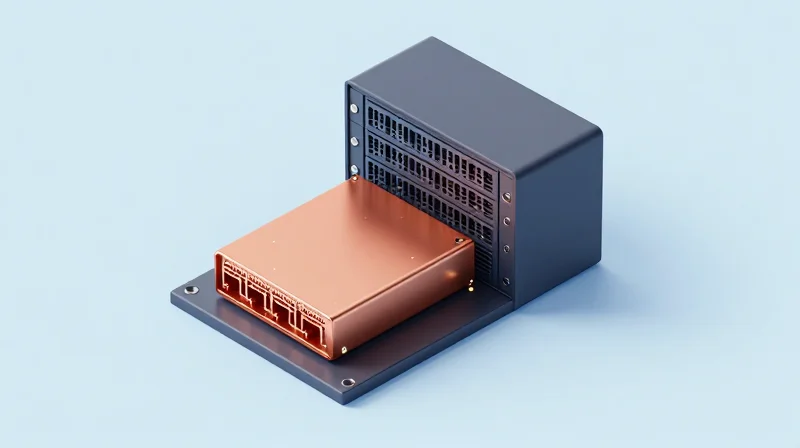
For enterprise and data center operators, the primary challenge of purchasing wholesale SFP+ to RJ45 copper modules is ensuring they are recognized by existing hardware without triggering 'unsupported transceiver' errors. Ubytelink eliminates this risk through advanced EEPROM (Electrically Erasable Programmable Read-Only Memory) coding, which mimics the unique vendor signatures and firmware attributes of original equipment manufacturer (OEM) modules, providing 100% functional equivalence at a fraction of the cost.
The Importance of EEPROM Coding in Multi-Vendor Networks
Every SFP+ module contains an internal EEPROM chip that stores vital data, including the manufacturer name, part number, serial number, and security checksums. Many tier-one networking brands employ 'vendor locking,' a software mechanism that checks these values before enabling the port. To bypass these restrictions, our modules are programmed using specialized coding stations to match the specific Multi-Source Agreement (MSA) standards and proprietary requirements of your target hardware.
| Brand Environment | Compatibility Requirement | Typical OEM Error Without Coding |
|---|---|---|
| Cisco Catalyst/Nexus | Specific Vendor ID & Checksum | %PHY-4-UNSUPPORTED_TRANSCEIVER |
| Arista Networks | Unlock Command or Custom ID | Transceiver invalid / Port disabled |
| HP / Aruba | Strict Checksum Validation | Non-Genuine Module Alert |
| Juniper Networks | MSA Compliance Verification | Alarm: 'Non-certified optical module' |
Our Rigorous Testing and Verification Protocol
We do not rely on theoretical simulations. Every batch of wholesale SFP+ to RJ45 transceivers undergoes a two-step verification process. First, the EEPROM is flashed with the correct firmware profile for the client’s specific switch model. Second, the module is physically tested in our 'Compatibility Lab,' which houses an extensive inventory of latest-generation switches from Ubiquiti, Mikrotik, Cisco, and Arista to ensure link stability, low latency, and correct DOM (Digital Optical Monitoring) reporting.
Common Compatibility Questions for Wholesale Buyers
- Can I request 'Generic' MSA coding for mixed environments?
Yes. We offer Generic MSA coding that works across open-standard platforms like Ubiquiti, MikroTik, and TP-Link, which do not enforce vendor locks. - Is it possible to re-code modules if I change my hardware?
While our modules are shipped pre-coded for your current needs, they can be re-programmed if you have access to a coding box, or we can provide updated firmware for future bulk orders. - Do these modules support Digital Optical Monitoring (DOM)?
Absolutely. Our coding ensures that real-time diagnostics—such as temperature, voltage, and link status—are accurately reported to the host system’s CLI or management interface.
By prioritizing these technical nuances in our wholesale production line, we ensure that your network expansion is characterized by technical reliability rather than troubleshooting sessions. Whether you are deploying 10GBASE-T in a high-density Cisco environment or a cost-sensitive Ubiquiti setup, our custom coding provides the necessary bridge for seamless operation.
Heat Dissipation Challenges in Copper SFP+ Modules

Heat Dissipation Challenges in Copper SFP+ Modules
Unlike optical transceivers that use light for transmission, 10GBASE-T SFP+ copper modules rely on sophisticated Physical Layer (PHY) chips to drive high-frequency electrical signals over twisted-pair cabling. This process requires significant power—often between 2.0W and 3.0W per module—which is dissipated as heat within a very small form factor. Without high-quality engineering and optimized power consumption, these modules can reach temperatures that trigger thermal throttling or premature component failure, especially when deployed in adjacent ports on a high-density switch.
Thermal Profile Comparison
| Module Type | Max Distance | Typical Power Consumption | Heat Dissipation Level |
|---|---|---|---|
| SFP+ 10GBASE-T (Ultra-Low Power) | 30m | 1.6W - 2.0W | Low to Moderate |
| SFP+ 10GBASE-T (Standard) | 30m | 2.3W - 2.5W | Moderate |
| SFP+ 10GBASE-T (Extended) | 80m | 2.5W - 3.0W | High |
| SFP+ SR Optical (For Context) | 300m | < 1.0W | Minimal |
Engineering Solutions for Thermal Mitigation
To address the inherent heat generation of the 10G copper standard, premium wholesale modules incorporate several design innovations. The most critical is the selection of the latest-generation 28nm or 16nm PHY chips, which significantly reduce the energy-per-bit required for transmission. Furthermore, the use of high-thermal-conductivity zinc alloy housings acts as a massive heat sink, transferring heat from the internal components to the module's surface where it can be dissipated by the switch's forced-air cooling systems.
Impact on High-Density Bulk Deployments
When purchasing SFP+ to RJ45 modules in bulk, network architects must consider 'thermal stacking.' In a 48-port switch, filling every port with standard copper modules can create localized hot spots that exceed the switch's overall cooling capacity. Opting for low-power customized firmware and high-grade thermal interface materials (TIM) inside the module ensures that even in fully populated racks, the hardware maintains a safe operating temperature, preventing link flapping and CRC errors.
FAQ: Managing Heat in Wholesale Copper Modules
- How does ambient temperature affect 10GBASE-T performance?
As ambient temperature rises, the module's PHY chip must work harder to maintain signal integrity, potentially increasing power draw. Using modules with an industrial temperature rating (-40 to 85°C) provides a larger safety margin for non-standard environments. - Why do some 80m copper modules feel hotter than 30m modules?
Extended-reach modules require higher voltage swings to push signals through longer lengths of Cat6a cabling, which directly increases the power consumption and subsequent heat output of the transceiver. - Can firmware optimization reduce heat?
Yes. Custom firmware can disable unused features within the PHY chip or optimize the energy-efficient ethernet (EEE) settings, which helps reduce the baseline power consumption by up to 15% in idle states.
Quality Assurance: EEAT Standards in Hardware Manufacturing
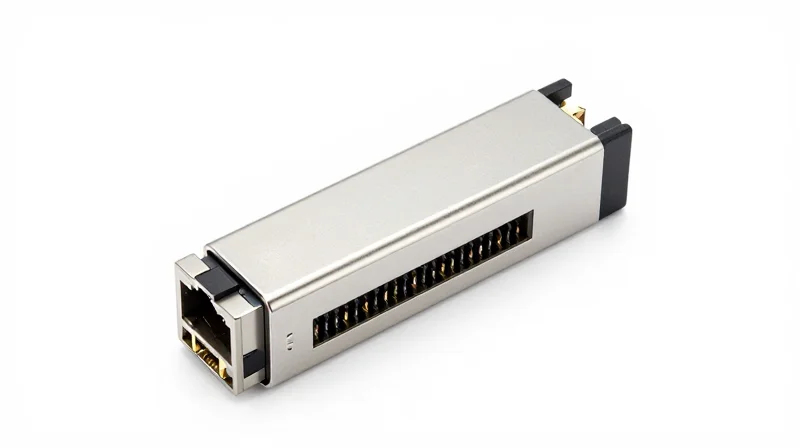
Quality assurance in SFP+ to RJ45 manufacturing is built upon a foundation of Experience, Expertise, Authoritativeness, and Trustworthiness (EEAT), ensuring that every module delivered can withstand the high-power and high-thermal demands of 10G copper networking. For wholesale buyers, reliability is not a luxury but a requirement; standardized regulatory compliance and multi-stage testing cycles are the only ways to guarantee field failure rates of less than 0.1%.
Essential Regulatory Certifications for Global Compliance
| Certification | Primary Purpose | Operational Impact |
|---|---|---|
| CE Marking | European Safety/Health Compliance | Mandatory for legal distribution in the European Economic Area. |
| FCC Part 15 | Electromagnetic Interference (EMI) Control | Prevents the module from interfering with other data center equipment. |
| RoHS | Hazardous Substance Restriction | Ensures the lead-free construction of PCBs and solder for safety. |
| MSA Compliance | Multi-Source Agreement Standards | Guarantees form factor and electrical compatibility across vendors. |
Rigorous Testing Protocols for Copper Modules
Because copper SFP+ modules generate significantly more heat than optical alternatives, the testing phase must be specialized. Manufacturers like Ubytelink utilize advanced automated test equipment (ATE) to simulate extreme network environments.
- Bit Error Rate (BER) Testing
Modules are tested to ensure data integrity remains below 10^-12 over maximum distances of 30 meters using Cat6a/Cat7 cabling. - Thermal Stress & Power Cycles
Modules undergo 24-hour 'burn-in' tests at elevated temperatures to verify that heat dissipation logic prevents packet loss. - Signal Integrity Analysis
Using high-speed oscilloscopes, engineers verify that the electrical 'eye diagram' is open and stable, meeting IEEE 802.3an standards. - Mechanical Durability
The RJ45 port and the SFP+ latching mechanism are tested for a minimum of 500 insertion cycles to ensure physical longevity.
Quality Assurance FAQ for B2B Buyers
- How does certification impact the Total Cost of Ownership (TCO)?
Certified modules drastically reduce the risk of network downtime and equipment damage, leading to lower long-term maintenance costs despite a potentially higher initial bulk price. - What is the industry standard for MTBF in copper SFP+ modules?
High-tier manufacturers target a Mean Time Between Failures (MTBF) of 1,000,000+ hours, which is verified through accelerated life testing. - Do you provide individual test reports for wholesale orders?
Yes, reputable suppliers provide serial-number-specific test reports that include BER results and EEPROM coding verification for transparency.
Supply Chain Resilience and Global Shipping for Bulk Orders
In the complex landscape of 2026 global trade, supply chain resilience is the primary differentiator between a successful network deployment and a stalled project. For wholesale buyers of SFP+ to RJ45 copper modules, a partner with a robust logistics framework ensures that 10GBASE-T hardware reaches its destination on schedule, regardless of geopolitical shifts or raw material fluctuations. Resilience involves not just the ability to ship, but the capacity to anticipate shortages in critical components like PHY chips and maintain localized inventory to buffer against international transit volatility.
Navigating the Volatility of 10G Copper Component Sourcing
The manufacturing of SFP+ to RJ45 modules is highly dependent on specific semiconductor availability. Unlike standard optical transceivers, copper modules require sophisticated integrated circuits to manage high-speed data across twisted-pair cabling while controlling heat. A resilient supplier mitigates risk by diversifying their Tier-1 component sources and maintaining a 'Safety Stock' strategy, ensuring that bulk orders are fulfilled even when the broader market experiences silicon shortages.
| Logistics Tier | Typical Transit Time | Cost Impact | Reliability Factor |
|---|---|---|---|
| Express Air Freight | 3 - 5 Days | Highest | High - Direct Tracking |
| Standard Air Freight | 7 - 12 Days | Moderate | Medium - Multiple Hubs |
| Sea Freight (Bulk Only) | 30 - 45 Days | Lowest | Variable - Port Congestion |
| Regional Warehousing | 1 - 2 Days | Included | Highest - Localized |
Customs Clearance and Regulatory Compliance
Wholesale orders often face bottlenecks at international borders due to improper documentation or compliance failures. Professional wholesale partners provide DDP (Delivered Duty Paid) options and ensure all SFP+ modules carry the necessary CE, FCC, and RoHS certifications. This proactive approach to regulatory compliance eliminates unexpected duties and prevents the lengthy customs inspections that can derail project timelines for weeks.
Supply Chain FAQ: Ensuring Delivery Reliability
- How do you protect bulk shipments from damage during transit?
We utilize industrial-grade, anti-static packaging and reinforced exterior crating for all wholesale orders. Each module is individually slotted within custom-molded trays to prevent physical vibration damage or electromagnetic interference during the global shipping process. - Can you provide real-time tracking for international wholesale orders?
Yes, every bulk shipment is assigned a comprehensive tracking profile. Our logistics dashboard integrates with major carriers like DHL, FedEx, and UPS to provide milestone-based alerts and estimated arrival times down to the hour. - What happens if a project requires a split-shipment across multiple global sites?
We offer multi-destination logistics management for large-scale enterprise contracts. We can divide your custom quote into localized batches and ship them concurrently to different data centers or regional hubs to synchronize your deployment schedule.
Scaling your network infrastructure requires a balance of high performance and fiscal responsibility. By choosing Ubytelink for your SFP+ to RJ45 copper wholesale needs, you gain access to tier-one manufacturing quality and expert technical support. Whether you need standard modules or custom ODM designs, our team is ready to provide a solution that fits your budget and technical scope. Ready to upgrade? Contact Ubytelink today for a personalized bulk quote and take the first step toward a faster, more efficient network.