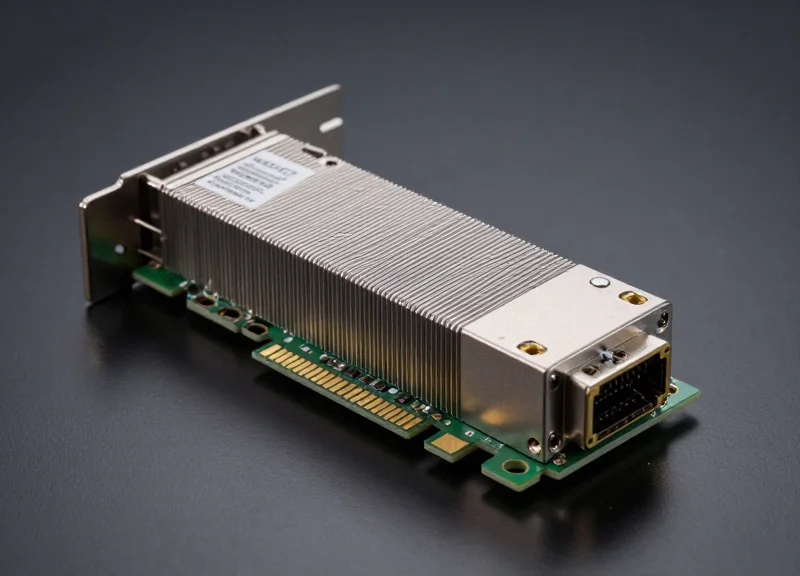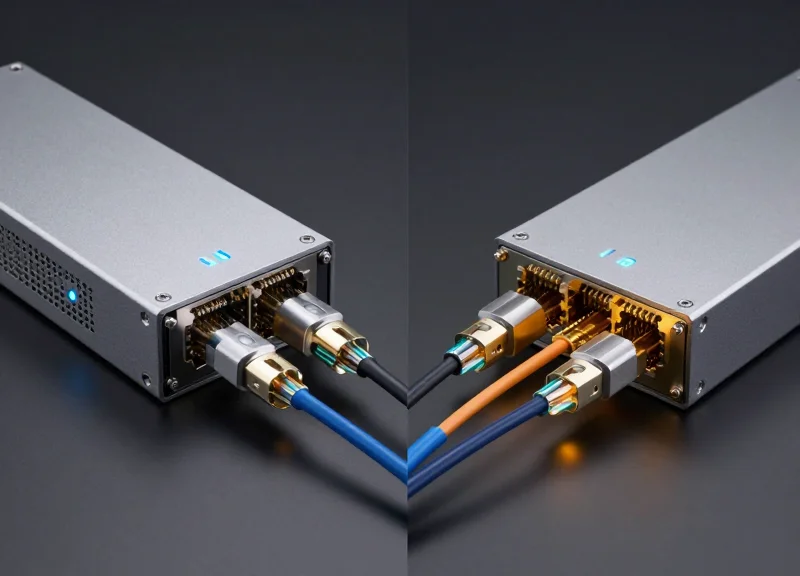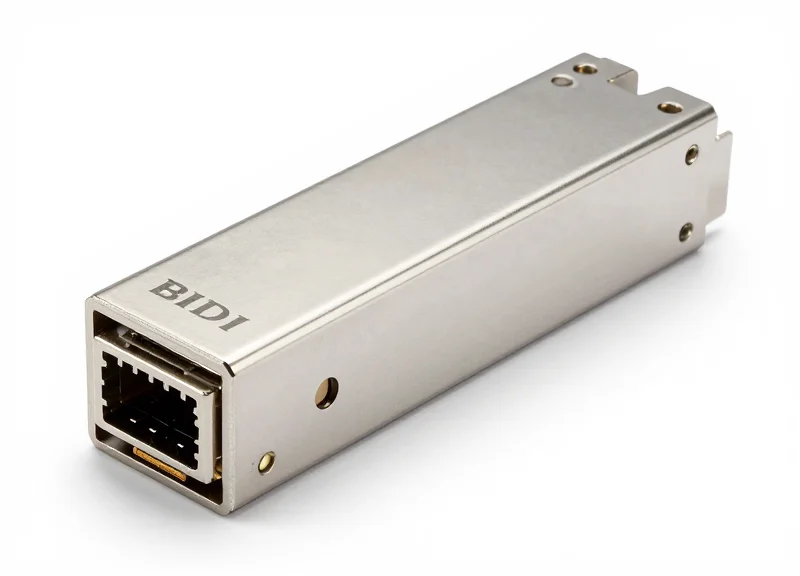
As modern data demands push existing infrastructure to its limits, network engineers are seeking efficient ways to scale without the prohibitive cost of laying new fiber. BIDI (Bidirectional) transceivers offer a game-changing solution by enabling two-way communication over a single fiber strand. Ubytelink stands at the forefront of this technology, providing high-performance wholesale options and bespoke OEM/ODM manufacturing to help your business stay ahead in 2026.
Decoding BIDI Technology: How Single Fiber Transceivers Work
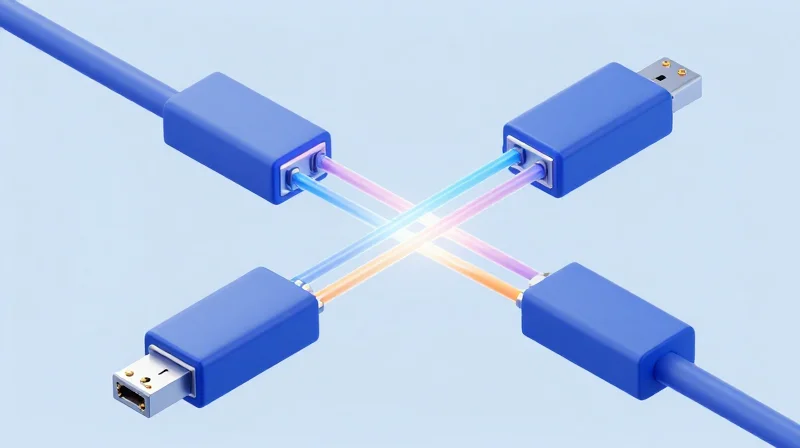
BIDI transceivers revolutionize network density by enabling bi-directional traffic on a single fiber strand, effectively doubling the bandwidth capacity of existing fiber plants without the capital expenditure of laying new cables. Unlike traditional duplex transceivers that require two separate fibers—one for transmitting (TX) and one for receiving (RX)—BIDI technology integrates specialized diplexers to manage two different light wavelengths on the same glass medium.
The Role of Wavelength Division Multiplexing (WDM)
At the core of every BIDI module is Wavelength Division Multiplexing. By using a WDM coupler, the transceiver can combine and separate data based on light frequency. In a typical deployment, these modules work in complementary pairs. For instance, if the upstream transceiver transmits at 1310nm and receives at 1550nm, the downstream unit must transmit at 1550nm and receive at 1310nm. This 'handshake' of wavelengths ensures that signals do not collide, maintaining high-speed data integrity over long distances.
Technical Comparison: Standard Duplex vs. BIDI Single Fiber
| Feature | Standard Duplex Transceiver | BIDI Single Fiber Transceiver |
|---|---|---|
| Fiber Requirement | 2 Strands (Dedicated TX/RX) | 1 Strand (Shared TX/RX) |
| Wavelength Usage | Identical Wavelengths (e.g., 1310nm) | Paired Wavelengths (e.g., 1310/1490nm) |
| Infrastructure Cost | Higher (Requires more fiber/patching) | Lower (50% reduction in fiber usage) |
| Deployment Logic | Identical modules on both ends | Must use complementary 'A' and 'B' pairs |
Common Wavelength Pairings and Industry Standards
To ensure reliable performance, BIDI modules are manufactured with specific wavelength filters optimized for different distances. In wholesale procurement, identifying the correct wavelength pair is essential for compatibility with existing optical line terminals (OLT) and switches.
- What are the most common wavelength pairs for BIDI?
For 1G and 10G applications, the most frequent pairings are 1270nm/1330nm and 1310nm/1490nm. For longer-reach applications like 40km or 80km, 1490nm/1550nm pairings are often utilized. - Why must BIDI transceivers be used in pairs?
Because one side transmits at a wavelength the other receives, you cannot use two 'Side A' modules together. You must purchase a matched set (TX1310/RX1550 and TX1550/RX1310) to establish a link. - Can BIDI modules work with standard patch cords?
Yes, but they require simplex patch cables (single connector) rather than the standard duplex (dual connector) LC or SC cables typically found in data centers.
For enterprise-level bulk buyers, BIDI technology represents a strategic choice for high-density environments. By migrating to single-fiber transceivers, organizations can effectively postpone expensive fiber-lay projects while expanding their network capacity for 2026 and beyond.
The Economics of Scaling: Why Choose BIDI for Your Infrastructure

The Economics of Scaling: Why Choose BIDI for Your Infrastructure
The primary economic driver for adopting BIDI technology is the immediate 50% reduction in physical fiber requirements. By enabling a single strand of fiber to handle both transmission and reception simultaneously, network operators can bypass the massive capital expenditure (CAPEX) associated with laying new fiber or leasing additional dark fiber strands. In a wholesale environment, where the cost of physical infrastructure often outweighs the cost of active hardware, BIDI transceivers transform a fixed asset into a highly elastic resource.
Maximizing Existing Fiber Plants
For enterprises and service providers operating in congested metropolitan areas, the ability to double capacity without civil engineering is invaluable. BIDI modules leverage Wavelength Division Multiplexing (WDM) to create two independent channels on one strand. This efficiency doesn't just save money on cables; it also optimizes patch panel usage and reduces the complexity of cable management systems. In 2026, as 25G and 100G BIDI solutions become more prevalent, the cost-per-gigabit is reaching a tipping point where single-fiber architectures are becoming the default for greenfield deployments.
| Economic Metric | Dual-Fiber (Standard) | BIDI (Single-Fiber) |
|---|---|---|
| Fiber Utilization | 2 Strands per Link | 1 Strand per Link |
| Cabling CAPEX | High (100%) | Low (50%) |
| Rack Space Density | Standard | 2x Capacity |
| Maintenance Complexity | High (More points of failure) | Low (Reduced physical cabling) |
Operational Savings and Wholesale Bulk Pricing
The 'BIDI premium'—the historical price difference between single-fiber and dual-fiber modules—has largely evaporated in the wholesale market. When purchasing in bulk, the unit price of BIDI transceivers is now highly competitive. Furthermore, the operational expenditure (OPEX) savings are significant: fewer connectors to clean, fewer patch cords to inventory, and a smaller physical footprint in the data center, which leads to better airflow and reduced cooling costs. Custom quotes for 2026 deployments often reflect these efficiencies, offering tiered pricing that favors high-volume single-fiber integration.
FAQ: Scaling with BIDI Technology
- Does BIDI technology increase power consumption compared to dual-fiber?
No. Modern BIDI transceivers are designed to operate within the same power envelopes as standard modules, ensuring that your switch or router’s power budget remains unaffected while doubling your capacity. - How does BIDI affect the total cost of ownership (TCO) over five years?
The TCO is significantly lower because BIDI delays the need for fiber exhaustion upgrades and reduces the number of components requiring manual maintenance and troubleshooting. - Is it possible to request custom wavelength pairings for wholesale orders?
Yes. Wholesale vendors typically offer custom wavelength configurations (e.g., 1270/1330nm or 1310/1490nm) to align with existing passive WDM infrastructure or specific transmission distances.
Key Technical Specifications to Consider for Bulk Procurement
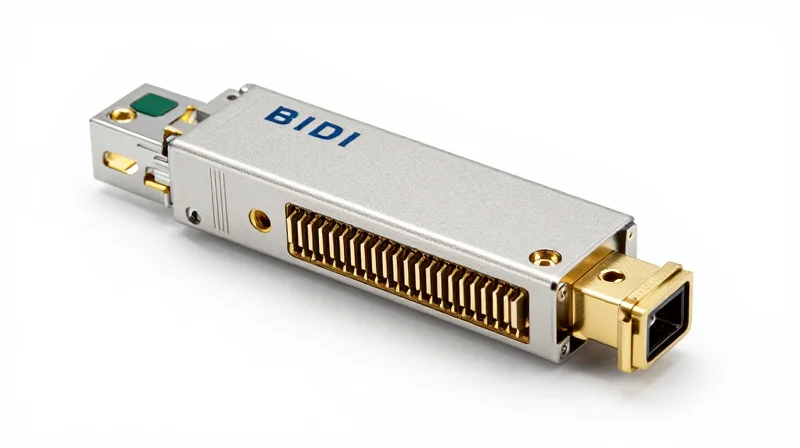
When procuring BIDI transceivers for wholesale deployment, technical specifications must align perfectly with both existing fiber plants and future-proofing requirements. Unlike standard dual-fiber modules, BIDI units rely on specific wavelength pairs and stringent optical budgets to maintain signal integrity over a single strand, making the verification of data rates (ranging from 1G to 100G+), transmission distances (10km to 80km+), and Digital Diagnostic Monitoring (DDM) capabilities essential for network stability.
Wavelength Pairs and Spectral Efficiency
The core of BIDI technology is the pairing of different wavelengths to avoid interference. Common pairings include 1310nm/1490nm for 1G/10G long-haul and 1270nm/1330nm for high-speed 10G/25G/100G applications. For bulk buyers, it is imperative to ensure that for every 'Upstream' (U) module purchased, a corresponding 'Downstream' (D) module is included in the quote to complete the link.
Data Rate and Form Factor Overview
| Form Factor | Max Data Rate | Typical Distances | Common Connector |
|---|---|---|---|
| SFP BIDI | 1.25 Gbps | 10km, 20km, 40km, 80km, 120km | Simplex LC |
| SFP+ BIDI | 10 Gbps | 10km, 20km, 40km, 60km, 80km | Simplex LC |
| SFP28 BIDI | 25 Gbps | 10km, 20km, 30km, 40km | Simplex LC |
| QSFP28 BIDI | 100 Gbps | 70m, 100m, 150m (MMF) / 10km (SMF) | Simplex LC / LC-Duplex |
Link Budgets and Transmission Distance
Wholesale buyers must calculate the total link loss (including connectors, splices, and fiber attenuation) against the transceiver's optical power budget. High-sensitivity receivers are critical for 80km (ZR) reaches, where signal degradation is more pronounced. Ensuring modules support Digital Diagnostic Monitoring (DDM) allows administrators to track real-time parameters such as laser bias current and optical output power, which is vital for preventative maintenance in large-scale deployments.
Procurement Technical Checklist
- Are the wavelength pairs compatible with existing CWDM/DWDM filters?
Verify that the BIDI wavelengths do not overlap with other services running on the same fiber trunk if using multiplexing equipment. - Does the module support the required protocol?
Ensure the transceiver supports specific protocols like Ethernet, Fibre Channel, or CPRI/eCPRI depending on whether the application is enterprise, storage, or 5G fronthaul. - Is the form factor compatible with the host switch?
Confirm that the SFP+, SFP28, or QSFP28 modules are coded for compatibility with specific OEM vendors (Cisco, Juniper, Arista, etc.) to avoid port lockout. - What is the operating temperature range?
Choose Commercial (0°C to 70°C) for data centers or Industrial (-40°C to 85°C) for outdoor cabinets and harsh environments.
The Advantage of Wholesale Pricing for ISPs and Data Centers

The ROI of Wholesale BIDI Procurement for High-Density Networks
Wholesale procurement of BIDI transceivers serves as a financial catalyst for large-scale network expansions, where the cost per link is the primary metric of success. By leveraging bulk pricing, Internet Service Providers (ISPs) and data center operators can achieve a 25-40% reduction in transceiver CAPEX compared to retail acquisitions. When combined with the inherent 50% fiber-saving property of BIDI technology, the total cost of ownership (TCO) for fiber-to-the-home (FTTH) and metro-Ethernet deployments drops significantly. In the competitive landscape of 2026, Ubytelink's wholesale model is designed to facilitate this scalability by providing predictable pricing and verified reliability for mission-critical infrastructure.
Ubytelink 2026: Tiered Wholesale Pricing Model
To better support infrastructure diversity, our 2026 pricing structure is tiered to reward volume while ensuring high-quality technical support for every project size. Below is the standard wholesale framework for BIDI modules ranging from 1G to 25G.
| Order Tier | Volume (Units) | Average Discount | Support Level |
|---|---|---|---|
| Standard | 1 - 49 | 0% | Standard Technical Support |
| Professional | 50 - 199 | 15% - 22% | Dedicated Account Manager |
| Enterprise/ISP | 200 - 499 | 25% - 35% | Custom Coding & Fast-Track Shipping |
| Wholesale/Tier-1 | 500 + | Custom Quote | White-Glove Integration & Lifecycle Support |
Strategic Advantages for Data Centers and ISPs
- Optimized Cash Flow
Custom wholesale quotes allow for scheduled shipments, enabling ISPs to manage their cash flow while locking in lower prices for multi-phase deployments. - Multi-Vendor Interoperability
Wholesale orders through Ubytelink include custom coding for compatibility across Cisco, Juniper, Arista, and Generic hardware, eliminating the need for expensive OEM-specific inventory. - Buffer Stock Mitigation
Bulk purchasing ensures that data centers maintain an on-site inventory of matched pairs (upstream/downstream), reducing downtime during fiber link failures or emergency capacity increases.
Wholesale Procurement FAQs
- What is the typical lead time for custom wholesale BIDI orders?
Standard bulk orders are usually processed within 3-5 business days. Custom-coded or extremely high-volume orders (1,000+ units) typically ship within 7-10 days depending on the specific optical requirements. - Can we mix different types of BIDI modules in a single wholesale quote?
Yes. Ubytelink allows for 'Bundle Quotes' where you can combine 1G SFP BIDI, 10G SFP+ BIDI, and 25G SFP28 BIDI modules to reach higher discount tiers. - Do wholesale orders include a warranty?
All wholesale BIDI transceivers come with a standard lifetime warranty and a 30-day money-back guarantee, ensuring that your network reliability is never compromised for cost.
Custom OEM/ODM Solutions: Tailoring BIDI Modules to Your Brand
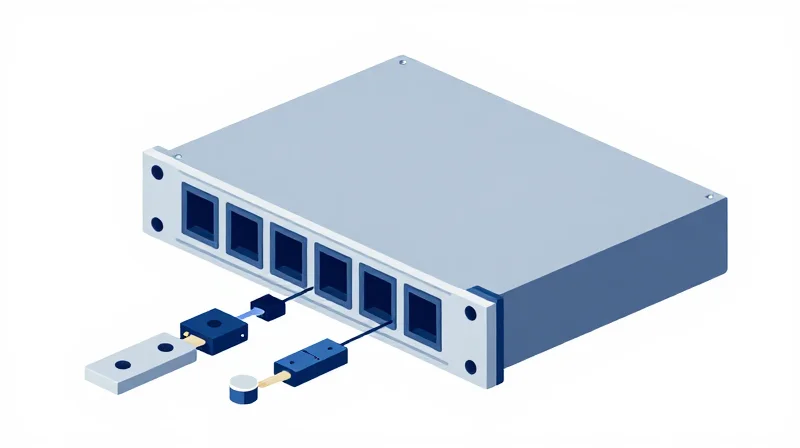
Custom OEM/ODM solutions empower businesses to transcend off-the-shelf limitations by aligning BIDI transceiver specifications with exact operational requirements and brand aesthetics. By leveraging Ubytelink’s manufacturing expertise, organizations can secure high-performance modules that feature vendor-specific firmware, optimized hardware components, and custom physical packaging designed for high-density environments, ensuring that the hardware reflects the quality and technical standards of the procurement brand.
The Difference Between Standard Wholesale and Custom OEM/ODM
| Feature | Standard Wholesale | OEM/ODM Custom Solution |
|---|---|---|
| Firmware Configuration | Generic or Multi-vendor Compatibility | Bespoke Vendor-locked or Open-coded for Specific Platforms |
| Physical Branding | Standard Manufacturer or Neutral Label | Private Labeling with Logo, Part Numbers, and SN |
| Hardware Modification | Standard PCB/Shell Design | Specialized Heat Sinks or Laser Selection (e.g., Industrial Grade) |
| Inventory Management | Random Serial Sequences | Custom Serial Sequences for Automated Asset Tracking |
Technical Customization: Firmware and Hardware Flexibility
The technical core of our OEM service lies in specialized EEPROM coding. We provide firmware adjustments that ensure 100% compatibility with major networking brands such as Cisco, Juniper, Arista, and Nokia, effectively bypassing the 'unsupported transceiver' warnings that often plague generic modules. Beyond software, our ODM services allow for hardware adjustments, including selecting specific laser wavelengths (TX/RX pairings) or utilizing enhanced heat dissipation materials for modules operating in ruggedized industrial environments or high-temperature data center top-of-rack switches.
Frequently Asked Questions About Custom BIDI Manufacturing
- Can you provide custom serial numbers for inventory tracking?
Yes, we can encode specific serial number sequences into the transceiver's firmware and print matching barcodes on the physical labels to streamline your automated inventory management systems. - What is the typical lead time for custom-labeled BIDI modules?
While standard wholesale stock often ships immediately, custom OEM orders typically add 7 to 14 days to the production cycle, depending on the complexity of hardware modifications and labeling requirements. - Is it possible to request specific transmission distances not found in standard catalogs?
Absolutely. Our ODM services include tuning the optical budget and receiver sensitivity to meet non-standard distance requirements, such as specialized 30km or 60km spans for unique metropolitan fiber layouts.
Compatibility and Interoperability: Ensuring Seamless Integration
Successful integration of BIDI transceivers in 2026 network environments relies on a 'Universal Compatibility' approach, where custom-coded firmware allows third-party optics to behave identically to OEM-branded modules while providing a significantly lower total cost of ownership. For ISPs and data centers, this means ensuring that every module purchased in bulk is not only compliant with Multi-Source Agreements (MSA) but also specifically tailored to bypass the proprietary lock-in mechanisms of major hardware vendors.
The Critical Role of EEPROM and Firmware Coding
Every BIDI transceiver contains an Electronically Erasable Programmable Read-Only Memory (EEPROM) chip. This chip stores metadata including the vendor name, serial number, and internal calibration data for Digital Diagnostics Monitoring (DDM). When a transceiver is plugged into a switch, the Network Operating System (NOS) reads this data to verify compatibility. Without precise coding, high-end equipment from brands like Cisco or Arista may flag the module as 'unsupported,' potentially disabling the port or limiting performance.
Multi-Vendor Interoperability Matrix
| Network Vendor | Compatibility Challenge | Ubytelink Bulk Solution |
|---|---|---|
| Cisco | Stringent SFP-Check algorithms and ID verification. | Algorithm-matched firmware for 100% recognition. |
| Arista | Strict signature requirements for EOS compatibility. | Custom-coded binary files to match EOS expectations. |
| Juniper | Specific part number and vendor ID requirements. | Full EEPROM emulation for seamless Junos integration. |
| HPE/Aruba | Proprietary 'J-number' verification systems. | Pre-coded hardware to bypass 'Non-HPE' warnings. |
Ensuring Performance in Heterogeneous Environments
In wholesale procurement, the risk of interoperability issues increases as the variety of host devices grows. Ubytelink mitigates this by conducting rigorous cross-platform testing. Our BIDI modules are validated across hundreds of switch models to ensure that the single-fiber communication (WDM) remains stable regardless of the brand at either end of the link. This interoperability is vital for ISPs who may use a Juniper core switch while terminating connections on various enterprise-grade switches at the client side.
Frequently Asked Questions: BIDI Compatibility
- Will using third-party BIDI modules void my switch warranty?
No. Laws such as the Magnuson-Moss Warranty Act in the US protect consumers. OEM warranties remain valid as long as the third-party transceiver does not cause direct damage to the hardware. - What is DDM/DOM and why is it essential for compatibility?
Digital Diagnostics Monitoring (DDM) allows the switch to monitor real-time metrics like optical power, temperature, and voltage. Compatible coding ensures these metrics are accurately reported to the system for proactive troubleshooting. - Can I request custom coding for a specific legacy system?
Yes. Wholesale orders include the option for custom firmware requests to ensure compatibility with older or highly specialized equipment that requires unique vendor signatures.
Quality Assurance: Testing Protocols for Mission-Critical Links
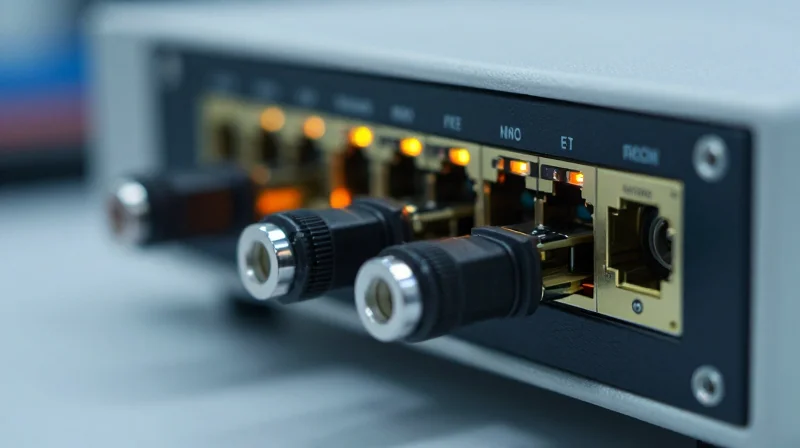
Ensuring the reliability of mission-critical links requires a testing regimen that goes beyond basic functional checks; it necessitates comprehensive optical, electrical, and environmental validation. Because BIDI transceivers operate over a single fiber strand using Wavelength Division Multiplexing (WDM), the margin for error in signal isolation and return loss is significantly tighter than in traditional dual-fiber systems. For wholesale buyers, these protocols are the only safeguard against high failure rates and costly truck rolls in large-scale 2026 infrastructure projects.
Optical Precision: Eye-Pattern Analysis and BER Testing
The cornerstone of optical quality assurance is Eye-Pattern analysis. By overlaying thousands of digital waveforms, engineers can visualize the 'eye' of the signal; a wide, clear opening indicates minimal jitter and optimal rise/fall times. In BIDI modules, this is critical to ensure that the internal diplexer effectively separates the upstream and downstream wavelengths without inducing cross-talk. Coupled with Bit Error Rate (BER) testing—often pushed to 10^-12 or better—this ensures that data integrity is maintained over the full rated distance of the transceiver.
Comparative Testing Standards for Bulk Procurement
| Test Parameter | Standard Commercial Grade | Carrier-Grade (Ubytelink Standard) |
|---|---|---|
| Eye-Pattern Margin | >10% Mask Margin | >25% Mask Margin for cleaner signals |
| Temperature Cycling | 0°C to 70°C (Basic) | -40°C to 85°C (Industrial stress testing) |
| BER Threshold | 1E-10 | 1E-12 or 1E-15 for mission-critical data |
| Wavelength Isolation | Min 30dB | Min 35dB to prevent single-fiber crosstalk |
| Aging Simulation | 24-hour burn-in | 48-to-72 hour accelerated aging at 65°C |
Environmental Durability and Thermal Cycling
Wholesale BIDI transceivers are often deployed in unconditioned environments, such as outdoor cabinets or remote cell sites. Quality assurance must include rigorous thermal cycling, where modules are subjected to rapid temperature fluctuations from extreme cold to intense heat. This process exposes latent manufacturing defects in the TOSA (Transmitter Optical Sub-Assembly) and ROSA (Receiver Optical Sub-Assembly) before they reach the field. Furthermore, damp-heat testing ensures that the epoxy seals and optical coatings can withstand high humidity without degradation of the signal path.
Quality Assurance FAQ
- Why is 'Burn-In' testing vital for bulk orders?
Burn-in testing involves running the transceivers at high loads and temperatures for an extended period to trigger 'infant mortality' failures, ensuring only stable units are shipped in wholesale batches. - How is wavelength cross-talk prevented in BIDI modules?
Through high-quality thin-film filters (TFF) and specialized diplexers that are tested for high isolation values (typically >35dB) to ensure the 1310nm and 1550nm (or other pairs) signals do not interfere. - Does Ubytelink provide serialized test reports?
Yes, for wholesale and custom orders, we can provide individualized test data including transmit power, receiver sensitivity, and EEPROM coding verification for every module in the shipment.
Strategic Sourcing: Why Ubytelink is Your Ideal 2026 Partner
Strategic Sourcing: Why Ubytelink is Your Ideal 2026 Partner
In a market defined by fluctuating demand and technological evolution, Ubytelink serves as a critical bridge between advanced manufacturing and practical network implementation. For wholesale buyers, the value proposition extends beyond mere hardware; it encompasses a comprehensive support ecosystem designed to minimize lead times, ensure 100% interoperability, and provide a pricing structure that scales with project complexity. By focusing on the 'Single Fiber' transition, Ubytelink empowers operators to double their capacity without the prohibitive costs of new fiber trenching.
Operational Efficiency and Lead Time Advantages
The global supply chain remains sensitive to localized disruptions, making domestic inventory and agile manufacturing essential. Ubytelink maintains a strategic buffer of core BiDi components—ranging from 1G SFP to 100G QSFP28—allowing for rapid fulfillment that often outperforms standard industry timelines by 50% or more. This operational agility ensures that mission-critical upgrades or emergency replacements do not become bottlenecks for service providers or enterprise data centers.
| Sourcing Metric | Ubytelink Advantage | Standard Market Average |
|---|---|---|
| Standard Lead Times | 3-7 Business Days (Stocked Items) | 4-6 Weeks |
| Custom EEPROM Coding | Included / On-site programming | Additional Fee / Outsourced |
| Technical Support | L3 Engineering Access | General Sales Support |
| Warranty & RMA | Advance Replacement Options | Standard Depot Return |
Technical Integration and Multi-Vendor Expertise
Wholesale procurement often involves diverse hardware environments where Cisco, Juniper, Arista, and Nokia equipment must coexist. Ubytelink's engineering team specializes in the 'Vendor-Agnostic' approach, providing transceivers that are pre-coded and tested for specific hardware signatures. This eliminates the risk of port-lockout or diagnostic errors, ensuring that 'Plug-and-Play' is a reality rather than a marketing slogan. Our 2026 quality protocol includes real-world stress testing under peak thermal loads to guarantee long-term stability.
- How does Ubytelink handle custom wholesale quotes?
We offer a consultative quoting process where pricing is adjusted based on volume, long-term delivery schedules, and specific technical requirements like industrial temperature ratings. - What post-purchase support is available for bulk buyers?
Wholesale partners receive a dedicated account manager and direct access to senior optical engineers for troubleshooting and network optimization advice. - Can Ubytelink provide white-labeling for resellers?
Yes, we offer comprehensive private labeling and custom packaging services for distributors and system integrators looking to build their own brand identity.
Scaling your network capacity shouldn't be a logistical nightmare or a budget-breaker. By leveraging BIDI transceivers for single fiber applications, you gain a competitive edge in both performance and cost-efficiency. Ubytelink is ready to support your growth with premium wholesale pricing and comprehensive OEM/ODM services tailored to your specific needs. Contact our expert team today for a custom quote and take the first step toward a more efficient network in 2026.