In the high-stakes world of data centers and telecommunications, hardware reliability isn't just a metric—it's the backbone of uptime. While standard warranties offer short-term peace of mind, the 'Lifetime Warranty' for transceivers has emerged as a gold standard for network architects looking to mitigate risk and optimize Total Cost of Ownership (TCO). This guide explores the technical and economic realities of these guarantees in the context of modern high-speed optical networking.
Defining 'Lifetime' in the Networking Industry: Decoding the Fine Print

In the networking industry, a 'Lifetime Warranty' for transceivers does not imply coverage for the duration of the buyer's life; instead, it typically refers to the period starting from the date of purchase until a specified number of years after the product has reached its End of Sale (EOS) or End of Life (EOL) status. This distinction is critical for network architects and procurement officers to understand, as it defines the actual window of protection and technical support available for their hardware investments.
The Lifecycle-Based Definition of 'Lifetime'
Manufacturers define the 'lifetime' of a transceiver based on its commercial and technological relevance. Because networking standards evolve rapidly, hardware that was cutting-edge five years ago may be obsolete today. Consequently, most warranties are 'Limited Lifetime' warranties, where the 'lifetime' is explicitly linked to the product's manufacturing cycle. Once a product is officially discontinued, the countdown for the remaining warranty coverage begins.
| Milestone Term | Industry Meaning | Warranty Impact |
|---|---|---|
| Active Production | The product is currently manufactured and sold. | Full warranty and RMAs are readily available. |
| End of Sale (EOS) | The final date the product can be purchased from the vendor. | Warranty remains active, but replacements may be refurbished. |
| End of Life (EOL) | The official end of the product's service life. | The clock starts on the final 1-5 years of coverage. |
| End of Support | The date when all technical assistance and RMAs cease. | The warranty is considered expired. |
Decoding the Fine Print: Common Limitations
When reviewing warranty documentation, it is essential to look for phrases like 'Original Owner' and 'Standard Usage.' Most lifetime warranties are non-transferable, meaning the protection ends if the hardware is sold on the secondary market. Furthermore, the warranty typically covers manufacturing defects but excludes damage from improper installation, environmental factors (like power surges), or use in non-certified equipment.
- Does 'Lifetime' mean until the company goes out of business?
Generally, no. It refers to the specific product model's lifecycle. However, if a manufacturer is acquired, the acquiring company usually honors existing warranty terms for the duration of the product's EOL cycle. - How long is the typical post-EOL coverage?
While it varies by vendor, the industry standard for a 'Limited Lifetime' warranty is often 3 to 5 years after the product has been discontinued. - Why do third-party transceivers often offer better warranty terms?
Third-party vendors often use 'Lifetime' as a competitive advantage, sometimes offering replacement guarantees that extend longer than the original equipment manufacturer (OEM) to build trust in their compatibility.
The Economics of Transceiver Failure: Why Warranty Matters

The Real Cost of Network Failure
The economics of transceiver failure extend far beyond the unit price of a replacement module; the true cost is measured in service interruptions, lost productivity, and the man-hours required for troubleshooting and logistics. In a high-density data center environment, a single failed 400G link can trigger failover events that saturate remaining paths, potentially leading to performance degradation across an entire cluster. A robust lifetime warranty transforms an unpredictable operational risk into a fixed, manageable insurance policy, ensuring that hardware failures do not result in recurring capital expenditures (CAPEX) or spiraling operational expenses (OPEX).
Direct vs. Indirect Costs: A Comparison
| Cost Category | Direct Impact | Indirect/Long-term Impact |
|---|---|---|
| Hardware | Purchase price of a new transceiver. | Inventory carrying costs for on-site spares. |
| Labor | On-site technician time for physical swap. | Root cause analysis (RCA) and administrative overhead. |
| SLA Compliance | Immediate service credits or penalties. | Brand reputation damage and customer churn. |
| Network Health | Temporary reduction in bandwidth. | Increased wear on redundant systems during failover. |
The Financial Hedge: Warranty as an Asset
When calculating the Total Cost of Ownership (TCO) for networking equipment, the warranty structure is a primary variable. Standard one-year or three-year warranties often align with the initial depreciation cycle of the hardware but fail to protect the enterprise during the 'extended life' phase of the infrastructure. A lifetime warranty effectively caps the hardware replacement cost at zero for the duration of the equipment's utility. This is particularly vital for legacy systems or environments where the refresh cycle exceeds five years, as it prevents 'budget creep' caused by aging optics that exhibit higher failure rates over time.
- How does a lifetime warranty lower OPEX?
By eliminating the need for discretionary spending approvals every time a module fails, and by reducing the need to maintain an expensive, self-funded buffer of spare parts. - Is the higher initial cost of a 'lifetime' product worth it?
Yes. While the premium may be 10-15%, the cost of a single out-of-warranty failure (including shipping, procurement, and hardware costs) typically exceeds the initial premium of the entire batch. - Does the warranty cover the cost of shipping?
This depends on the vendor, but high-tier lifetime warranties often include Advance Hardware Replacement, which mitigates the cost of expedited shipping during emergencies.
Technical Reliability: The Components Behind the Guarantee
Technical Reliability: The Components Behind the Guarantee
A lifetime warranty is not a marketing gimmick but a technical statement regarding the expected Mean Time Between Failures (MTBF) of the device's internal architecture. For a manufacturer to offer such a guarantee, the transceiver must be engineered to withstand the thermal and electrical stressors of a 24/7 data center environment for decades. This reliability is rooted in the selection of high-grade semiconductors, the precision of the optical sub-assemblies, and exhaustive post-production stress testing that filters out marginal units before they ever reach a customer's switch.
Laser Diode Selection and Semiconductor Binning
The most critical component in any transceiver is the laser diode, whether it is a VCSEL for multi-mode fiber or a DFB/EML for single-mode applications. Manufacturers offering lifetime terms utilize 'wafer-level binning' to select only the highest-performing diodes. These top-tier components exhibit lower threshold currents and higher thermal resistance, which significantly reduces the progression of 'dark line defects'—the microscopic crystalline fractures that lead to laser degradation and eventual failure.
TOSA and ROSA Manufacturing Standards
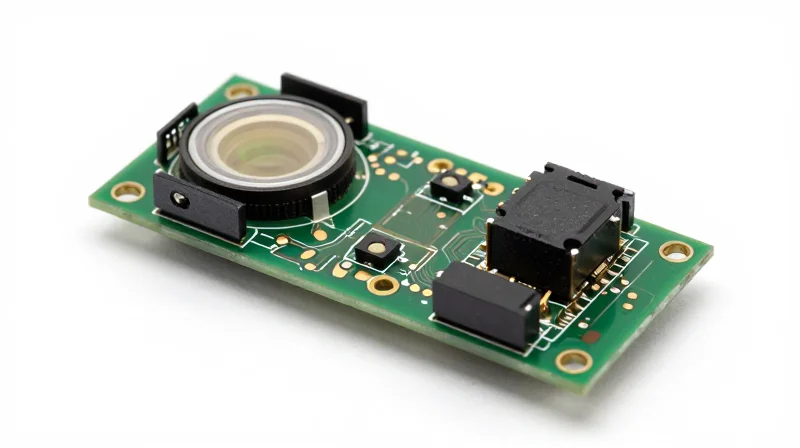
The Transmitter Optical Sub-Assembly (TOSA) and Receiver Optical Sub-Assembly (ROSA) represent the physical interface between electronics and light. To ensure lifetime reliability, high-end modules employ hermetic or near-hermetic sealing. This prevents moisture ingress, which is a primary cause of photodiode corrosion and optical misalignment. Precision active alignment—where the laser is powered on and optimized for peak coupling efficiency during the glue-curing process—ensures that the optical path remains stable despite the physical vibrations and thermal cycling inherent in high-density networking racks.
| Component/Process | Standard Grade Transceiver | Lifetime-Rated Transceiver |
|---|---|---|
| Laser Binning | Statistical sampling from wafer | Top-tier 100% individual binning |
| Optical Packaging | Standard epoxy/non-hermetic | Hermetic or advanced moisture-shielded |
| Component Testing | Batch-level validation | 100% individual component burn-in |
| MTBF Rating | 300,000 - 500,000 hours | 1,000,000+ hours |
The Role of Rigorous Burn-in Protocols
To justify a lifetime guarantee, manufacturers must eliminate 'infant mortality'—the phenomenon where components with latent defects fail shortly after deployment. This is achieved through a 'Burn-in' protocol, where transceivers are operated at elevated temperatures (typically 70°C to 85°C) and maximum voltage for 24 to 48 hours. This accelerated aging process forces weak components to fail in the factory, ensuring that the units shipped to the field are on the stable 'plateau' of the reliability bathtub curve.
- Does laser power decrease over time?
Yes, all semiconductor lasers experience power 'droop,' but lifetime-rated modules are designed with a high 'link budget' margin and internal compensation circuitry to maintain signal integrity for over 15-20 years. - How does heat affect the warranty?
Heat is the enemy of optics. Lifetime warranties are supported by advanced Digital Diagnostics Monitoring (DDM) that allows the module to report its temperature, enabling proactive cooling and protecting the longevity of the laser. - Is the firmware included in the reliability guarantee?
Reliability also extends to the EEPROM/MCU. Lifetime-rated units use high-end flash memory that is resistant to 'bit rot,' ensuring the transceiver remains compatible with its host switch for the duration of its life.
Lifetime vs. Limited Warranties: A Comparative Analysis
Lifetime vs. Limited Warranties: A Comparative Analysis
The fundamental distinction between lifetime and limited warranties for optical transceivers is the duration of financial protection against hardware failure and the alignment with the equipment's actual deployment cycle. While limited warranties are designed to expire just as the probability of semiconductor wear-out increases, lifetime warranties provide a continuous hedge against 'infant mortality' and long-term degradation, ensuring the transceiver remains a one-time capital expenditure throughout its entire operational life.
The Structural Gap: Duration and Hardware Cycles
Standard OEM warranties generally span one to three years, a timeframe that often falls short of the typical five-to-seven-year data center refresh cycle. This creates a 'coverage gap' where the risk of failure increases as the hardware ages, but the protection has already lapsed. When a module fails in year four under a limited warranty, the operator is forced to procure a replacement at current market prices, which can be significantly inflated for legacy parts. A lifetime warranty eliminates this risk by covering the module until its End of Life (EOL) plus a specific grace period.
| Feature | OEM Limited Warranty | Third-Party Lifetime Warranty |
|---|---|---|
| Typical Duration | 1-3 Years | Product Lifecycle + 3-5 Years |
| Replacement Cost | Market Price (after expiration) | Zero (Full replacement included) |
| RMA Processing | Standard Return-to-Factory | Often Advanced Replacement (NBD) |
| Incentive Structure | Encourages hardware refresh | Focuses on component longevity |
| Legacy Support | Discontinued after EOL | Extended support for older links |
Strategic Advantages of Lifetime Coverage
Opting for a lifetime warranty transitions the risk of hardware failure from the operational budget to the supplier. This is particularly critical for high-bandwidth optics (like 400G and 800G) where thermal stress and power consumption are higher, potentially shortening the lifespan of sensitive laser diodes. A lifetime guarantee signals that the supplier has performed rigorous burn-in testing to ensure long-term stability, whereas limited warranties may reflect a lower manufacturer confidence in the component's Mean Time Between Failures (MTBF).
- Does a lifetime warranty cover user-induced damage?
No. Lifetime warranties typically cover defects in materials and workmanship under normal operating conditions. They do not cover physical damage, improper handling, or contamination of the optical end-faces. - What happens when a part goes EOL under a lifetime warranty?
Reputable providers will replace the failed EOL unit with an equivalent or superior module. If no functional equivalent exists, they may offer a credit, ensuring the network link can be maintained or upgraded without full cost. - Is the 'lifetime' based on the buyer's life?
No. In the networking industry, 'lifetime' refers to the period during which the product is manufactured and supported by the vendor, often extending several years beyond the product's official discontinuation date.
Scalability and High-Speed Networks: 100G, 400G, and 800G

Scalability and High-Speed Networks: 100G, 400G, and 800G
As data centers transition toward 400G and 800G architectures, the technical margin for error in optical transceivers shrinks significantly. High-speed modules operate under intense physical and electronic strain, where even minor component degradation can lead to total link failure or prohibitive Bit Error Rates (BER). A lifetime warranty in this context is not merely a service add-on; it is a fundamental financial and operational hedge against the accelerated aging processes inherent in high-density, high-bandwidth optical fabrics.
The Thermal Management Challenge
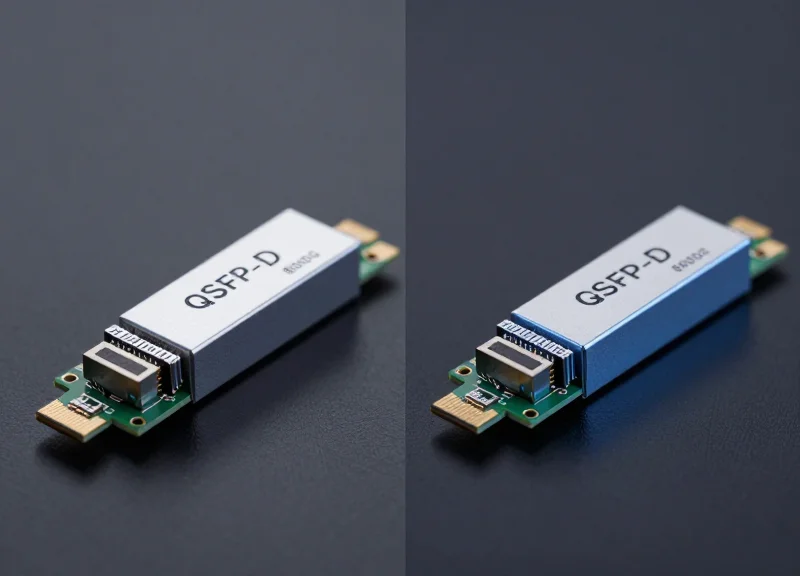
The migration from 100G (QSFP28) to 400G (QSFP-DD) and 800G (OSFP) has seen power consumption per module climb from approximately 3.5W to as high as 20W. This exponential increase in power density creates localized heat pockets that stress the Transmit Optical Sub-Assembly (TOSA) and the Digital Signal Processor (DSP). Repeated thermal cycling causes expansion and contraction that can lead to micro-fissures in solder joints or slight misalignments in the optical path. Lifetime warranties provide a guarantee that the manufacturer has engineered these modules to withstand these high-temperature environments over many years of continuous operation.
Signal Integrity and PAM4 Sensitivities
Unlike the NRZ (Non-Return-to-Zero) modulation used in 10G and 25G, 400G and 800G utilize PAM4 (Pulse Amplitude Modulation 4-level) to pack more data into the same spectrum. PAM4 is significantly more sensitive to noise and signal attenuation. As laser diodes age, their light output can fluctuate, and the 'eye' of the signal can close. In a 10G environment, a slight degradation might be negligible; in an 800G environment, it renders the module useless. A lifetime warranty ensures that if the signal integrity falls below the threshold required to maintain a stable PAM4 link, the module is replaced, preserving network uptime.
| Speed Class | Modulation | Power Draw (Avg) | Primary Failure Risk |
|---|---|---|---|
| 10G / 25G | NRZ | 1.0W - 1.5W | Standard Component Aging |
| 100G (QSFP28) | NRZ / PAM4 | 3.5W - 5.0W | Thermal Saturation |
| 400G (QSFP-DD) | PAM4 | 10W - 14W | DSP Fatigue & Optical Misalignment |
| 800G (OSFP) | PAM4 | 16W - 20W+ | Extreme Thermal Stress & Signal Decay |
Future-Proofing High-CAPEX Investments
- Why is a lifetime warranty more important for 800G than 10G?
The unit cost of 800G modules is significantly higher, and their failure rates are statistically higher due to complexity and heat. A warranty protects this larger capital investment. - How does signal degradation affect long-term reliability?
As optical components age, the BER increases. In PAM4 systems, this can lead to frequent link flapping or total throughput collapse, necessitating replacement. - What happens if a high-speed module is discontinued?
A robust lifetime warranty typically ensures that the provider will supply a functionally equivalent or superior module (e.g., a newer revision) if the original SKU is EOL.
The Role of Third-Party Transceivers in Warranty Strategies
Third-party transceivers serve as the cornerstone of modern network warranty strategies by providing a high-reliability alternative to expensive OEM modules, often backed by lifetime guarantees that far exceed the standard 1-to-3-year terms offered by equipment manufacturers. These independent vendors leverage specialized engineering and rigorous testing to prove that third-party hardware is not just a 'cheaper alternative,' but a strategic asset that ensures long-term operational continuity without the 'OEM tax'.
Challenging the OEM Warranty Monopoly
For decades, OEMs have used proprietary 'lock-in' tactics, suggesting that using non-branded transceivers would void the warranty of the host switch or router. However, legal frameworks like the Magnuson-Moss Warranty Act in the US protect consumers, and third-party vendors have turned this into a competitive advantage. By offering a true lifetime warranty, independent providers effectively de-risk the transition away from OEM optics, providing a safety net that the original manufacturers are often unwilling to match.
| Feature | OEM Transceiver Warranty | Third-Party Lifetime Warranty |
|---|---|---|
| Standard Duration | 90 Days to 3 Years | Lifetime of Product |
| Cost Basis | High (Premium Brand Markup) | Low (Value-Driven) |
| Support Model | Tiered/Contract Dependent | Direct Engineer Access |
| Legacy Support | Ends at EOL (End of Life) | Often Continues Post-EOL |
The Engineering Behind the Warranty
A lifetime warranty is only as good as the engineering that supports it. Third-party leaders invest heavily in EEPROM coding and multi-platform testing labs. Because they must ensure compatibility across diverse environments (Cisco, Arista, Juniper, etc.), their quality control often exceeds OEM standards, which only test for their own ecosystem. This 'agnostic' reliability is what allows third-party vendors to offer such aggressive warranty terms confidently.
- Will using third-party transceivers void my switch warranty?
No. Legally, manufacturers cannot void a hardware warranty simply for using third-party components unless they can prove the component caused the specific damage. - How can third-party vendors afford lifetime terms?
By specializing solely in optics and maintaining higher yields through focused manufacturing, third-party vendors have lower overhead and higher confidence in their specific product niche. - What happens if a third-party transceiver fails after 10 years?
Under a true lifetime warranty, the vendor will replace the unit with an equivalent or better model, regardless of the purchase date, as long as the product has not reached its defined end-of-support life.
EEAT Considerations: How to Vet a Warranty Provider

Vetting a Lifetime Warranty Provider: Beyond the Paper Promise
Evaluating a transceiver warranty requires a deep dive into the provider's Experience, Expertise, Authoritativeness, and Trustworthiness (E-E-A-T). A lifetime warranty is effectively an insurance policy, and its value is strictly limited by the provider's ability to remain solvent, maintain stock of legacy components, and offer high-level technical engineering support when signal integrity issues arise in complex 400G or 800G environments.
Core Comparison: Vendor Reliability Metrics
| Vetting Criteria | Generic White-Label | Established Third-Party | OEM (Original Equipment Manufacturer) |
|---|---|---|---|
| Financial Longevity | Low/Uncertain | High (10+ years in market) | Very High |
| Technical Support | Basic/Ticketing only | Direct Engineering Access | Tiered/Contract-based |
| RMA Speed | 3-4 Weeks (Shipping-dependent) | Next Business Day (Advanced Replacement) | Varies by Service Level Agreement |
| Testing Infrastructure | Sample Testing | 100% Component-Level Testing | Rigorous System Testing |
The Pillars of a Trustworthy Warranty
Financial stability is the most critical factor; a lifetime warranty from a company that has only existed for two years carries significant risk. Inquisitive buyers should investigate the provider's market tenure and their track record with Tier-1 data centers. Furthermore, the warranty must be backed by technical expertise—specifically, the ability to provide Failure Analysis (FA) reports. If a transceiver fails, a simple replacement is often insufficient; network engineers need to know *why* it failed to prevent systemic outages.
Operational Logistics and RMA Efficiency
- Advanced Replacement
Does the vendor ship a new unit before receiving the faulty one? This is non-negotiable for mission-critical infrastructure. - Global Logistics Reach
Can the provider clear customs and deliver replacements to international edge sites within 24-48 hours? - No-Hassle Policy
Is the RMA process gated by complex troubleshooting scripts, or is the 'lifetime' promise honored based on simple diagnostic logs?
Frequently Asked Questions: Vetting Warranty Providers
- What happens if a product is discontinued (End-of-Life)?
A reputable provider will specify in their warranty that they will replace an EOL product with a functionally equivalent or superior modern alternative. - Who pays for shipping during a warranty claim?
High-quality providers typically cover two-way shipping for the first year, or at minimum, provide pre-paid labels for the replacement unit to expedite recovery. - Does the warranty cover firmware incompatibility?
Expert providers include firmware updates as part of the 'lifetime' support, ensuring that a transceiver purchased today will work with a switch OS update three years from now.
Impact on Total Cost of Ownership (TCO) and Lifecycle Management
Integrating lifetime warranties into your transceiver strategy fundamentally alters the Total Cost of Ownership (TCO) equation by removing the "failure tax" associated with standard 1-to-3-year OEM warranties. Instead of budgeting for out-of-warranty hardware failures as an ongoing operational expense, organizations can capitalize on the hardware's full functional life, ensuring that a single upfront investment covers the component until the network architecture itself becomes obsolete. This transition from a recurring cost model to a protected capital asset provides the financial predictability essential for modern data center and enterprise environments.
Comparative TCO: Standard vs. Lifetime Warranty
| Financial Metric | Standard OEM Warranty (1-3 Years) | Lifetime Warranty (Third-Party) |
|---|---|---|
| Initial Unit Cost | High (OEM Brand Premium) | Competitive (Market-Based) |
| Post-Year 3 Replacement Cost | Full List Price per Failure | $0 (Covered by Warranty) |
| Support Renewal Fees | Annual Percentage of Original Price | Included for Life |
| Buffer Stock Requirement | High (to avoid OEM lead times/costs) | Low (Vendor-supported RMA) |
| 7-Year Projected Savings | Baseline | 45% to 75% Reduction |
Strategic Lifecycle Management and Asset Utilization
Traditional networking lifecycles are often dictated by the expiration of support contracts rather than the actual utility of the hardware. When transceivers are covered by a lifetime warranty, IT managers gain the "freedom to sweat the assets." This allows infrastructure to remain in production beyond the standard 3-to-5-year refresh cycle without increasing the risk profile. As long as the module meets the bandwidth requirements, the lifetime warranty ensures that physical degradation or laser failure is handled without additional capital outlay, effectively decoupling hardware utility from arbitrary support expiration dates set by OEMs.
Predictability and Risk Mitigation
Beyond direct savings, the impact on lifecycle management includes the stabilization of OpEx. A lifetime warranty acts as a hedge against inflation and supply chain volatility. In a standard model, a failure in year six might require sourcing a legacy part at a premium; in a lifetime model, the vendor is contractually obligated to provide a functional equivalent, shielding the organization from the complexities of the secondary market and End-of-Life (EOL) challenges.
- How does a lifetime warranty impact the ROI of a network upgrade?
It significantly accelerates ROI by lowering the initial CAPEX and eliminating the tail-end OPEX associated with maintenance and replacements, allowing the project to break even much sooner. - Does a lifetime warranty simplify technical debt management?
Yes, by ensuring that legacy optics remain functional and replaceable, organizations can focus their budget on strategic upgrades rather than spending resources to keep existing connections alive. - What happens if the specific transceiver model is discontinued?
A reputable lifetime warranty provider will typically replace the discontinued part with a newer, backwards-compatible equivalent, ensuring the link remains operational without requiring a full infrastructure overhaul.
Common Exclusions and Fine Print to Watch Out For
Understanding the scope of a 'lifetime' warranty requires looking beyond the marketing label to the technical and legal exclusions that govern it. Most lifetime warranties are effectively limited warranties that protect against defects in materials and workmanship under normal operating conditions; they do not serve as an insurance policy against accidental damage, environmental negligence, or unauthorized modifications. Identifying these nuances is critical for network engineers to ensure that their hardware remains protected throughout its service life.
Technical Exclusions: When Hardware Fails Due to Misuse
Vendors typically define 'normal use' within strict parameters. If a failure analysis during the RMA process determines that the transceiver was subjected to conditions outside its specified datasheet limits, the claim is almost universally denied. This involves looking for specific physical and electrical indicators of stress that fall outside of manufacturing defects.
| Exclusion Category | Examples of Prohibited Actions | Impact on Warranty |
|---|---|---|
| Physical Damage | Dropped units, bent casing, or cracked optical sub-assemblies (OSA). | Voided Immediately |
| Environmental Stress | Operating above rated temperatures or in high-humidity non-condensing environments. | Voided |
| Electrical Overstress | Damage from power surges or Electrostatic Discharge (ESD) during installation. | Voided |
| Contamination | Scratched lenses or debris buildup due to failure to use dust caps. | Often Excluded |
The Fine Print: Legal and Policy Constraints
Beyond physical handling, several policy-based exclusions can terminate coverage. One of the most common is the 'Original Purchaser' clause, which states that the warranty is non-transferable. If the hardware is resold as part of a used system, the secondary owner may find themselves without any recourse should a module fail. Furthermore, unauthorized modifications—such as attempting to re-code the EEPROM or opening the housing—will immediately nullify the agreement.
End-of-Life (EoL) Limitations
In the transceiver industry, 'lifetime' rarely means infinity. It typically refers to the product's market lifecycle. Most fine print specifies that coverage lasts for the duration the product is manufactured, plus a fixed period (often three to five years) following the official End-of-Sale announcement. This prevents vendors from being legally obligated to stock obsolete technology for decades.
Warranty Fine Print FAQ
- Does the warranty cover firmware-driven compatibility issues?
Usually, no. If an OEM (like Cisco or Arista) releases a software update that 'locks out' third-party transceivers, this is viewed as a compatibility support issue rather than a hardware defect covered by a standard warranty. - Is the warranty void if I use the transceiver in a different brand's switch?
Technically, no, provided the transceiver is not damaged. However, the vendor may only guarantee performance in the specific environments for which the transceiver was coded. - What happens if the manufacturer goes out of business?
A 'lifetime' warranty is only as good as the company backing it. If a vendor dissolves, the warranty typically disappears with them, which is why vetting the financial stability of the provider is essential. - Are shipping costs included in the warranty?
This varies. While many lifetime warranties cover the cost of the replacement unit, the customer is often responsible for shipping the defective unit back to the vendor for inspection.
Investing in transceivers with a lifetime warranty is more than just a purchase; it's a strategic move for network resilience and fiscal responsibility. By prioritizing high-quality components and robust manufacturer support, you ensure your infrastructure remains agile, reliable, and cost-effective for years to come. Evaluate your current vendor's terms today to secure your network's future—contact our technical team for a consultation on high-reliability optical solutions.