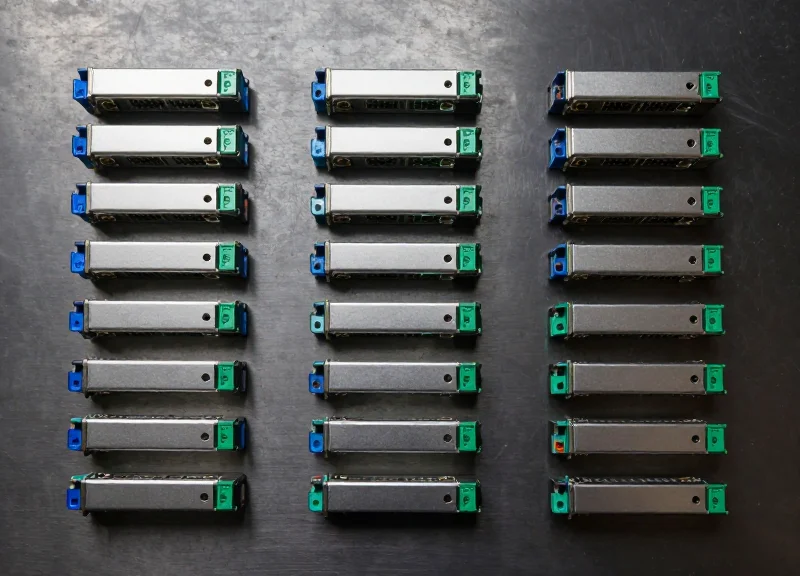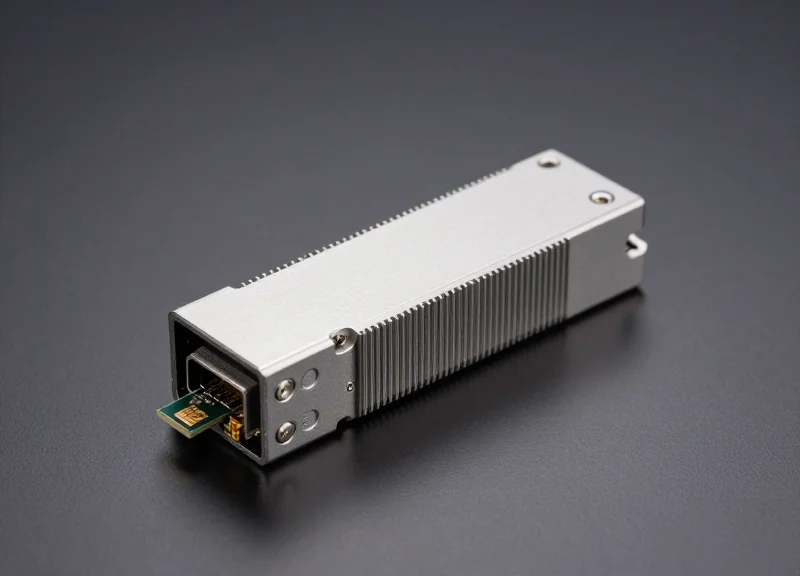
As data demands surge, network engineers are moving away from overpriced proprietary optics toward reliable third-party solutions. This guide addresses the critical balance between cost-efficiency and technical reliability, demonstrating how wholesale procurement of third-party modules can optimize your CapEx without compromising network integrity.
The Evolution of Third-Party Optics Reliability
The Shift from Generic Alternatives to Mission-Critical Standards
The landscape of optical networking has shifted dramatically over the last decade, transforming third-party transceivers from perceived 'cheap substitutes' into high-performance industry standards. In the early days of 1G and 10G networking, third-party modules were often associated with inconsistent firmware and hardware instability. However, the 2026 market represents a new era where third-party optics are engineered to meet or exceed Original Equipment Manufacturer (OEM) specifications. This evolution is driven by the maturation of Multi-Source Agreements (MSAs) and significant investments in local testing labs that verify compatibility across multiple hardware ecosystems including Cisco, Arista, and Juniper.
Comparative Evolution: Then vs. Now
| Feature | Early Generation Third-Party | Modern Enterprise-Grade (2026) |
|---|---|---|
| Firmware Development | Static/Generic Coding | Dynamic, Multi-Vendor Custom Coding |
| Component Sourcing | Mixed Tier-2/3 Suppliers | Tier-1 Lasers (Broadcom, Lumentum) |
| Failure Rates (AFR) | 3.0% - 5.0% | Less than 0.1% |
| Testing Scope | Sample-based Bench Testing | 100% Real-Environment Host Testing |
| Warranty Support | Limited/Standard | Lifetime with Advance Replacement |
Engineering Reliability into Wholesale Procurement
Modern reliability is no longer just about the physical hardware; it is about the intersection of high-spec components and intelligent firmware. Leading third-party providers now utilize the same silicon and optical sub-assemblies (TOSA/ROSA) found in OEM modules. When buying wholesale, the reliability factor is compounded by batch-consistency. Large-scale deployments benefit from unified firmware versions across thousands of units, eliminating the configuration drift that often plagues mixed-inventory environments. This level of precision is why global data centers are increasingly bypassing traditional OEM markups in favor of custom-quoted third-party solutions.
- Are third-party optics as reliable as OEM modules?
In many cases, they are more reliable. Top-tier third-party vendors perform 'in-host' testing on the specific switches and routers used by the client, whereas OEMs often rely on generalized manufacturing specifications. - How does custom firmware impact reliability?
Custom firmware ensures that the transceiver identifies correctly to the host software, preventing 'unsupported transceiver' errors and ensuring that Digital Optical Monitoring (DOM) data is accurate. - Does using third-party optics void my switch warranty?
No. In the United States, the Magnuson-Moss Warranty Act protects consumers by preventing manufacturers from voiding warranties simply because a third-party component was used, provided the component did not cause the damage.
The Economics of Scaling: Why Wholesale Matters in 2026
In 2026, the economics of networking have shifted from simple hardware acquisition to strategic lifecycle management, where wholesale procurement of third-party optics serves as the primary lever for sustainable scaling. By bypassing the artificial price inflation of Original Equipment Manufacturers (OEMs), enterprises and service providers can redirect capital toward higher-density hardware and talent, effectively decoupling network growth from exponential cost increases.
The Financial Impact: Bulk vs. Retail Procurement
| Procurement Metric | Standard OEM Retail | Wholesale Third-Party |
|---|---|---|
| Average Unit Cost | Premium (MSRP) | 70% - 90% Savings |
| Inventory Flexibility | Fixed Lead Times | On-Demand/Buffer Stocks |
| Scaling Capacity | Linear Cost Growth | Exponential Efficiency |
| Customization | Standardized Only | Custom Firmware/Coding |
Custom Quotes as a Tool for Network Resilience
The transition to 400G and 800G architectures requires a massive influx of transceivers, where even a minor price variance per unit can result in millions of dollars in budget delta. Custom wholesale quotes allow organizations to negotiate tiered pricing that accounts for specific deployment phases, ensuring that larger rollouts benefit from deeper discounts while maintaining a consistent supply of MSA-compliant, high-reliability modules.
Operational Efficiency and Bulk Reliability
Scaling isn't just about price; it's about the reliability of the volume. Wholesale third-party providers in 2026 utilize automated testing rigs to validate thousands of units simultaneously against specific switch environments. This bulk validation ensures that the 'infant mortality' rate of optics is virtually eliminated before the hardware reaches the data center floor, reducing the hidden costs of onsite troubleshooting and RMA logistics.
Frequently Asked Questions
- Why is wholesale pricing so much lower than OEM retail?
OEMs use optics as high-margin supplements to their hardware. Third-party wholesale providers focus on specialized manufacturing and direct-to-enterprise distribution, removing the 'brand tax' and middleman markups. - Does bulk purchasing increase the risk of receiving faulty batches?
On the contrary, wholesale agreements often include more rigorous batch testing and dedicated Quality Assurance (QA) protocols that are more stringent than standard retail checks, ensuring higher consistency across the entire shipment. - Can custom quotes include mixed optic types?
Yes, most 2026 wholesale models allow for 'blended' quotes that aggregate different speeds (10G, 100G, 400G) and form factors (SFP+, QSFP28, QSFP-DD) to maximize volume discounts across an entire infrastructure project.
Unlocking OEM/ODM Customization for Specialized Networks

Unlocking OEM/ODM Customization for Specialized Networks
OEM and ODM customization services represent the highest tier of third-party optics procurement, allowing network architects to move beyond generic compatibility and engineer transceivers that meet specific hardware, software, and environmental constraints. By leveraging wholesale relationships, organizations can secure custom-coded firmware and specialized hardware configurations that ensure seamless integration within proprietary ecosystems, effectively eliminating the vendor lock-in hurdles typically associated with major network equipment manufacturers.
The Technical Edge: Custom Firmware and Hardware Engineering
At the heart of ODM services is the ability to modify the transceiver's firmware at the EEPROM level. This is crucial for specialized networks where standard multi-source agreement (MSA) code may trigger 'unsupported transceiver' warnings or performance throttling. Custom firmware can be optimized for specific host-platform polling intervals, digital optical monitoring (DOM) thresholds, and specialized FEC (Forward Error Correction) settings that are often required in high-frequency trading or hyperscale cloud environments.
| Feature | Standard Third-Party Optics | OEM/ODM Customized Optics |
|---|---|---|
| Firmware | Generic MSA Compliance | Device-Specific Precision Coding |
| Hardware | Fixed Standard Specs | Adjustable Components (e.g., Industrial Temp) |
| Serialization | Manufacturer Sequential | Custom Schema for Asset Tracking |
| Labeling | Generic Branding | Private Labeling & Custom QR Codes |
| Compatibility | Broad/Multi-vendor | Deep-level Single-platform Optimization |
Branding, Serialization, and Inventory Management
For wholesale buyers managing thousands of nodes, physical customization is as vital as the internal software. ODM services allow for private labeling, custom laser-etched serial numbers, and specific color-coding on pull-tabs to simplify inventory management. This level of detail facilitates rapid troubleshooting in dense data centers, where identifying a specific batch of optics or a deployment date through a custom serial number can reduce Mean Time to Repair (MTTR) significantly.
- What is the typical MOQ for custom OEM/ODM optic orders?
Minimum Order Quantities vary by the complexity of the hardware change, but wholesale orders for custom-labeled or custom-coded firmware typically start at 50 to 100 units depending on the vendor. - Can custom optics support industrial temperature ranges?
Yes, ODM services allow for hardware adjustments, such as using industrial-grade components that support -40°C to +85°C operation for outdoor or harsh environments. - How does custom coding affect lead times in 2026?
While standard optics are often in stock, custom OEM/ODM builds generally require a 2-4 week lead time for engineering validation and specialized manufacturing runs. - Is reliability testing included for custom builds?
Reputable third-party wholesale providers include full-cycle testing (burn-in, traffic testing, and interoperability) specifically against the targeted host platform as part of the ODM agreement.
Ensuring 100% Compatibility with Multi-Vendor Environments

Ensuring 100% Compatibility with Multi-Vendor Environments
The primary barrier to adopting third-party optics is the fear of interoperability failure or 'port lockout' by original equipment manufacturers (OEMs). However, modern third-party reliability is built upon strict adherence to Multi-Source Agreements (MSAs) and advanced EEPROM (Electrically Erasable Programmable Read-Only Memory) coding. By precisely replicating the vendor-specific identification strings, checksums, and hardware IDs required by platforms like Cisco, Juniper, and Arista, wholesale optics providers can guarantee that their modules function identically to OEM counterparts, even within the most restrictive network operating systems.
The Role of EEPROM Coding and Firmware Adaptation
Every optical transceiver contains an internal chip that stores vital information such as the manufacturer name, serial number, and part number. OEMs use this data to 'handshake' with the switch. Professional-grade wholesale optics are coded using sophisticated programming stations that mimic these proprietary signatures. This ensures that features like Digital Optical Monitoring (DOM) and real-time telemetry are fully accessible, allowing network administrators to monitor light levels, temperature, and voltage across diverse hardware stacks without triggering 'unsupported transceiver' errors.
| Vendor Platform | Compatibility Challenge | Third-Party Solution |
|---|---|---|
| Cisco Systems | Strict SPROM validation and 'unsupported' flags. | Custom coding to match Cisco PID and VID requirements. |
| Juniper Networks | Junos OS integration for hardware alarms. | Precise I2C programming to ensure CLI recognition. |
| Arista Networks | High demand for low-latency and EOS telemetry. | Firmware optimization for Arista's open-standard EOS. |
| Nokia/ALU | Complex licensing and proprietary locking. | Specific OEM-mapped serializations to bypass lockouts. |
Rigorous Lab Validation and Environmental Testing
Reliability at scale requires more than just correct coding; it demands physical validation. Reputable wholesale partners maintain 'compatibility labs' stocked with the latest chassis from major vendors. Each batch of optics undergoes Bit Error Rate Testing (BERT) and stress testing across varying temperatures to ensure the signal integrity remains within the narrow margins required for 100G, 400G, and 800G applications. This proactive testing eliminates the risk of packet loss or link flapping that can occur with substandard, non-validated modules.
- Will using third-party optics void my switch warranty?
No. Under the Magnuson-Moss Warranty Act in the US and similar laws globally, manufacturers cannot void a hardware warranty simply for using third-party components unless they can prove the component caused the damage. - Can these optics be updated if a vendor releases a new OS version?
Yes, high-quality wholesale optics are often reprogrammable. If a software update introduces new validation checks, the modules can be updated via a coding box to maintain compatibility. - Is DOM/DDM supported on these third-party modules?
Absolutely. Full Digital Optical Monitoring support is a standard feature for professional wholesale optics, providing critical diagnostic data to the network operating system.
Rigorous Quality Assurance: From Cleanrooms to Stress Tests

Rigorous Quality Assurance: From Cleanrooms to Stress Tests
Securing a reliable supply chain when you Buy Third-Party Optics Reliability Wholesale: Custom Quotes & Bulk Pricing 2026 requires a deep dive into the manufacturer's quality assurance (QA) ecosystem. Unlike generic white-label modules, high-performance third-party optics undergo a multi-stage validation process designed to mirror or exceed Original Equipment Manufacturer (OEM) standards. This rigorous approach ensures that every module—whether it is a 10G SFP+ or a 800G OSFP—maintains signal integrity and thermal stability over a 10-year operational lifespan, effectively eliminating the risk of 'infant mortality' in the field.
Signal Integrity and Bit Error Rate (BER) Validation
The core of optical reliability lies in signal precision. Advanced testing involves Eye Pattern Analysis to evaluate the transmitter's quality and the receiver's sensitivity. By measuring the 'eye opening' on an oscilloscope, engineers can determine the jitter, noise, and overall health of the optical signal. Furthermore, Bit Error Rate (BER) testing is performed to ensure that the module can handle maximum throughput with an error rate of less than 10^-12, providing the packet-perfect performance required for high-frequency trading and mission-critical cloud infrastructure.
| Test Protocol | Technical Metric | Reliability Objective |
|---|---|---|
| BER Testing | < 10^-12 (Post-FEC) | Guarantee zero-packet loss during peak traffic. |
| Temperature Cycling | -40°C to +85°C | Prevent hardware failure during thermal expansion/contraction. |
| Optical Spectrum Analysis | SMSR > 30dB | Ensure laser wavelength stability and avoid signal crosstalk. |
| Burn-in Testing | 48-72 Hours @ Max Temp | Identify and weed out components prone to early failure. |
Environmental Stress Screening (ESS) and Cleanroom Standards
Reliability is also a product of the environment in which the optics are assembled. Leading wholesale providers utilize ISO 14644-1 Class 7 cleanrooms to prevent microscopic particulates from contaminating the optical sub-assembly (OSA). Once assembled, modules are subjected to Environmental Stress Screening (ESS), including damp heat tests and mechanical vibration analysis. This ensures that the delicate alignment of the internal TOSA (Transmitter Optical Sub-Assembly) and ROSA (Receiver Optical Sub-Assembly) remains intact even during the rigors of international shipping or high-vibration industrial environments.
- Why is 'Burn-in' testing necessary for bulk orders?
Burn-in testing subjects modules to extreme heat and maximum electrical load for extended periods. This process forces latent defects to surface at the factory rather than in the customer's rack, ensuring that wholesale batches maintain a 99.999% reliability rate. - What role does Optical Spectrum Analysis (OSA) play?
OSA verifies the Side-Mode Suppression Ratio (SMSR) and center wavelength. This is critical for DWDM and CWDM networks where precise wavelength spacing is required to prevent interference between channels. - Are these tests performed on every module?
Premium third-party providers perform 100% serialization and testing. Every module in a bulk order is individually tested for compatibility and performance, rather than relying on statistical sampling.
Navigating the 2026 Supply Chain for Optical Transceivers
In 2026, the optical transceiver market is characterized by a dual-speed supply chain. While legacy components like 10G SFP+ have largely stabilized, the unprecedented surge in AI-driven demand has created tighter supply windows for 400G and 800G modules. Navigating this landscape successfully involves moving beyond Just-In-Time (JIT) models toward strategic inventory buffering and early engagement with third-party partners who offer custom quote flexibility and localized stock holding.
Strategies for Mitigating Lead Times in Large-Scale Deployments
To maintain project timelines, enterprise and data center operators are increasingly turning to third-party optics providers who maintain diversified global inventories. By leveraging wholesale agreements, buyers can lock in pricing for the remainder of 2026 while ensuring that critical SFP+, QSFP28, and OSFP components are staged for immediate dispatch, effectively bypassing the 12-to-24 week lead times frequently encountered in OEM-direct channels.
| Form Factor | Typical Lead Time (2026) | Supply Risk Level | Procurement Recommendation |
|---|---|---|---|
| SFP+ (10G) | 1-2 Weeks | Low | Maintain standard buffer stock |
| QSFP28 (100G) | 2-4 Weeks | Moderate | Quarterly bulk orders |
| QSFP-DD (400G) | 6-10 Weeks | High | 6-month rolling forecasting |
| OSFP (800G) | 12+ Weeks | Very High | Annual blanket POs with scheduled releases |
Ensuring Consistent Supply for Next-Gen 400G/800G Modules
As the industry transitions toward 800G, the stability of the supply chain depends heavily on the availability過程中 of high-end Digital Signal Processor (DSP) chipsets and EML (Electro-absorption Modulated Laser) components. Reliable third-party vendors mitigate these risks by diversifying their sub-component suppliers and conducting rigorous internal validation. This ensures that bulk orders meet the exact performance benchmarks of initial samples, even when raw material sources shift due to geopolitical or logistical constraints.
FAQ: Managing Bulk Pricing and Supply Chain Risks
- How do custom quotes help in a volatile market?
Custom quotes allow for price locks and scheduled delivery phases, protecting your budget against mid-year raw material price hikes and ensuring predictable Opex. - Can third-party vendors guarantee supply during global shortages?
While no vendor is entirely immune, those with global manufacturing footprints and high-volume wholesale inventories are better positioned to fulfill urgent needs than those relying on a single source. - What is the benefit of a Blanket Purchase Order for 2026?
A Blanket PO secures a specific inventory volume at a fixed price, allowing for incremental draw-downs as deployment phases commence without the risk of stock-outs.
How to Request a Custom Quote for Bulk Infrastructure Projects

Securing a custom quote for bulk infrastructure projects requires moving beyond generic SKU requests to a comprehensive technical brief that aligns your hardware environment with the vendor's manufacturing capabilities. By providing granular details regarding host compatibility, environmental demands, and deployment phases, IT managers can unlock deeper volume discounts and ensure 100% reliability across complex, multi-vendor networks.
Critical Technical Specifications for Wholesale RFQs
To avoid the common pitfalls of 'generic' optics that may trigger software warnings or link instability, your quote request should include a detailed compatibility matrix. Vendors use this data to apply the correct EEPROM coding and ensure the modules are recognized as native by your specific switch or router firmware.
| Parameter | Necessary Detail for Quote | Impact on Pricing |
|---|---|---|
| Host Hardware | Exact model (e.g., Cisco Nexus 93180YC-FX3) and OS version. | High: Determines specific EEPROM coding requirements. |
| Reach & Media | Distance (10km, 40km, 80km) and fiber type (OS2, OM4). | Moderate: Drives the cost of the internal laser component. |
| Volume Tiers | Total project count vs. initial rollout phase. | Critical: Larger single-batch orders reduce per-unit logistics costs. |
| Temperature Grade | Commercial (0-70C) vs. Industrial (-40 to +85C). | High: Industrial-grade components carry a price premium. |
The Step-by-Step Procurement Workflow
- 1. Inventory and Forecasting
Audit your current port density and projected growth for the next 12-18 months. Consolidating multiple smaller projects into a single bulk RFQ significantly increases your leverage for 'Tier 1' wholesale pricing. - 2. Define Compatibility and Coding
List every unique host platform. In 2026, many projects involve 'Mixed-Vendor Coding,' where a single bulk order of 100G QSFP28s may need to be split into specific batches coded for Arista, Juniper, and Dell. - 3. Specify Performance Testing Standards
For mission-critical infrastructure, request that the quote includes serialized Bit Error Rate (BER) testing and optical spectrum analysis reports. This ensures you are paying for premium, high-reliability glass rather than B-grade alternatives. - 4. Establish a Lead-Time Buffer
While third-party optics offer better availability than OEMs, specialized modules (like 400G-ER4 or tunable DWDM) still require manufacturing windows. Communicate your project 'go-live' date to secure a firm delivery commitment.
Bulk Procurement Frequently Asked Questions
- What is the typical validity period for a wholesale quote?
Due to fluctuations in the semiconductor market, most custom wholesale quotes are valid for 15 to 30 days. It is advisable to request a 'refresh' if your procurement cycle extends beyond this window. - Can I request sample units for validation before the bulk order?
Yes, reputable third-party providers will offer 'Proof of Concept' (PoC) units. Always mention this in the initial RFQ to ensure the test units are included as part of the total project volume. - How does shipping and logistics impact bulk pricing?
Bulk orders typically benefit from flat-rate international shipping. However, for large infrastructure projects, you should specify if you require 'staggered shipping' to multiple data center locations, as this may affect the final quote.
Warranty and Support: The Safety Net of High-End Third-Party Optics
The safety net provided by high-end third-party optics vendors in 2026 represents a paradigm shift in network maintenance, offering 'Lifetime Warranty' and 'Advance Replacement' protocols that frequently outperform the restrictive, high-cost support contracts mandated by original equipment manufacturers (OEMs). For procurement officers looking to buy third-party optics reliability wholesale, the support structure is as critical as the hardware itself, ensuring that custom quotes for bulk 100G, 400G, and 800G modules include localized technical assistance and guaranteed hardware longevity that mitigates the risk of downtime in mission-critical environments.
Comparative Support Analysis: OEM vs. Premium Third-Party
| Support Feature | Traditional OEM Standard | High-End Third-Party (Wholesale) |
|---|---|---|
| Standard Warranty Period | 90 Days to 1 Year Limited | Lifetime Replacement Warranty |
| RMA Processing Speed | Return-to-Factory (15-30 Days) | Advance Replacement (Next Business Day) |
| Technical Support Cost | High Annual Service Fees (SmartNet, etc.) | Included in Hardware CAPEX |
| Firmware Compatibility | Restricted to Single Vendor | Multi-Vendor Recoding Capability |
| End-of-Life (EoL) Support | Strict Cut-off Dates | Extended Support for Legacy Infrastructure |
Advance Hardware Replacement (AHR) and MTTR Reduction
In large-scale data center and enterprise deployments, the Mean Time To Repair (MTTR) is a critical metric for operational success. While OEMs often require a failed module to be returned and inspected before a replacement is shipped—unless the client pays for premium service tiers—high-end third-party vendors typically include Advance Hardware Replacement (AHR) as a standard feature of their wholesale agreements. When a fault is identified, a new module is dispatched immediately, often reaching the site within 24 hours. This proactive approach ensures that redundancy is restored quickly, protecting the network against secondary failures during the RMA window.
Support and Warranty FAQ
- Does using third-party optics void my OEM switch warranty?
No. In the United States, the Magnuson-Moss Warranty Act protects consumers from manufacturers that try to void warranties for using third-party components. Similar protections exist in Europe and other regions, ensuring that switch hardware support remains intact. - How is compatibility supported during OEM firmware updates?
Premium third-party vendors maintain extensive testing labs where they replicate OEM firmware updates (like Cisco IOS-XE or Arista EOS). If an update changes how transceivers are recognized, vendors provide recoded modules or on-site coding tools to maintain seamless operation. - What happens if a module is discontinued?
Unlike OEMs that enforce strict End-of-Life (EoL) dates to drive hardware refreshes, wholesale third-party partners typically maintain 'buffer stock' for several years, ensuring that even discontinued form factors can be replaced under warranty.
The Long-Term ROI of Comprehensive Support
Ultimately, the support lifecycle of third-party optics contributes significantly to a lower Total Cost of Ownership (TCO). By eliminating the need for expensive annual maintenance contracts and providing lifetime hardware protection, enterprises can redirect their budgets toward scaling capacity—such as transitioning from 100G to 400G—without sacrificing the peace of mind required for 99.999% uptime requirements.
Scaling your network shouldn't be limited by proprietary price tags. By choosing high-reliability third-party optics, you gain flexibility, performance, and significant savings. Ready to optimize your infrastructure? Contact Ubytelink today for a custom quote on wholesale pricing and discover our comprehensive OEM/ODM options to take your network to the next level.