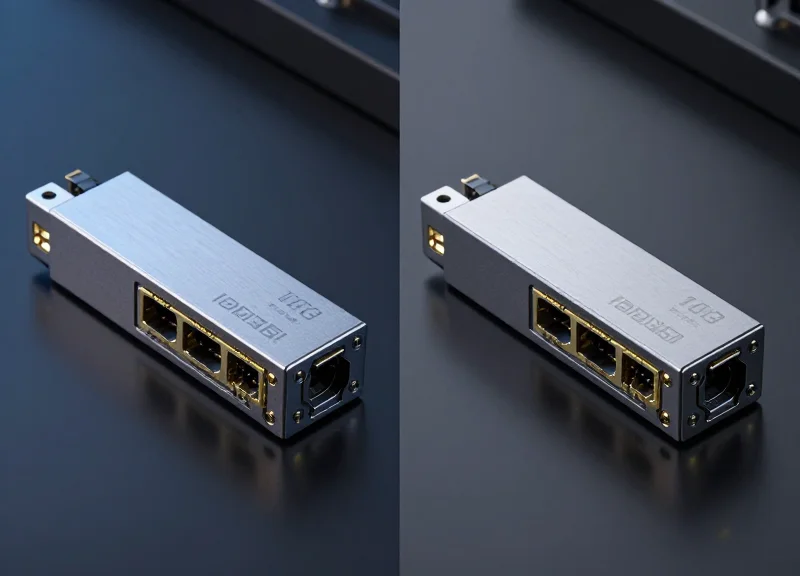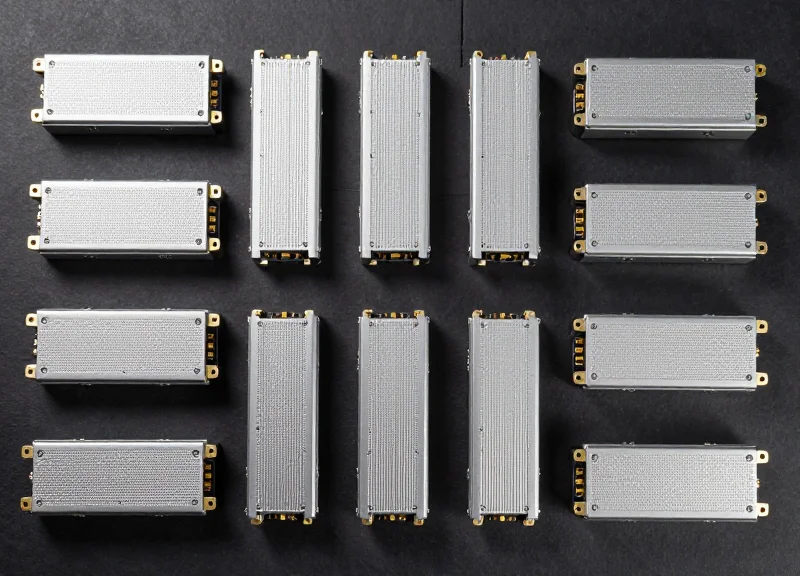
As network demands surge, the transition from fixed-wavelength optics to Tunable DWDM modules has become a strategic necessity for ISPs and data centers. Managing hundreds of individual fixed-wavelength SKUs is no longer sustainable. Tunable technology offers the flexibility to program wavelengths on-demand, streamlining operations and reducing capital expenditure. In this guide, we explore how sourcing Tunable DWDM modules at wholesale prices and leveraging OEM/ODM options can give your business a competitive edge in 2026.
The Evolution of DWDM: Why Tunability is the Industry Standard

The Evolution of DWDM: Why Tunability is the Industry Standard
Tunable DWDM (Dense Wavelength Division Multiplexing) modules represent the pinnacle of modern optical networking efficiency, enabling operators to program any of the standard ITU-T C-Band wavelengths onto a single transceiver. This shift from fixed-wavelength optics to tunable technology eliminates the need to stock up to 96 different part numbers for a single network segment, drastically reducing operational complexity and capital expenditure (CapEx) for 2026 deployments.
Solving the 'SKU-Mageddon' Inventory Crisis
In the early iterations of DWDM networks, every channel required a specific laser tuned to a precise, hardcoded frequency. If a 1550.12nm module failed, only an identical 1550.12nm replacement would suffice. This forced service providers and data center operators to maintain massive stockpiles of 'spares' for every possible channel in the spectrum. Tunability solves this logistical nightmare by providing a universal module that can be adjusted via software or network management interfaces to any 50GHz or 100GHz grid spacing instantly.
| Feature | Fixed-Wavelength DWDM | Tunable DWDM |
|---|---|---|
| Inventory Management | High (40-96 SKUs required) | Low (1 Universal SKU) |
| Sparing Complexity | Extremely High/Expensive | Simplified/Cost-Effective |
| Wavelength Selection | Hardcoded at Factory | Software-Defined/Programmable |
| On-site Flexibility | None (Must match port) | High (Adjustable on-the-fly) |
| Time-to-Service | Dependent on specific SKU stock | Instantaneous deployment |
Technical Superiority in the C-Band Spectrum
Modern tunable modules utilize sophisticated Integrated Tunable Laser Assemblies (ITLA) and high-performance Digital Signal Processors (DSP) to maintain frequency stability across the entire C-Band. Whether you are deploying 10G SFP+, 25G SFP28, or high-capacity 100G/400G variants, the ability to tune wavelengths remotely ensures that networks remain resilient during unexpected channel shifts or emergency re-routing. This programmable nature is essential for the software-defined networking (SDN) architectures that dominate today's wholesale and enterprise environments.
- Can tunable modules work with existing passive muxes?
Yes, tunable modules are fully compatible with standard DWDM multiplexers. The operator simply tunes the module to the specific frequency of the multiplexer port being utilized. - Is there a performance penalty for using tunable optics?
No, modern tunable transceivers offer equivalent or superior reach, thermal management, and signal integrity compared to their fixed-wavelength counterparts. - How is the wavelength actually changed on a tunable module?
Tuning is typically handled through the host equipment's Operating System (CLI or GUI) via the I2C interface, or through an external tuning tool for legacy systems.
The Economic Benefits of Wholesale Tunable DWDM Procurement

The Economic Benefits of Wholesale Tunable DWDM Procurement
Bulk acquisition of tunable DWDM modules represents a strategic shift from tactical purchasing to scalable infrastructure planning. By consolidating procurement into wholesale volumes, network operators can secure substantial per-unit discounts while simultaneously addressing the hidden costs of network complexity. The transition to a single-SKU model for the entire C-band spectrum eliminates the need to maintain hundreds of fixed-wavelength spares, directly impacting the bottom line through reduced inventory carrying costs and simplified logistics. In a landscape where fiber density is increasing, the economic efficiency of tunable optics is no longer just a convenience—it is a financial necessity for maintaining competitive margins.
Direct Impact on Total Cost of Ownership (TCO)
Total Cost of Ownership (TCO) in optical networking is often dominated by operational overhead rather than just the initial purchase price. Wholesale tunable procurement optimizes TCO by drastically reducing the 'Spares-to-Active' ratio. Unlike fixed modules, where a spare is required for every specific wavelength, a single tunable module can back up any channel in the C-band. This flexibility reduces the capital tied up in idle inventory by up to 90%.
| Economic Factor | Fixed-Wavelength (Bulk) | Tunable DWDM (Wholesale) |
|---|---|---|
| SKU Management | High (40+ SKUs) | Low (1 SKU) |
| Inventory Carrying Cost | Extremely High | Minimized |
| Procurement Frequency | Frequent/Ad-hoc | Consolidated/Strategic |
| Deployment Speed | Delayed by Wavelength Availability | Instant (Software Tunable) |
Leveraging Custom Quotes for Scalable Infrastructure
For 2026, vendors are increasingly offering tiered pricing structures that reward long-term infrastructure commitments. Custom quotes for wholesale tunable DWDM modules often include more than just a lower price point; they encompass value-added services such as multi-vendor compatibility coding, serialized batch testing, and priority allocation in the supply chain. These benefits ensure that large-scale deployments remain on schedule while maintaining a lower cost per gigabit compared to traditional retail sourcing.
- How much can bulk purchasing save on tunable DWDM modules?
Volume-based wholesale pricing typically offers a 20% to 35% reduction in per-unit cost compared to small-batch or ad-hoc procurement, depending on the transceiver form factor (SFP+ vs. QSFP28). - What is the primary operational saving of tunable optics?
The primary saving is the elimination of 'Wavelength Planning' errors and the associated labor costs. Technicians no longer need to match specific hardware to specific ports, reducing truck rolls and configuration time. - Are custom quotes available for multi-vendor environments?
Yes, wholesale providers often offer custom firmware coding within the same bulk order, allowing the modules to be used across Cisco, Juniper, Arista, and other platforms without additional costs.
Maximizing Operational Efficiency: Reducing Inventory Complexity

Streamlining Logistics with Single-SKU Architecture
Transitioning to tunable DWDM modules is the most effective way for network operators to eliminate the logistical burden of managing 40 to 96 distinct fixed-wavelength transceivers. By wholesale procurement of a single tunable SKU that covers the entire C-Band spectrum, organizations can ensure that their supply chain is lean, reactive, and significantly less prone to inventory bloat or part-number mismatches. This architectural shift allows for a 'one-size-fits-all' approach to wavelength management, where the hardware is defined by its software configuration rather than its physical manufacturing limits.
The Efficiency Gap: Fixed-Wavelength vs. Tunable Logistics
| Operational Metric | Fixed-Wavelength Inventory | Tunable Wholesale Solution |
|---|---|---|
| SKU Management | 40-96 unique part numbers | 1 universal part number |
| Sparing Strategy | High (Spare required for every channel) | Low (Common pool for all channels) |
| Emergency Response | Risk of 'wrong part' delays | Instant compatibility |
| Field Complexity | Requires specific channel verification | Simplified plug-and-tune workflow |
Lowering TCO through Sparing Efficiency
The financial advantage of tunable modules extends far beyond the initial wholesale unit price. When buying in bulk, the ability to maintain a common sparing pool allows operators to reduce their emergency stock levels by as much as 90%. Instead of stocking a safety margin for every individual ITU channel across multiple hubs, a small cache of tunable modules serves as a universal fail-safe for the entire fiber plant. This strategic reduction in inventory volume frees up significant capital that would otherwise be tied up in stagnant, channel-specific hardware that may never be used.
Optimizing Field Technician Workloads
Human error remains a primary driver of downtime in complex fiber deployments. Tunable technology simplifies the field technician's workflow by removing the need to identify, transport, and install site-specific frequencies. With a wholesale stock of tunable modules, a technician only needs to carry a single part type. Once plugged into the switch or router, the module is tuned to the required frequency via the host software, ensuring a 'first-time-right' installation and significantly reducing the likelihood of expensive secondary truck rolls caused by mismatched equipment.
Operational Efficiency FAQ
- How does wholesale tunable procurement impact warehouse management?
It dramatically simplifies auditing and storage by replacing hundreds of bin locations with one, reducing the administrative overhead and the risk of inventory obsolescence. - Does the use of tunable modules require specialized training for field teams?
No; most modern networking equipment handles tuning automatically or through simple CLI commands, making it as intuitive as traditional fixed-wavelength installations. - Can tunable modules be used for emergency disaster recovery?
Absolutely. Their universal nature makes them the ideal component for rapid restoration kits, as a single module can replace any failed fixed-wavelength transceiver on the network.
Custom OEM/ODM Solutions: Tailoring Optics to Your Infrastructure
Custom OEM/ODM solutions represent the pinnacle of network optimization, allowing enterprises and service providers to move beyond 'off-the-shelf' limitations and integrate tunable DWDM modules that are precision-engineered for their specific ecosystem. By leveraging factory-level customization, organizations can ensure seamless interoperability with legacy hardware while maintaining a unified brand presence across their optical infrastructure. In the competitive 2026 landscape, these tailored solutions are no longer a luxury but a necessity for scaling complex fiber deployments.
Branding and Private Labeling for Wholesale Partners
For wholesale distributors and large-scale integrators, brand consistency is critical for market positioning. Ubytelink offers comprehensive private labeling services, including custom laser-etched logos, bespoke serial numbering, and branded packaging. This allows partners to provide a premium, proprietary product line without the massive R&D overhead of independent manufacturing, ensuring that every module delivered aligns with the partner's corporate identity.
Firmware Optimization and Multi-Vendor Compatibility
Tunable modules often face handshake issues when inserted into specialized or older host equipment. Our ODM services include custom EEPROM coding and firmware tuning to ensure the modules report correctly to Network Management Systems (NMS). This ensures that a single tunable module can support multiple vendor protocols—such as Cisco, Arista, or Juniper—through specialized software profiles that emulate original manufacturer optics while providing tunable flexibility.
| Feature | Standard Wholesale | Custom ODM Solution |
|---|---|---|
| Firmware Configuration | Generic MSA Standard | Vendor-Specific (Cisco/Juniper/etc.) |
| External Labeling | Standard Ubytelink Brand | Private Label / Custom Logo |
| Serial Numbering | Sequential Factory ID | Customer-Defined Serialization |
| Hardware Testing | Batch Sampling | Specific Host-Platform Validation |
Hardware Modifications for Specialized Environments
In environments with extreme conditions, such as outdoor edge cabinets or high-density data centers, standard hardware may reach its thermal limits. Our manufacturing capabilities extend to industrial-grade temperature hardening (-40°C to +85°C) and custom heat-sink designs. These modifications ensure the tunable laser maintains frequency stability and spectral purity even under significant thermal stress or restricted airflow.
- What is the minimum order quantity (MOQ) for custom branding?
Typically, custom labeling and basic firmware coding start at 50 units, though full hardware ODM modifications may require higher volume commitments depending on the design complexity. - Can you provide custom firmware for proprietary switching platforms?
Yes, we specialize in reverse-engineering EEPROM requirements for proprietary hosts to ensure 100% compatibility and the avoidance of 'unsupported transceiver' warnings. - How long does the ODM prototyping phase take?
Initial firmware samples are usually ready in 1-2 weeks, while physical hardware modifications or custom heat-sink designs may take 4-6 weeks for validation and safety testing.
Technical Deep Dive: SFP+ and XFP Tunable Form Factors
Technical Deep Dive: SFP+ and XFP Tunable Form Factors
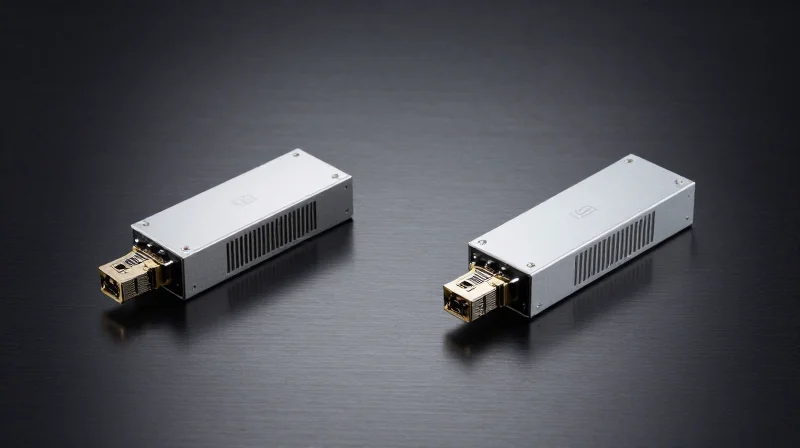
In modern DWDM infrastructures, the choice between SFP+ and XFP tunable modules is governed by a balance of legacy hardware compatibility and the relentless drive for higher port density and lower power consumption. While both form factors support C-band tuning across the 50GHz or 100GHz ITU grid, the SFP+ (Small Form-factor Pluggable Plus) has largely superseded the XFP (10 Gigabit Small Form-factor Pluggable) in new deployments due to its significantly smaller footprint and reduced thermal overhead, which are critical for 10G and 25G high-density applications.
Comparative Analysis: SFP+ vs. XFP Architecture
| Feature | Tunable SFP+ | Tunable XFP |
|---|---|---|
| Typical Power Consumption | 1.5W - 2.5W | 2.5W - 3.5W |
| Interface Type | Serial (SFI) | Parallel (XFI) |
| Clock & Data Recovery (CDR) | Typically on Host Board | Integrated inside Module |
| Form Factor Size | Small (approx. 1/3 smaller than XFP) | Large |
| Max Transmission Distance | Up to 80km (w/ EDFA/DCM) | Up to 80km (w/ EDFA/DCM) |
Thermal Management in High-Density Racks
Tunable lasers utilize a Thermo-Electric Cooler (TEC) to maintain precise wavelength stability, which inherently increases power draw compared to fixed-wavelength optics. In a fully populated 48-port 1U switch, the cumulative heat generation of tunable modules can exceed 100 Watts of additional thermal load. Efficient airflow design and selecting modules with low-power CMOS-based TOSA (Tunable Optical Sub-Assembly) components are vital to preventing thermal throttling and ensuring long-term laser diode reliability. Wholesale buyers should prioritize modules with advanced Digital Diagnostics Monitoring (DDM) to track real-time temperature fluctuations across the fabric.
Optimizing Wholesale Procurement for 10G and 25G
As networks transition toward 25G and 100G, the role of the 10G tunable SFP+ remains foundational for access and aggregation layers. Wholesale procurement strategies in 2026 focus on 'Dual-Rate' tunable modules that can support both 10G Ethernet and OTU2 protocols, providing maximum flexibility for service providers. By opting for bulk SFP+ solutions over XFP, operators can increase port density by up to 30% in the same rack space, directly impacting the Total Cost of Ownership (TCO) through reduced real estate and cooling requirements.
Common Technical Questions
- Can I use an SFP+ Tunable module in an XFP port?
No, they are physically and electrically incompatible. However, many modular line cards offer SFP+ and XFP variants for the same chassis to facilitate migration. - Do tunable modules require special firmware?
Yes, tunable modules require host-side support for the SFF-8690 (for SFP+) or INF-8077i (for XFP) management interface to command wavelength changes. - What is the typical tuning time for these modules?
Most modern tunable SFP+ modules feature 'Fast Tuning' capabilities, achieving channel lock-in times ranging from 10 to 30 seconds depending on the laser architecture.
Compatibility and Interoperability: Ensuring Seamless Integration

In the modern data center and telecommunications landscape, compatibility is the primary safeguard against network downtime and inflated operational costs. For wholesale buyers, ensuring that tunable DWDM modules are truly 'plug-and-play' involves more than just adhering to Multi-Source Agreement (MSA) standards; it requires precise EEPROM coding and firmware optimization to bypass proprietary 'vendor lock-in' software checks. Professional-grade modules are engineered to be indistinguishable from OEM counterparts, allowing for a unified sparing strategy across diverse hardware estates.
The Role of Professional Compatibility Labs
To guarantee 100% interoperability, wholesale modules must undergo rigorous validation in specialized testing labs. These facilities house the latest chassis from industry leaders—such as Cisco’s Nexus and ASR series, Juniper’s MX and PTX lines, and Nokia’s 7750 SR—to verify that the digital diagnostic monitoring (DDM) and wavelength tuning protocols function correctly within the host OS. This level of testing ensures that features like 'service-unsupported-transceiver' commands are not needed, providing a native user experience for network engineers.
| Vendor Platform | OS Compatibility | Verification Status | Special Requirements |
|---|---|---|---|
| Cisco Systems | IOS-XE, NX-OS, IOS-XR | Fully Validated | Custom EEPROM coding for DOM support |
| Juniper Networks | Junos OS | Fully Validated | Verified for high-power SFP+ slots |
| Nokia | SROS | Validated | Specific firmware for 50GHz grid spacing |
| Arista Networks | EOS | Fully Validated | Standard MSA compliance with low-latency |
Bypassing Vendor Lock-in for Better ROI
One of the most significant advantages of procuring compatible tunable DWDM modules wholesale is the ability to break free from the pricing constraints of proprietary hardware vendors. By utilizing modules that have been optimized for multi-vendor environments, enterprises can maintain a single inventory pool that serves multiple hardware platforms simultaneously. This reduces 'dead stock' and simplifies the procurement process, as one SKU can be recoded or pre-configured to meet the needs of any node in the network, regardless of the chassis brand.
- Can these modules be used in a mixed-vendor link?
Yes. As long as the wavelength grid (e.g., ITU 50GHz or 100GHz) is matched at both ends, a module coded for Cisco can communicate perfectly with a module coded for Juniper across the DWDM line system. - Does the host device control the wavelength tuning?
In most modern platforms, the host OS can natively control the wavelength via the CLI. For legacy systems, modules can be pre-set to a specific channel before shipping or tuned using a portable field programmer. - Will firmware updates on my switches break compatibility?
Wholesale modules from reputable suppliers use robust firmware architectures designed to withstand OS updates. If a major vendor change occurs, the modules can typically be re-flashed in the field.
Ensuring Long-Term Stability
Beyond initial recognition, interoperability also encompasses thermal management and power consumption. Tunable modules draw more power than fixed-wavelength optics; therefore, compatibility testing must ensure the module does not exceed the power envelope of the host port, which could lead to intermittent port flapping or hardware damage over time. Choosing wholesale partners who provide comprehensive 'burn-in' test reports is essential for ensuring long-term link stability.
Future-Proofing Your Network for 5G and Beyond

Future-Proofing Your Network for 5G and Beyond
Tunable DWDM modules are the primary catalysts for future-proofed optical infrastructure, offering the wavelength agility necessary to sustain the exponential bandwidth demands of 5G and the impending transition to 800G. By adopting wholesale tunable optics, network operators move away from the rigid constraints of fixed-channel architectures, enabling a software-defined approach where capacity can be reallocated remotely. This flexibility is essential for reducing the total cost of ownership as networks evolve from simple point-to-point links to complex, mesh-based 5G fronthaul and backhaul ecosystems.
Agility in 5G Fronthaul and Backhaul
The densification of 5G requires an unprecedented number of small cell deployments, making fiber exhaustion a significant risk. Tunable 10G and 25G SFP+ modules allow operators to maximize existing fiber plants by multiplexing multiple signals onto a single strand via DWDM. Unlike fixed-channel modules that require unique inventory for every ITU channel, a single tunable module can be programmed for any frequency, simplifying the massive rollout of O-RAN (Open Radio Access Network) sites and ensuring that fronthaul links can be upgraded without replacing physical hardware.
| Feature | Standard 10G Tunable | 100G/400G Coherent Tunable |
|---|---|---|
| Primary Application | 5G Fronthaul / Metro Access | Long-Haul / Core / DCI |
| Spectrum Management | 50GHz / 100GHz Fixed Grid | Flex-Grid / Gridless Support |
| Reach Capacity | Up to 80km (Amplified) | 120km to 1000km+ (ZR/ZR+) |
| Power Consumption | Low (<1.5W to 2W) | High (15W to 20W+) |
Transitioning to Coherent 100G/400G Solutions
The next frontier in network future-proofing is the integration of Coherent DWDM technology in pluggable form factors like QSFP-DD. 400G ZR and ZR+ modules utilize digital signal processing (DSP) to overcome the physical limitations of fiber, such as chromatic dispersion, allowing for high-speed tunable transmission over much longer distances. Wholesale procurement of these modules in 2026 allows enterprises and ISPs to build a scalable foundation that supports today's 10G traffic while being '400G ready' for the next generation of data-intensive applications and edge computing.
- How do tunable modules reduce long-term 5G costs?
They minimize logistical overhead by eliminating the need to stock 40+ different fixed-wavelength modules and reduce the frequency of site visits for manual reconfiguration. - Are 10G tunable modules compatible with 400G systems?
Yes, through the use of Flex-Grid ROADMs, operators can multiplex legacy 10G tunable channels alongside newer 100G and 400G coherent signals on the same fiber. - Why buy 400G ZR wholesale for future-proofing?
Securing bulk pricing for 400G ZR/ZR+ optics now ensures inventory stability for upcoming core network refreshes while lowering the per-gigabit cost of transit.
How to Request a Custom Wholesale Quote from Ubytelink
To initiate a custom wholesale quote for Tunable DWDM modules, network operators should provide a comprehensive breakdown of their specific deployment needs, including channel spacing, distance requirements, and host device compatibility to ensure the most accurate pricing and logistics schedule. Our consultative approach ensures that bulk orders are optimized for both cost-efficiency and high-performance network reliability.
Essential Technical Data for Accurate Quotes
The accuracy of a wholesale quote depends heavily on the granularity of the technical specifications provided. By detailing your hardware environment and performance targets upfront, you enable our engineering team to identify the exact MSA-compliant or vendor-compatible solutions required for your infrastructure.
| Specification Category | Details Required for Quote |
|---|---|
| Form Factor | SFP+, XFP, QSFP28, or CFP2-DCO |
| Data Rate | 10G, 25G, 100G, or 400G |
| Transmission Distance | Standard 80km (ZR) or specialized long-haul requirements |
| Hardware Compatibility | Specific vendor coding needs (e.g., Cisco, Arista, Juniper, Nokia) |
| Total Volume | Specific unit counts for initial deployment and forecasted expansion |
The Ubytelink Wholesale Procurement Workflow
Ubytelink follows a streamlined four-step process to move from initial inquiry to delivery. First, the 'Technical Assessment' phase involves our engineers reviewing your requirements. Second, we move to 'Tiered Pricing Generation,' where we apply volume discounts based on order size. Third is 'Prototyping & Validation,' where sample units may be provided for large-scale deployments. Finally, 'Logistics Planning' ensures a staggered or bulk delivery schedule that fits your project timeline.
Frequently Asked Questions Regarding Custom Quotes
- What is the typical turnaround time for a wholesale quote?
Standard wholesale quotes are typically processed and delivered to the client within 24 to 48 business hours after the technical requirements are confirmed. - Are there Minimum Order Quantities (MOQ) for bulk pricing?
Bulk pricing tiers generally begin at 20 units, with significantly deeper discounts available for high-volume orders exceeding 100 units. - Can quotes include custom firmware coding?
Yes, all custom quotes include the option for specific EEPROM coding to ensure seamless interoperability across diverse multi-vendor network environments. - Does Ubytelink offer price protection for long-term projects?
For multi-phase infrastructure rollouts, we can negotiate price-lock agreements to protect your budget against market fluctuations in optical component costs.
In summary, Tunable DWDM modules are the cornerstone of a modern, agile optical network. By moving to a wholesale procurement model with Ubytelink, you not only secure the best market pricing but also gain access to world-class OEM/ODM customization that ensures your hardware is perfectly tuned to your operational needs. Ready to scale your infrastructure? Contact the Ubytelink team today for a comprehensive consultation and custom quote on our full range of Tunable DWDM solutions.