As data demands surge, network architects face a critical choice: how to scale capacity while minimizing costs and energy footprint. The 10G SFP+ BIDI 20km transceiver has emerged as a disruptive solution, leveraging Wavelength Division Multiplexing (WDM) to transmit and receive over a single fiber strand. This article provides a technical deep-dive into how this technology stacks up against traditional dual-fiber and multi-channel alternatives, focusing on the metrics that matter most: speed, efficiency, and the bottom line.
Understanding 10G SFP+ BIDI Technology
Understanding 10G SFP+ BIDI Technology
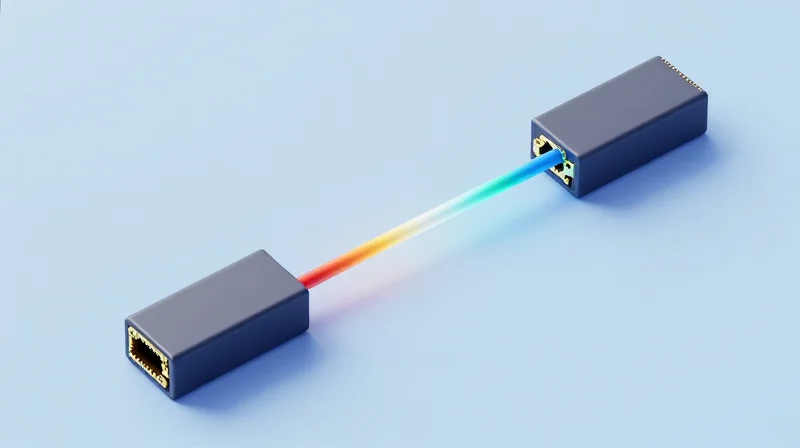
10G SFP+ BIDI (Bi-Directional) technology represents a significant advancement in fiber optic efficiency, allowing for full-duplex 10Gbps data transmission over a single strand of single-mode fiber (SMF). Unlike traditional duplex transceivers that require two separate fibers—one for transmitting (TX) and one for receiving (RX)—BiDi modules utilize Wavelength Division Multiplexing (WDM) to separate the upstream and downstream signals by frequency. This capability is particularly critical for service providers and enterprises looking to maximize existing fiber plants where laying additional cable is either cost-prohibitive or physically impossible.
The Mechanics of Single-Fiber Communication
The core of BiDi technology lies in the integrated WDM coupler, which combines and separates light based on its wavelength. For the 20km reach variant, the industry standard involves using 1270nm and 1330nm wavelengths. These specific windows are chosen because they offer low attenuation and minimal chromatic dispersion over medium distances, ensuring signal integrity without the need for complex amplification.
| Feature | Standard 10G SFP+ (LR) | 10G SFP+ BiDi 20km |
|---|---|---|
| Fiber Count | 2 Strands (Duplex) | 1 Strand (Simplex) |
| Connector Type | LC Duplex | LC Simplex |
| Operating Wavelengths | 1310nm (Fixed) | 1270nm-TX/1330nm-RX (or vice versa) |
| Fiber Efficiency | Standard | Double (200%) |
| Typical Reach | 10km | 20km |
Complementary Pairing: Upstream and Downstream
A fundamental requirement of 10G SFP+ BiDi deployment is the use of 'matching pairs.' Because one transceiver must transmit at a frequency the other is designed to receive, you cannot use two identical BiDi modules at both ends of a link. Typically, these are categorized as BiDi-U (Upstream) and BiDi-D (Downstream). If Side A transmits at 1270nm and receives at 1330nm, Side B must transmit at 1330nm and receive at 1270nm.
Frequently Asked Questions
- Can I connect a BiDi transceiver to a standard duplex transceiver?
No. Standard duplex transceivers use the same wavelength for TX and RX across two fibers, whereas BiDi requires a single fiber and mismatched wavelengths. They are physically and optically incompatible. - Does 10G SFP+ BiDi 20km require special fiber optic cables?
No. It operates on standard G.652 Single-Mode Fiber (SMF). The only difference is the requirement for an LC Simplex connector instead of the more common LC Duplex connector. - Why is 20km the standard distance for these BiDi modules?
20km provides a 'sweet spot' for metropolitan and campus backbones, offering enough power budget to handle patches and splices while remaining cost-effective compared to 40km or 80km ER/ZR optics.
Latency Benchmarks: Single-Strand vs. Dual-Fiber

Latency Benchmarks: Single-Strand vs. Dual-Fiber
The primary performance concern when transitioning from dual-fiber 10G SFP+ LR to single-strand BiDi modules is whether the internal Wave Division Multiplexing (WDM) filters introduce measurable signal lag. Technical benchmarks indicate that for 10G SFP+ BiDi 20km optics, the internal latency overhead is virtually indistinguishable from standard duplex optics, typically adding less than 1 nanosecond to the total round-trip time (RTT).
WDM Filtering vs. Direct Laser Emission
In a standard dual-fiber 10G SFP+ LR module, the signal is transmitted directly over one fiber and received on another using a 1310nm wavelength. In contrast, BiDi modules must use an internal prism or filter to combine and split 1270nm and 1330nm wavelengths. While this filtering process is an extra optical step, it occurs at the speed of light through glass. The electronic serialization/deserialization (SerDes) process within the switch silicon remains the dominant source of latency, dwarfing any micro-delay introduced by the BiDi's passive optical components.
| Transceiver Type | Wavelength (TX/RX) | Internal Optical Delay | Fiber Propagation (20km) |
|---|---|---|---|
| 10G SFP+ LR (Duplex) | 1310nm / 1310nm | < 0.05 ns | ~97.4 μs |
| 10G SFP+ BiDi (A-Side) | 1270nm / 1330nm | < 0.10 ns | ~97.4 μs |
| 10G SFP+ BiDi (B-Side) | 1330nm / 1270nm | < 0.10 ns | ~97.4 μs |
Asymmetric Propagation Considerations
Because 10G BiDi uses two different wavelengths (1270nm and 1330nm), there is a theoretical difference in the refractive index of the fiber for each signal. Light at 1330nm travels slightly slower than at 1270nm due to chromatic dispersion. However, over a 20km span, this difference is measured in picoseconds. For standard Ethernet applications, including synchronous protocols like PTP (Precision Time Protocol), this asymmetry is negligible and can be calibrated out if necessary.
- Does BiDi introduce jitter in 10G networks?
No. Jitter is primarily a function of the clock recovery circuit and switch buffer management, not the passive WDM filters used in BiDi optics. - Is BiDi suitable for High-Frequency Trading (HFT)?
While the delay is minimal, HFT environments often prefer the absolute simplicity of 1310nm duplex fiber to avoid the picosecond-level asymmetry caused by disparate wavelengths. - Does the 20km distance increase BiDi latency vs. 10km?
Latency increases linearly with fiber distance (approx. 5μs per km), regardless of whether you use BiDi or duplex transceivers.
Power Consumption and Thermal Management

Energy Efficiency and Thermal Dynamics in BiDi Deployments
10G SFP+ BIDI 20km modules are remarkably energy-efficient, typically drawing between 1.0W and 1.2W, which is largely identical to standard 10G SFP+ LR transceivers. While the internal Bi-Directional Optical Sub-Assembly (BOSA) integrates both a laser and a detector into a single component, the passive nature of the wavelength-division multiplexing (WDM) filter ensures that power consumption does not scale significantly compared to dual-fiber alternatives, making them ideal for power-constrained environments.
Comparative Power Consumption Analysis
| Module Type | Typical Wattage (W) | Max Wattage (W) | Thermal Output |
|---|---|---|---|
| 10G SFP+ BIDI 20km | 1.0W | 1.2W | Low |
| 10G SFP+ LR (Dual Fiber) | 0.9W | 1.2W | Low |
| 10G SFP+ CWDM 20km | 1.2W | 1.5W | Moderate |
| 10G SFP+ ER (40km) | 1.3W | 1.5W | Moderate |
Impact on Airflow and Rack Temperature
The thermal advantage of BiDi technology extends beyond the individual module's wattage. By utilizing a single strand of fiber, BIDI deployments reduce the volume of cabling in front of high-density switch ports by 50%. This reduction in physical cable bulk significantly improves front-to-back airflow, preventing heat pockets from forming at the faceplate and reducing the energy required for chassis fans to maintain optimal operating temperatures.
Power and Thermal FAQs
- Does using 1270nm vs 1330nm affect power consumption?
No, the variation in wavelength between the two BiDi ends does not cause a measurable difference in power draw. Both use similar DFB laser technology that operates within the same electrical parameters. - Are BiDi modules prone to overheating in fully populated 48-port switches?
No, 10G BIDI modules are designed to operate within the standard SFP+ power envelope (MSA Class 1). As long as the switch has standard cooling, they will not overheat. - How does temperature affect the performance of the BOSA?
High temperatures can cause wavelength drift, but 10G SFP+ BIDI modules include internal temperature compensation circuits to keep the laser stabilized within the 1270/1330nm window.
Industrial Temperature Considerations
For deployments in non-climate-controlled environments, such as outdoor cabinets or industrial floors, users should opt for 'Industrial Temperature' (I-Temp) BIDI modules. These variants are rated for -40°C to +85°C. While they share the same architectural efficiency, I-Temp modules are tested to ensure that their power consumption remains stable even at thermal extremes, preventing the 'thermal runaway' that can occur in lower-quality commercial-grade transceivers.
Total Cost of Ownership (TCO) Deep Dive

Economic Analysis of 10G BIDI 20km vs. Dual-Fiber Infrastructure
When evaluating the financial impact of 10G SFP+ BIDI 20km modules, the primary driver of ROI is the optimization of physical layer assets rather than the unit price of the transceiver itself. While BIDI modules typically command a 20-30% price premium over standard 10G LR dual-fiber modules, they provide a 50% reduction in fiber strand utilization. For organizations leasing dark fiber or operating in fiber-constrained environments, this shift from dual-strand to single-strand architecture represents a massive reduction in long-term Operational Expenditure (OpEx).
Bypass Trenching Costs with Single-Strand Architecture
The most significant cost avoidance associated with BIDI technology is the prevention of new fiber deployments. In metropolitan or campus environments, the cost of trenching and laying new fiber can range from $10,000 to $50,000 per mile. By deploying 10G BIDI 20km modules, network architects can double the capacity of an existing fiber plant instantly. This capability allows enterprises to defer or entirely avoid capital-intensive construction projects, delivering an immediate return on investment that outweighs the marginal increase in hardware costs.
| Cost Component | Standard 10G SFP+ LR (Dual) | 10G SFP+ BIDI 20km (Single) |
|---|---|---|
| Fiber Strand Requirement | 2 Strands | 1 Strand |
| Max Links per 12-Strand Cable | 6 Links | 12 Links |
| Patch Cable Complexity | High (Duplex) | Low (Simplex) |
| Relative Fiber Leasing Cost | 100% | 50% |
| Deployment Speed | Moderate | Fast (Reuse existing) |
OpEx Savings: Leasing and Maintenance
In scenarios where fiber is leased from a provider, costs are typically billed per strand. Utilizing BIDI modules effectively cuts the monthly recurring cost of a 10Gbps link in half. Furthermore, the reduction in patch cables and connection points simplifies the cable management within the data center or headend, reducing the probability of human error during maintenance and shortening the 'Mean Time to Repair' (MTTR) by simplifying the physical troubleshooting path.
- Does BIDI hardware cost more than standard LR modules?
Yes, BIDI modules generally cost more due to the internal WDM filters required to split transmit and receive signals on different wavelengths. However, this cost is typically recouped within months of fiber leasing savings. - How does BIDI affect the ROI of dark fiber leases?
BIDI doubles the ROI of a dark fiber lease by allowing two independent 10G links to run over the same pair of strands that previously supported only one link. - Are there hidden costs in BIDI deployments?
The main consideration is the requirement for matching pairs (e.g., 1270nm/1330nm), which requires slightly more diligent inventory management compared to identical dual-fiber LR modules.
BIDI vs. Standard 10G SFP+ LR (20km)
BIDI vs. Standard 10G SFP+ LR (20km): Architecture and Implementation
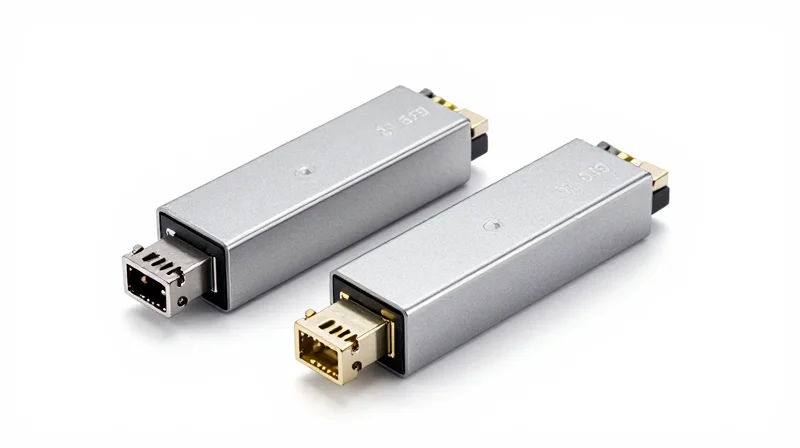
The choice between 10G SFP+ BIDI and standard LR for 20km spans is primarily a strategic decision regarding fiber plant utilization rather than raw optical performance. While both modules operate over single-mode fiber (SMF) and achieve identical distances, BIDI transceivers utilize Wavelength Division Multiplexing (WDM) to transmit and receive on a single strand. In contrast, standard LR modules operate on a dual-fiber architecture, requiring one strand for transmission and another for reception. This fundamental difference dictates the cost-efficiency of the entire network build-out.
Infrastructure Capacity and Deployment Dynamics
In greenfield scenarios where new fiber is being laid, BIDI is significantly more cost-effective because it halves the amount of physical fiber cabling needed. For service providers and enterprises leasing fiber, BIDI can reduce monthly recurring costs by 50% compared to standard LR. However, standard LR modules are often favored in legacy data centers where dual-fiber patches are already the norm, as they do not require the 'matched pairing' (specifically, the Upstream/Downstream wavelength matching) required by BIDI systems.
| Feature | 10G SFP+ BIDI (20km) | Standard 10G SFP+ LR (20km) |
|---|---|---|
| Fiber Requirement | Single Strand (Simplex) | Dual Strand (Duplex) |
| Wavelengths | 1270nm/1330nm (Paired) | 1310nm (Both ends) |
| Inventory Complexity | High (Requires matching A/B units) | Low (Uniform modules) |
| Fiber Efficiency | 200% compared to LR | Baseline (100%) |
| Primary Use Case | Fiber-constrained environments | Legacy infrastructure |
Selection Criteria and Future-Proofing
Scalability is the deciding factor for many network architects. Utilizing BIDI transceivers leaves existing 'dark fiber' strands available for future expansion or redundancy without the need for expensive new cable pulls. Standard LR transceivers consume fiber capacity twice as fast, which can lead to a 'capacity wall' where the only solution is a costly infrastructure upgrade or moving to even more complex CWDM/DWDM systems.
- Can I connect a BIDI module to a standard LR module?
No. Standard LR modules transmit and receive at 1310nm, while BIDI modules use mismatched wavelengths (like 1270nm and 1330nm). They are optically incompatible. - Is there a latency difference between BIDI and LR?
No. The latency is identical as the signal travels through the same glass medium at the same speed; the wavelength multiplexing does not add processing delay. - Do BIDI modules require special patch cords?
They use standard LC/UPC single-mode patch cords, but you only use one of the two fibers in a standard duplex zip-cord, or use a simplex cable for a cleaner install.
BIDI vs. CWDM/DWDM: When to Move Beyond BiDi

BIDI vs. CWDM/DWDM: When to Move Beyond BiDi
While 10G SFP+ BIDI 20km modules are an excellent tactical solution for doubling capacity on existing fiber, they represent a linear scaling model that eventually hits a 'capacity wall.' The decision to move beyond BiDi to Coarse Wavelength Division Multiplexing (CWDM) or Dense Wavelength Division Multiplexing (DWDM) is typically driven by the need to aggregate multiple high-speed services over a single fiber pair where physical strand availability is zero and bandwidth demand is exponentially increasing.
Comparative Technology Framework
| Feature | 10G BiDi (20km) | CWDM | DWDM |
|---|---|---|---|
| Max Channels | 1 (per strand) | Up to 18 | Up to 96+ |
| Fiber Efficiency | High (1 strand/link) | Very High (18 links/pair) | Extreme (96+ links/pair) |
| Typical Reach | 20km - 80km | Up to 80km | 100km+ (with amplification) |
| Deployment Complexity | Low (Plug-and-Play) | Moderate (Passive Mux) | High (Active/Passive Mux) |
| Cost per Link | Lowest | Moderate | High |
Key Indicators for Transition
Network architects should consider transitioning from BiDi to multiplexing solutions when one or more of the following thresholds are met: 1. Fiber Exhaustion: When even after deploying BiDi, there are no remaining dark fiber strands to accommodate new 10G links. 2. Protocol Diversity: If the link needs to carry a mix of 10G Ethernet, Fibre Channel, and CPRI simultaneously on one fiber. 3. Future-Proofing for 100G: While BiDi exists for higher speeds, DWDM provides a more robust path for 100G/400G waves over the same infrastructure.
Operational FAQs
- Can I use BiDi optics with a CWDM Mux?
No. BiDi optics use specific upstream/downstream wavelengths (e.g., 1270/1330nm) that do not always align with standard CWDM grid channels. Multiplexing requires specific CWDM or DWDM-rated optics designed to hit precise channel frequencies. - Is DWDM overkill for a 20km span?
Usually, yes. For 20km, CWDM is more cost-effective due to uncooled lasers. DWDM is only justified at 20km if you anticipate needing more than 18 channels or require integration into a larger long-haul DWDM ring. - What is the primary maintenance difference?
BiDi is simple point-to-point troubleshooting. Multiplexing introduces a Mux/Demux as a potential point of failure and requires optical power management to ensure all channels are balanced.
Reliability and MTBF Analysis
The reliability of 10G SFP+ BIDI 20km transceivers is remarkably high, with modern modules typically achieving a Mean Time Between Failures (MTBF) exceeding 1.2 million hours. While the integration of a Bi-Directional Optical Sub-Assembly (BOSA) adds internal complexity compared to separate TOSA/ROSA configurations, advancements in semiconductor manufacturing and hermetic sealing have neutralized any significant reliability gap between BIDI and standard dual-fiber LR optics.
Comparative Reliability Metrics
When assessing long-term stability, engineers look at Failures in Time (FIT) and MTBF. A typical 10G BIDI 20km module operates within a very narrow failure margin, making it suitable for carrier-grade 'five-nines' (99.999%) availability targets. The table below compares the typical reliability profiles of BIDI 20km against its primary alternatives.
| Optic Type | Typical MTBF (Hours) | FIT (Failures/10^9 Hrs) | Temp Rating Availability |
|---|---|---|---|
| 10G SFP+ BIDI 20km | 1,250,000+ | 800 | C-Temp & I-Temp |
| 10G SFP+ LR (Dual) | 1,500,000+ | 660 | C-Temp & I-Temp |
| 10G CWDM SFP+ 20km | 1,050,000+ | 950 | Mostly C-Temp |
BOSA Integrity and Thermal Management
The BOSA is the heart of the BIDI transceiver, utilizing a WDM filter to isolate the 1270nm and 1330nm wavelengths. The primary reliability concern in early BIDI generations was internal reflection and thermal crosstalk. Modern 10G BIDI 20km designs mitigate this through high-isolation filters (>30dB) and superior heat dissipation techniques. Because BIDI transceivers handle both Tx and Rx in one assembly, thermal management is slightly more intensive than in dual-fiber units, yet stays well within the SFF-8431 power consumption standards (typically <1.0W).
Ruggedness for Outside Plant (OSP) and Metro-Ethernet
For 20km links, optics are often housed in unconditioned street cabinets or aerial enclosures. In these scenarios, Industrial Temperature (I-Temp) rated BIDI optics are essential. These modules are tested to withstand ranges from -40°C to +85°C. The reliability of these I-Temp versions is bolstered by more rigorous burn-in testing and higher-quality laser drivers that compensate for wavelength drift caused by extreme temperature fluctuations.
Reliability and Maintenance FAQ
- Does using a single fiber strand increase the risk of network downtime?
While a fiber cut impacts both directions of traffic on a BIDI link, the statistical probability of a fiber failure is the same for single-strand and dual-strand cables. BIDI actually simplifies troubleshooting by reducing the number of connectors and patch points by 50%. - What is the most common cause of failure in 10G BIDI 20km modules?
The most common failure is not electronic but environmental: contamination of the optical LC port. Because BIDI uses complex WDM filters, dust on the connector can cause significantly higher back-reflection (ORL) issues compared to standard LR optics. - How does MTBF vary between 20km and 40km BIDI optics?
MTBF is slightly higher (better) for 20km BIDI modules because they use uncooled DFB lasers. 40km or 80km variants often require EML lasers or Thermo-Electric Coolers (TEC), which add complexity and slightly lower the theoretical MTBF.
Interoperability and Vendor Compatibility
Interoperability and Vendor Compatibility
Interoperability for 10G SFP+ BiDi 20km transceivers is governed by two critical factors: optical synchronization through matching pairs and logical handshake via vendor-specific firmware. Unlike standard duplex optics where transceivers are identical on both ends, BiDi links must utilize complementary wavelengths (typically 1270nm and 1330nm) to facilitate simultaneous bidirectional traffic over a single strand. Furthermore, while the physical hardware adheres to the SFP+ Multi-Source Agreement (MSA), the internal EEPROM must be coded to satisfy the host switch's firmware requirements, particularly in environments involving 'locked' vendors like Cisco, Arista, or HPE.
The Logic of Matching Pairs (TX/RX Synchronization)
To establish a functional 20km link, network engineers must deploy BiDi modules in 'upstream' and 'downstream' sets. If a technician attempts to use two identical 1270nm-TX modules, the link will fail because both devices will be transmitting and receiving on the same frequencies, leading to signal collision or total loss of communication. The standard industry practice for 10G 20km BiDi involves the following pairing logic:
| Module Type | Transmit (TX) Wavelength | Receive (RX) Wavelength | Typical Application |
|---|---|---|---|
| BiDi-U (Upstream) | 1270 nm | 1330 nm | Core Switch / Data Center |
| BiDi-D (Downstream) | 1330 nm | 1270 nm | Access Switch / Remote Node |
Multi-Vendor Hardware Integration
In a heterogeneous network environment, it is common to connect a Cisco backbone to a Juniper or Arista edge switch. While the optical specifications remain the same, the switches may reject a module that lacks the correct vendor signature. Third-party transceivers are the most cost-effective solution here, provided they are 'recoded' for the specific port they inhabit. It is a best practice to keep a small inventory of programmed spares for each vendor present in the rack to avoid 'Transceiver Error' or 'Unrecognized' port status.
| Vendor | Software Lock Status | Compatibility Best Practice |
|---|---|---|
| Cisco | High (Strict) | Enable 'service unsupported-transceiver' command. |
| Juniper | Low (Open) | Generally accepts most MSA compliant modules. |
| Arista | Moderate | Requires specific Arista-compatible EEPROM coding. |
| HPE/Aruba | High (Strict) | Requires precise J-series or compatible firmware signatures. |
Deployment and Interoperability FAQ
- Can I connect a BiDi 20km module to a standard 10G-LR module?
No. Standard 10G-LR uses two fibers at 1310nm. BiDi uses a single fiber with shifted wavelengths. They are fundamentally incompatible. - Will Digital Optical Monitoring (DOM) work across different vendors?
DOM functionality is usually preserved across vendors as long as the transceiver firmware correctly maps the internal sensors to the MSA-defined memory addresses. - How do I identify a BiDi pair in the field?
Most manufacturers color-code the pull-tabs: typically, 1270nm-TX (Upstream) uses a blue or gray tab, while 1330nm-TX (Downstream) uses a green or purple tab.
Selecting the right 10G transceiver is a balance of immediate performance needs and long-term infrastructure strategy. The 10G SFP+ BIDI 20km provides a unique opportunity to slash fiber costs while maintaining carrier-grade reliability. To determine if BiDi optics are the right fit for your next network upgrade, contact our senior engineering team for a personalized consultation and a comprehensive TCO report.