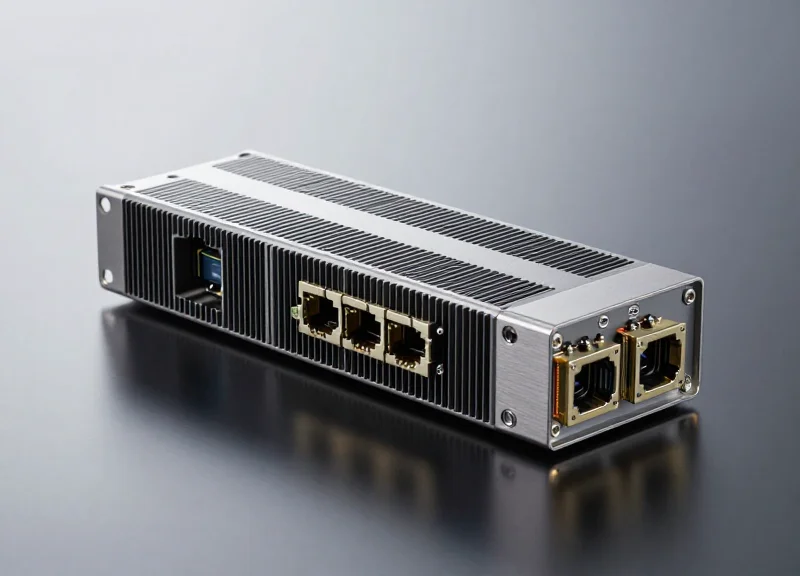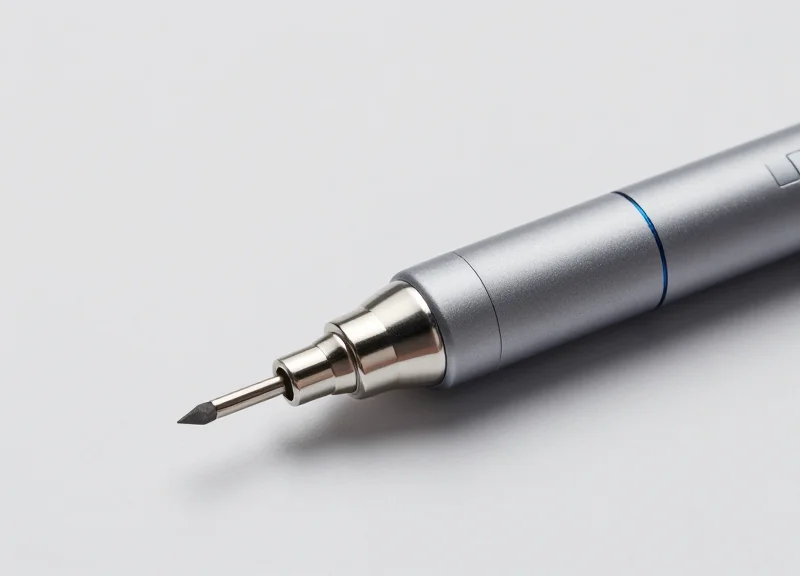
In the world of high-speed data transmission, even a microscopic dust particle can lead to catastrophic network failure. As global networks transition to higher densities with MPO and LC interfaces, the precision of connector cleaning has become the cornerstone of infrastructure reliability. Ubytelink delivers industry-leading cleaning modules designed to protect your mission-critical investment and ensure seamless data flow.
The Critical Role of Fiber End-Face Cleanliness
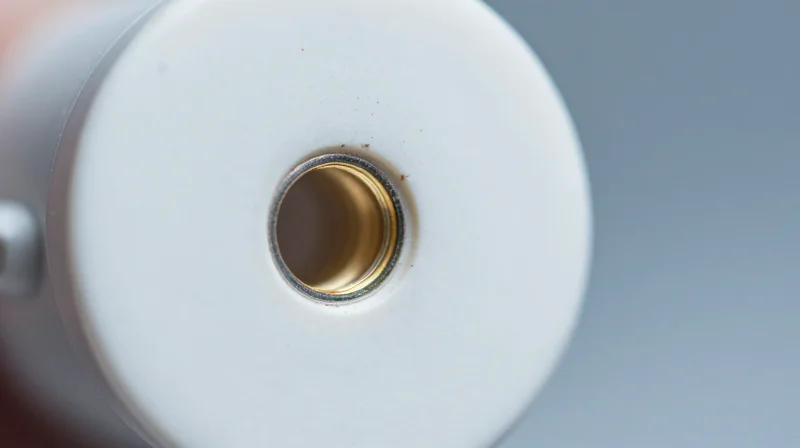
The Impact of Microscopic Contamination on Light Transmission
In fiber optic networks, the core of a single-mode fiber is approximately 9 microns in diameter—smaller than a single human hair. Consequently, even a microscopic speck of dust or a fingerprint smudge can completely obstruct the optical path, leading to significant Insertion Loss (IL) and catastrophic Return Loss (RL). When light encounters a contaminant, it is either absorbed or reflected back toward the source, causing signal attenuation, increased bit error rates, and potential damage to high-power laser transmitters through back-reflection.
Primary Contaminants and Their Origins
Contamination is often invisible to the naked eye but possesses physical properties that permanently damage glass interfaces. These contaminants typically fall into three categories: dry particles, fluid-based residues, and organic matter. If these are not removed before mating, the pressure of the connector alignment can embed particles into the glass, creating permanent pits and scratches.
- Dust and Airborne Particulates
Common in data center environments, these particles cause light scattering and can physically scratch the ferrule during the mating process. - Oils and Skin Residue
Oils from human skin are particularly problematic as they act as an adhesive for other particles and create a refractive index mismatch. - Manufacturing Residues
Even new cables can be contaminated by outgassing from plastic caps or debris from the assembly environment, necessitating a 'clean every time' protocol.
Technical Performance Comparison
| Parameter | Clean End-Face (Pristine) | Contaminated End-Face |
|---|---|---|
| Insertion Loss (IL) | Typically < 0.25 dB | > 1.0 dB or Total Signal Loss |
| Return Loss (RL) | High (> 55 dB) | Low (High Back-reflection) |
| Signal Integrity | Optimal Data Throughput | High Bit Error Rate (BER) |
| Hardware Longevity | Minimized Component Stress | Risk of Laser Damage |
Fiber Cleaning FAQ
- Why should I clean a brand-new connector out of the bag?
Protective dust caps are not always clean; they can contain mold-release agents or plastic particulates that transfer to the end-face during shipping. - What is the 'Inspect-Clean-Inspect' workflow?
It is the industry-standard process of using a fiber microscope to verify cleanliness before mating, cleaning if necessary, and re-inspecting to ensure no new debris was introduced. - Can contamination spread between connectors?
Yes. If a dirty connector is mated to a clean one, the contaminants are transferred and often compressed, making them much harder to remove later.
Understanding MPO vs. LC Cleaning Challenges
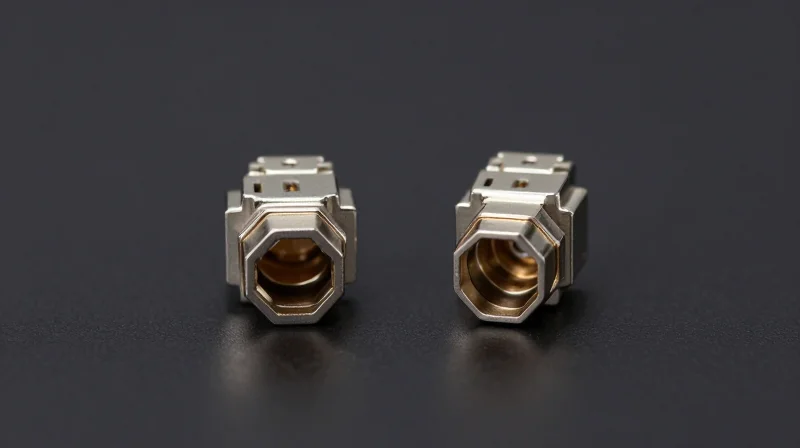
Understanding the discrepancy between MPO and LC cleaning challenges is vital for maintaining network integrity, as these interfaces differ significantly in surface geometry, fiber count, and susceptibility to contamination. While LC connectors utilize a singular 1.25mm ceramic ferrule, MPO connectors house an array of fibers—typically 12 to 32—across a much larger, flat surface area, which dramatically increases the probability of a single particle causing a multi-channel failure.
MPO Connectors: The Multi-Fiber Contamination Multiplier
The primary challenge with MPO (Multi-Fiber Push-On) interfaces lies in their 'all-or-nothing' nature. Because multiple fibers are polished on a single rectangular ferrule, a microscopic contaminant can easily migrate across the surface during the mating process. This cross-contamination can lead to insertion loss or permanent damage (pitting) across several fiber channels at once. Furthermore, male MPO connectors feature alignment pins that create recessed areas where dust can accumulate, making traditional cleaning methods less effective without specialized tools.
LC Connectors: Precision and Port Density
LC connectors are the standard for high-density single-fiber connections, but their small 1.25mm form factor presents its own set of hurdles. The main difficulty is accessibility within high-density patch panels where ports are tightly packed. Unlike MPO, where the surface is broad, the LC ferrule is narrow and deeply recessed. Contaminants often hide on the ferrule's edge and migrate to the core during thermal expansion or vibration, requiring high-precision 'one-click' cleaners that can reach into the adapter without disrupting adjacent links.
| Feature | LC Connector (Single-Fiber) | MPO Connector (Multi-Fiber) |
|---|---|---|
| Ferrule Diameter/Size | 1.25mm Circular | ~6.4mm x 2.5mm Rectangular |
| Primary Risk Factor | Core Centricity/Edge Migration | Cross-Contamination/Static Pull |
| Cleaning Complexity | Moderate - Requires deep reach | High - Requires uniform pressure |
| Cleaning Tool Needed | 1.25mm One-Click / Swab | MPO One-Click / Cassette |
Maintenance Best Practices FAQ
- Can I use an LC cleaning tool on an MPO connector?
No. The 1.25mm tip of an LC cleaner cannot cover the wide rectangular surface of an MPO ferrule and may damage the alignment pins or the fibers. - Why does MPO require more frequent inspection?
Due to the larger surface area and static charge associated with the polymer ferrule, MPO connectors attract significantly more dust from the environment than LC connectors. - Is 'dry' cleaning enough for both types?
While 'one-click' dry cleaners are efficient, heavy oils or residues often require a 'wet-to-dry' method for both MPO and LC to ensure the end-face is completely residue-free.
Engineering Excellence: The Ubytelink Cleaning Module Design
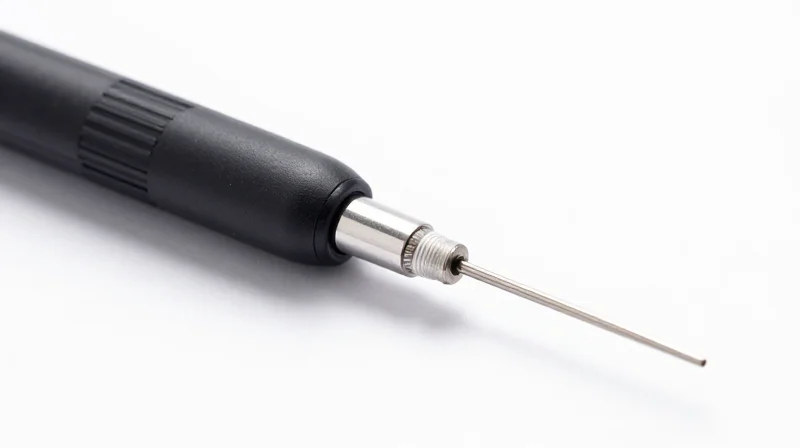
Ubytelink fiber cleaning modules are engineered through a combination of proprietary high-density micro-fiber tapes and a precision-calibrated mechanical delivery system, ensuring consistent, non-destructive debris removal across both MPO and LC interfaces. By utilizing a 'dry-cleaning' methodology that eliminates the need for volatile solvents, Ubytelink ensures that the delicate glass surfaces of high-speed optical connectors remain pristine and free from chemical residues or 'halo' effects that can occur with traditional cleaning fluids.
Proprietary Micro-fiber Material Science
The core of the Ubytelink module is a high-purity, lint-free micro-fiber filament woven into a dense matrix. This specific weave is designed to provide high surface area contact at the microscopic level, allowing it to lift and trap contaminants such as skin oils, salts, and sub-micron dust particles rather than merely pushing them across the ferrule surface. The filament's tensile strength is optimized to prevent fraying, ensuring that the cleaning process itself does not introduce new particulates into the optical path.
Precision Engineering vs. Generic Solutions
| Engineering Attribute | Ubytelink Module Design | Generic/Standard Cleaners |
|---|---|---|
| Cleaning Filament | Ultra-dense Synthetic Micro-fiber | Standard Polyester/Cotton Blend |
| Mechanical Action | Calibrated 180-Degree Rotation | Simple Linear Swipe |
| Static Management | Conductive Anti-Static Housing | Non-conductive Plastics |
| Residue Risk | Zero-Lint/Dry Tech | High Lint/Variable Residue |
ESD Safety and Anti-Static Protection
One of the most critical aspects of Ubytelink's engineering is the integration of anti-static properties into the module housing. Electrostatic discharge (ESD) during the cleaning process can turn a fiber end-face into a 'dust magnet,' attracting airborne particles immediately after the tool is removed. Ubytelink uses advanced anti-static resins that dissipate charge during the cleaning cycle, ensuring the ferrule remains neutral and stays clean for longer periods in high-density data center environments.
- Does the module support both UPC and APC connectors?
Yes, the Ubytelink cleaning tip is engineered with a flexible, conforming head that maintains optimal contact pressure for both Physical Contact (UPC) and Angled Physical Contact (APC) geometries. - Is the cleaning tape replaceable in these modules?
To maintain mechanical tensioning and prevent contamination of internal components, Ubytelink modules are designed as high-cycle single-unit tools, providing 525+ to 800+ cleans depending on the specific model. - Why is a dry cleaning system preferred over solvent-based systems?
Dry cleaning prevents 'solvent creep,' where excess fluid enters the connector housing, and avoids the risk of leaving streaks or drying residues that can increase insertion loss over time.
Combating Insertion Loss and Back Reflection

Combating Insertion Loss and Back Reflection
In the realm of high-speed fiber optics, insertion loss (IL) and back reflection—quantified as Return Loss (RL)—are the critical metrics that determine the reliability of a link. Microscopic contaminants like dust, skin oils, and salt spray at the ferrule interface create air gaps or scatter light, leading to signal attenuation and noise. Ubytelink cleaning modules are precision-engineered to achieve a 'pristine mating state,' ensuring that the physical contact (PC) or angled physical contact (APC) interfaces meet the stringent IEC 61300-3-35 standards for end-face quality.
The Relationship Between Contamination and Optical Performance
| Contaminant Type | Primary Performance Impact | Signal Consequence |
|---|---|---|
| Dry Dust Particles | Increased Insertion Loss (IL) | Light scattering and physical obstruction of the core. |
| Skin Oils/Fingerprints | High Back Reflection (Lower RL) | Index-matching effects that cause signal bounce-back. |
| Liquid Residue | Signal Instability | Ghosting effects and increased Bit Error Rate (BER). |
| Physical Scratches | Permanent Attenuation | Irreversible damage requiring connector replacement. |
Back reflection is particularly hazardous in high-power systems and coherent optical networks (like 400G/800G). When light is reflected back toward the transmitter, it creates optical feedback that can destabilize the laser source and increase noise. Ubytelink’s advanced micro-woven cleaning fabric is designed to lift and sequester debris without the use of harsh solvents that could leave residues, effectively maintaining Return Loss at levels better than -55dB for single-mode fibers.
Optimizing Return Loss (RL) in MPO/MTP Interfaces
MPO connectors present a unique challenge for Return Loss due to their multi-fiber array. A single speck of dust on one fiber can prevent the entire array from making uniform physical contact. Ubytelink cleaning modules apply consistent pressure across the entire MT ferrule, ensuring that every fiber in the 12, 24, or 32-fiber ribbon is equally clean. This uniformity is essential for minimizing the 'skew' and maintaining signal phase consistency across parallel lanes.
- How does Ubytelink prevent 'Static Charge' during cleaning?
Ubytelink modules use specialized anti-static materials that neutralize the ferrule surface, preventing the immediate re-attraction of airborne dust after cleaning. - Why is Return Loss more critical than Insertion Loss in modern links?
While IL reduces signal strength, poor RL introduces noise and multi-path interference, which can cause total link failure in high-order modulation formats like PAM4. - Can Ubytelink tools recover a link with high BER?
Yes, in many cases, a high Bit Error Rate is caused by 'invisible' oil films that Ubytelink’s dry-cleaning technology is specifically optimized to remove.
Standardization and Compliance in Data Center Environments
Standardization and Compliance in Data Center Environments
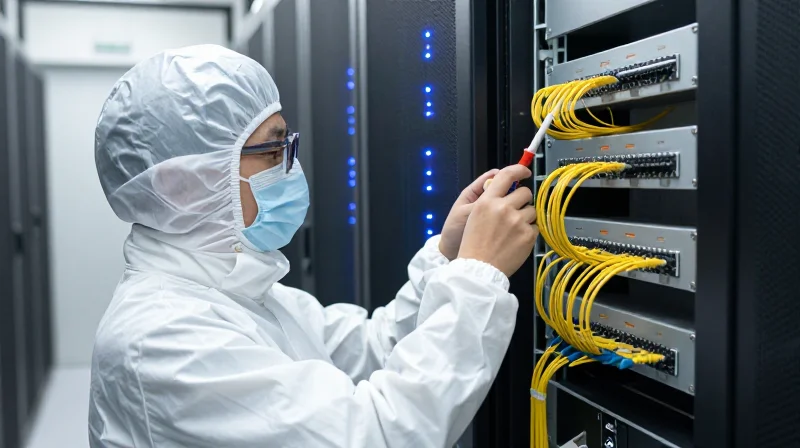
Adhering to international standards is a non-negotiable requirement in modern high-density data centers, where even minor contaminants can lead to catastrophic network failure. Ubytelink Fiber Connector Cleaning (MPO/LC) solutions are engineered specifically to help technicians meet and exceed the IEC 61300-3-35 standard, which defines the quantitative requirements for fiber optic connector end-face quality. By utilizing Ubytelink’s precision cleaning modules, organizations can ensure that their fiber infrastructure passes automated inspection protocols, thereby minimizing the risks associated with signal degradation and hardware damage.
The IEC 61300-3-35 Benchmark: Ensuring Optical Integrity
The IEC 61300-3-35 standard classifies connector end-face zones—Core, Cladding, Adhesive, and Contact—and sets strict limits on the size and quantity of scratches and defects allowed in each. Ubytelink's cleaning technology is designed to address the most sensitive areas, particularly the core and cladding, where contamination most significantly impacts insertion loss and back reflection. The specialized micro-fibers used in Ubytelink modules lift debris away without leaving residues or creating new scratches, which is critical for passing the rigorous 'Pass/Fail' assessments conducted by digital inspection probes.
| Inspection Zone | IEC 61300-3-35 Criteria | Ubytelink Solution Impact |
|---|---|---|
| Zone A: Core | Zero scratches or defects allowed. | Non-abrasive cleaning preserves core integrity. |
| Zone B: Cladding | No large scratches; limited minor defects. | High-density fabric captures sub-micron particles. |
| Zone C: Adhesive | Limited debris allowed near the ferrule. | Antistatic materials prevent dust re-attraction. |
| Zone D: Contact | No debris that prevents physical contact. | Uniform pressure ensures full-surface cleaning. |
The Importance of Compliance for Global Networks
For global network operators, standardization ensures interoperability and consistent performance across different geographical regions. When technicians use Ubytelink solutions, they are employing a standardized cleaning process that yields predictable, high-quality results. This consistency is vital during large-scale deployments of 400G and 800G Ethernet, where the margins for error are significantly narrower than in legacy 10G or 40G systems. Compliance with IEC standards using Ubytelink tools reduces the need for costly troubleshooting and ensures that the physical layer remains robust against the demands of high-speed data transmission.
- Why is IEC 61300-3-35 compliance necessary for data centers?
Compliance ensures that fiber end-faces are clean enough to prevent signal loss and physical damage to expensive transceivers, maintaining the reliability required for high-uptime environments. - How does Ubytelink help in passing automated inspections?
Ubytelink tools use medical-grade, lint-free cleaning ribbons that effectively remove oils and dust in a single click, ensuring the end-face meets the 'Pass' threshold in automated software evaluations. - Can non-compliant cleaning tools damage the network?
Yes, sub-par cleaning tools can introduce scratches or static charges that attract more dust, leading to a failure of IEC standards and permanent damage to the fiber ferrule.
Operational Efficiency: Simplifying Maintenance Workflows
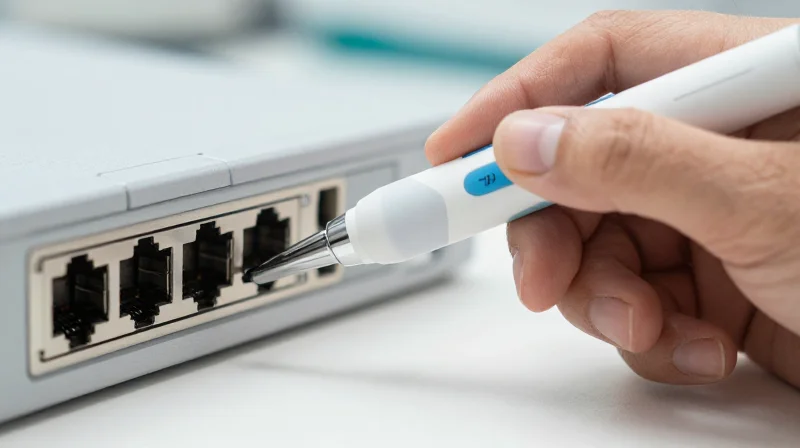
Operational efficiency in modern fiber networks depends on the speed and reliability of maintenance cycles; Ubytelink Fiber Connector Cleaning (MPO/LC) Solutions simplify these workflows by replacing cumbersome manual processes with standardized, ergonomic tools that ensure first-pass success. By integrating these tools into standard operating procedures, network operators can significantly reduce the 'Mean Time To Repair' (MTTR) and prevent the recurring costs associated with improper cleaning techniques.
The One-Click Ergonomic Advantage
Field engineers often face high-pressure environments, such as crowded data center aisles or remote cell towers, where every second of downtime is critical. Ubytelink tools are engineered for intuitive, one-handed operation. By utilizing a mechanical 'push-to-clean' action, the tool automatically advances the cleaning ribbon and applies the precise amount of force needed to remove oils and dust without damaging the delicate end-face. This eliminates the variability of manual wiping, where excessive pressure or incorrect angles can lead to permanent fiber scratches.
Workflow Efficiency Comparison
| Maintenance Metric | Manual Wiping/Alcohol | Ubytelink One-Click Solution |
|---|---|---|
| Cleaning Time per Port | 30-60 seconds | < 3 seconds |
| Risk of Cross-Contamination | High (open wipes/residue) | Near Zero (sealed ribbon) |
| Consistency | Variable (Technician-dependent) | Standardized Mechanical Pressure |
| Tool Portability | Multiple supplies needed | Single, pocket-sized tool |
| Training Requirements | Extensive technique training | Minimal (Point-and-click) |
Reducing Human Error in High-Density MPO Environments
In complex MPO environments where 12 or 24 fibers must be cleaned simultaneously, the margin for error is razor-thin. A single contaminated fiber in an MPO trunk can degrade the performance of the entire link. Ubytelink’s MPO cleaners provide a uniform sweep across the entire array end-face in a single motion. This systematic approach ensures that global networks maintain high performance with fewer truck rolls and fewer instances of 'no fault found' re-inspections.
Maintenance Workflow FAQ
- How does the one-click design reduce technician fatigue?
The lightweight housing and low-actuation force allow for hundreds of cleanings per shift without the physical strain associated with traditional manual cleaning kits. - Are these tools compatible with both patch cords and bulkhead adapters?
Yes, Ubytelink tools feature an extendable tip and a removable cap, allowing technicians to clean both exposed connectors and those recessed behind patch panels without changing tools. - What is the capacity of a single Ubytelink cleaning unit?
Most Ubytelink premium models provide 500+ to 800+ cleanings per unit, offering a high duty cycle that minimizes the frequency of tool replenishment in the field.
By standardizing on Ubytelink Fiber Connector Cleaning (MPO/LC) Solutions, organizations empower their field teams to perform precision maintenance with speed and confidence, ensuring that the physical layer remains a robust foundation for global digital infrastructure.
Why Global Enterprises Trust Ubytelink for Network Longevity
Why Global Enterprises Trust Ubytelink for Network Longevity
Ubytelink has established itself as a critical partner for global enterprises by providing fiber cleaning solutions that directly correlate with the extended lifespan of mission-critical network hardware. In high-density environments where the cost of a single transceiver failure can trigger significant downtime and replacement expenses, Ubytelink’s MPO and LC cleaning tools act as a safeguard for physical layer integrity. By ensuring that every connection point is free of microscopic debris, these solutions prevent the permanent hardware degradation—such as ferrule pitting and laser-induced 'burn-in'—that occurs when contaminants are ignored.
Maximizing Component Lifecycle and CAPEX Protection
The trust placed in Ubytelink stems from the brand's commitment to precision engineering. For global enterprises, the goal is to maximize the Return on Investment (ROI) of their fiber infrastructure. Ubytelink tools facilitate this by maintaining optimal Return Loss (RL) and Insertion Loss (IL) levels over thousands of mating cycles. Without professional-grade cleaning, the cumulative damage from dust and skin oils can render expensive patch cords and transceivers useless within months. Ubytelink’s 'one-click' technology ensures that technicians can maintain these standards consistently, regardless of the scale of the deployment.
| Maintenance Strategy | Impact on Transceiver Life | Network Reliability | Long-term Cost Impact |
|---|---|---|---|
| Reactive/Minimal Cleaning | High risk of early failure due to pitting | Intermittent signal drops and errors | High (Frequent replacement costs) |
| Ubytelink Proactive Cleaning | Maximized (Protects ferrule surface) | Consistent high-speed performance | Low (Protects initial CAPEX investment) |
Enterprise FAQ: Sustaining Network Performance
- How does Ubytelink improve long-term network stability?
By effectively removing 99% of contaminants that cause signal reflection and attenuation, Ubytelink ensures that the signal quality remains within the original design parameters of the hardware for its entire rated lifespan. - Can these cleaning solutions prevent permanent transceiver damage?
Yes. High-power optical signals can trap dust particles against the ferrule, causing permanent heat-related damage (pitting). Ubytelink's lint-free cleaning ribbons remove these particles before they can be fused to the surface. - Why is Ubytelink preferred for high-density MPO environments?
Ubytelink's MPO cleaners are designed for the high-precision requirements of multi-fiber arrays, ensuring that all 12 or 24 fibers are cleaned uniformly, which is essential for maintaining the integrity of 100G/400G links.
Ultimately, the adoption of Ubytelink Fiber Connector Cleaning (MPO/LC) Solutions represents a strategic shift from simple maintenance to comprehensive asset protection. For global enterprises managing vast networks, the reliability and consistency of Ubytelink tools provide the peace of mind that their premium infrastructure will continue to perform at peak efficiency for years to come.
Cost-Benefit Analysis of Proactive Connector Care
The Financial Imperative of Proactive Fiber Maintenance
For global network operators, the cost of a single Ubytelink cleaning module is negligible when measured against the catastrophic financial impact of a fiber link failure. Proactive maintenance ensures that signal integrity remains within peak parameters, preventing the 'thermal runaway' and physical pitting that occurs when contaminated connectors are mated under high laser power. By integrating Ubytelink’s one-click solutions into standard operating procedures, enterprises transition from a reactive 'break-fix' model to a predictable, high-uptime environment, ultimately safeguarding the massive capital expenditure invested in transceivers and backbone cabling.
Cost Comparison: Maintenance vs. System Failure
| Metric | Proactive Cleaning (Ubytelink) | Reactive Repair/Downtime |
|---|---|---|
| Tooling Cost | Low (Price per click < $0.05) | High (Emergency logistics & parts) |
| Labor Impact | Minimal (Seconds per port) | Extensive (Hours of troubleshooting) |
| Hardware Longevity | Extended (Reduced wear on ferrule) | Shortened (Physical damage/scratches) |
| Network Availability | 99.999% (Sustained performance) | High Risk (Unplanned outages) |
The long-term savings extend beyond immediate repair costs. In high-density environments like hyperscale data centers, the failure of a single 400G MPO link can disrupt thousands of concurrent sessions. Ubytelink's cleaning solutions mitigate this risk at a fraction of the cost of a single service level agreement (SLA) credit. Furthermore, because clean connectors require less troubleshooting and re-testing, technicians can complete deployments up to 30% faster, directly lowering labor-related OPEX.
ROI and Asset Protection FAQ
- What is the estimated ROI of using Ubytelink tools?
The ROI is typically realized within the first avoided outage. While a cleaning tool costs tens of dollars, a single hour of data center downtime can cost upwards of $300,000 in lost revenue and productivity. - How does cleaning prevent hardware replacement?
Dust and oils trapped between connectors under pressure can cause permanent scratches or 'pitting' on the glass. Once pitted, the cable or transceiver must be replaced. Ubytelink tools remove these contaminants before mating. - Does proactive cleaning reduce long-term labor costs?
Yes. By ensuring 'first-time-right' connections, Ubytelink tools eliminate the need for costly rework and secondary truck rolls, allowing engineering teams to focus on expansion rather than maintenance.
Maintaining the integrity of your optical network requires more than just high-quality cables; it demands a commitment to cleanliness and precision. Ubytelink's MPO and LC cleaning solutions provide the professional-grade protection needed for today's high-density, high-speed environments. Contact our technical team today to optimize your infrastructure's performance and ensure your global network remains future-proof.