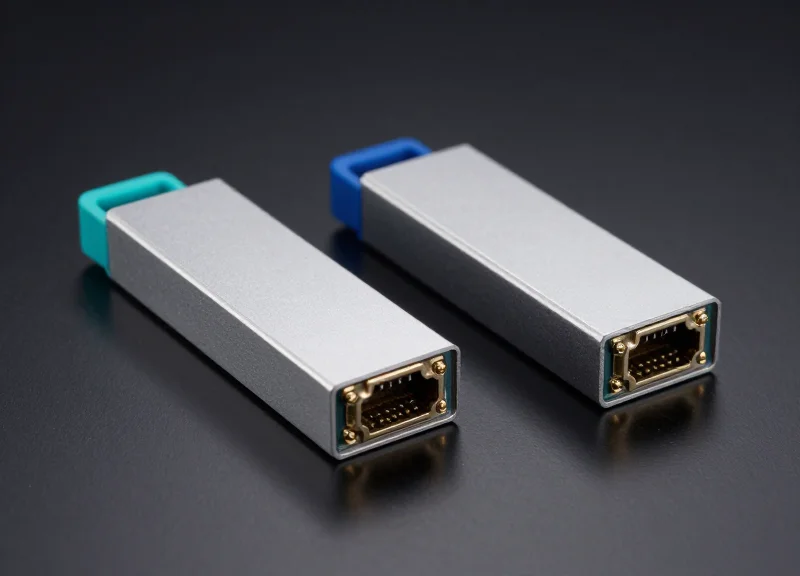
As modern data centers scale to meet increasing bandwidth demands, the 10G SFP+ transceiver remains a cornerstone of reliable network architecture. However, the choice between Short Range (SR) and Long Reach (LR) optics is often a source of confusion for network engineers. This guide provides a technical deep dive into these modules, addressing performance benchmarks, compatibility, and real-world deployment strategies to help you build a future-proof network.
Introduction to the 10G SFP+ Form Factor
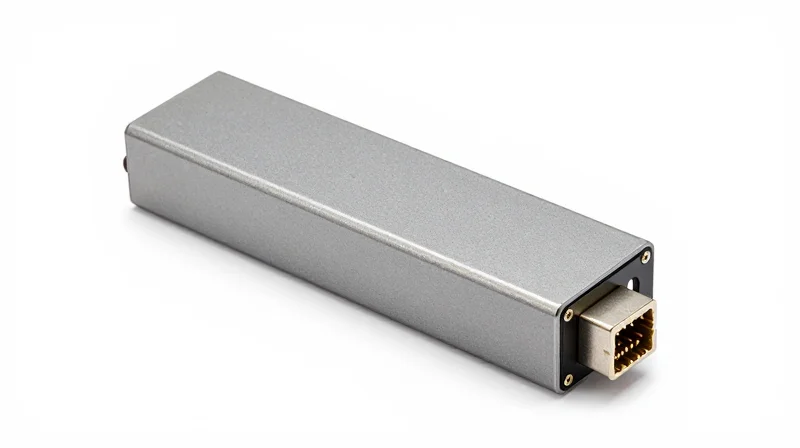
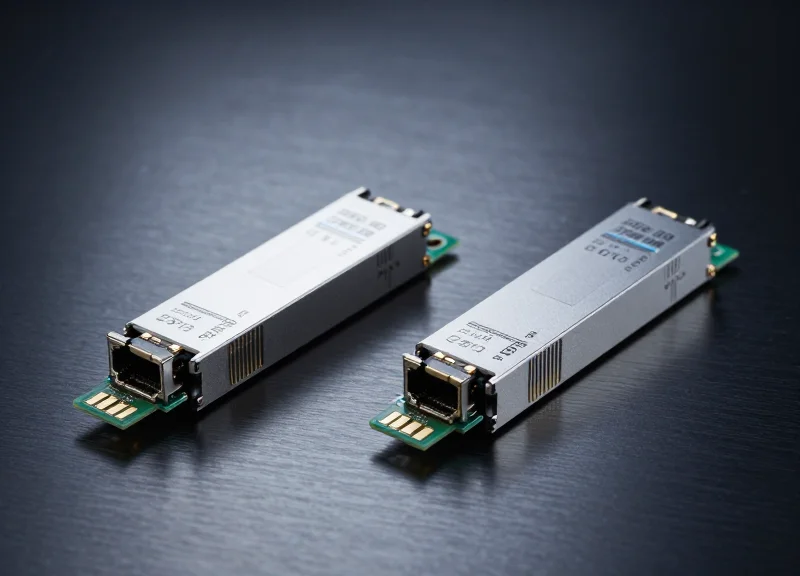
The 10G SFP+ (Small Form-factor Pluggable Plus) is a compact, hot-swappable optical transceiver designed to support 10Gbps data rates across various networking environments. As an evolution of the original SFP standard, SFP+ was specifically engineered to meet the increasing bandwidth demands of enterprise data centers and telecommunication hubs. By offloading certain processing functions—such as clock and data recovery (CDR)—to the host line card, the SFP+ module achieves a significantly smaller physical footprint and lower power profile compared to its predecessors, making it the most cost-effective and high-density solution for 10GbE deployments.
The Evolution of 10G: SFP+ vs. XFP
Prior to the widespread adoption of SFP+, the XFP (10 Gigabit Small Form-factor Pluggable) was the industry standard for 10Gbps connectivity. While functional, XFP modules were bulky and required more power because they contained internal processing components that SFP+ eventually moved to the motherboard. The shift to SFP+ allowed hardware manufacturers to increase port density on switches and routers, essentially doubling or tripling the capacity available in a single rack unit (RU).
| Feature | XFP Module | SFP+ Module |
|---|---|---|
| Dimensions | Larger (Approx. 71mm length) | Smaller (Approx. 56mm length) |
| Power Consumption | Typically 2.5W - 3.5W | Typically < 1.0W |
| Port Density | Lower (approx. 16 ports per line card) | Higher (up to 48 ports per line card) |
| Standardization | INF-8077i | SFF-8431 |
Key Design Advantages of SFP+
The success of the SFP+ form factor is attributed to its balance of performance and physical efficiency. Because it shares the same physical dimensions as the 1G SFP, it allowed a seamless transition for hardware vendors, who could design 'SFP/SFP+' ports that support both speeds. This versatility is critical for businesses migrating from legacy Gigabit Ethernet to 10G infrastructures.
- Is SFP+ compatible with legacy SFP?
Most SFP+ ports are backwards compatible and can accept 1G SFP modules, but an SFP+ module will not function in a port designed strictly for 1G SFP due to clocking differences. - What is the primary benefit of the smaller SFP+ size?
Increased port density allows network engineers to maximize throughput in limited data center space, supporting more connections per switch. - Does SFP+ support both copper and fiber?
Yes, the SFP+ form factor supports Direct Attach Copper (DAC) cables for short distances and various optical fiber types (SR, LR, ER) for longer distances.
10G SFP+ SR: Technical Specifications and Short-Range Use Cases
The 10G SFP+ SR (Short Reach) transceiver is the industry-standard solution for high-speed data transmission over multimode fiber (MMF). Utilizing a Vertical-Cavity Surface-Emitting Laser (VCSEL) operating at a nominal wavelength of 850nm, these modules offer a cost-effective balance between performance and power consumption. They are designed specifically for high-density 10 Gigabit Ethernet environments where low latency and high reliability are paramount, serving as the primary interconnect method for short-distance infrastructure.
Technical Specifications of 10G SFP+ SR
| Parameter | Specification Detail |
|---|---|
| Wavelength | 850 nm |
| Media Type | Multimode Fiber (MMF) |
| Transmitter Type | VCSEL |
| Connector Type | LC Duplex |
| Typical Power Consumption | < 1.0 W |
| Operating Temperature Range | 0°C to 70°C (Commercial) |
Fiber Compatibility and Distance Limits
The maximum transmission distance of a 10G SFP+ SR module is strictly dependent on the grade of multimode fiber used. While legacy OM1 and OM2 fibers provide very limited range for 10G signals, laser-optimized OM3 and OM4 fibers are the standard choice for reaching maximum specifications. The modal bandwidth of the fiber determines how far the light signal can travel before pulse spreading (dispersion) causes bit errors.
| Fiber Type | Core Diameter | Maximum Reach |
|---|---|---|
| OM1 | 62.5 μm | 33 meters |
| OM2 | 50 μm | 82 meters |
| OM3 | 50 μm | 300 meters |
| OM4 | 50 μm | 400 meters |
Short-Range Use Cases
- Intra-Rack Connectivity (Top-of-Rack)
The most common application for SR modules is connecting Top-of-Rack (ToR) switches to individual servers within the same or adjacent 19-inch racks. - Data Center Core/Aggregation Layers
Used to link aggregation switches to core switches within a centralized data hall where distances rarely exceed 300 meters. - Enterprise LAN Backbones
Ideal for vertical backbone cabling in office buildings, connecting floor-level distribution switches to a central main distribution frame (MDF). - Storage Area Networks (SAN)
Widely deployed in 10G Fibre Channel over Ethernet (FCoE) environments to connect storage arrays to high-speed fabric switches.
Common Questions Regarding 10G SR
- Can 10G SFP+ SR work on Single-Mode Fiber?
No. The 850nm VCSEL laser and the receiver sensitivity are designed for the 50/62.5 micron core of multimode fiber. Using single-mode fiber (9 micron core) will result in extreme signal loss and link failure. - Does 10G SR require an attenuator?
Typically, no. Unlike long-haul LR or ER modules, SR modules do not usually output enough power to saturate or damage the receiver, even at very short distances (e.g., 1 meter). - Is SFP+ SR backward compatible with SFP?
While an SFP+ slot can often accept a 1G SFP module, a 10G SR module cannot 'negotiate down' to 1G speeds unless the specific hardware and firmware of the switch support multi-rate operation.
10G SFP+ LR: Long Reach Capabilities and Enterprise Applications
10G SFP+ LR: Engineering the 10km Threshold
The 10G SFP+ LR (Long Reach) transceiver is a high-performance optical module designed for 10 Gigabit Ethernet applications over single-mode fiber (SMF). Unlike the SR variant which relies on short-wavelength lasers, the LR module operates at a nominal wavelength of 1310nm, utilizing Distributed Feedback (DFB) lasers to achieve link lengths of up to 10 kilometers (6.2 miles). This makes the LR standard the primary choice for interconnecting geographically dispersed facilities or bridging the gap between data center rows where multimode fiber distance limits are exceeded.
The Role of 1310nm DFB Lasers and Single-mode Fiber
At the heart of the 10G SFP+ LR module is the Distributed Feedback (DFB) laser. Unlike the VCSELs used in SR modules, DFB lasers offer higher output power and a narrower spectral width, which are critical for maintaining signal integrity over kilometers of glass. When paired with Single-mode Fiber (OS1/OS2), which has a much smaller core diameter of approximately 9 microns compared to multimode fiber, modal dispersion is virtually eliminated. This allows the 1310nm signal to travel significant distances with minimal attenuation, ensuring that high-speed data remains readable at the receiver end without the need for frequent signal regeneration.
| Specification | 10G SFP+ LR Detail |
|---|---|
| Wavelength | 1310 nm |
| Laser Type | DFB (Distributed Feedback) |
| Fiber Type | Single-mode Fiber (SMF) |
| Max Distance | 10 km |
| Cable Diameter | 9/125 µm |
| Optical Budget | Approximately 6 dB to 9 dB |
Enterprise Applications and Campus Backbones
In the enterprise environment, 10G SFP+ LR transceivers serve as the 'connective tissue' for large-scale infrastructures. Common deployments include campus backbones, where multiple buildings must be linked to a central core switch. Because campus distances often exceed the 300-400m limit of multimode fiber, LR modules are indispensable. Additionally, they are used for Metropolitan Area Network (MAN) links and connecting remote disaster recovery sites to primary data centers, providing a cost-effective alternative to more expensive ER (Extended Reach) or ZR (Zero Reach) modules when the distance is under the 10km mark.
Common Questions Regarding 10G SFP+ LR
- Can I use 10G SFP+ LR with multimode fiber?
While physically possible with a mode-conditioning patch cable, it is not recommended for standard 10G operations as the distance is severely limited and performance is unpredictable. LR is designed specifically for single-mode fiber. - Do I need an attenuator for 10G SFP+ LR?
Generally, no. For most 10G LR modules, the receiver sensitivity and transmitter power are balanced such that an attenuator is not required even for short-distance loops, unlike high-power ER or ZR modules. - Is 10G SFP+ LR compatible with SFP28 ports?
Yes, most SFP28 (25G) ports are backward compatible with 10G SFP+ modules, allowing an LR module to function at 10G speeds in a 25G slot.
Side-by-Side Comparison: SR vs. LR Performance Matrix
Side-by-Side Comparison: SR vs. LR Performance Matrix
Choosing between 10G SFP+ SR and LR modules is fundamentally a trade-off between infrastructure cost and transmission distance. While SR (Short Reach) is the standard for high-density, low-cost data center cabling within 300 meters, LR (Long Reach) provides the optical power and signal integrity required for campus-wide connectivity and carrier-grade backhauls reaching up to 10 kilometers. The choice dictates not only the transceiver cost but also the specific cabling infrastructure—Multimode Fiber (MMF) for SR versus Single-mode Fiber (SMF) for LR—that must be deployed.
| Parameter | 10G SFP+ SR | 10G SFP+ LR |
|---|---|---|
| Wavelength | 850 nm | 1310 nm |
| Fiber Type | Multimode (MMF) | Single-mode (SMF) |
| Core Diameter | 50 / 62.5 µm | 9 µm |
| Laser Source | VCSEL | DFB Laser |
| Max Distance (OM3) | 300 meters | N/A |
| Max Distance (OS2) | N/A | 10 kilometers |
| Power Consumption | < 1.0 W | < 1.5 W |
| Typical Application | Intra-rack / Data Center | Campus / WAN / Inter-building |
Understanding Optical Budget and Sensitivity
The performance gap between SR and LR is driven by the optical power budget and receiver sensitivity. SFP+ SR modules are designed for high-speed modulation over short distances where dispersion is the primary limiting factor. In contrast, SFP+ LR modules use more sophisticated Distributed Feedback (DFB) lasers that emit a narrower spectral width, allowing the light to travel over the much smaller 9-micron core of single-mode fiber with minimal signal degradation over several miles.
Common Compatibility and Deployment Questions
- Can I connect an SFP+ SR module directly to an SFP+ LR module?
No. These modules use different wavelengths (850nm vs 1310nm) and different fiber types. The light pulses from an LR laser will not be correctly interpreted by an SR receiver, and the physical fiber core mismatch would result in massive signal loss. - Is SFP+ LR backward compatible with SFP+ SR cabling?
Generally, no. Running LR over multimode fiber requires specialized mode-conditioning patch cables and is limited to very short distances (approx. 220m-300m), making it inefficient compared to using the correct SR hardware. - Why is SR power consumption lower than LR?
SR modules use VCSEL (Vertical-Cavity Surface-Emitting Laser) technology, which requires significantly less current to drive than the DFB lasers used in LR modules, leading to lower heat generation and power draw.
Fiber Optic Cabling Essentials: OM3/OM4 vs. OS2
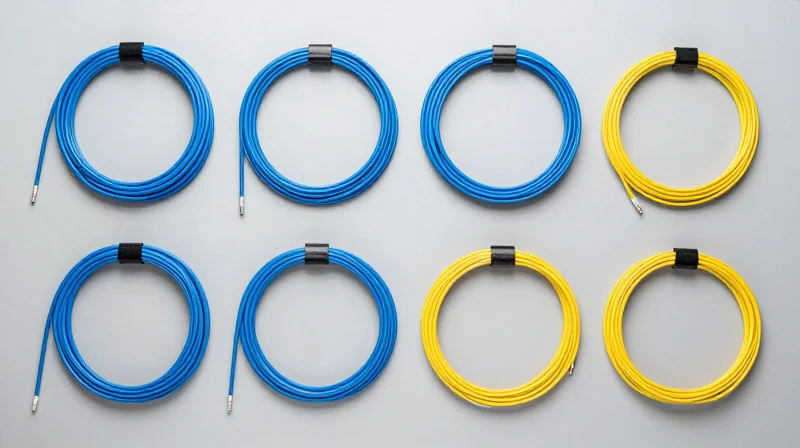
Selecting the correct fiber optic cabling is as vital as the transceiver itself, as the physical medium defines the maximum distance and bandwidth potential of a 10G network. While OM3 and OM4 multimode fibers are the standard for short-range (SR) connectivity within data centers, OS2 single-mode fiber is the mandatory choice for long-reach (LR) applications spanning campus environments or metropolitan areas.
Multimode Infrastructure: OM3 vs. OM4 for 10G SR
Multimode fiber (MMF) is characterized by its larger core diameter (typically 50 xm), which allows multiple light modes to propagate. For 10G SFP+ SR modules, the choice between OM3 and OM4 primarily impacts the maximum transmission distance due to modal bandwidth differences.
- OM3 Fiber
Laser-optimized with a 2000 MHz·km effective modal bandwidth (EMB), supporting 10G speeds up to 300 meters. - OM4 Fiber
Provides a higher EMB of 4700 MHz·km, extending the 10G reach to 400 meters, offering more headroom for complex patch environments.
Single-mode Dominance: OS2 for 10G LR
OS2 is the standard for single-mode fiber (SMF) with a much smaller core (9 xm), allowing only a single pathway for light. This eliminates modal dispersion, which is why OS2 is paired with 1310nm 10G SFP+ LR transceivers to achieve distances up to 10km. Unlike MMF, OS2 is designed for low attenuation over long distances, making it the backbone of enterprise and provider networks.
| Fiber Type | Mode | Core Diameter | Typical Transceiver | Max 10G Distance |
|---|---|---|---|---|
| OM3 | Multimode | 50 xm | SFP+ SR | 300m |
| OM4 | Multimode | 50 xm | SFP+ SR | 400m |
| OS2 | Single-mode | 9 xm | SFP+ LR | 10km |
Budget and Planning Considerations
While OS2 fiber cable is often cheaper per meter than OM3/OM4, the associated 10G SFP+ LR transceivers are more expensive due to the precision required in their laser components. Decision-makers must balance the lower cost of SR optics against the superior future-proofing and distance capabilities of an OS2-based LR deployment.
- Can I run an SR module over OS2 fiber?
No. The 850nm VCSEL laser in an SR module is not compatible with the 9µm core of OS2 fiber; the light will not couple correctly, resulting in total link failure. - Is OM4 backward compatible with OM3?
Yes, OM3 and OM4 can be mixed in the same link, but the entire channel will be limited to the performance specifications of the lowest-grade component (OM3).
Power Consumption and Thermal Management in 10G Networks
Power Consumption Profiles: 10G SFP+ SR vs. LR
While 10G SFP+ modules are engineered for high energy efficiency, the cumulative electrical draw of SR and LR transceivers in fully populated 48-port switches can significantly impact a facility's power budget and cooling requirements. Generally, the 10G SFP+ SR module is the most power-efficient option, typically consuming less than 1.0W, whereas the 10G SFP+ LR module consumes slightly more due to the higher driving current required for its long-range DFB laser.
The discrepancy in power usage stems from the laser technology utilized. SR modules employ Vertical-Cavity Surface-Emitting Lasers (VCSELs), which operate at lower bias currents. In contrast, LR modules use Distributed Feedback (DFB) lasers designed to push light through up to 10km of single-mode fiber, necessitating more robust driver circuitry and higher optical output power.
| Transceiver Type | Typical Power (Watts) | Max Power (Watts) | Laser Component |
|---|---|---|---|
| 10G SFP+ SR | 0.6W - 0.8W | 1.0W | 850nm VCSEL |
| 10G SFP+ LR | 0.9W - 1.2W | 1.5W | 1310nm DFB |
| 10G SFP+ ER | 1.2W - 1.5W | 1.8W | 1550nm EML |
Thermal Management in High-Density Environments
In high-density network deployments, such as Top-of-Rack (ToR) switches, SFP+ ports are tightly packed, which can lead to localized heat accumulation. If heat is not effectively dissipated, the internal temperature of the transceivers can exceed the standard operating range (typically 0°C to 70°C for commercial grade), leading to increased Bit Error Rates (BER) and reduced hardware lifespan.
Monitoring and Mitigation Strategies
Modern 10G SFP+ modules include Digital Optical Monitoring (DOM) or Digital Diagnostic Monitoring (DDM) capabilities. This allows network administrators to monitor real-time temperature, voltage, and bias current. To mitigate thermal issues, data centers should ensure proper airflow direction (front-to-back or back-to-front) that aligns with the switch fan configuration and utilize blanking panels in empty rack spaces to prevent hot air recirculation.
- How does high temperature affect 10G SFP+ SR performance?
Excessive heat causes the VCSEL laser to lose efficiency, resulting in a lower optical signal-to-noise ratio and potentially causing the link to drop or experience intermittent packet loss. - Is LR power consumption high enough to require special cooling?
Individually, no; however, in a 48-port switch, LR modules can generate nearly 60W of heat. Standard data center HVAC and switch fans are usually sufficient, provided there is no airflow obstruction. - What is the impact of power consumption on OpEx?
Lower power consumption, like that found in SR modules, reduces the total cost of ownership by lowering both direct electricity costs and the indirect costs associated with cooling the hardware.
DOM/DDM Support: Real-time Monitoring and Diagnostics

Digital Optical Monitoring (DOM), also known as Digital Diagnostic Monitoring (DDM), is a standardized feature in modern 10G SFP+ SR and LR transceivers that provides real-time access to operating parameters. By integrating a digital diagnostic interface based on the SFF-8472 specification, these modules allow switches and routers to monitor internal conditions and signal quality without interrupting data traffic, providing an essential layer of visibility for high-availability enterprise and data center networks.
Core Diagnostic Parameters in SFP+ Modules
The SFF-8472 standard defines a memory map that provides the host system with internal telemetry. For both 10G SR and LR modules, five primary metrics are monitored to ensure the optical link remains within its operational 'sweet spot.' Deviations in these values often serve as early warning signs for hardware failure or physical layer degradation.
| Parameter | Unit | Impact on Network Health |
|---|---|---|
| Transceiver Temperature | Celsius | High heat can accelerate laser aging and cause frequency drift. |
| Supply Voltage | Volts | Fluctuations may indicate power supply issues in the host switch. |
| TX Bias Current | mA | An increase in current is often a sign of a degrading laser diode. |
| TX Output Power | dBm/mW | Ensures the transmitter is emitting a signal strong enough for the link. |
| RX Received Power | dBm/mW | Crucial for detecting dirty connectors, fiber bends, or excessive attenuation. |
Predictive Maintenance and Troubleshooting
The true value of DOM lies in its ability to facilitate predictive maintenance. Instead of reacting to a total link failure, network engineers can set thresholds for 'Warnings' and 'Alarms.' For example, if the RX power on a 10G SFP+ LR link begins to drop over several weeks, it may indicate a dusty patch cable or a failing splice. Similarly, monitoring the TX Bias Current can predict the end-of-life for a laser before it actually stops transmitting, allowing for scheduled replacement during maintenance windows rather than emergency downtime.
Common Monitoring Scenarios
- Is DDM support mandatory?
While not strictly mandatory for the basic operation of 10G SFP+, it is a standard feature on most professional-grade SR and LR modules. Always verify 'DOM/DDM' support in the transceiver specifications to ensure compatibility with your monitoring software. - How does DOM identify dirty fiber?
If the TX power at one end is normal but the RX power at the other end is significantly lower than expected, it typically points to physical layer issues like contaminated connectors or high-loss fiber spans. - Can DOM prevent hardware damage?
Yes, by monitoring temperature and voltage, the host switch can trigger alerts or even shut down a port if a module is overheating, preventing permanent damage to both the transceiver and the switch ASIC.
In summary, DOM/DDM is an indispensable tool for managing 10G SFP+ infrastructure. Whether deploying Short Range multimode or Long Range single-mode fibers, the data provided by these diagnostic interfaces ensures that the physical layer remains robust and transparent, significantly reducing the Mean Time to Repair (MTTR) when issues arise.
Interoperability and Avoiding Vendor Lock-In
Interoperability and Avoiding Vendor Lock-In
Achieving a flexible and scalable 10G network requires moving beyond proprietary hardware constraints by leveraging the standardized specifications of Multi-Source Agreements (MSA). While many Tier-1 networking vendors encourage the use of their own branded 10G SFP+ SR and LR modules, the underlying technology is standardized across the industry, meaning that 'compatible' optics often provide identical performance at a fraction of the cost.
The Role of Multi-Source Agreements (MSA)
The SFP+ form factor is governed by MSA standards (such as SFF-8431 and SFF-8472), which define the mechanical, electrical, and data signaling interfaces. These agreements ensure that any 10G SFP+ module, whether SR or LR, will physically fit into a standard port and communicate with the host system. The primary difference between a 'vendor-branded' module and a third-party module lies in the EEPROM coding, which contains the vendor name, serial number, and security keys required for the switch to 'recognize' the transceiver.
| Feature | OEM Transceivers | Third-Party (MSA) Transceivers |
|---|---|---|
| Cost | High (Premium pricing) | Low (Market-driven pricing) |
| Standardization | MSA Compliant | MSA Compliant |
| Components | Tier-1 Lasers/Chips | Tier-1 Lasers/Chips (Reputable vendors) |
| Warranty Support | Full OEM support | Legally protected (Magnuson-Moss Act) |
| Availability | Subject to OEM stock | Widely available/Fast shipping |
Strategic Implementation of Compatible Optics
To avoid vendor lock-in, administrators should prioritize transceivers that are pre-coded for their specific hardware environment (e.g., Cisco, Arista, or Juniper). Modern high-quality third-party SR and LR modules undergo rigorous validation in the target hardware to ensure that Digital Optical Monitoring (DOM) and link auto-negotiation work seamlessly. This approach allows organizations to allocate more budget toward high-capacity switches or Single-mode fiber infrastructure rather than overpaying for proprietary optics.
Common Interoperability Questions
- Does using third-party SFP+ modules void my switch warranty?
No. Legally, in many jurisdictions like the US, manufacturers cannot void a hardware warranty simply because a third-party component was used. If a port fails due to a faulty optic, that specific port might not be covered, but the overall switch warranty remains intact. - Why does my switch show an 'unsupported transceiver' error?
This is often a software-level check intended to encourage OEM purchases. Most enterprise switches have CLI commands, such as 'service unsupported-transceiver', to bypass these warnings and enable the link. - Can I mix SR and LR modules on the same link?
No. Interoperability requires matching the wavelength and fiber type. An SR module (850nm) cannot communicate with an LR module (1310nm) because their optical properties and power levels are fundamentally different.
Choosing the Right Module: Cost-Benefit Analysis
Choosing the right 10G SFP+ module is not merely a matter of matching distance requirements; it is a complex calculation involving the cost of the optical transceivers, the underlying fiber plant, and the projected growth of the network architecture. While SR modules are the default choice for short-reach data center applications due to lower transceiver costs, the higher price of multimode fiber cabling often makes LR modules on single-mode fiber a more cost-effective solution for long-range or campus-wide deployments where future-proofing is a priority.
CAPEX vs. OPEX: The Real Cost of Fiber Infrastructure
When analyzing the budget for a 10G rollout, many network engineers focus solely on the 'price per port' of the SFP+ module. However, the choice of module dictates the choice of fiber. SR modules utilize Multimode Fiber (MMF), such as OM3 or OM4, which is significantly more expensive per foot than the Single-mode Fiber (SMF) used by LR modules. In large-scale deployments, the savings gained from cheaper SR optics can be quickly erased by the premium paid for high-grade multimode cabling.
| Factor | 10G SFP+ SR (Multimode) | 10G SFP+ LR (Singlemode) |
|---|---|---|
| Transceiver Price | Lowest (High Volume) | Moderate to High |
| Cabling Cost (per m) | High (OM3/OM4/OM5) | Low (OS2) |
| Typical Max Distance | 300m - 400m | 10km |
| Power Consumption | < 1W | ~1W - 1.5W |
| Longevity/Upgrade Path | Limited to 100G (short) | Scalable to 400G+ |
Strategic Scaling and Future-Proofing
Strategic deployment involves looking beyond the current 10G requirement. Single-mode fiber infrastructure (LR) offers an almost unlimited bandwidth ceiling, supporting subsequent migrations to 40G, 100G, and even 400G over the same glass. Conversely, multimode infrastructure (SR) often requires expensive cabling upgrades to support higher speeds over the same distances. Organizations planning for decade-long infrastructure cycles often find that standardizing on LR/Singlemode optics—even for sub-300m runs—reduces total cost of ownership by eliminating future re-cabling labor costs.
FAQ: Strategic Module Selection
- Can I use an LR module for very short distances like 5 meters?
Yes, but you must monitor the RX power. Because LR lasers are much more powerful, short-range connections may require an optical attenuator to prevent 'blinding' or damaging the receiver on the opposite end. - Is it worth using SR modules in a new greenfield build?
Only if the entire deployment is contained within a single rack or adjacent racks. For anything spanning multiple rooms or floors, single-mode fiber with LR modules provides better ROI due to lower cable costs and easier upgrades. - How does vendor compatibility affect the cost-benefit analysis?
Using third-party compatible modules (MSA compliant) significantly lowers the CAPEX for LR modules, making the price gap between SR and LR negligible and often tipping the scale in favor of Singlemode deployments.
Selecting the correct 10G SFP+ module is critical for ensuring link stability and optimizing infrastructure costs. By understanding the technical nuances between SR and LR, you can build a more resilient and efficient network. Ready to upgrade your connectivity? Contact our technical experts for a personalized consultation or explore our full range of MSA-compliant transceivers.