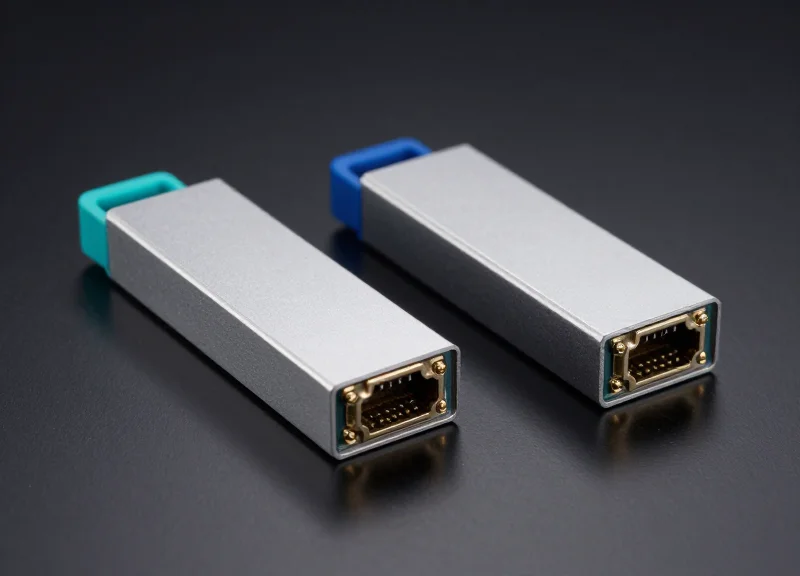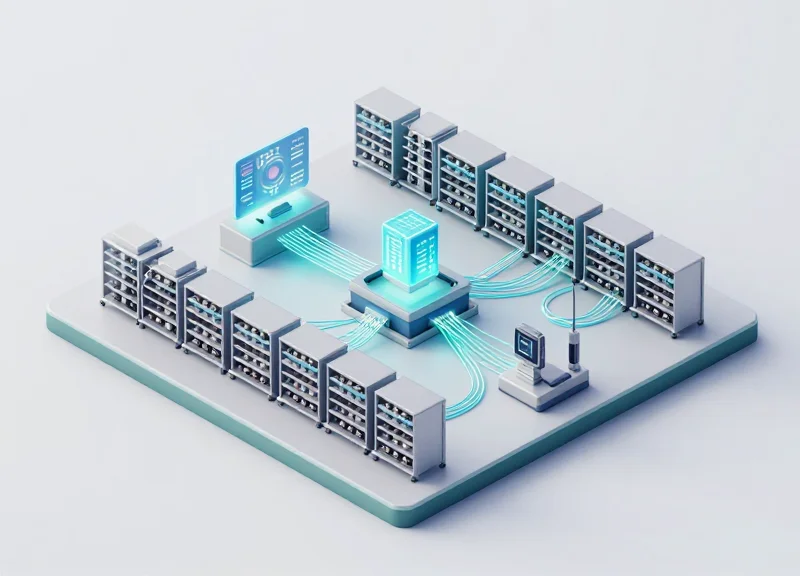
As modern data centers accelerate toward 800G and 1.6T bandwidth, traditional pluggable optics are hitting a wall in power consumption and signal integrity. Co-Packaged Optics (CPO) represents the most significant architectural shift in a decade, moving the optical engine closer to the silicon. Ubytelink provides the expertise and supply chain reliability needed to navigate this transition with cost-effective wholesale solutions.
The Evolution of Connectivity: What is Co-Packaged Optics (CPO)?
The Evolution of Connectivity: What is Co-Packaged Optics (CPO)?
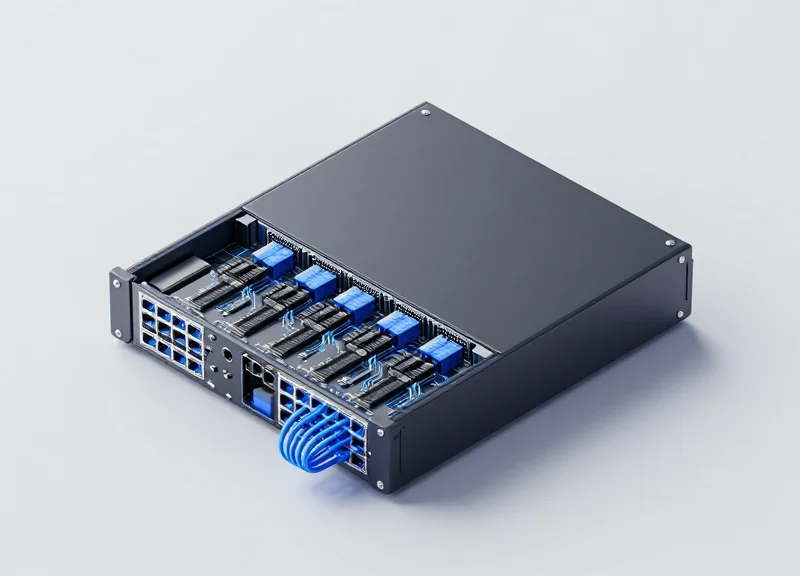
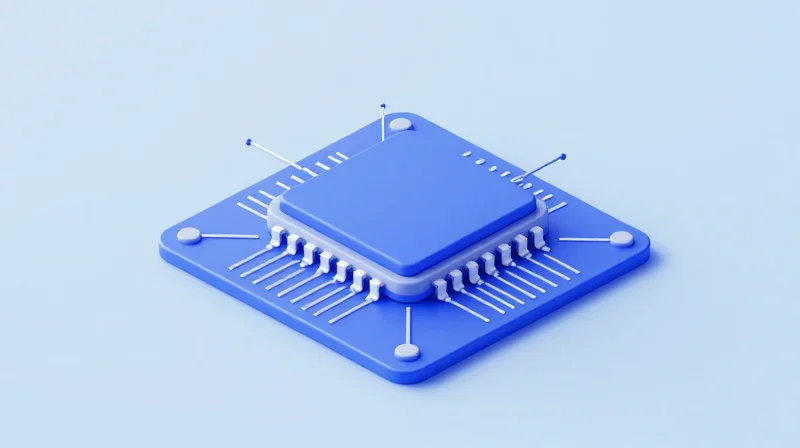
Co-Packaged Optics (CPO) is a next-generation integration technology that co-locates optical engines and silicon photonics directly onto the same substrate as the Application Specific Integrated Circuit (ASIC). Unlike traditional networking where optical transceivers are plugged into the front panel of a switch, CPO moves the electro-optical conversion process into the heart of the package. This proximity minimizes the electrical signal travel distance, effectively overcoming the 'bandwidth wall' while reducing power consumption by up to 30% per bit compared to pluggable alternatives. As data centers scale toward 51.2T and 102.4T capacities, CPO represents the critical shift required to maintain efficiency and signal integrity at ultra-high speeds.
The Technical Paradigm Shift: Pluggable vs. Integrated
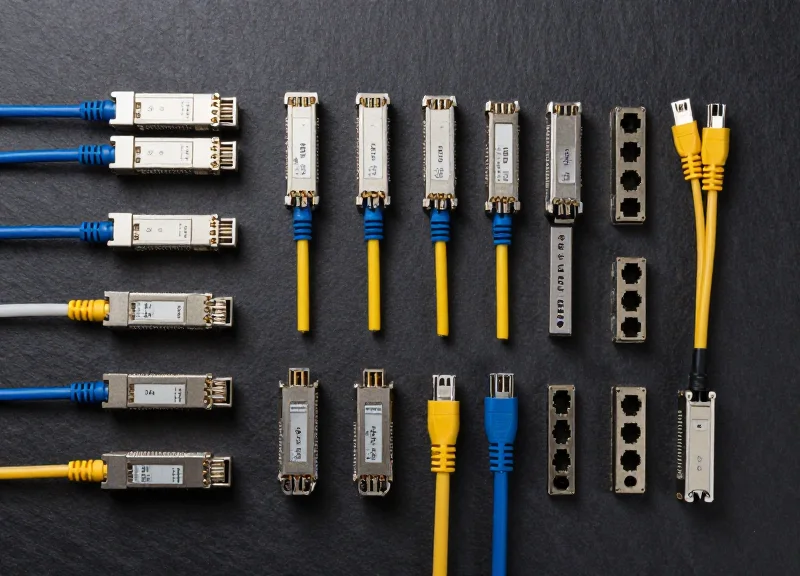
For decades, the industry relied on modular connectivity where pluggable form factors like SFP, QSFP, and OSFP provided flexibility. However, as link speeds increase to 800G and 1.6T, the electrical signals traveling across the printed circuit board (PCB) from the ASIC to the front panel suffer from extreme signal degradation. CPO eliminates these long-reach electrical traces, replacing them with high-density optical interconnects directly at the chip level. This shift is essential for AI/ML clusters where low latency and massive throughput are non-negotiable.
| Feature | Pluggable Optics (Traditional) | Co-Packaged Optics (CPO) |
|---|---|---|
| Power Efficiency | Lower (High power required for SerDes) | Higher (Short-reach electrical paths) |
| Form Factor | Front-panel module ports | Integrated on-chip optical engines |
| Signal Integrity | Higher loss over PCB traces | Superior due to integrated packaging |
| System Density | Limited by physical panel space | Significantly increased port density |
| Serviceability | Field-replaceable modules | Modular Remote Laser Sources (ELS) |
Key Components of the CPO Ecosystem
- Silicon Photonics Engine
The core conversion unit that translates electrical data into optical signals within the package. - External Laser Source (ELS)
To manage heat, the laser light source is often decoupled from the ASIC package and housed in a separate, serviceable module. - High-Speed ASIC
The central processing unit, such as a network switch or AI accelerator, that sits at the center of the co-packaged arrangement.
Procurement Outlook for 2026
For wholesale buyers and data center architects, the transition to CPO changes the procurement landscape. Instead of purchasing thousands of individual transceivers, the market is moving toward integrated switch solutions where the optics are an inherent part of the hardware stack. This requires a deeper level of collaboration with vendors for custom quotes and long-term bulk pricing strategies to secure the specialized components, such as Remote Laser Modules, that support these CPO architectures.
Overcoming the 'Power Wall' in High-Density Networking

As data centers transition to 51.2T and 102.4T switching capacities, traditional front-panel pluggable optics face a thermal and energy crisis known as the Power Wall. Co-Packaged Optics (CPO) solves this by bringing the optical engines onto the same substrate as the switch ASIC. By drastically shortening the electrical trace length, CPO eliminates the need for power-hungry signal conditioning components, allowing for higher density without a proportional increase in energy costs.
The Impact of Trace Length on Energy Efficiency
In a conventional pluggable architecture, electrical signals must travel across the PCB from the switch chip to the front-panel cage, often covering distances of 150mm to 250mm. This journey requires heavy-duty SerDes (Serializer/Deserializer) and often Retimers to maintain signal integrity, which account for a significant portion of the total power budget. CPO reduces this distance to less than 10mm. Shorter traces mean lower signal loss, which in turn allows for simpler, lower-power SerDes designs and the total removal of intermediate Retimers.
| Feature | Traditional Pluggable | Co-Packaged Optics (CPO) | Improvement |
|---|---|---|---|
| Electrical Trace Length | 150mm - 300mm | < 10mm | 95% Reduction |
| Power Consumption | High (Requires Retimers) | Low (Direct Drive) | Up to 30% Savings |
| Signal Integrity | High Loss/Jitter | Ultra-Low Loss | Superior Reliability |
| Cooling Requirement | Extreme Airflow Needed | Optimized Heat Dissipation | Reduced OPEX |
Common Questions Regarding CPO Power Management
- How does CPO impact the overall TCO for 2026 deployments?
CPO significantly lowers Total Cost of Ownership (TCO) by reducing energy bills and cooling infrastructure requirements, which are the two largest ongoing expenses in high-density data centers. - Is the power reduction consistent across all bandwidths?
The efficiency gains of CPO become more pronounced at higher speeds, such as 800G and 1.6T, where the power required to drive electrical signals over copper traces becomes the primary architectural bottleneck.
CPO vs. Pluggable Optics: A Strategic Comparison
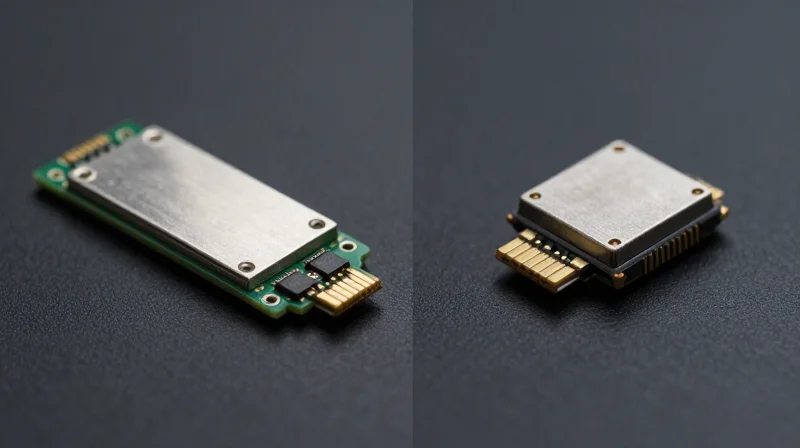
While pluggable optics like QSFP-DD and OSFP have defined data center interconnects for decades, the industry is hitting a 'physical wall' at 51.2 Tbps and 102.4 Tbps switching capacities. Co-Packaged Optics (CPO) represent a fundamental architectural shift, moving the optical engine from the front-panel cage to the same substrate as the ASIC, thereby eliminating the massive electrical loss associated with long PCB traces.
Signal Integrity and the SerDes Bottleneck
In traditional pluggable architectures, the electrical signal must travel through several inches of PCB material, connectors, and Vias before reaching the optical module. This requires high-power SerDes (Serializer/Deserializer) and retimers to maintain signal integrity. In contrast, CPO reduces the electrical trace length to less than 10 millimeters. By significantly shortening this path, CPO eliminates the need for power-hungry retimers, drastically reducing the overall system power budget while maintaining a cleaner signal-to-noise ratio.
| Feature | Pluggable Optics (QSFP-DD/OSFP) | Co-Packaged Optics (CPO) |
|---|---|---|
| Electrical Trace Length | 100mm to 250mm | < 10mm |
| Power Consumption | Baseline (100%) | ~30% Reduction |
| Port Density | Limited by Front Panel Surface Area | Limited only by ASIC/Substrate size |
| Thermal Strategy | Edge/Airflow Cooled | Direct-to-Chip / Liquid Cooling Ready |
| Serviceability | Field-Replaceable (Hot-Swappable) | Requires Modular 'Engine' Replacement |
Thermal Management and Density Scaling
As bandwidth increases, the thermal density of front-panel pluggables becomes unmanageable. Cooling dozens of 20W+ modules packed tightly together creates massive airflow resistance. CPO mitigates this by spreading the heat load across the ASIC substrate and utilizing Remote Laser Sources (RLS). By moving the heat-sensitive laser away from the high-temp switch silicon, CPO improves reliability and allows for a significantly higher number of ports per rack unit (RU), enabling the transition to 102.4T wholesale infrastructure.
Strategic Procurement FAQs
- Is CPO backwards compatible with existing fiber infrastructure?
Yes. While the internal switching architecture changes, CPO systems still utilize standard LC or MPO fiber connectors at the patch panel, ensuring compatibility with current single-mode fiber plants. - How does CPO impact wholesale pricing for 2026?
Initially, CPO involves higher R&D and specialized manufacturing costs. However, for bulk deployments at 51.2T, the total cost of ownership (TCO) is lower due to reduced energy consumption and higher port density per chassis. - What is the primary risk of adopting CPO over Pluggables?
The main challenge is the 'blast radius' of a failure. If a co-packaged optical engine fails, it is more complex to replace than a pluggable module, though newer modular CPO designs aim to make these engines field-serviceable.
The Strategic Role of OEM/ODM in CPO Adoption
The Strategic Role of OEM/ODM in CPO Adoption
OEM and ODM manufacturing partners act as the critical integration layer in the CPO ecosystem, allowing enterprises to move beyond standard components to bespoke solutions. By collaborating with these specialists during the design phase, organizations can optimize the physical layout and electrical signaling between the optical engine and the ASIC, ensuring that the shortened trace lengths of CPO result in the predicted 30% power savings while meeting the specific demands of 2026 AI networking fabrics.
Precision Customization of Optical Parameters
For large-scale AI and high-performance computing (HPC) environments, standard specifications are often insufficient. Through ODM channels, wholesale buyers can specify laser wavelengths, modulation formats, and fiber-to-chip coupling efficiencies. This level of customization ensures that the optical subsystem is perfectly matched to the switch silicon's SerDes capabilities, reducing latency and maximizing signal integrity across the internal package.
| Feature | Standard Pluggable | Custom OEM/ODM CPO |
|---|---|---|
| Integration | Front-panel plug-and-play | On-substrate direct integration |
| Trace Length | Long (High Loss) | Ultra-short (Low Loss) |
| Cooling | Standard Airflow | Custom Cold Plates/Integrated Heat Sinks |
| Procurement | Off-the-shelf | Custom Design-in & Bulk Quotes |
Advanced Thermal and Mechanical Design
Heat dissipation is the primary engineering challenge in CPO since the optical components share a package with the high-power ASIC. OEM partners leverage advanced materials like silicon interposers and specialized thermal interface materials (TIMs) to manage this. Custom cooling solutions, including micro-channel liquid cooling, are often integrated directly into the custom quote process for bulk CPO orders to ensure operational stability under heavy AI training loads.
- How does OEM/ODM affect bulk pricing for CPO?
Wholesale CPO pricing is typically structured around initial design-in costs followed by high-volume production. While custom quotes may include Non-Recurring Engineering (NRE) fees, the total cost of ownership is significantly lower due to reduced power consumption and higher port density. - Can optical engine parameters be modified for specific AI workloads?
Yes, ODM partners allow for adjustments in lane speeds and laser output power to specifically accommodate the high-bandwidth, low-latency requirements of distributed AI training fabrics.
Key Industry Standards and the OIF Framework
Standardization as the Catalyst for CPO Scalability
To Buy The Future of Co-Packaged Optics (CPO) Wholesale with long-term security, enterprises must prioritize adherence to the Optical Internetworking Forum (OIF) standards, which establish the foundational blueprints for multi-vendor interoperability and mechanical reliability. These standards ensure that optical engines from different manufacturers can interface seamlessly with switch ASICs, preventing proprietary lock-in and allowing for the mass production required to drive down unit costs in bulk pricing models.
The OIF Framework and Implementation Agreements
The OIF has led the industry by developing several 'Implementation Agreements' (IAs) that define the electrical, optical, and thermal requirements for CPO systems. One of the most significant shifts is the separation of the laser source from the optical engine. By standardizing External Laser Sources (ELS), the industry has solved the 'reliability dilemma' where the heat of the ASIC would otherwise shorten the lifespan of sensitive laser components.
| Standard Component | Key Specification | Wholesale Advantage |
|---|---|---|
| OIF-CPO-3.2T | 3.2 Tbps optical engine interface | Standardized footprints for modular replacement. |
| ELSFP | External Laser Source Form Factor | Simplified maintenance and higher yield for bulk deployments. |
| CEI-112G/224G | Common Electrical I/O at ultra-high speeds | Guaranteed signal integrity across different ASIC vendors. |
Ensuring Reliability through Multi-Source Agreements (MSAs)
Beyond the OIF, various Multi-Source Agreements (MSAs) focus on the physical form factors and management interfaces. For wholesale buyers, these standards are the benchmark for quality assurance. They mandate rigorous testing for thermal cycling, vibration resistance, and bit-error-rate (BER) stability, ensuring that custom-quoted CPO solutions can operate for a 10-year lifecycle in demanding hyperscale environments.
- Why is the ELSFP standard important for bulk pricing?
The External Laser Source Form Factor allows the laser to be replaced without replacing the entire CPO-switch assembly, significantly lowering the total cost of ownership and risk for large-scale buyers. - Does CPO support interoperability between different brands?
Yes, through the OIF’s common electrical interfaces and standardized optical parameters, modules from different OEM/ODM partners can function within the same network ecosystem. - What role does thermal management play in these standards?
OIF standards specify the maximum thermal dissipation for optical engines to ensure that high-density CPO configurations do not exceed the cooling capacities of standard 1U/2U rack units.
Scaling to 1.6T and Beyond: The Future Roadmap

The 1.6T Threshold: Why CPO is the Only Path Forward
As data centers transition toward 1.6T and eventually 3.2T per-port speeds, the industry faces a 'power wall' where traditional pluggable optics consume up to 50% of total switch power. Co-packaged optics (CPO) eliminates this bottleneck by reducing the electrical trace length between the switch ASIC and the optical engine, drastically lowering signal attenuation and removing the need for high-power Retimers. This shift is not merely an incremental upgrade but a fundamental architectural requirement for AI clusters and hyperscale environments that demand massive throughput with a manageable thermal footprint.
Comparative Scaling: Pluggable vs. CPO Architecture
| Metric | 800G (Current) | 1.6T (Roadmap) | 3.2T (Future CPO) |
|---|---|---|---|
| Power Consumption | ~25-30W (Pluggable) | ~45-55W (Estimated Pluggable) | < 30W (CPO Optimized) |
| Signal Reach | Short PCB Traces | Critical Loss (VSR) | Ultra-Short (XSR/USR) |
| Density | 32 Ports / 1RU | Physical Space Limit | High-Density Substrate |
| Primary Constraint | Thermal Dissipation | Signal Integrity/Loss | Laser Reliability |
The 2026-2028 Roadmap: From Proof-of-Concept to Bulk Deployment
The roadmap for 1.6T involves a dual-track strategy. While 1.6T pluggables (OSFP-XD) will serve as an interim solution for early adopters, wholesale procurement for 2026 and beyond is increasingly shifting toward CPO-ready designs. The integration of 224G SerDes technology is the catalyst; at these speeds, the parasitic capacitance of traditional sockets becomes a liability. Enterprises looking to buy the future of wholesale CPO must focus on the convergence of silicon photonics and ELSFP (External Laser Small Form-factor Pluggable) light sources to ensure long-term serviceability and scalability.
Future-Proofing Your Wholesale Strategy
- How does 1.6T CPO affect custom wholesale quotes?
Wholesale pricing for 1.6T CPO is currently driven by NRE (Non-Recurring Engineering) costs and the volume of silicon photonics wafers. Bulk purchasers in 2026 are securing lower per-gigabit rates by committing to multi-year ASIC-optical engine integration cycles rather than off-the-shelf module purchases. - Can 1.6T systems be retrofitted for CPO later?
Generally, no. Because CPO requires the optical engine to be mounted on the same substrate as the ASIC, the hardware architecture must be 'CPO-native.' Forward-thinking enterprises are investing in CPO-ready switch chassis now to avoid massive forklift upgrades at the 3.2T milestone. - What is the role of the Remote Laser Source (RLS) in scaling?
Scaling to 1.6T and 3.2T relies on decoupling the laser from the hot ASIC environment. Wholesale buyers should prioritize ELSFP standards, which allow for bulk-priced, replaceable laser modules that significantly improve system uptime.
By 2025, the cost-per-bit parity between CPO and pluggable modules is expected to favor CPO at 1.6T densities. For organizations managing high-performance computing (HPC) or LLM training clusters, securing custom quotes now for integrated optical solutions is the only way to bypass the inevitable supply chain constraints of the high-speed pluggable market.
Wholesale Sourcing: Navigating the CPO Supply Chain
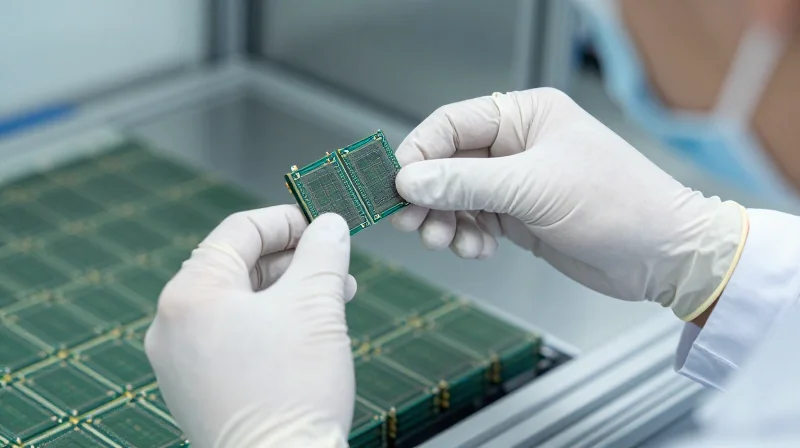
Wholesale Sourcing: Navigating the CPO Supply Chain
Successfully sourcing Co-Packaged Optics (CPO) at wholesale scale requires a fundamental shift from transactional purchasing to strategic ecosystem partnerships. Because CPO components are physically integrated with the ASIC, procurement teams must navigate a high-dependency supply chain where optical engine performance, External Laser Source (ELS) reliability, and substrate thermal management are all interlinked. In the 2026 landscape, securing bulk pricing is less about simple volume discounts and more about aligning with manufacturers who can guarantee yield stability and long-term technical support for these highly specialized silicon photonics modules.
Evaluating Vendor Capabilities for Bulk CPO Delivery
When requesting custom quotes for CPO, enterprises must evaluate suppliers based on their 'Total Integrated Yield.' Since an optical failure in a CPO configuration can jeopardize an expensive 51.2T or 102.4T switch silicon, wholesale partners must demonstrate rigorous cleanroom standards and automated testing protocols. Buyers should prioritize vendors that offer comprehensive 'Golden Module' benchmarking, ensuring that the optical engines provided in bulk meet the specific signal integrity requirements of the target ASIC.
| Sourcing Factor | Traditional Pluggable Wholesale | CPO Wholesale Strategy |
|---|---|---|
| Interoperability | Standardized MSA compliance | Deep ASIC-specific co-engineering |
| Supply Chain Risk | Moderate; multi-source availability | High; dependent on silicon foundry capacity |
| Procurement Cycle | Short-term (4-8 weeks) | Long-term (16-24 weeks lead times) |
| Technical Support | Post-sales RMA focus | Pre-sales design-in and integration support |
Managing Logistics and Quality Control
Logistics for CPO components differ significantly from standard optics due to the sensitivity of the External Laser Source (ELS) and the precision required for fiber-to-chip coupling. Wholesale shipments must utilize specialized ESD-safe, vibration-dampened packaging to prevent micro-fractures in the silicon photonics die. Furthermore, quality control at the wholesale level should include 'In-Circuit' testing data provided by the manufacturer, allowing the buyer to verify the performance of each module before it is integrated into the final switch chassis.
CPO Procurement FAQ
- How do lead times affect CPO bulk pricing?
Lead times for CPO are currently extended (16+ weeks) due to specialized silicon wafer fabrication. Securing better bulk pricing often requires 'rolling forecasts' where buyers commit to quarterly volumes to lock in foundry slots. - Can I mix vendors for CPO optical engines and ASICs?
While the OIF and other bodies are working on standards, current wholesale CPO deployments often require a validated pairing between the engine manufacturer and the switch silicon vendor to ensure thermal and electrical compatibility. - What is included in a custom CPO quote?
A professional CPO quote in 2026 typically includes the cost of the optical engines, the Remote Laser Modules (RLM), specialized fiber arrays, and a technical support retainer for integration and debugging.
ROI Analysis: Long-term Savings through CPO Implementation
The primary financial driver for transitioning to Co-Packaged Optics (CPO) wholesale is the drastic reduction in operational expenditure (OPEX) driven by energy efficiency. By moving the optical engine closer to the switch ASIC, CPO eliminates the need for power-hungry electrical retimers and high-loss copper traces. This architectural shift translates to a power saving of roughly 5 to 10 watts per 400G/800G link, which, when scaled to thousands of nodes in a hyperscale facility, results in millions of dollars in electricity savings annually.
Comparative Total Cost of Ownership (TCO) Analysis
| Metric | Traditional Pluggable Optics | Co-Packaged Optics (CPO) |
|---|---|---|
| Power Efficiency | ~15-20 pJ/bit | ~5-8 pJ/bit |
| Cooling Requirements | High (Active Air/Liquid at Module) | Low (Integrated Heat Sinks) |
| Port Density | Limited by Faceplate Space | 2x Higher Density |
| 5-Year OPEX | High (Replacement + Electricity) | Significantly Reduced |
Extended Hardware Lifespan and Thermal Management
Beyond direct power savings, CPO implementation improves the overall thermal profile of the networking rack. Traditional pluggable modules generate concentrated heat at the faceplate, often leading to 'thermal hotspots' that accelerate component degradation. CPO’s integrated approach allows for more uniform heat distribution and the use of optimized cooling solutions, such as cold plates or immersion cooling. This leads to a longer Mean Time Between Failures (MTBF) for both the optics and the switch ASIC, deferring expensive hardware replacement cycles and providing a more stable environment for AI and high-performance computing (HPC) workloads.
Wholesale Acquisition Strategy for 2026
When sourcing CPO components in bulk, the ROI is further enhanced through custom quotes that factor in long-term supply agreements. Wholesale buyers should look for vendors that provide modularity within the CPO package—specifically 'Remote Laser Modules' (RLM). By utilizing RLMs, the most failure-prone component (the laser) is kept separate from the complex ASIC package, allowing for field replacement without discarding the entire CPO assembly, thus protecting the initial capital investment.
- How long does it take to see a return on CPO investment?
Most hyperscale deployments see a break-even point within 18 to 24 months, primarily due to the 30% reduction in power and cooling costs compared to 800G pluggable alternatives. - Does CPO reduce the cost of cabling in bulk purchases?
Yes. CPO allows for higher density at the switch level, which reduces the number of switches and overall cabling infrastructure required to support the same bandwidth, lowering both CAPEX and complexity. - What is the impact of CPO on data center floor space?
CPO significantly increases radix and port density, allowing data centers to consolidate their footprint. This reduction in physical space requirements directly lowers the 'cost per square foot' for wholesale infrastructure projects.
Why Ubytelink is Your Preferred Partner for CPO Solutions

Ubytelink serves as the critical link between foundational silicon photonics innovation and large-scale industrial deployment, providing enterprises and hyperscalers with the competitive edge needed to dominate the 2026 networking landscape. By integrating deep technical expertise directly into the procurement cycle, we ensure that every CPO component is not just a commodity, but a precision-engineered solution tailored to specific hardware ecosystems.
The Ubytelink Advantage: Beyond Standard Distribution
In the complex transition toward 1.6T and 3.2T bandwidths, off-the-shelf components often fall short of meeting the rigorous thermal and signal integrity requirements of co-packaged architectures. Ubytelink addresses this through a multi-tiered value proposition that prioritizes engineering support alongside volume scalability.
| Feature | Ubytelink Wholesale Support | Standard Component Distributors |
|---|---|---|
| Technical Consultation | Direct access to optical engineers and system architects. | General sales support with limited technical depth. |
| Customization | Full OEM/ODM capabilities for firmware and mechanical integration. | Locked, off-the-shelf product specifications. |
| Pricing Strategy | Dynamic volume-based quoting and strategic bulk rebates. | Fixed tier pricing with narrow margin flexibility. |
| Supply Chain | End-to-end management from fab to integration site. | Simple logistics and freight-forwarding services. |
Scalable OEM/ODM and Technical Consulting
Our commitment to the CPO ecosystem extends into specialized engineering services. For clients developing proprietary switch fabrics or custom AI accelerators, Ubytelink provides NRE (Non-Recurring Engineering) support to adapt optical engines to unique substrates. This bespoke approach ensures that your hardware achieves the lowest possible power-per-bit (pJ/bit) while maintaining industry-leading reliability metrics.
Frequently Asked Questions for CPO Wholesale
- How does Ubytelink guarantee the performance of wholesale CPO units?
Every batch undergoes rigorous multi-stage testing, including high-temperature operating life (HTOL) and thermal cycling, ensuring that wholesale quantities meet the strict reliability standards of mission-critical data centers. - Can I request custom quotes for mixed-protocol environments?
Yes. Ubytelink specializes in custom quoting for diverse infrastructures, allowing you to bundle CPO optical engines with standard pluggable transceivers and active optical cables for a unified wholesale price. - What are the typical lead times for bulk 2026 orders?
While global lead times for advanced optics vary, Ubytelink leverages strategic partnerships with Tier-1 foundries to offer priority manufacturing slots, typically reducing lead times by 15-20% compared to standard market rates.
The transition to Co-Packaged Optics is no longer a matter of 'if' but 'when' for organizations serious about scaling their network performance. By choosing a partner like Ubytelink, you gain access to industry-leading wholesale pricing and the technical depth required for successful CPO deployment. Ready to lead the next generation of connectivity? Contact Ubytelink today for a custom quote and explore our bulk pricing options for 2026.