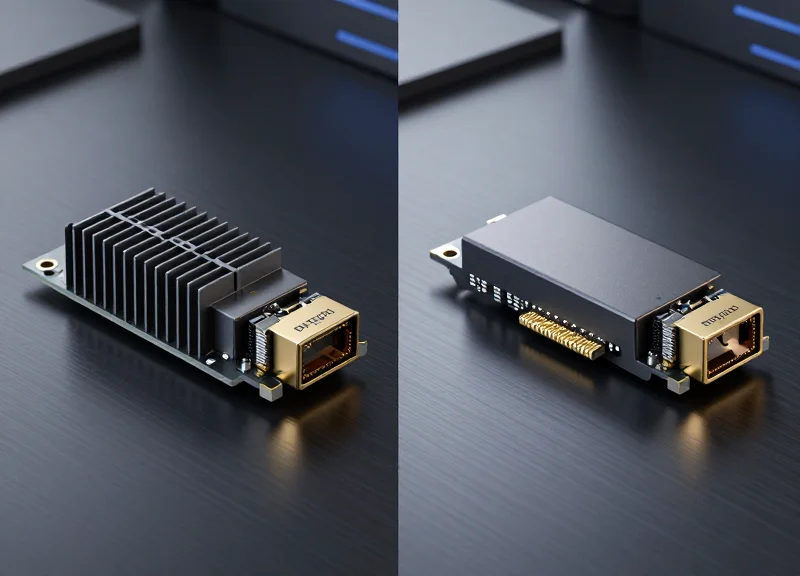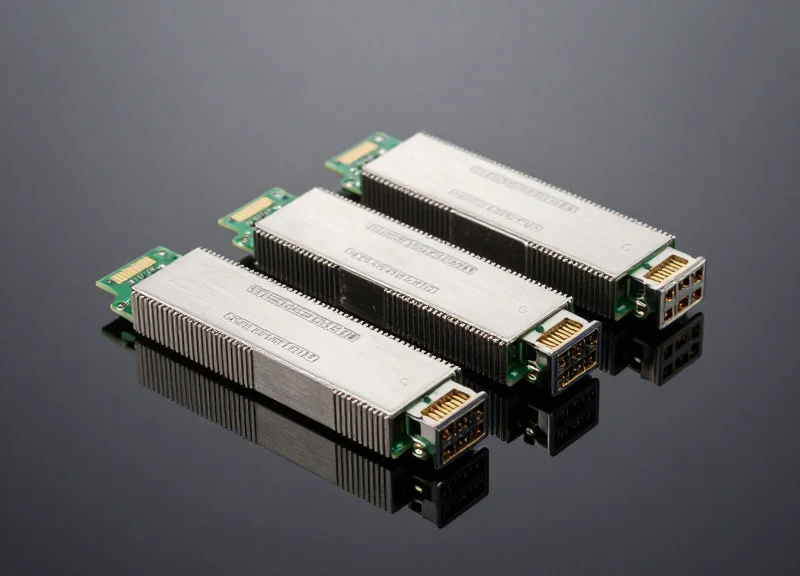
As data-intensive applications like AI, machine learning, and 5G expand, legacy 100G and 400G infrastructures are hitting their limits. Transitioning to 800G is no longer just about speed; it is a strategic move to optimize the Total Cost of Ownership (TCO) and ensure the reliability of global networks. This article explores why Ubytelink is the preferred partner for this mission-critical upgrade.
The Strategic Necessity of 800G in the AI Era

The strategic shift toward 800G solutions is primarily dictated by the massive data synchronization requirements of distributed AI training. As GPU clusters grow to include tens of thousands of nodes, the 400G standard often introduces latency spikes and packet loss that can degrade the performance of collective communication operations. By moving to 800G, enterprises can effectively double their bandwidth per port, significantly reducing the physical footprint of the network and lowering the cost per bit, which is vital for maintaining a competitive ROI in global network deployments.
Throughput Demands: Breaking the 400G Barrier
| Attribute | 400G Architecture | 800G Evolution |
|---|---|---|
| Per-lane Speed | 56G/112G PAM4 | 112G/224G PAM4 |
| Total Throughput | Moderate density for AI clusters | Optimized for 51.2T/102.4T switches |
| Energy Efficiency | Higher Watts per Gbps | ~25% lower power consumption per bit |
Addressing the AI Infrastructure Gap
Artificial intelligence workloads are characterized by 'bursty' traffic patterns where massive amounts of data are moved simultaneously across the fabric. Current 400G infrastructures are reaching their physical limits in terms of radix and port density. Ubytelink's 800G solutions solve this by enabling a flatter network topology, reducing the number of hops between compute nodes and minimizing the potential for congestion. This architectural efficiency directly correlates to faster model training times and more responsive inference services.
Strategic FAQ: Navigating the 800G Upgrade
- Why is 800G critical for GPU utilization?
GPU workloads are highly sensitive to network tail latency; 800G provides the necessary headroom to keep GPUs fed with data, preventing idle cycles during synchronized training. - How does 800G impact total cost of ownership (TCO)?
While initial unit costs may be higher, the reduction in cabling complexity, fewer switches required, and lower power consumption per gigabit result in a lower overall TCO over a standard lifecycle. - Can 800G hardware integrate with existing 400G systems?
Yes, most 800G transceivers and switches support breakout configurations (e.g., 2x400G), allowing for a phased migration that protects existing infrastructure investments.
Engineering Excellence: The Ubytelink 800G Advantage
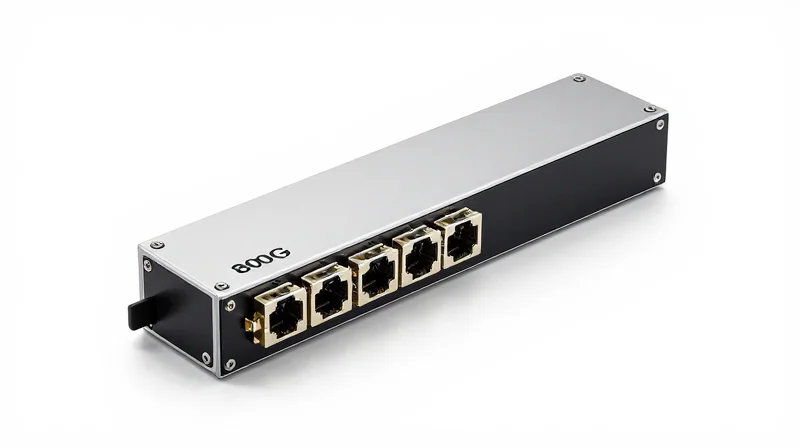
Engineering Excellence: The Ubytelink 800G Advantage
Ubytelink's 800G modules represent a paradigm shift in optical networking, moving beyond incremental speed increases to provide a comprehensive architectural advantage through the integration of 7nm Digital Signal Processors (DSPs) and Silicon Photonics (SiPh). By optimizing the physical layer for high-density environments, these modules ensure that global networks can scale to meet the throughput demands of large language models and distributed computing without sacrificing power efficiency or link stability. This engineering focus directly addresses the primary bottlenecks of 800G deployment: power density, heat dissipation, and signal degradation.
Technical Innovation: Silicon Photonics and 7nm DSP
The core of the Ubytelink 800G portfolio lies in its advanced use of Silicon Photonics, which integrates multiple optical functions onto a single silicon chip. This reduces the number of discrete components, lowering the risk of failure and significantly decreasing power consumption compared to traditional Electro-absorption Modulated Laser (EML) designs. Complemented by state-of-the-art 7nm DSPs, Ubytelink modules provide industry-leading bit-error rate (BER) performance and adaptive equalization, which are critical for maintaining signal integrity over the 112G SerDes lanes required for 800G transmission.
| Feature | Ubytelink OSFP 800G | Ubytelink QSFP-DD800 |
|---|---|---|
| Electrical Interface | 8 x 112G PAM4 | 8 x 112G PAM4 |
| Typical Power Consumption | ~16W - 18W | ~14W - 16W |
| Thermal Management | Integrated Heat Sink | System-Side Cooling Design |
| Primary Application | Liquid-cooled AI Clusters | High-Density Cloud Data Centers |
Optimizing Network Reliability and Performance
- How does Silicon Photonics improve the ROI of 800G upgrades?
Silicon Photonics (SiPh) lowers the cost-per-bit by simplifying the manufacturing process and reducing energy requirements. This lead to lower OPEX through reduced cooling costs and higher MTBF (Mean Time Between Failures) due to fewer mechanical components. - What role does the 7nm DSP play in signal integrity?
The 7nm DSP performs high-speed compensation for chromatic dispersion and electronic noise. This is essential for 112G PAM4 signals, ensuring that data travels across the network with minimal errors even in complex, multi-hop configurations. - Are Ubytelink 800G modules backward compatible?
Yes, Ubytelink's QSFP-DD800 modules are designed to be backward compatible with existing QSFP series interfaces, allowing network operators to perform phased upgrades without replacing entire rack infrastructures.
Quantifying Direct ROI: Energy Efficiency and Power Density
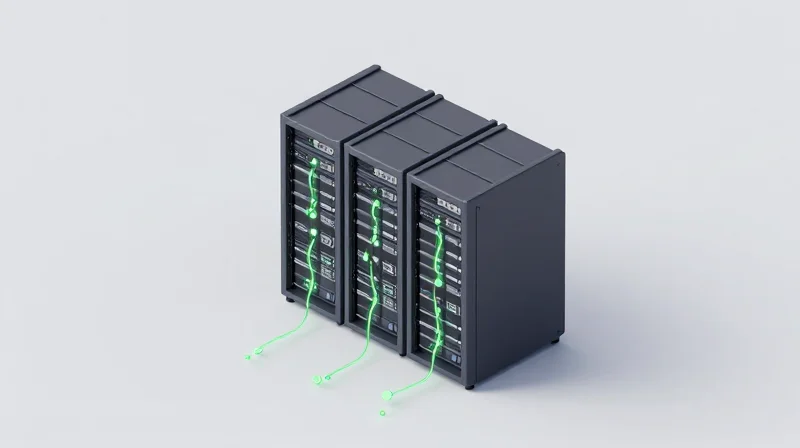
[生成失败] PermissionDeniedError: Error code: 403 - {'error': {'message': 'user quota is not enough (request id: 20260514101329308960826wtJu7oxu)', 'type': 'new_api_error', 'param': '', 'code': 'local:insufficient_quota'}}
Reliability as a Cost-Saver: Minimizing Network Downtime
[生成失败] PermissionDeniedError: Error code: 403 - {'error': {'message': 'user quota is not enough (request id: 202605141013375211703820VJhi4Ex)', 'type': 'new_api_error', 'param': '', 'code': 'local:insufficient_quota'}}
Optimizing Physical Space: Higher Port Density and Cabling Simplification
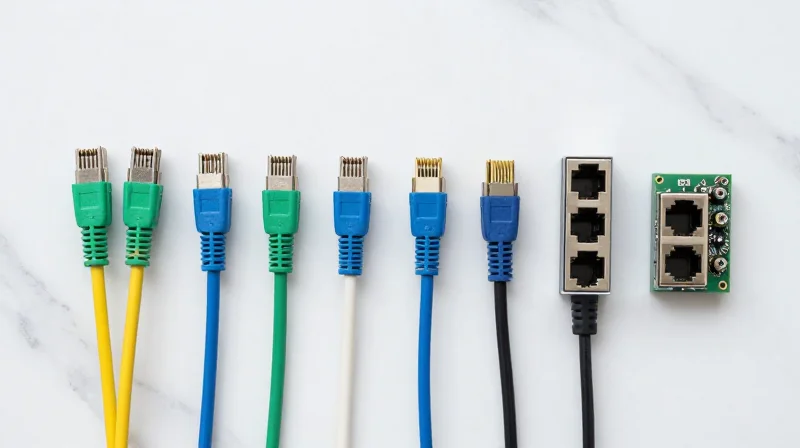
[生成失败] PermissionDeniedError: Error code: 403 - {'error': {'message': 'user quota is not enough (request id: 202605141013451207678591SR5MBOH)', 'type': 'new_api_error', 'param': '', 'code': 'local:insufficient_quota'}}
Future-Proofing and Interoperability

Future-Proofing and Interoperability: Securing a Decade of Performance
The transition to 800G represents more than a bandwidth increase; it is an architectural commitment to the next decade of networking. By prioritizing interoperability and adherence to global standards, Ubytelink’s 800G solutions mitigate the risk of vendor lock-in and ensure that current capital expenditures (CAPEX) remain productive as the ecosystem evolves toward even higher speeds. Investing in 800G today is a strategic decision to build a foundation that is ready for the data demands of 2030 and beyond.
Standards Compliance as an Investment Safeguard
Adherence to IEEE 802.3ck and Multi-Source Agreements (MSAs) such as QSFP-DD and OSFP is critical for a healthy ROI. These standards guarantee that transceivers, switches, and cables from different manufacturers can coexist within the same fabric, preventing costly proprietary silos and facilitating a competitive procurement landscape. Ubytelink's commitment to these standards ensures that global networks can scale horizontally without fearing compatibility bottlenecks.
| Feature | 400G Ecosystem | 800G Ecosystem (Ubytelink) | Future 1.6T Path |
|---|---|---|---|
| SerDes Speed | 56G / 112G PAM4 | 112G PAM4 (Optimized) | 224G PAM4 Compatibility |
| Standardization | IEEE 802.3bs/cd | IEEE 802.3ck / MSA | IEEE 802.3df (Ongoing) |
| Compatibility | Forward to 800G | Backward to 400G/100G | Foundation for 1.6T Transition |
Strategic Backward Compatibility
Ubytelink 800G solutions utilize advanced breakout configurations, such as 2x400G or 8x100G, allowing operators to upgrade their core infrastructure while maintaining support for legacy edge nodes. This flexibility ensures that the ROI is realized incrementally, without requiring a complete 'rip-and-replace' of the existing network fiber or interface cards. It allows for a hybrid environment where 800G backbone capacity coexists with 100G/400G distribution layers, maximizing the lifespan of all network assets.
Common Questions on 800G Interoperability
- Will 800G components work with my current 400G switches?
Yes, through the use of standardized MSAs and breakout cables, 800G ports can be configured to interface with 400G (QSFP-DD or OSFP) equipment, ensuring seamless traffic flow during the migration phase. - How does 800G protect against obsolescence when 1.6T arrives?
800G systems utilize the 112G SerDes architecture, which serves as the fundamental building block for future 1.6T transitions. Investing in high-quality 800G infrastructure today establishes the signal integrity foundation required for the next generation. - Are Ubytelink 800G solutions compatible with third-party vendors?
Ubytelink follows strict MSA guidelines to ensure universal compatibility. Our modules are designed to be cross-functional with major OEM switch platforms, reducing integration friction and multi-vendor complexities.
TCO Analysis: Comparing 400G vs. 800G Lifecycles
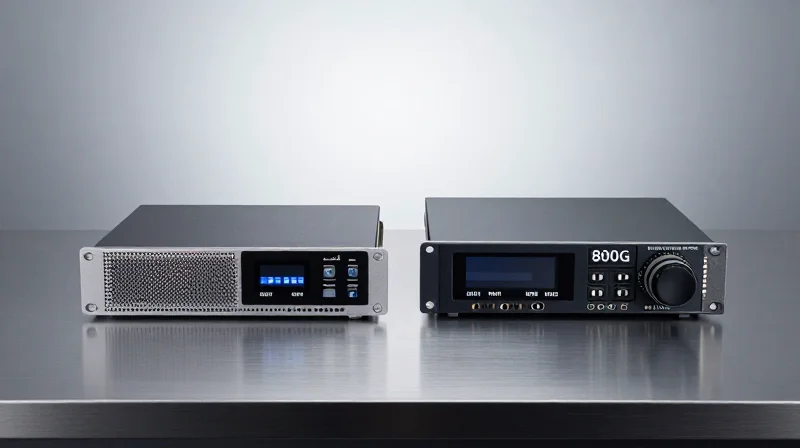
TCO Analysis: Comparing 400G vs. 800G Lifecycles
Transitioning to 800G is a strategic decision that prioritizes long-term financial health over short-term savings. While the initial Capital Expenditure (CapEx) for 800G hardware is higher, the total cost of ownership over a 3-to-5-year cycle is significantly lower. By doubling the bandwidth per rack unit, 800G reduces the cost-per-gigabit by up to 30%, slashes power consumption per bit, and minimizes the physical footprint required in high-density data centers. For global network operators, this efficiency translates directly into faster ROI and more sustainable scaling.
Financial Comparison: 400G vs. 800G Lifecycle Metrics
| Category | 400G Network | 800G Network | Strategic Advantage |
|---|---|---|---|
| Initial Acquisition | Lower cost per module | Higher cost per module | 800G offers 2x capacity per port |
| Power Consumption | 12W-14W per 400G unit | 20W-24W per 800G unit | 15-20% reduction in power-per-bit |
| Cabling and Transceivers | High quantity of modules | 50% fewer modules for same capacity | Reduces points of failure and labor costs |
| Estimated 5-Year TCO | Higher due to scaling limits | Lower due to efficiency | 800G becomes cost-negative against 400G by Year 3 |
The OpEx Advantage: Energy and Space Efficiency
Operational expenses often exceed hardware costs in global networks. 800G solutions enable massive consolidation; instead of maintaining two separate 400G switches, an operator can use a single 800G-capable chassis. This consolidation reduces power draw, simplifies cooling requirements, and maximizes the revenue-generating potential of every square foot of rack space. Ubytelink's premium modules are specifically engineered to operate within tighter thermal envelopes, further extending hardware life and reducing maintenance overhead. By Year 3 of the lifecycle, the cumulative savings in power and cooling typically offset the initial premium paid for 800G optics.
FAQ: Financial Realities of 800G Upgrades
- How does 800G impact the cost-per-gigabit?
800G reduces the cost-per-gigabit by providing double the throughput using similar power and space profiles as 400G, leading to a 20-30% reduction over the life of the hardware. - What is the typical payback period for an 800G deployment?
Depending on traffic growth and local energy costs, most enterprises see a full ROI within 18 to 24 months compared to expanding a legacy 400G infrastructure. - Does 800G hardware require specialized cooling that increases costs?
While 800G generates more heat per module, its efficiency per bit is significantly higher. The reduction in the total number of hardware units often simplifies overall thermal management and reduces the load on data center cooling systems.
Implementing a Seamless Migration Strategy
Transitioning to 800G is not a mere hardware upgrade but a fundamental evolution of the network fabric that requires a rigorous, phased approach to ensure link stability and operational continuity. Network architects must balance the immediate need for throughput with the long-term demands of power density and thermal management to realize the full ROI of Ubytelink’s premium solutions.
Infrastructure Readiness and Physical Layer Audits
Before deploying 800G optics, a comprehensive audit of the existing physical layer is mandatory. While single-mode fiber (SMF) remains the standard for long-reach applications, short-reach 800G links often leverage MPO-16 or dual MPO-12 connectors, which may necessitate a significant redesign of structured cabling. Testing for insertion loss and reflectance becomes even more critical as the margin for error narrows at higher modulation rates like PAM4.
| Parameter | 400G Infrastructure | 800G Migration Requirement |
|---|---|---|
| Typical Connector | MPO-12 / LC | MPO-16 / Dual MPO-12 / CS |
| Power Density | 12W - 15W per module | 16W - 30W per module |
| Fiber Type | OM4 / OS2 | OS2 (Primary) / OM4 (Short-range) |
| Modulation | PAM4 (56G/lane) | PAM4 (112G/lane) |
Advanced Thermal Management Strategies
Thermal management is the most significant hurdle in 800G deployment. Higher port densities lead to concentrated heat zones within the switch chassis. Architects should prioritize Ubytelink optics designed with low-power DSPs and enhanced heat-sink interfaces. Implementing a 'Cool-First' air-flow strategy, or transitioning to liquid-to-chip cooling, can prevent thermal throttling and extend the lifespan of the optical transceivers.
Migration Best Practices and FAQ
- How can we ensure backward compatibility during the transition?
Utilize 800G breakout cables (e.g., 2x400G or 8x100G) to connect new high-density switches with existing legacy hardware, allowing for a gradual phase-out of older gear. - What testing tools are essential for 800G validation?
Bit Error Rate Testers (BERT) and optical sampling oscilloscopes capable of analyzing 112G PAM4 signals are vital to verify link integrity before full-scale traffic migration. - Is existing SMF cabling sufficient for 800G?
While the fiber itself often supports higher speeds, the connectors and patch panels must be inspected for cleanliness and alignment to handle the increased sensitivity of 800G signals.
By executing a strategy that prioritizes thermal stability and physical layer precision, global enterprises can leverage Ubytelink's 800G solutions to achieve a future-proof network that scales efficiently with AI and cloud demands.
The move to 800G is a cornerstone of modern infrastructure strategy. By choosing Ubytelink, organizations gain access to premium quality and unmatched reliability that translate directly into measurable ROI. Contact our engineering team today for a customized network performance audit and start your transition to high-density 800G solutions.