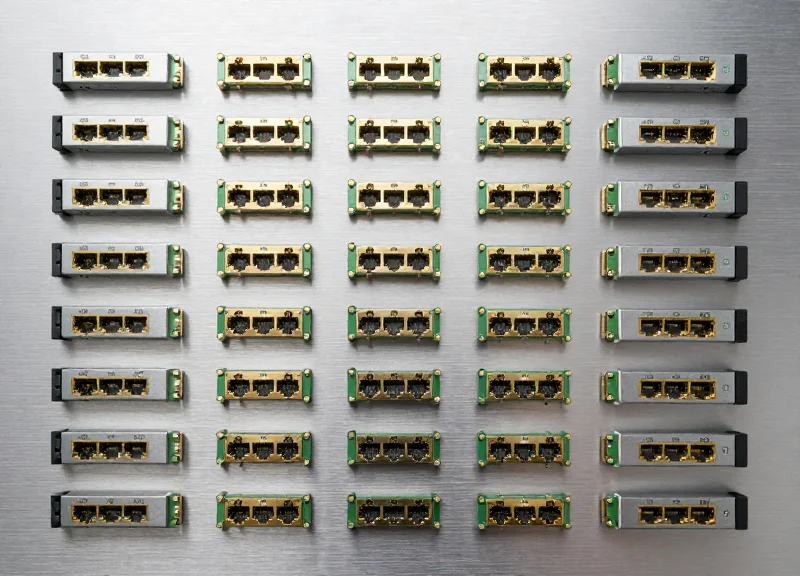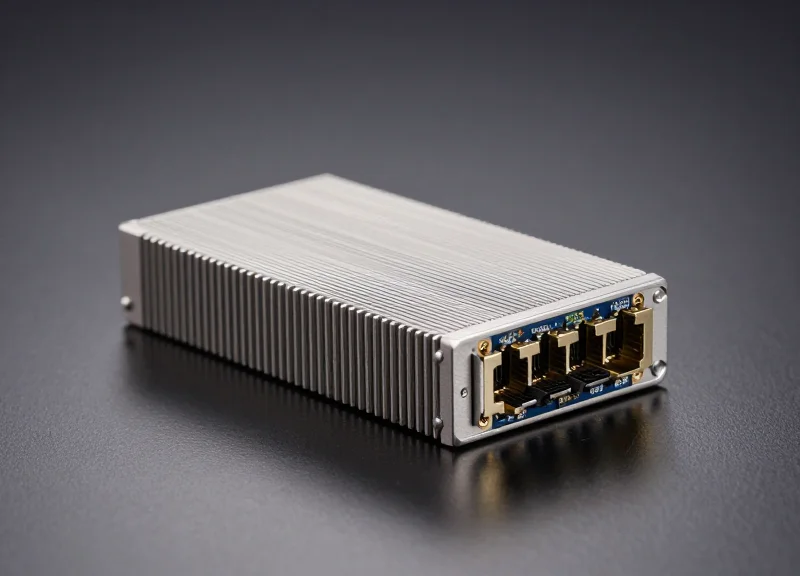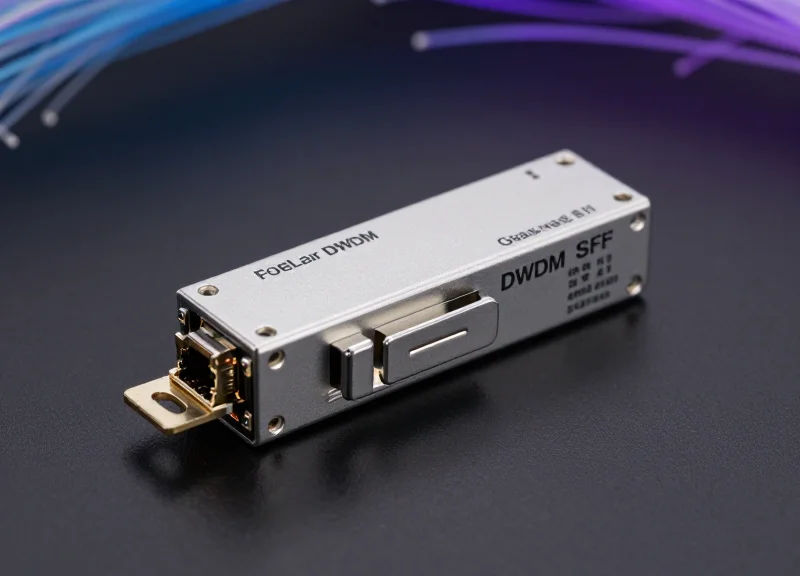
In today's digital-first economy, the backbone of every successful enterprise is a robust, high-speed network. For years, IT leaders were forced to choose between the high costs of OEM optics and the uncertainty of generic alternatives. Ubytelink changes the narrative by offering HP Aruba compatible transceivers engineered to meet the most demanding specifications, providing a bridge between fiscal responsibility and technical excellence in mission-critical infrastructure.
The Evolution of Network Connectivity: Why Compatibility Matters

The evolution of network connectivity has reached a pivotal junction where the rigid lock-in of Original Equipment Manufacturers (OEMs) is being replaced by high-performance, compatible transceiver solutions. As global data demands surge, the ability to integrate reliable, third-party optics like Ubytelink HP Aruba compatible transceivers has become a strategic necessity for Fortune 500 companies seeking to balance extreme scalability with rigorous quality standards.
Breaking the OEM Monopoly
For decades, network architects were tethered to proprietary ecosystems, often paying significant premiums for optics that bore a specific brand logo. However, the maturation of the Multi-Source Agreement (MSA) standards has leveled the playing field. These standards ensure that third-party transceivers are built to the exact physical and electronic specifications of the original hardware, allowing for seamless integration into HP and Aruba environments without performance degradation or signaling errors.
| Feature | OEM Transceivers | Ubytelink Compatible Solutions |
|---|---|---|
| Cost Structure | High (Premium Brand Tax) | Optimized (Direct-to-Manufacturer) |
| Standardization | Proprietary Constraints | MSA Compliant |
| Reliability | Carrier-Grade | Carrier-Grade / Rigorously Tested |
| Vendor Lock-in | High | None |
The Significance of Premium Quality in Compatibility
Not all compatible modules are created equal. While entry-level third-party optics may suffer from high failure rates or EEPROM coding errors, premium solutions like Ubytelink focus on precision engineering. This involves individual testing in actual HP and Aruba switches to ensure 100% host-device recognition and data integrity, effectively bridging the gap between affordability and mission-critical reliability for modern data centers.
- Does using Ubytelink compatible transceivers void my HP or Aruba warranty?
No. Under the Magnuson-Moss Warranty Act and similar international consumer protection laws, manufacturers cannot void a hardware warranty simply for using compatible third-party components unless those components directly cause damage. - How does Ubytelink ensure compatibility with newer firmware versions?
Ubytelink maintains an extensive library of HP and Aruba hardware to verify that transceiver coding remains compatible with the latest OS releases and firmware updates, ensuring long-term operational stability.
Ubytelink Engineering: How We Match HP Aruba Performance

Ubytelink Engineering: How We Match HP Aruba Performance
Ubytelink bridges the gap between third-party affordability and OEM-level reliability by strictly adhering to the Multi-Source Agreement (MSA) while implementing proprietary firmware coding. Unlike generic alternatives, our engineering process focuses on the 'handshake' protocol required by ArubaOS and AOS-CX. By precisely replicating the vendor-specific data structures within the transceiver's EEPROM, Ubytelink modules are recognized as 'Aruba Certified' by the host switch, eliminating the common 'Unsupported Transceiver' errors and ensuring that Digital Diagnostics Monitoring (DDM) functions as intended.
Seamless Integration with ArubaOS and AOS-CX
Modern Aruba switches utilize sophisticated software checks to verify hardware authenticity. Our engineering team utilizes state-of-the-art programming platforms to embed specific vendor IDs, serial numbers, and checksums into every module. This level of technical precision ensures that features like port security, power budgeting, and link aggregation operate exactly as they would with an HP Aruba branded optic, providing a true 'plug-and-play' experience for network administrators.
| Feature Specification | HP Aruba OEM Standard | Ubytelink Compatible Solution |
|---|---|---|
| EEPROM Coding | Vendor-Locked Signature | Fully Emulated Aruba Signature |
| Software Compatibility | ArubaOS / AOS-CX Native | Native Recognition (No CLI bypass needed) |
| DDM / DOM Support | Real-time Monitoring | Fully Functional Real-time Monitoring |
| Bit Error Rate (BER) | < 10^-12 | < 10^-12 (Industry Leading) |
| Power Consumption | Optimized for Switch Thermal Profiles | Low-Power Design for High Density |
Optical Precision and Signal Integrity
Beyond coding, the physical layer of Ubytelink optics utilizes premium components, including industry-standard lasers (VCSEL or DFB) and high-performance clock and data recovery (CDR) chips. We perform rigorous BER testing and eye-diagram analysis to ensure that signal dispersion and jitter remain well within the thresholds defined by the IEEE 802.3 standards. This ensures that even in high-density data center environments, Ubytelink transceivers maintain stable, high-speed links over maximum rated distances.
- Will using Ubytelink transceivers trigger an 'unsupported transceiver' warning?
No. Our modules are coded with the specific HP Aruba vendor ID, allowing the switch to recognize them as native, original hardware. - Are Ubytelink modules compatible with the latest AOS-CX 10.x versions?
Yes, our engineering team continuously updates our firmware database to ensure compatibility with the latest Aruba operating system releases and hardware revisions. - Can I monitor power levels and temperature through the Aruba CLI?
Absolutely. Ubytelink transceivers fully support Digital Diagnostics Monitoring (DDM), allowing administrators to view real-time metrics through standard CLI commands.
Rigorous Testing Protocols for Zero-Failure Networks
Rigorous Testing Protocols for Zero-Failure Networks
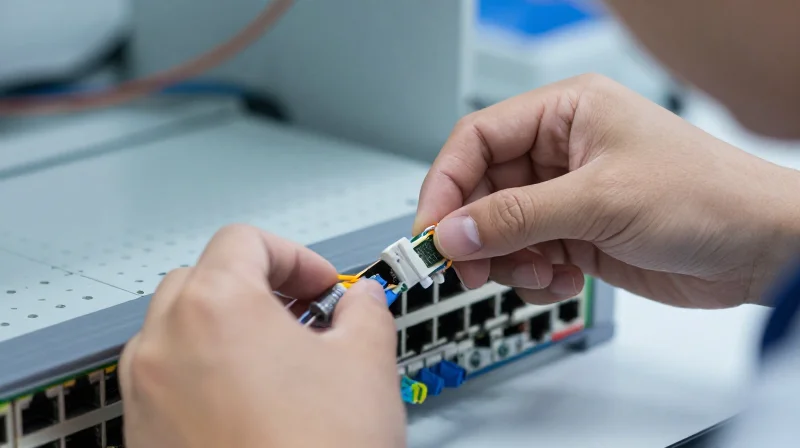
The cornerstone of Ubytelink’s reliability lies in our non-negotiable commitment to 100% testing. While many generic manufacturers utilize statistical sampling or software-only simulations to verify their optics, Ubytelink subjects every individual transceiver to a gauntlet of physical hardware tests. By replicating the exact operating conditions of a production data center, we ensure that each module provides the sub-millisecond latency and high-density performance required by enterprise-grade HP Aruba architectures.
The Ubytelink Advantage: Native Hardware Validation
Compatibility is more than just a matching part number; it is about the intricate handshake between the transceiver firmware and the switch operating system. Ubytelink maintains an extensive laboratory featuring the latest ArubaOS and AOS-CX platforms, including the Aruba 6300M, 8325, and 5400R series. Our engineering team validates optical signal integrity, power consumption, and digital diagnostics monitoring (DDM) directly within these environments to prevent the 'Unsupported Transceiver' errors that plague inferior alternatives.
| Testing Parameter | Generic Compatibility | Ubytelink Protocol |
|---|---|---|
| Verification Method | Statistical Sampling (1/100) | 100% Individual Unit Testing |
| Validation Environment | Software Simulation | Genuine HP Aruba Hardware |
| Bit Error Rate (BER) | Estimated | Measured < 10^-12 |
| Firmware Handshake | Generic Coding | Native ArubaOS/AOS-CX Recognition |
Eliminating Latency and DOA Risks
Dead on Arrival (DOA) units and intermittent link flapping are often the result of insufficient signal-to-noise ratios or poor laser calibration. During our testing cycle, we measure the eye diagram and extinction ratio of every transceiver to ensure maximum reach and minimum jitter. This rigorous approach ensures that once a Ubytelink module is deployed, it remains invisible to the network administrator, performing exactly as an OEM module would in terms of packet throughput and thermal stability.
- How does Ubytelink prevent 'Unknown Transceiver' warnings?
We use proprietary coding that perfectly mirrors the EEPROM signatures of original HP Aruba modules, ensuring they are recognized natively without needing the 'allow-unsupported-transceiver' command. - What is the Bit Error Rate (BER) standard for these modules?
Every module is tested to maintain a BER of less than 10 to the power of negative 12, ensuring zero packet loss even during high-traffic bursts. - Are the modules tested for heat dissipation?
Yes, thermal testing is conducted in high-density port configurations to ensure that the transceivers operate within safe temperature ranges on Aruba chassis.
Broad Product Portfolio: From 1G SFP to 400G Solutions
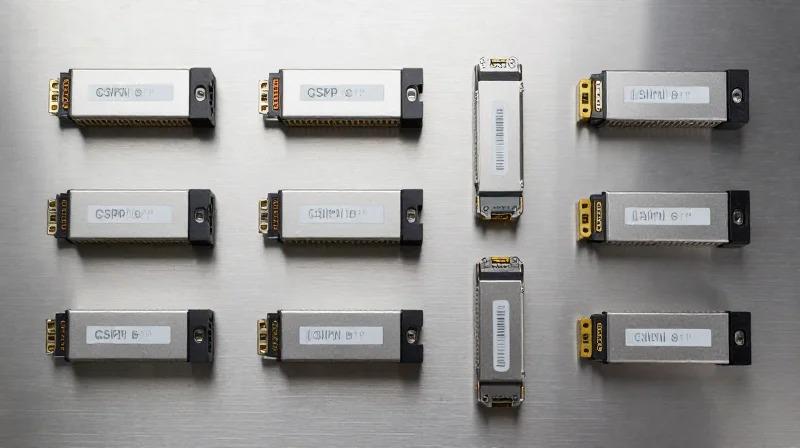
Ubytelink offers a versatile hardware ecosystem that mirrors the full spectrum of HP Aruba networking requirements. By providing everything from legacy 1G SFP modules to cutting-edge 400G solutions, we enable network architects to maintain a uniform, high-performance environment across distributed enterprise campuses and high-density data centers without the 'vendor lock-in' premium. Our portfolio is engineered to support the evolving demands of bandwidth-heavy applications while maintaining 100% inter-operability with ArubaOS and AOS-CX switching platforms.
Enterprise Foundation: 1G SFP and 10G SFP+ Modules
For the access layer and standard enterprise connectivity, Ubytelink's 1G and 10G modules serve as the backbone. These units are designed for high-reliability links in Aruba 2930F, 5400R, and 6300M series switches. Whether deploying SX, LX, or copper RJ45 variations, each module is programmed with the specific EEPROM signatures required for immediate recognition by the host hardware.
The Next Generation: 25G to 400G High-Speed Interconnects
As data centers migrate toward leaf-spine architectures, the demand for 25G SFP28 and 100G QSFP28 has skyrocketed. Ubytelink's high-speed portfolio supports the latest Aruba CX 8325 and 8400 series, offering lower latency and higher port density. For future-proofed environments, our 400G QSFP-DD solutions provide the massive throughput required for AI-driven workloads and hyperscale virtualization.
| Data Rate | Form Factor | Common HP/Aruba Equivalent | Typical Application |
|---|---|---|---|
| 1G | SFP | J4858D / J4859D | Access Layer / Uplinks |
| 10G | SFP+ | J9150D / J9151E | Aggregation / Storage |
| 25G | SFP28 | JL484A / JL485A | Server-to-Switch / Core |
| 40G | QSFP+ | JH231A / JH232A | Data Center Spine |
| 100G | QSFP28 | JL307A / R0P89A | High-Density Core |
| 400G | QSFP-DD | R4X43A | Next-Gen Hyperscale |
Strategic Advantages of the Ubytelink Portfolio
- Full Breadth of Optics
From short-range (SR) multi-mode to long-haul (ZR) single-mode reaching up to 80km, we cover all distance requirements. - Copper & Fiber Diversity
Beyond optical transceivers, we offer DAC (Direct Attach Copper) and AOC (Active Optical Cables) for cost-effective short-reach cabling. - Power Efficiency
Each module is optimized for low power consumption, reducing the thermal footprint in high-density rack environments.
Portfolio FAQ
- Does Ubytelink support the newer AOS-CX platforms?
Yes, our transceivers are fully compatible with the 6000 and 8000 series switches running AOS-CX, ensuring no 'Unsupported Transceiver' errors. - Can I mix Ubytelink modules with original Aruba optics?
Absolutely. Ubytelink modules are designed to follow industry standards, allowing them to interoperate seamlessly with OEM optics on the same link. - Are 400G solutions available for immediate deployment?
We maintain stock of 400G QSFP-DD modules tested specifically for high-capacity Aruba core environments.
Addressing the Cost-Benefit Equation for IT Directors
Addressing the Cost-Benefit Equation for IT Directors
The primary challenge for IT Directors in scaling global networks is balancing budgetary constraints with the uncompromising need for network uptime. Ubytelink HP Aruba compatible transceivers solve this equation by providing a direct path to reducing capital expenditure (CAPEX) by up to 80% compared to OEM equivalents, without the traditional trade-offs in quality or longevity. By maintaining the same Mean Time Between Failures (MTBF) as original modules, Ubytelink ensures that financial efficiency is achieved through smarter sourcing rather than technical compromise.
Quantifying the Financial and Performance Advantage
| Metric | OEM Aruba Transceiver | Ubytelink Compatible Solution | Strategic Impact |
|---|---|---|---|
| Average Unit Cost | Premium Pricing | Up to 80% Lower | Significant CAPEX reduction |
| Mean Time Between Failures (MTBF) | ~1.5M - 2M Hours | ~1.5M - 2M Hours | Reliability parity |
| Budget Flexibility | Fixed/High Cost | High Flexibility | Funds reallocated to innovation |
| Warranty Terms | Standard/Limited | Lifetime Replacement | Lowered long-term OPEX |
Mitigating Risk and Maximizing ROI
The perceived risk of third-party optics often centers on compatibility and hardware support. Ubytelink mitigates these concerns by using the same high-quality Tier-1 chipsets and laser components as the OEMs. Because these modules are recognized natively by ArubaOS, they do not trigger software flags or instability. For the IT Director, this means the Return on Investment (ROI) is realized immediately upon deployment, as the total cost of ownership (TCO) is slashed while the network maintains its high-availability status.
- Will using Ubytelink transceivers void my HP/Aruba hardware warranty?
No. Under the Magnuson-Moss Warranty Act and similar international trade regulations, a manufacturer cannot void your hardware warranty simply for using compatible third-party components. - How does Ubytelink achieve the same MTBF as the original manufacturer?
We utilize identical industrial-grade components and the same manufacturing facilities as major OEMs, ensuring that the electronic and optical integrity of our modules meets the 1.5 million+ hour benchmarks required for enterprise environments. - Is the 80% savings figure applicable to high-speed modules like 100G and 400G?
Yes, the cost delta between OEM and Ubytelink often increases with the complexity of the module, making high-speed data center upgrades the most lucrative area for CAPEX savings.
Ensuring Security and Integrity in Global Supply Chains
Ensuring Security and Integrity in Global Supply Chains
Ubytelink addresses the critical need for hardware security by implementing a 'Zero Trust' approach to the manufacturing and distribution of HP Aruba compatible transceivers. By maintaining total control over the procurement of high-grade optoelectronics and enforcing strict vendor audits, Ubytelink ensures that every module is free from malicious hardware alterations and meets the precise operational specifications required for mission-critical enterprise environments. This proactive integrity management protects organizations from the systemic vulnerabilities often introduced by unverified third-party suppliers.
The Ubytelink Integrity Advantage vs. Gray Market Risks
Many IT directors face the temptation of 'gray market' transceivers, which are often sold without clear provenance. Ubytelink mitigates this risk through serialized tracking and tier-one component sourcing, ensuring that the cost savings do not come at the expense of network uptime or data security.
| Security Feature | Ubytelink Certified Solutions | Generic/Gray Market Modules |
|---|---|---|
| Component Traceability | Full end-to-end serialized tracking. | Fragmented or non-existent provenance. |
| Vendor Verification | Audited tier-one semiconductor partners. | Variable and unverified manufacturers. |
| EEPROM Integrity | Secure, validated coding for Aruba OS. | Risk of generic, outdated, or buggy code. |
| Malware Protection | Hardware-level security validation. | High risk of unauthorized alterations. |
End-to-End Quality Management Systems
To maintain premium quality for global networks, Ubytelink utilizes a multi-stage Quality Management System (QMS). This involves pre-production material inspection, automated optical testing (AOT), and in-system validation using actual HP Aruba switches. This ensures that the physical layer of the network—often the most overlooked point of failure—remains as resilient as the core software architecture.
FAQ: Supply Chain Security and Product Authenticity
- How does Ubytelink ensure that transceivers are not counterfeit?
We maintain direct relationships with component manufacturers and implement a unique serialization system for every transceiver. This allows for immediate verification of authenticity and provides a digital audit trail from the factory floor to the end-user's data center. - Does using compatible transceivers compromise my network's data security?
No, provided they are sourced from Ubytelink. Our HP Aruba compatible solutions use industry-standard EEPROM coding that follows original manufacturer protocols, ensuring the hardware performs only the intended data transmission tasks without secondary vulnerabilities. - How does supply chain transparency affect delivery lead times?
While maintaining high standards, Ubytelink optimizes logistics through strategic regional hubs. This transparency actually improves lead times by reducing the risk of customs delays or batch failures that are common with low-quality, generic alternatives.
Real-World Applications: Powering Global Data Centers

Ubytelink's HP Aruba compatible transceiver solutions serve as the critical backbone for diverse global infrastructures, ranging from high-frequency trading floors to massive university research networks. By delivering identical performance to original equipment manufacturer (OEM) modules at a fraction of the cost, these solutions allow IT architects to scale their data center capacity and density without compromising on reliability or network security.
Case Study: Financial Services and Low-Latency Excellence
In the financial sector, where microseconds determine profitability, a leading European investment bank integrated Ubytelink QSFP28 100G modules into their Aruba 8400 series core switches. The deployment focused on reducing latency between the trading engine and the storage area network (SAN). Ubytelink modules maintained 100% error-free transmission during peak market volatility, proving that compatible solutions can handle the most rigorous mission-critical environments.
Case Study: Modernizing Higher Education Networks
A major North American university faced the challenge of upgrading its campus-wide backbone to support 40G and 100G research links. By choosing Ubytelink's HP Aruba compatible optics over OEM alternatives, the IT department reclaimed 70% of their optics budget, which was subsequently reinvested into expanding wireless access points. The Ubytelink transceivers provided seamless 'plug-and-play' interoperability with Aruba's AOS-CX operating system, requiring no custom CLI overrides.
| Industry Vertical | Primary Challenge | Ubytelink Solution | Key Outcome |
|---|---|---|---|
| Finance | High-frequency data throughput | QSFP28 100G SR4/LR4 | Zero-latency jitter, 80% cost saving |
| Education | Budget-constrained 100G upgrade | SFP28 25G & QSFP28 100G | Campus-wide 100G core adoption |
| Healthcare | 24/7 uptime for patient records | SFP+ 10G Smart Rate | Redundant failover stability |
| Cloud Providers | Massive scalability & heat management | QSFP28 100G CWDM4 | Reduced power consumption per port |
Operational Excellence in Global Deployments
- Do Ubytelink modules require special commands to work in Aruba switches?
No. Our HP Aruba compatible transceivers are pre-coded with the correct EEPROM signatures to be recognized as 'Aruba Genuine' modules, avoiding the need for the 'allow-unsupported-transceiver' command. - How do these modules perform in high-density data centers?
Ubytelink modules are designed for high-density environments, featuring optimized power consumption profiles and rigorous thermal testing to ensure they do not contribute to rack overheating. - Are these solutions suitable for long-haul metropolitan links?
Yes. We offer long-range (LR4 and ER4) HP Aruba compatible modules that support distances up to 40km, ideal for interconnecting geographically dispersed data centers.
Navigating Warranty and Support: The Ubytelink Promise
Choosing Ubytelink HP Aruba compatible transceivers does not compromise your existing OEM hardware warranties or technical support agreements. By law and technical standard, equipment manufacturers cannot void a system warranty simply because a third-party component was installed. Ubytelink bolsters this legal protection with an industry-leading lifetime replacement guarantee, ensuring that your investment in 'Premium Quality for Global Networks' is backed by a support framework that often exceeds the terms provided by original equipment manufacturers (OEMs).
Legal Protections: The Magnuson-Moss Warranty Act
A common misconception in the networking industry is that using compatible optics will void the warranty of the host switch or router. In the United States, the Magnuson-Moss Warranty Act (15 U.S.C. 2302) prohibits manufacturers from conditioning their warranties on the consumer's use of a specific brand of product or service, unless those parts are provided free of charge. Similar consumer protection laws exist globally, including the European Union’s competition rules. This means that HP/Aruba cannot legally deny warranty service for a failed motherboard or power supply simply because a Ubytelink transceiver was present in an SFP port.
Ubytelink Warranty vs. OEM Standard Support
While many OEMs offer limited 1-year or 3-year warranties on optics, Ubytelink provides a lifecycle-centric approach to support. We understand that networking hardware often stays in production for 7 to 10 years; our warranty reflects that reality.
| Feature | Ubytelink Support | Standard OEM Support |
|---|---|---|
| Warranty Duration | Lifetime Replacement | Often Limited (1-5 Years) |
| Technical Support Cost | Included / No Contract Required | Requires Paid Support Credits |
| Magnuson-Moss Compliant | Yes | N/A (The Manufacturer) |
| Firmware Compatibility | Guaranteed for Life of Hardware | Limited to Current Generation |
Frequently Asked Questions Regarding Compatibility
- Will HP/Aruba TAC refuse to help me if I use Ubytelink?
No. Technical Assistance Centers (TAC) are required to provide support for issues unrelated to the transceiver. If a specific issue is isolated to the transceiver itself, they may ask you to test with an OEM part, but they cannot refuse to troubleshoot the switch hardware or software. - What happens if a Ubytelink module fails after five years?
Our lifetime warranty covers the module for as long as you own the device. We will provide a functional replacement of the same or better specification at no additional cost to your organization. - Does Ubytelink provide technical documentation for integration?
Yes, we provide full data sheets, compatibility matrices, and engineering support to ensure our HP Aruba compatible transceivers integrate seamlessly with your existing network architecture.
The Ubytelink Promise is built on the foundation of transparency and reliability. By combining high-performance hardware with a robust legal and technical support structure, we enable global enterprises to scale their networks with confidence, knowing that their 'Premium Quality for Global Networks' is protected today and well into the future.
Ubytelink is committed to providing the reliability your network demands without the premium price tag of OEM hardware. By integrating our HP Aruba compatible transceivers, you are investing in a future-proof network backed by industry-leading support and engineering. Ready to optimize your infrastructure? Contact our technical sales team today for a custom quote or compatibility consultation.