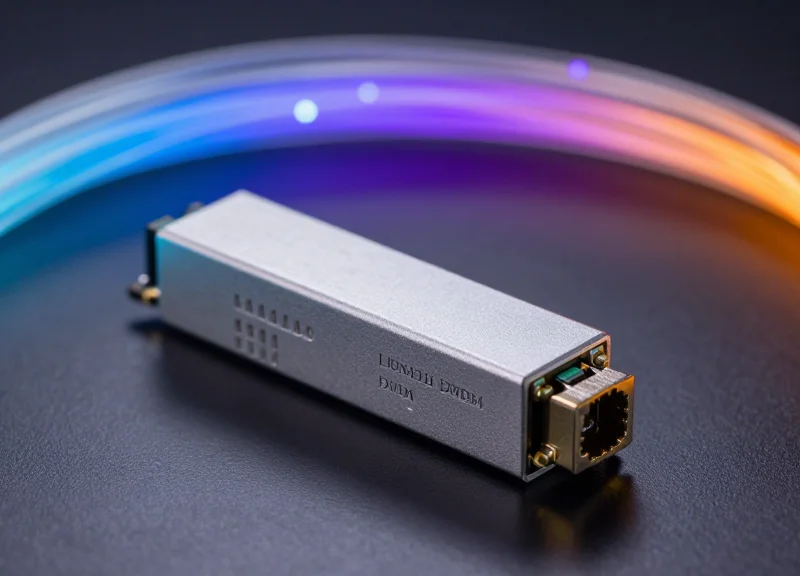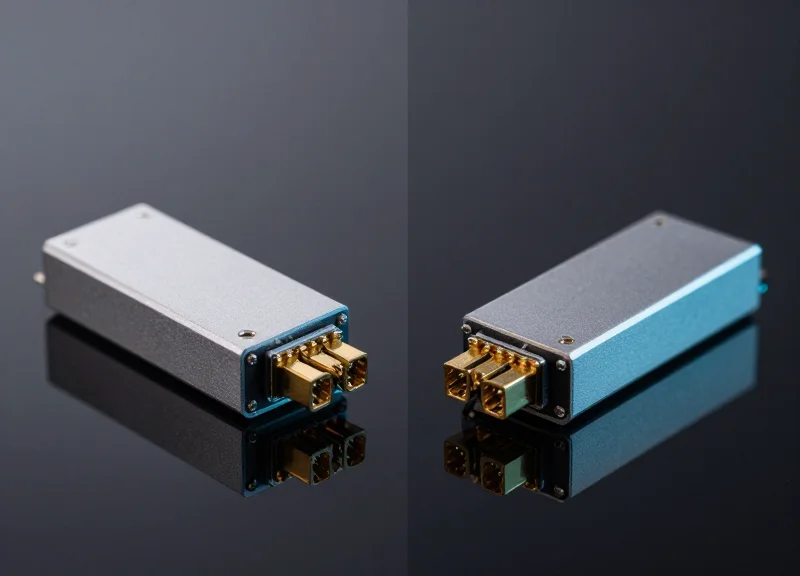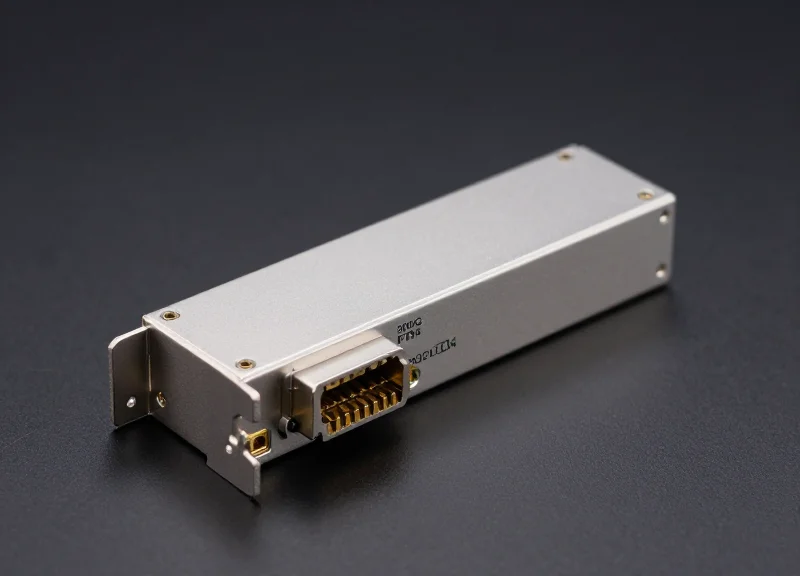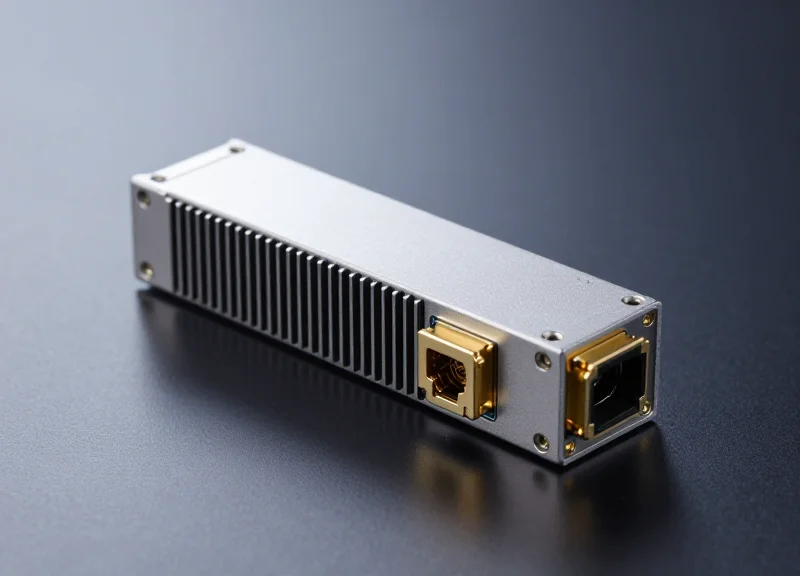
As hyperscale data centers and enterprise networks push toward 400G and 800G, the demand for efficient, high-density 100G interconnects has never been higher. The 100G Single-Lambda SFP-DD represents a pivotal shift in optical networking, moving away from complex multi-lane configurations to a streamlined, single-wavelength approach. This deep dive examines the engineering behind the SFP-DD form factor and why it is becoming the preferred choice for next-generation port density.
The Genesis of SFP-DD: Understanding 'Double Density'
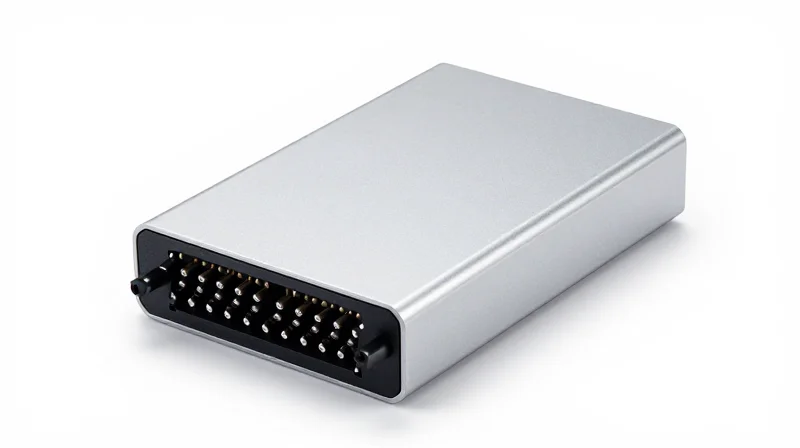
The SFP-DD (Small Form-factor Pluggable Double Density) standard is a breakthrough in optical transceiver design that leverages a two-lane electrical interface to achieve double the bandwidth of traditional SFP modules while maintaining a similar physical size. By introducing a second row of electrical contacts, SFP-DD facilitates high-density 100G deployments and ensures a seamless migration path from legacy 25G and 50G infrastructures through its unique mechanical backwards compatibility.
The MSA Mandate: Scaling Beyond Single Lanes
The SFP-DD Multi-Source Agreement (MSA) was established to address the I/O limitations of the standard SFP footprint. While SFP+, SFP28, and SFP56 modules are restricted to a single electrical lane, modern data centers require higher aggregate speeds within the same faceplate density. The SFP-DD MSA defined the mechanical, electrical, and thermal specifications to support two lanes, effectively doubling the capacity of the interface while ensuring that host equipment remains interoperable across multiple vendors.
Mechanical Evolution: The Dual-Row Pin Architecture
The primary innovation of SFP-DD is its 'Double Density' electrical interface. Unlike the single row of 20 pins found in standard SFP28 modules, the SFP-DD connector utilizes two rows of pins totaling 40 contacts. The first row is positioned to maintain compatibility with existing SFP modules, while the second, recessed row provides the additional signaling lane and ground connections required for 100G (2x50G PAM4) operation.
| Feature | SFP28 / SFP56 | SFP-DD |
|---|---|---|
| Electrical Lanes | 1 Lane | 2 Lanes |
| Total Pins | 20 | 40 |
| Max Data Rate (Typical) | 25G / 50G | 100G (using 50G PAM4) |
| Backwards Compatibility | N/A | Yes (Standard SFP Legacy Support) |
| Form Factor Width | 13.4 mm | 13.4 mm |
Common Questions About SFP-DD Architecture
- How does the mechanical design support backwards compatibility?
The SFP-DD cage and connector are designed so that a standard single-lane SFP module can be inserted and will only engage the first row of pins, while an SFP-DD module inserts deeper or utilizes its dual-row alignment to engage all 40 pins. - What is the benefit of a two-lane interface versus a single-lane?
A two-lane interface allows the module to transport 100G of data using two 50G PAM4 electrical signals, which is more cost-effective and power-efficient for certain switch architectures compared to a single-lane 100G electrical interface. - Does SFP-DD replace QSFP-DD?
No. SFP-DD is intended for higher port density in server-side or access-layer connections where a smaller footprint is required, whereas QSFP-DD is used for higher aggregate bandwidth (400G/800G) in core and spine switches.
The Power of Single-Lambda Technology

The power of single-lambda technology lies in its ability to streamline the optical path of high-speed transceivers. By replacing the traditional four-channel architecture with a single 100 Gbps wavelength, manufacturers can eliminate significant optical overhead, including multiple lasers, optical multiplexers, and complex alignment processes. This shift is primarily enabled by the transition from NRZ (Non-Return-to-Zero) signaling to PAM4 (Pulse Amplitude Modulation 4-level), which effectively doubles the data density per clock cycle.
The Architectural Evolution: From 4x25G to 1x100G
Legacy 100G solutions, such as the QSFP28 LR4 or CWDM4, utilize four discrete optical lanes each operating at 25 Gbps. This requires four sets of Transmit Optical Sub-Assemblies (TOSA) and Receive Optical Sub-Assemblies (ROSA). In contrast, 100G single-lambda technology utilizes a single laser operating at 53 Gbaud with PAM4 signaling to achieve a 100 Gbps aggregate rate. This architectural simplification is the foundation for the SFP-DD's high density and lower power consumption.
| Feature | Traditional 100G (4x25G NRZ) | Single-Lambda 100G (1x100G PAM4) |
|---|---|---|
| Laser Count | 4 | 1 |
| Modulation Scheme | NRZ (Binary) | PAM4 (4-Level) |
| Optical Components | High (Requires MUX/DEMUX) | Low (Simplified Path) |
| Relative Power Consumption | High | Significantly Lower |
| Production Yield | Lower (Complex Alignment) | Higher (Simplified Assembly) |
Economic and Operational Advantages
The reduction in component count directly translates to a lower Bill of Materials (BOM) and improved manufacturing yields. For data center operators, single-lambda SFP-DD modules offer a clear path toward 400G and 800G upgrades, as these higher speeds are built upon the same 100G-per-lane fundamental technology. Furthermore, the simplified optical design increases the Mean Time Between Failures (MTBF) by reducing potential points of failure within the transceiver.
- How does PAM4 enable single-lambda 100G?
PAM4 transmits two bits of information per symbol by using four distinct signal levels, allowing it to reach 100 Gbps bandwidth on a single wavelength without requiring prohibitively high baud rates. - Is single-lambda compatible with legacy 100G hardware?
While the optical modulation (PAM4 vs NRZ) differs, interoperability is typically handled via gearbox chips in the host switch or by using specific breakout cables that bridge the different signaling technologies. - What is the primary benefit for SFP-DD users?
The main benefit is the ability to support two 100G ports in a single SFP-DD slot, doubling faceplate density while maintaining the thermal and cost advantages of single-wavelength optics.
Electrical Interface and PAM4 Signaling

Electrical Architecture and PAM4 Signaling
The core of the 100G Single-Lambda SFP-DD interface is its ability to translate a dual-lane 50G electrical signal into a high-density 100G optical stream. Unlike standard SFP modules that feature a single row of electrical pins, the SFP-DD (Double Density) mechanical design incorporates two rows of contacts, allowing for two independent electrical lanes. In a 100G configuration, these lanes operate at 50Gbps using Pulse Amplitude Modulation 4-level (PAM4) signaling. This dual-lane electrical host interface is then aggregated by an internal Digital Signal Processor (DSP) to drive the single 100G optical lambda, ensuring seamless high-speed data transmission between the host ASIC and the fiber network.
The Shift from NRZ to PAM4
The transition to 100G throughput necessitated a change in signaling logic. While traditional 25G NRZ (Non-Return-to-Zero) was sufficient for lower speeds, it became physically impractical for 100G due to bandwidth and signal integrity constraints. PAM4 solves this by using four signal levels to represent two bits of data per symbol period, effectively doubling the data rate without doubling the required bandwidth. This efficiency is what allows the SFP-DD to maintain its small footprint while outperforming traditional SFP28 solutions.
| Feature | NRZ Signaling (25G) | PAM4 Signaling (50G/100G) |
|---|---|---|
| Bits Per Symbol | 1 bit | 2 bits |
| Signal Levels | 2 (High, Low) | 4 (0, 1, 2, 3) |
| Bandwidth Efficiency | Baseline | 2x Higher |
| Signal-to-Noise Ratio | Higher | Lower (Requires FEC) |
DSP and Gearbox Functionality
A critical component within the SFP-DD module is the DSP with an integrated Gearbox. The Gearbox acts as a logical bridge, mapping the data from the two 53.125 Gbps (PAM4) electrical lanes provided by the host into a single 106.25 Gbps (PAM4) optical signal. Beyond simple mapping, the DSP performs adaptive equalization and Forward Error Correction (FEC) monitoring. These processes are essential for compensating for signal degradation and inter-symbol interference that naturally occur at 50G+ speeds, ensuring the Bit Error Rate (BER) remains within acceptable limits for carrier-grade reliability.
- Why does SFP-DD use two 50G lanes instead of one 100G lane?
Most current host ASICs are designed to output 50G PAM4 lanes. By using two lanes, the SFP-DD aligns with existing switch architectures while providing a path to 100G total throughput. - Does the SFP-DD electrical interface support backward compatibility?
Yes, the SFP-DD's first row of pins is identical to a standard SFP. This allows the port to support legacy SFP28 or SFP56 modules if the host firmware permits. - What is the role of FEC in this interface?
Forward Error Correction (FEC) is mandatory for PAM4 signaling because the reduced voltage gaps between levels make the signal more susceptible to noise. FEC allows the receiver to correct bit errors without retransmitting data.
SFP-DD vs. QSFP28: A Comparative Analysis
SFP-DD vs. QSFP28: A Comparative Analysis
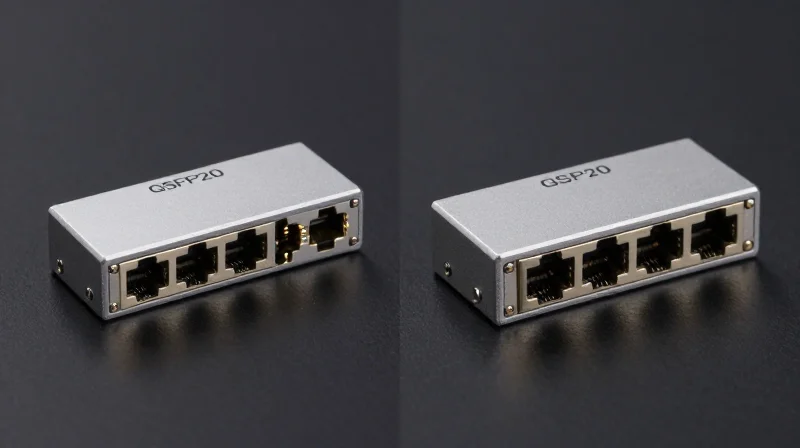
The primary distinction between SFP-DD and QSFP28 lies in their physical architecture and electrical efficiency: while QSFP28 relies on four 25G NRZ lanes, SFP-DD utilizes two 50G PAM4 lanes to achieve 100G throughput, enabling significantly higher port density and a more streamlined path to single-lambda optical integration.
Port Density and Faceplate Optimization
The SFP-DD form factor is designed to solve the 'faceplate real estate' crisis in modern hyperscale data centers. By maintaining the same width as a standard SFP module but adding a second row of electrical pins, SFP-DD allows network engineers to double the number of ports on a 1U switch compared to traditional SFP28 layouts. When compared to QSFP28, which is wider (~18mm vs ~14mm), SFP-DD provides a far more granular and dense solution for 100G breakout and leaf-spine architectures.
| Feature | SFP-DD (100G Single-Lambda) | QSFP28 (100G) |
|---|---|---|
| Electrical Interface | 2x 50G PAM4 | 4x 25G NRZ |
| Module Width | ~14.0 mm | ~18.35 mm |
| Typical Port Count (1U) | Up to 72 Ports | Up to 32-36 Ports |
| Backward Compatibility | SFP, SFP+, SFP28 | QSFP+, QSFP28 |
| Optical Tech | Single-Lambda (1x100G) | Multi-Lane (4x25G) |
Thermal Management and Power Efficiency
Thermal management is a critical consideration in the SFP-DD vs. QSFP28 debate. Although the SFP-DD module has a smaller surface area for heat dissipation, its use of single-lambda 100G technology inherently reduces power consumption. Traditional QSFP28 modules (like the LR4) require four separate lasers and a TOSA/ROSA assembly that includes an optical multiplexer and demultiplexer. In contrast, 100G SFP-DD modules using single-lambda optics eliminate these components, reducing the overall bill of materials (BOM) and heat generation per gigabit of data transmitted.
- Can I plug a QSFP28 module into an SFP-DD port?
No. SFP-DD is backward compatible with the SFP family (SFP+/SFP28), but it is physically incompatible with the QSFP family due to differences in width and connector design. - Does SFP-DD offer better power efficiency than QSFP28?
Generally, yes. By utilizing 100G Single-Lambda technology, SFP-DD modules reduce the number of optical components, leading to lower power draw compared to multi-lane QSFP28 modules for the same 100G reach. - Why choose SFP-DD for 100G instead of QSFP28?
SFP-DD is the preferred choice for high-density environments where maximizing the number of 100G ports per rack unit is the priority, and for networks transitioning toward 400G/800G where SFP-DD serves as a high-density breakout option.
Backward Compatibility and Interoperability
Backward Compatibility and Interoperability
The 100G Single-Lambda SFP-DD module achieves backward compatibility through a sophisticated 'Double Density' connector design that incorporates a second row of electrical pins while maintaining the mechanical footprint of the standard SFP. This allows network operators to populate SFP-DD ports with legacy SFP+, SFP28, or SFP56 modules, facilitating a gradual and cost-effective transition to 100G infrastructure without requiring immediate hardware replacement or specialized adapters.
The Dual-Row Connector Architecture
The SFP-DD Multi-Source Agreement (MSA) defines a cage and connector system where the primary row of contacts matches the traditional SFP pinout. When a legacy module is inserted, it only makes contact with this first row. In contrast, an SFP-DD module features a slightly longer PCB with a recessed second row of pads. This second row engages a deeper set of pins in the host connector, enabling two lanes of 50G PAM4 electrical signaling, which aggregates to the 100G throughput required for single-lambda optics.
| Module Type | Electrical Lanes | Max Data Rate | SFP-DD Port Compatibility |
|---|---|---|---|
| SFP+ (Legacy) | 1x 10G NRZ | 10 Gbps | Supported (Row 1 Only) |
| SFP28 (Legacy) | 1x 25G NRZ | 25 Gbps | Supported (Row 1 Only) |
| SFP56 (Legacy) | 1x 50G PAM4 | 50 Gbps | Supported (Row 1 Only) |
| SFP-DD (Native) | 2x 50G PAM4 | 100 Gbps | Full High-Density Support |
Ecosystem Interoperability
Beyond physical port compatibility, 100G Single-Lambda SFP-DD modules are designed for seamless optical interoperability with other 100G form factors. Because they utilize the same 100G PAM4 optical signaling as defined in IEEE 802.3 standards, an SFP-DD 100G-DR module can communicate directly with a 100G-DR QSFP28 module or connect to 400G-DR4 ports via breakout cables. This cross-form-factor interoperability is critical for data centers utilizing mixed-platform environments.
- Can I plug a standard SFP28 module into an SFP-DD cage?
Yes. The SFP-DD connector is designed specifically to accept legacy SFP modules. The legacy module will only interface with the front row of pins, functioning exactly as it would in a standard SFP28 port. - Does using legacy modules in SFP-DD ports affect switch performance?
No. The switch ASIC recognizes the legacy module and configures the electrical lane for the appropriate legacy speed (e.g., 10G or 25G). This does not impact the performance or signaling of other ports on the device. - Is a physical adapter needed for backward compatibility?
No adapters are required. The backward compatibility is built into the mechanical design of the SFP-DD cage and the host-side connector, providing a plug-and-play experience for all legacy SFP modules.
Thermal Management Challenges and Solutions
Thermal Management Challenges and Solutions
Effective thermal management for 100G Single-Lambda SFP-DD modules is primarily achieved through high-efficiency heatsink geometries, optimized chassis-level airflow, and the application of high-performance thermal interface materials (TIMs). Because these modules concentrate 100G processing power into the slim SFP form factor, the heat density is significantly higher than that of larger QSFP28 modules, necessitating aggressive cooling strategies to maintain internal components within their standard 0C to 70C operational temperature range.
The Challenge of High Power Density
The SFP-DD form factor presents a significant thermal hurdle because it maintains the 13.4mm width of a standard SFP module while doubling the electrical lanes to support 100G throughput via PAM4 signaling. While a QSFP28 module typically consumes between 3.5W and 5W, it has a larger surface area to dissipate that heat. In contrast, an SFP-DD module consuming 4W to 4.5W has a much smaller thermal envelope, resulting in a higher watts-per-square-millimeter ratio. If the host system cannot effectively remove this concentrated heat, the module's DSP and optical engine may suffer from thermal instability or accelerated aging.
| Metric | SFP28 (25G) | QSFP28 (100G) | SFP-DD (100G) |
|---|---|---|---|
| Max Power Consumption | 1.5W | 5.0W | 4.5W |
| Module Width | 13.4mm | 18.35mm | 13.4mm |
| Thermal Density | Low | Moderate | Critical |
| Typical Cooling Need | Passive/Standard | Active Airflow | Enhanced Airflow + Heatsinks |
Strategic Heat Dissipation Solutions
- Optimized Heatsink Fin Design
Utilizing high-fin-count or specialized rider heatsinks attached to the SFP-DD cage to maximize the surface area for convective cooling. - Enhanced Airflow Velocity
Configuring switch chassis to provide high-velocity, laminar airflow across the SFP-DD ports, often requiring more powerful variable-speed fans. - Stacked vs. Belly-to-Belly Configurations
Carefully designing the PCB layout to avoid 'belly-to-belly' mounting of SFP-DD ports when possible, as this configuration traps heat between the two modules. - Thermal Interface Materials (TIMs)
Applying high-conductivity pads or gels between the module and the cage assembly to reduce contact resistance and speed up heat transfer to the external heatsink.
Frequently Asked Questions
- Does 100G Single-Lambda SFP-DD run hotter than QSFP28?
The total power consumption is often lower, but the heat is concentrated in a much smaller volume, making the thermal management more challenging for the system designer. - Can standard SFP heatsinks be used?
No, SFP-DD typically requires specialized, low-profile heatsinks designed specifically for the higher power load of 100G DSPs within the SFP-DD cage footprint. - What happens if an SFP-DD module exceeds its thermal limit?
Most modern modules include thermal sensors that will trigger a 'Thermal Alarm' and eventually throttle the DSP performance or shut down the laser to prevent permanent hardware damage.
Key Applications: From Leaf-Spine to Edge Computing
Key Applications: From Leaf-Spine to Edge Computing
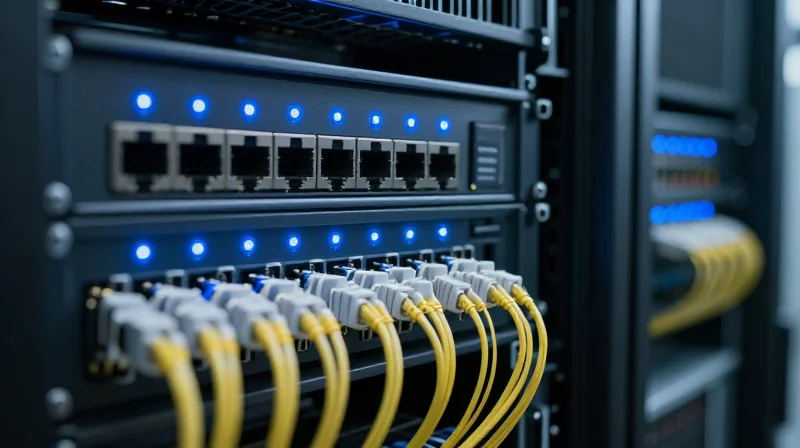
The adoption of 100G Single-Lambda SFP-DD is primarily driven by the transition toward 51.2T switching silicon and the need for higher radix architectures that reduce the number of tiers in a data center network. By leveraging the double-density interface, network architects can deploy 100G connectivity in a form factor that matches the density of 400G and 800G systems, ensuring that the access layer does not become a bottleneck for hyperscale or edge traffic.
Hyperscale Leaf-Spine Fabrics and High-Radix Switching
In hyperscale environments, the ability to increase port count without expanding the physical footprint of the switch is paramount. 100G SFP-DD enables high-radix switches to support double the 100G ports compared to traditional SFP28 or SFP56 designs. This allows for flatter network topologies, reducing the latency incurred by multiple switch hops and simplifying the management of 'East-West' traffic patterns common in cloud applications.
| Deployment Scenario | Role of 100G SFP-DD | Operational Advantage |
|---|---|---|
| Hyperscale Data Center | High-density Top-of-Rack (ToR) switching | Reduced cabling complexity and power per bit |
| Edge Data Center | Bandwidth aggregation in small footprints | High throughput in environmentally constrained sites |
| 5G Infrastructure | Fronthaul and Midhaul transport | Lower latency via single-lambda optical processing |
The Shift to the Edge: 5G and Low-Latency Demands
Edge computing sites often operate under strict space and power limitations that make bulky QSFP28 modules less ideal. SFP-DD provides a compact 100G solution that is optimized for the next generation of Edge routers and 5G base stations. By utilizing single-lambda technology, these modules simplify the optical path, which reduces both component costs and power consumption, making them highly effective for the distributed nature of edge deployments where operational efficiency is a primary metric.
- How does 100G SFP-DD improve switch radix?
By doubling the number of electrical lanes per port within the same physical width as a standard SFP module, it allows switch manufacturers to double the number of accessible 100G channels on a single front panel. - Is 100G SFP-DD suitable for long-reach applications?
While commonly used for short-reach DR1 connections, the single-lambda technology also supports reaches up to 10km (LR1), making it versatile for campus and metro-edge deployments. - Does SFP-DD support 100G breakout configurations?
Yes, it is often used in breakout scenarios where an 800G (2x400G) or 400G spine port is connected to multiple 100G SFP-DD leaf or server ports using breakout cables.
The Economic Impact of 100G Single-Lambda
100G Single-Lambda SFP-DD modules deliver a superior Total Cost of Ownership (TCO) by replacing complex, multi-lane optical assemblies with a streamlined single-channel architecture. This shift significantly reduces the Bill of Materials (BOM) for manufacturers, which translates to lower market prices for operators, while simultaneously decreasing power consumption and cooling requirements per unit of bandwidth.
Capex Reduction through Optical Simplification
Traditional 100G optics, such as the QSFP28 LR4, rely on four discrete 25G lasers and a complex set of optical multiplexers and de-multiplexers to combine these signals. In contrast, 100G Single-Lambda technology uses a single 53 Gbaud laser with PAM4 modulation. By eliminating three lasers and the associated alignment complexities, manufacturers can achieve higher yields and lower production costs, directly lowering the capital expenditure for network expansion.
| Economic Factor | Legacy 4x25G Architecture | 100G Single-Lambda |
|---|---|---|
| Component Count | High (4 Lasers, 4 Detectors) | Low (1 Laser, 1 Detector) |
| Optical Packaging | Complex Mux/Demux required | Simplified, No Mux/Demux |
| Manufacturing Yield | Lower due to multi-lane alignment | Higher due to simplified design |
| Relative Unit Cost | Higher | Lower (Optimized for Scale) |
Opex Optimization: Power and Cooling Efficiency
Operational expenses are a primary concern for hyperscale data centers. 100G Single-Lambda SFP-DD modules contribute to lower Opex by significantly improving the power-per-bit metric. Because there are fewer active optical components to power and cool, these modules consume less energy than their multi-lane predecessors. In high-density switch environments, these incremental power savings aggregate into massive reductions in utility costs and a smaller carbon footprint for the facility.
Leveraging Existing Fiber Infrastructure
The Single-Lambda approach is specifically engineered to run over standard duplex Single-Mode Fiber (SMF). This allows network operators to upgrade from 25G or 40G to 100G without the need to install expensive new parallel fiber or ribbon cables. The ability to reuse existing fiber plants dramatically increases the Return on Investment (ROI) for legacy infrastructure while providing a clear path to 400G and 800G through future breakout configurations.
- Does 100G Single-Lambda require more expensive DSPs?
While the DSP (Digital Signal Processor) is more sophisticated to handle PAM4 modulation, the overall cost is offset by the drastic reduction in expensive optical components like lasers and receivers. - How does this technology affect reliability costs?
Fewer components generally mean fewer points of failure. By reducing the number of lasers from four to one, the Mean Time Between Failures (MTBF) theoretically improves, reducing long-term maintenance costs. - Is SFP-DD more cost-effective than QSFP28?
SFP-DD provides a more cost-effective path for high-density applications because it allows for more ports in the same faceplate area (double the density), maximizing the bandwidth value of each rack unit.
The Future Roadmap: SFP-DD in the 400G Ecosystem

Integrating SFP-DD into the 400G Network Fabric
The 100G Single-Lambda SFP-DD module is not a standalone innovation but a critical building block for the broader transition to 400G and 800G networking. By utilizing two electrical lanes of 50G PAM4 to support a single 100G optical lambda, SFP-DD enables a symmetrical relationship with 400G QSFP-DD ports. This alignment allows data center architects to deploy massive 4x100G breakout architectures, where a single 400G switch port communicates directly with four high-density SFP-DD server ports. This evolution ensures that the small form factor remains relevant as the industry shifts its core infrastructure toward higher aggregate throughputs.
Evolutionary Path: From 100G to 400G SFP-DD
The SFP-DD Multi-Source Agreement (MSA) has already defined paths for scaling performance beyond the initial 100G threshold. As 100G PAM4 per-lane electrical signaling becomes the industry standard, SFP-DD will evolve to support 200G (2x100G) and eventually higher capacities, maintaining the same compact physical footprint. This roadmap is essential for maintaining backward compatibility with existing SFP cages while providing an upgrade path that mirrors the density improvements seen in the QSFP-DD and OSFP families.
| Generation | Max Bandwidth | Electrical Lane Configuration | Primary Application |
|---|---|---|---|
| Current SFP-DD | 100G | 2 x 50G PAM4 | 100G Leaf-Spine / Breakouts |
| Next-Gen SFP-DD | 200G | 2 x 100G PAM4 | High-Performance Computing (HPC) |
| Future SFP-DD800 | 400G+ | 2 x 200G PAM4 | AI/ML Clusters and 800G Breakouts |
Strategic Outlook and FAQ
- How does SFP-DD impact 400G breakout strategies?
It allows for the highest density of 100G ports in a single rack unit, enabling a 1:4 breakout from 400G QSFP-DD switches without the space constraints of standard SFP modules. - Will SFP-DD eventually replace standard SFP56?
While SFP56 remains relevant for single-lane 50G, SFP-DD is expected to become the preferred choice for 100G and 200G edge connectivity due to its dual-lane efficiency. - Is the SFP-DD roadmap compatible with 800G ecosystems?
Yes, future iterations of SFP-DD are designed to support the electrical signaling required to act as the client-side interface for 800G (8x100G or 4x200G) breakout cables.
The 100G Single-Lambda SFP-DD is more than just a minor iteration; it is a fundamental architectural upgrade that enables the density required for the AI and Cloud era. By combining the space-saving benefits of Double Density with the efficiency of PAM4 signaling, it offers a clear path for network operators to scale. Ready to optimize your high-speed interconnects? Contact our technical experts today for a custom network assessment and SFP-DD compatibility check.