In the rapidly evolving world of data centers and enterprise networking, compatibility and performance are non-negotiable. Traditional vendor-locked hardware often comes with inflated costs and limited flexibility. This guide explores how wholesale firmware coding for switches can revolutionize your procurement strategy, offering the perfect balance of cost-efficiency and technical precision through Ubytelink’s industry-leading services.
The Strategic Importance of Firmware Coding in Modern Networking
The Strategic Importance of Firmware Coding in Modern Networking
Firmware coding is the essential digital architecture that facilitates the 'handshake' between a switch’s operating system and a pluggable transceiver. In modern high-density environments, obtaining wholesale firmware coding solutions is no longer just a cost-saving measure; it is a strategic necessity for ensuring that third-party optical modules maintain 100% interoperability with major vendor hardware such as Cisco, Arista, and Juniper. Without precise coding, switches often trigger 'unsupported transceiver' errors, disable ports, or fail to report critical Digital Optical Monitoring (DOM) data.
Overcoming Proprietary Vendor Lock-in
Major network equipment manufacturers (NEMs) frequently use proprietary algorithms and EEPROM checksums to prevent the use of non-branded optics. Custom firmware coding allows enterprise-level users to bypass these restrictions by emulating the specific identification strings and power parameters required by the host switch. By leveraging bulk pricing for these coding services, network engineers can deploy white-box or third-party hardware across diverse environments without sacrificing the stability of an OEM-certified link.
| Feature | OEM Factory Coding | Wholesale Custom Coding |
|---|---|---|
| Brand Compatibility | Single Vendor Only | Multi-Vendor (Cisco, Arista, etc.) |
| Cost Efficiency | Standard Retail Premium | Volume-Based Bulk Discounts |
| Field Flexibility | Hard-coded / Static | Re-programmable for 2026 Standards |
| Diagnostic Access | Full DOM/DDM Support | Full DOM/DDM Support via Custom I2C |
Operational Advantages of Bulk Firmware Solutions
- Why is firmware coding necessary for Arista and Cisco parity?
Arista and Cisco switches utilize specific MSA (Multi-Source Agreement) data fields to verify the authenticity of a module. Custom coding ensures the transceiver's EEPROM perfectly matches the expected vendor ID, part number, and serial format. - How does wholesale pricing benefit data centers in 2026?
Wholesale quotes for firmware coding reduce the per-unit overhead of transceiver deployment by up to 70%, allowing for rapid scaling of 100G, 400G, and 800G infrastructures without inflating the CapEx budget. - Can firmware be updated after purchase?
Yes, high-quality wholesale solutions often include the ability to re-code or update firmware in the field to adapt to new switch OS versions or brand transitions.
As we move further into 2026, the demand for custom-coded optics continues to surge. Organizations looking to optimize their supply chain should seek out vendors who provide custom quotes for bulk firmware coding. This ensures that every module in a 1,000+ unit deployment is pre-configured for the specific software environment of the target data center, virtually eliminating the time-consuming troubleshooting associated with generic optical components.
Why Buy Wholesale: The Economics of Bulk Firmware Coding
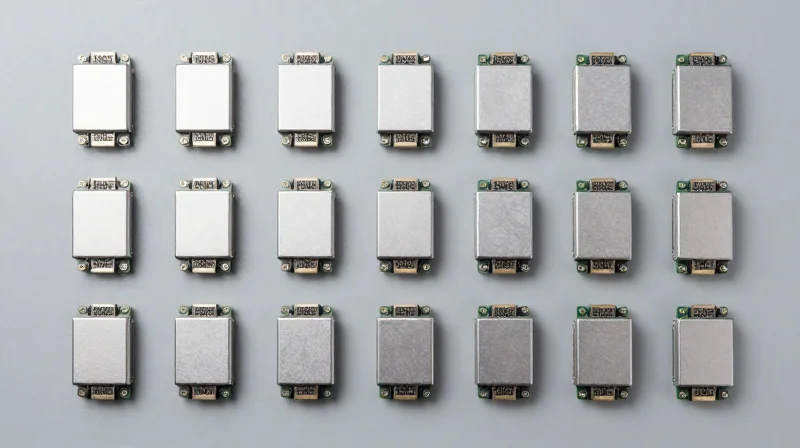
Why Buy Wholesale: The Economics of Bulk Firmware Coding
Transitioning to a wholesale procurement model for switch firmware coding is a strategic move that significantly reduces the Total Cost of Ownership (TCO) for enterprise networks. When organizations opt to 'Buy Firmware Coding for Switches Wholesale,' they move away from the high-margin, low-volume pricing typical of individual modules. By centralizing coding requirements for large batches of transceivers, companies can negotiate custom quotes that reflect the actual labor and R&D costs rather than inflated retail markups. This approach is essential for 2026 deployments where high-density 100G, 400G, and 800G infrastructures require thousands of compatible interlinks across diverse hardware like Cisco, Juniper, and Arista.
Comparative Cost Efficiency: Individual vs. Wholesale
| Metric | Individual Procurement | Wholesale Procurement (Bulk) |
|---|---|---|
| Per-Unit Price | High (Retail/List Price) | Substantial Volume Discounts |
| Testing Overhead | Per-batch variation | Standardized Regression Testing |
| Administrative Cost | High (Multiple POs/Invoices) | Low (Consolidated Procurement) |
| Lead Times | Subject to Stock Availability | Prioritized Production Queues |
| Firmware Consistency | Variable/Inconsistent | Uniform Across All Units |
The ROI of Firmware Parity
The economics of bulk coding extend beyond the initial purchase price into the realm of operational efficiency. 'Firmware Parity'—ensuring every transceiver in a deployment runs the exact same validated code version—drastically reduces troubleshooting time. In an individual procurement model, different batches might have slight firmware variations that cause intermittent link flaps or CRC errors. Wholesale coding guarantees uniformity, which simplifies network monitoring and accelerates the time-to-market for new data center tiers. This uniformity is a hidden contributor to long-term ROI, as it minimizes the need for expensive on-site engineering interventions.
- Why are custom quotes better than standard pricing for bulk orders?
Custom quotes allow for tailored technical specifications, such as specific DOM/DDM parameters and vendor-specific handshake protocols, which standard pricing models often overlook. - How does bulk coding impact deployment speed in 2026?
By securing bulk pricing and coding upfront, organizations bypass the delays associated with multi-stage procurement, ensuring that all hardware arrives 'plug-and-play' ready for immediate installation. - Is wholesale coding applicable to multi-vendor environments?
Yes; custom bulk quotes often include 'multi-code' solutions where a single batch of transceivers is partitioned with different firmware sets for Cisco, Arista, and Mellanox switches simultaneously.
Ultimately, the economics of bulk firmware coding are driven by the elimination of redundant testing and the leverage of volume-based negotiation. For large-scale data centers and telecommunications providers, the shift to custom bulk quotes is no longer optional—it is a foundational requirement for maintaining a competitive cost structure and ensuring high network availability.
Custom OEM/ODM Options: Beyond Standard Configurations
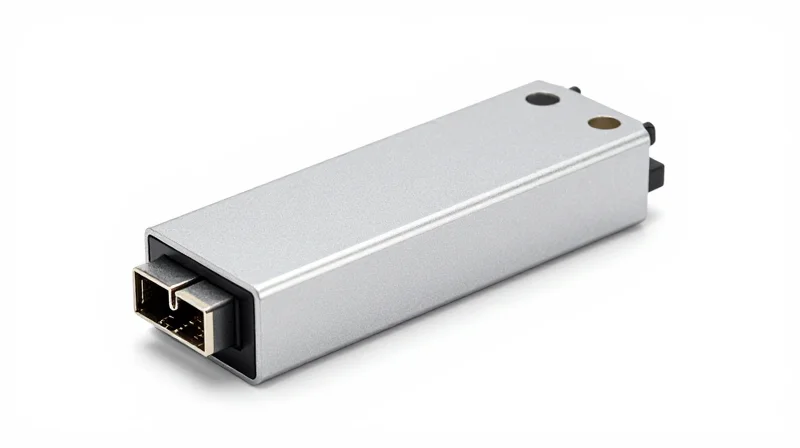
Advanced Customization for Specialized Infrastructure
When organizations buy firmware coding for switches wholesale, they often encounter scenarios where off-the-shelf configurations fall short. Custom OEM/ODM options bridge this gap by offering deep-level modifications to the firmware logic, enabling transceivers to communicate flawlessly with niche hardware architectures and proprietary management systems. This bespoke approach ensures that even the most complex networking environments maintain 100% operational integrity by optimizing the interface between hardware and software.
| Feature | Standard Firmware Coding | Custom OEM/ODM Firmware |
|---|---|---|
| Compatibility | Mainstream Brands (Cisco, Juniper) | Legacy, Niche, and Proprietary Systems |
| Protocol Support | Standard MSA Compliance | Extended/Custom Protocol Stacks |
| Diagnostic Access | Standard DOM/DDM Reporting | Custom Telemetry and Vendor Specific Fields |
| Scaling | Batch Programming | Unique Per-Port/Per-Unit Serialization |
Engineering Bespoke Logic for Proprietary Protocols
Standard MSA (Multi-Source Agreement) configurations provide a baseline for interoperability, but high-performance data centers often utilize custom silicon or specialized ASICs that require specific signal conditioning and power management parameters. Ubytelink’s engineering team works directly with your technical specifications to develop firmware that handles non-standard handshake sequences and proprietary encryption layers, ensuring that wholesale procurement fits your specific architectural roadmap for 2026 and beyond.
- Can custom firmware support vendor-specific identification strings?
Yes, our OEM services allow for complete customization of Vendor Name, OUI, and Part Number fields to ensure seamless integration into proprietary network management software. - How does bespoke coding impact wholesale lead times?
While custom logic requires an initial validation phase, our bulk coding infrastructure allows us to replicate custom firmware across thousands of units with minimal delay once the initial golden image is approved. - Is it possible to optimize firmware for specific cable lengths?
Absolutely. We can adjust the pre-emphasis and equalization settings within the firmware to optimize performance for specific DAC lengths or fiber types in high-density environments.
By moving beyond standard configurations, wholesalers can offer their end-users a level of reliability and specialized performance that off-the-shelf modules cannot match. This technical advantage, combined with competitive bulk pricing, positions custom firmware as a critical component of modern network procurement strategies.
Solving the Compatibility Challenge in Multi-Vendor Environments
Solving the Compatibility Challenge in Multi-Vendor Environments
Professional firmware coding is the definitive solution for overcoming 'unsupported transceiver' errors, serving as the programmatic bridge that allows generic or third-party optical modules to function flawlessly within proprietary host environments. By meticulously modifying the EEPROM and MCU data to align with specific vendor algorithms and checksum requirements, professional coding ensures that switches from Cisco, Arista, Juniper, and Mellanox recognize external hardware as native components, thereby maintaining 100% link stability and data integrity across heterogeneous networks.
Overcoming Vendor Lock-In Through Precise EEPROM Mapping
The primary hurdle in multi-vendor data centers is software-defined restrictions designed to enforce brand loyalty. These restrictions manifest as error messages that disable the port when a non-branded module is detected. Wholesale firmware coding bypasses these limitations by replicating the specific IDPROM signatures, serial numbers, and vendor OUI (Organizationally Unique Identifier) codes that the host switch's operating system expects to see. This level of customization allows operators to leverage high-performance hardware without being tethered to the inflated margins of original equipment manufacturers (OEMs).
| Brand Environment | Common Error Symptom | Firmware Coding Solution |
|---|---|---|
| Cisco Catalyst/Nexus | %PHY-4-UNSUPPORTED_TRANSCEIVER | Recoding with specific PID and security checksums. |
| Arista 7000 Series | Transceiver validation failed | Implementing custom encryption keys and Arista-compatible signatures. |
| Juniper EX/QFX | fru-id mismatch / Link Down | Aligning IDPROM data with Junos Hardware Compatibility Lists (HCL). |
| Mellanox/NVIDIA | Missing or invalid EEPROM data | Optimizing I2C communication protocols and vendor-specific registers. |
Interoperability FAQs for Wholesale Procurement
- Can custom firmware support multiple vendors on a single module?
Yes, through multi-coding techniques, a single optical module can be programmed with dual or even quad-firmware stacks, allowing it to work across different brands without manual intervention. - Does wholesale firmware coding impact the hardware warranty?
No. Modern networking regulations and laws like the Magnuson-Moss Warranty Act generally protect users from warranty voidance simply for using third-party components, provided the firmware is coded to meet standard MSA specifications. - How does bulk coding handle firmware updates in the switch?
We utilize 'future-proof' coding methodologies that account for OS updates (like Cisco IOS-XE or Arista EOS revisions), ensuring that the modules remain compatible even after a network-wide software upgrade.
In a 2026 landscape where supply chain agility is paramount, the ability to source wholesale modules with pre-configured, multi-vendor firmware profiles is a strategic advantage. It eliminates the need for expensive on-site recoding tools and reduces the technical overhead of managing mixed-brand deployments, providing a streamlined path to network scalability and significantly improved ROI.
Quality Assurance and Testing: The EEAT Standard for Firmware
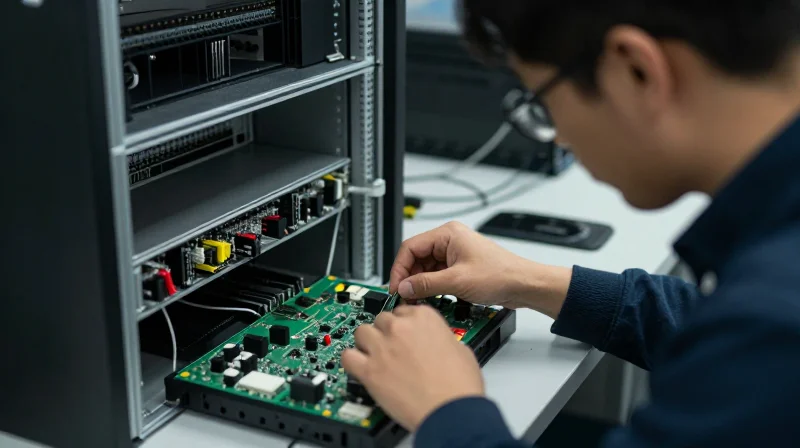
Quality assurance in wholesale firmware coding is not merely a final check but a foundational requirement that ensures signal integrity, power consumption efficiency, and long-term stability across massive deployments. When procuring firmware at scale, the 'EEAT' standard—Expertise, Experience, Authoritativeness, and Trustworthiness—is upheld through multi-layered testing environments that simulate real-world data center stress, ensuring that every coded module performs identically under peak load.
Core Testing Protocols for Wholesale Firmware Reliability
To guarantee that custom-coded modules integrate seamlessly into heterogeneous networks, engineers employ high-precision diagnostic tools. Testing focuses on the physical layer (L1) and data link layer (L2) to prevent the common 'unsupported transceiver' errors that plague low-quality bulk imports.
| Testing Domain | Target Metric | Operational Benefit |
|---|---|---|
| Signal Integrity (SI) | Bit Error Rate (BER) < 10^-12 | Eliminates packet drops and transmission latency. |
| Power Efficiency | < 1.0W - 3.5W (Module Dependent) | Reduces data center cooling costs and extends hardware life. |
| Thermal Stability | 0°C to 70°C (Commercial Range) | Prevents firmware crashes during high-temperature surges. |
| Protocol Compliance | 100% MSA Agreement Alignment | Ensures multi-vendor compatibility across Cisco, Arista, and Juniper. |
Signal Integrity and Eye-Pattern Analysis
Rigorous signal integrity testing involves eye-pattern analysis to ensure that the electrical signals within the switch modules meet strict amplitude and timing requirements. By optimizing the firmware's pre-emphasis and equalization settings during the coding process, developers can compensate for channel loss, which is critical for 100G and 400G high-speed interconnects.
Frequently Asked Questions: Quality Standards in Firmware Procurement
- How does custom coding impact power consumption in bulk orders?
Optimized firmware reduces power draw by disabling unused diagnostic sub-routines and optimizing I2C bus communication. In bulk deployments of 1,000+ modules, this can result in significant annual electricity savings. - What is the importance of EEAT in firmware supply chains?
EEAT ensures that the provider has the technical expertise to handle complex EEPROM mapping and the authority to guarantee that the firmware will not be flagged by OEM security updates. - Is signal integrity testing performed on every unit in a wholesale quote?
Reputable vendors perform 100% functional testing and batch-based signal integrity validation to ensure that the entire lot meets the quoted performance specifications.
2026 Trends: 400G and 800G Firmware Requirements

The Evolution of Firmware for 400G and 800G Architectures
In 2026, firmware coding for high-speed switches has transitioned from simple hardware identification to complex algorithmic optimization. As data centers migrate to 400G and 800G speeds, the firmware must manage Four-Level Pulse Amplitude Modulation (PAM4), perform real-time error correction, and ensure interoperability across various silicon photonics platforms. Wholesale firmware solutions now prioritize these sophisticated layers to ensure that bulk-deployed modules can handle the rigorous demands of AI-driven traffic and hyperscale data environments.
Key Technical Requirements for Next-Gen Firmware
| Specification | 400G Requirements | 800G Requirements |
|---|---|---|
| Signaling | PAM4 (56Gbps/lane) | PAM4 (112Gbps/lane) |
| Management Interface | CMIS 4.0 / 5.0 | CMIS 5.0 and higher |
| FEC Support | Forward Error Correction (KP4) | Advanced RS-FEC and Inner-FEC |
| Power Management | 10W - 14W per module | 16W - 25W+ per module |
The Role of CMIS in Bulk Firmware Deployment
The Common Management Interface Specification (CMIS) has become the industry standard for managing high-speed pluggable modules. For 800G switches, CMIS 5.0 compliance is non-negotiable. This protocol allows the host switch to interact with the module's Digital Signal Processor (DSP), managing lane configurations, diagnostic monitoring, and power-up sequences. When purchasing firmware coding wholesale, it is vital to ensure the code supports the latest CMIS iterations to prevent 'port flap' and initialization failures in multi-vendor environments.
Addressing Signal Integrity and Thermal Constraints
Higher speeds generate significant heat and signal degradation. 2026 firmware trends emphasize 'intelligent' cooling profiles and adaptive equalization. Firmware must be coded to dynamically adjust the Tx/Rx settings based on the length of the link (DAC vs. AOC vs. Optical) and the specific thermal conditions of the switch chassis to maintain a stable Bit Error Rate (BER).
High-Speed Firmware FAQ
- Why is PAM4 support critical for 400G/800G firmware?
Unlike traditional NRZ signaling, PAM4 carries two bits per symbol, which requires the firmware to manage complex threshold levels and noise cancellation via the DSP. - What is the benefit of wholesale coding for 800G modules?
Wholesale coding ensures that every module in a bulk order uses identical, tested firmware versions, which eliminates variability in signal timing and power draw across a large-scale fabric. - Does 800G firmware support backward compatibility?
While the hardware may support it, the firmware must be specifically coded to 'gear down' to 400G or 200G speeds while maintaining signal integrity at the lower clock rates.
Streamlining Your Supply Chain with Ubytelink’s OEM Services
When you buy firmware coding for switches wholesale through Ubytelink, you transition from a reactive procurement model to a proactive, integrated supply chain strategy that eliminates the technical bottlenecks of manual onsite coding. By embedding custom code directly into the hardware manufacturing or pre-shipment phase, enterprises can ensure that every module is deployment-ready the moment it arrives at the data center.
Optimizing Procurement through Vertical Integration
Traditional supply chains often involve purchasing generic hardware and then seeking third-party coding or performing manual updates in-house. Ubytelink’s OEM services merge these steps, delivering pre-coded, verified modules that match your specific network architecture. This vertical integration significantly reduces the time-to-market for new data center build-outs and network upgrades, allowing IT teams to focus on architecture rather than troubleshooting compatibility.
| Feature | Standard Wholesale Procurement | Ubytelink OEM Services |
|---|---|---|
| Lead Time | 4-8 Weeks (Variable) | 1-2 Weeks (Optimized) |
| Customization | Limited/Generic | Full Protocol Alignment |
| Testing | Post-Delivery | Pre-Shipment Validation |
| Deployment Speed | Low (Requires manual coding) | High (Plug-and-Play) |
The Economics of Scale: Bulk Pricing and Custom Quotes
Agility in 2026 requires more than just speed; it requires financial predictability. By leveraging custom quotes for bulk firmware coding, organizations can lock in competitive pricing while ensuring that every unit meets the same rigorous performance standards. This removes the variability in signal integrity and power efficiency that often plagues fragmented procurement strategies.
- How does Ubytelink handle urgent hardware requirements?
Through our global logistics network and pre-staging capabilities, we prioritize high-volume orders to meet critical project deadlines and minimize downtime. - Can firmware be tailored to specific proprietary switch operating systems?
Yes, our OEM services specialize in cross-compatibility, ensuring seamless integration with major vendors like Cisco, Arista, and Juniper via custom-coded EEPROM signatures. - Is bulk pricing available for specialized 400G and 800G modules?
We offer tiered pricing structures for next-generation hardware, ensuring that early adopters of high-speed standards maintain cost-efficiency while scaling their bandwidth.
How to Request a Custom Wholesale Quote for Your Project
Requesting a custom wholesale quote for firmware coding requires a systematic approach that balances technical specifications with volume projections. To secure the most competitive rates in 2026, procurement teams must move beyond simple RFPs and provide detailed architectural insights that allow developers to accurately assess engineering man-hours and licensing costs. An effective request identifies the specific hardware-software interface requirements, ensuring that the final quote reflects the true scope of work without unnecessary 'safety' margins added by the provider due to ambiguity.
Essential Documentation for Accurate Pricing
Before contacting a provider like Ubytelink, ensure your technical team has prepared a comprehensive Data Sheet or Specification Document. This should detail the target ASIC/SoC (such as Broadcom or Mellanox chipsets), the required port density, and specific Layer 2 or Layer 3 feature sets. Providing a clear roadmap of your expected deployment scale allows the vendor to apply tiered bulk pricing models that reward high-volume commitments.
| Quote Category | Required Information | Impact on Wholesale Rate |
|---|---|---|
| Hardware Scope | CPU architecture, ASIC model, Flash/RAM size | Determines baseline development complexity. |
| Volume Commit | Projected units per quarter/year | Triggers tiered discounts and NRE fee waivers. |
| Feature Stack | VXLAN, EVPN, MLAG, or custom SDN protocols | Defines the depth of coding and testing cycles. |
| Compliance | TAA compliance, IEEE standards, or proprietary certifications | Influences regulatory and validation costs. |
Step-by-Step Quoting Process
- 1. Technical Consultation
Initiate a discovery call to align your hardware capabilities with the firmware provider's library of existing IP blocks. - 2. NDA Execution
Secure your intellectual property and project timelines through a formal Non-Disclosure Agreement before sharing proprietary hardware schematics. - 3. Draft Proposal Review
Analyze the preliminary quote for line items covering Non-Recurring Engineering (NRE) fees versus per-unit licensing costs. - 4. Final Volume Negotiation
Finalize the bulk pricing based on multi-year forecasts to maximize the economy of scale for the firmware deployment.
Frequently Asked Questions Regarding Custom Quotes
- What is the typical turnaround for a wholesale quote?
Standard requests are processed within 48 to 72 business hours, while complex projects requiring custom ASIC integration may take up to 7 business days for a full technical audit. - Can we negotiate NRE fees for very large orders?
Yes, for wholesale orders exceeding specific unit thresholds, providers often amortize or completely waive Non-Recurring Engineering fees to lower the entry barrier. - Is technical support included in the bulk pricing?
Wholesale quotes typically include a base level of integration support. Extended SLAs and 24/7 technical assistance are usually quoted as optional recurring service modules.
By following this structured approach, your organization can leverage its purchasing power to secure not only the best price but also a firmware solution that is perfectly optimized for your specific networking hardware and use cases in the 2026 market.
Optimizing your network infrastructure shouldn't be constrained by proprietary limitations or high retail markups. By choosing Ubytelink for your wholesale firmware coding needs, you gain access to top-tier engineering expertise and competitive bulk pricing. Ready to scale your infrastructure? Contact Ubytelink today for a custom quote and discover how our OEM/ODM solutions can power your growth.