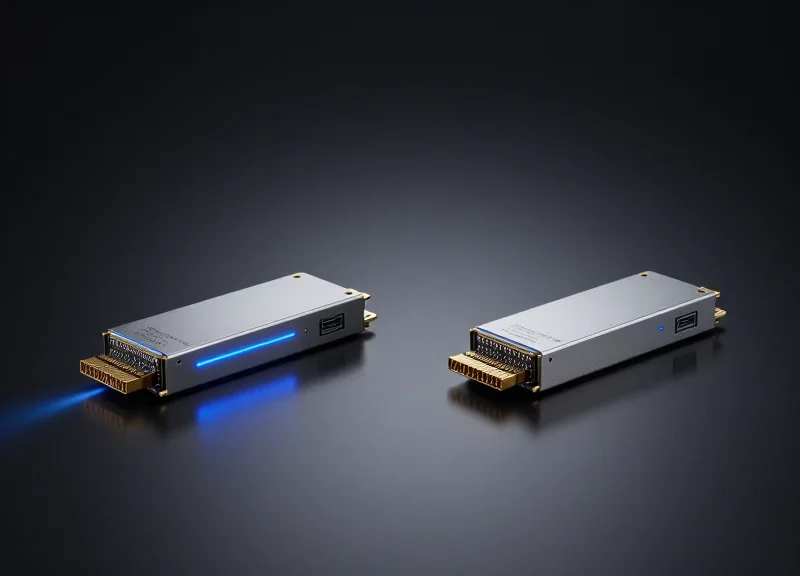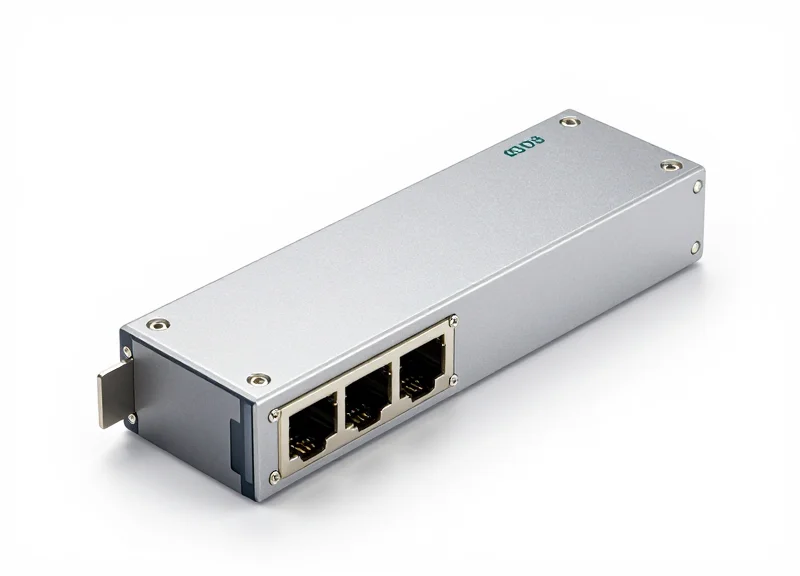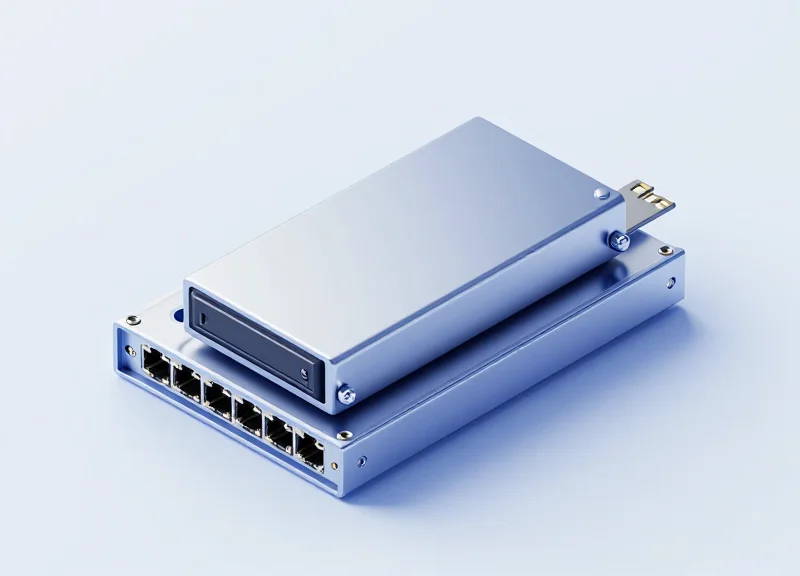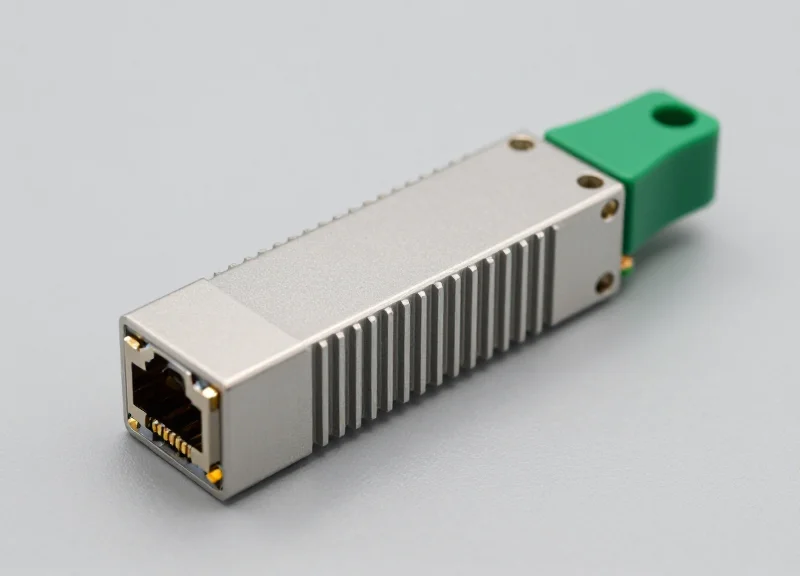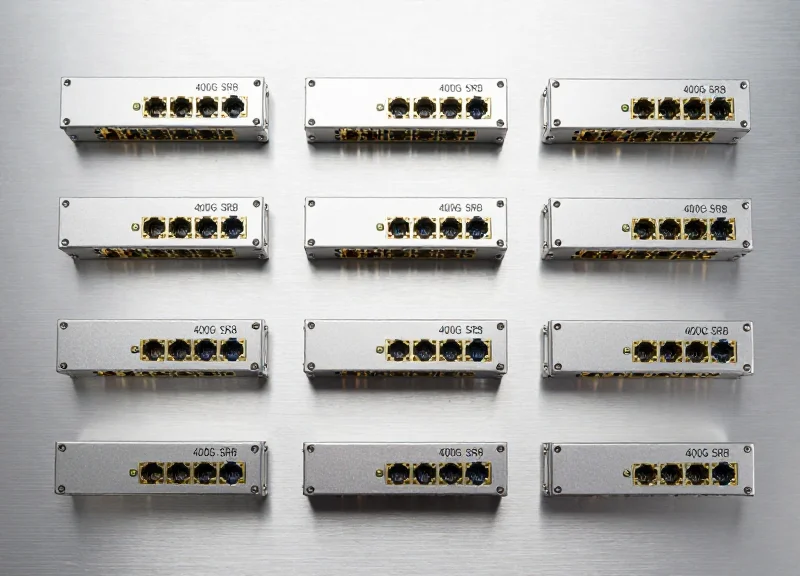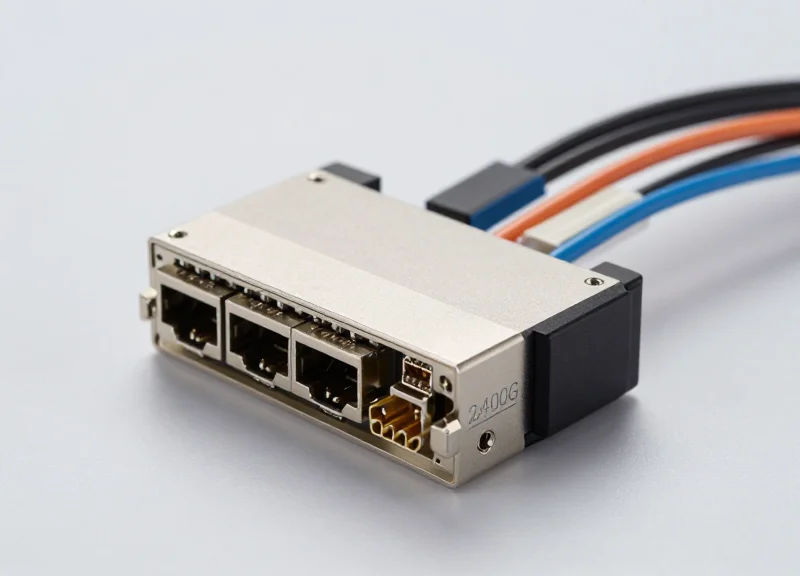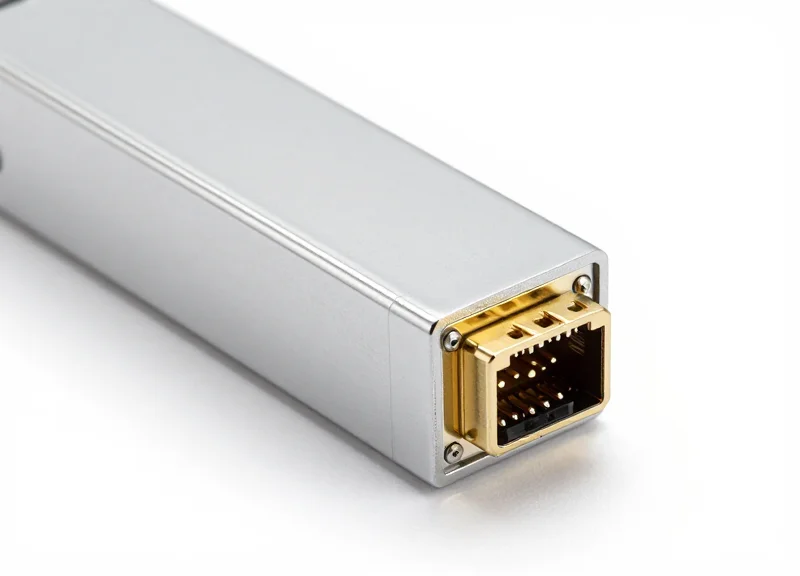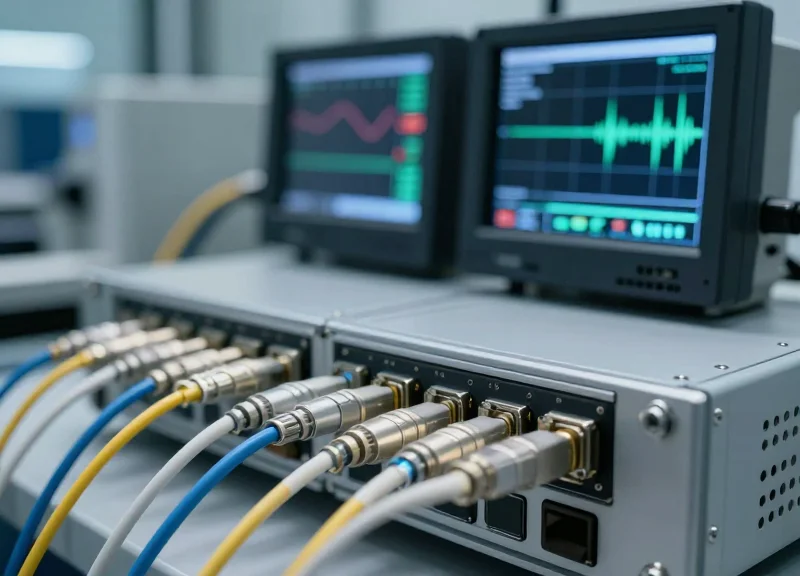
As global data demands surge, the integrity of high-speed optical and electrical signals has never been more critical. Bit Error Rate (BER) testing stands as the gold standard for validating network performance, but scaling these capabilities often comes with prohibitive costs. This guide explores how wholesale procurement and custom OEM/ODM partnerships with Ubytelink can help you bridge the gap between technical excellence and budget efficiency.
The Critical Role of BER Testing in 400G and 800G Networks

Bit Error Rate (BER) testing is the most critical metric for assessing the health of high-speed digital links, providing a direct measurement of the ratio of error bits to the total number of bits transmitted over a set time interval. In 400G and 800G architectures, where signal margins are razor-thin, BER testing ensures that hardware components like transceivers, switches, and fiber optics meet the stringent performance requirements necessary to maintain uptime and data accuracy in hyperscale environments.
The Evolution of Testing Requirements for 400G and 800G
The evolution from 100G to 400G and 800G has introduced the PAM4 (4-level Pulse Amplitude Modulation) signaling scheme. Unlike the older NRZ format, PAM4 uses four signal levels to pack more data into the same frequency. This complexity makes the signal far more vulnerable to noise, jitter, and inter-symbol interference (ISI). Professional BER testing at scale is required to characterize these impairments and ensure that the network's Forward Error Correction (FEC) can handle the raw error rate before it reaches the end-user.
| Specification | Legacy 100G (NRZ) | Modern 400G/800G (PAM4) |
|---|---|---|
| Signal Architecture | 2-Level (Binary) | 4-Level (PAM4) |
| Error Sensitivity | Lower Sensitivity | Extreme Sensitivity |
| Primary Metric | Raw BER | Pre-FEC and Post-FEC BER |
| Testing Focus | Logic and Timing | Signal-to-Noise Ratio (SNR) |
Strategic Advantages of Wholesale BER Testing Procurement
- Cost-Effective Scalability
As laboratories move from testing single lanes to 8-lane or 16-lane configurations, wholesale procurement allows for consistent equipment across all testing benches at a lower per-unit cost through custom bulk pricing. - Consistency Across Development Cycles
Using identical, high-quality BER testers across R&D and manufacturing phases ensures that performance data remains comparable and reliable throughout the entire product lifecycle.
Common Questions on High-Bandwidth BER Testing
- What is the difference between pre-FEC and post-FEC BER?
Pre-FEC BER measures the raw errors occurring on the physical line, while post-FEC BER measures the error rate after the Forward Error Correction algorithm has repaired the data; both are vital for 800G validation. - Can I use older 100G testers for 400G networks?
Generally, no. 400G and 800G networks use PAM4 modulation and require specialized hardware capable of analyzing multiple signal levels and complex jitter components that older NRZ-only testers cannot detect.
Economic Advantages of Wholesale BER Equipment Procurement

Procuring Bit Error Rate (BER) testing equipment in volume transforms high-precision validation from a recurring operational bottleneck into a scalable strategic asset. For organizations managing 400G and 800G transitions, the economic advantage lies not just in the initial discount, but in the long-term reduction of Total Cost of Ownership (TCO) through unified maintenance contracts, priority support, and accelerated deployment timelines.
Maximizing ROI through Volume Discounts and Tiered Pricing
When hardware manufacturers or hyperscale data centers purchase BER testers individually, they often face premium pricing and fragmented support agreements. Wholesale procurement leverages economies of scale to drive down the per-unit price significantly—often by 15% to 30%. This capital efficiency allows labs to equip more testing stations for the same budget, ensuring that signal integrity validation does not become a bottleneck in the production or deployment lifecycle.
| Procurement Model | Unit Cost Savings | Calibration Support | Hardware Uniformity |
|---|---|---|---|
| Single-Unit Purchase | Base Price (N/A) | Standard Tier | Low (Mixed Revisions) |
| Wholesale (5-10 units) | 10-15% Discount | Priority Tier | High (Same Batch) |
| Enterprise Bulk (10+ units) | Custom Quote (20%+) | Global Managed Services | Absolute (Unified Specs) |
Standardization as an Economic Multiplier
Beyond the sticker price, wholesale procurement facilitates technical standardization. By deploying identical BERT modules across multiple sites, organizations reduce the overhead associated with technician training and cross-site result correlation. Standardized hardware ensures that a BER result in a development lab is directly comparable to a production test result on a different continent, eliminating the costly re-testing cycles caused by equipment variance or calibration discrepancies.
Strategic Benefits of Custom Wholesale Quotes for 2026
Custom wholesale quotes for 2026 often include 'future-proofing' clauses, such as discounted upgrades for 1.6T modules or bundled software licenses for advanced PAM4 analysis. This foresight mitigates the risk of technological obsolescence, ensuring that the initial capital investment remains productive as network speeds continue to double. Furthermore, bulk contracts often secure guaranteed lead times, shielding the organization from supply chain volatility.
Wholesale BER Procurement FAQ
- What defines a wholesale volume for BER testers?
Typically, wholesale pricing tiers begin at 5 units, with the deepest discounts and custom service-level agreements reserved for enterprise-level orders exceeding 10-15 testing modules. - Can custom quotes include mixed hardware configurations?
Yes. Many wholesale agreements allow for a 'blended' fleet, such as combining high-speed 800G PAM4 testers with standard NRZ units to cover diverse testing needs while still qualifying for bulk pricing. - How does bulk purchasing affect calibration and maintenance?
Wholesale buyers usually receive consolidated service contracts, allowing all units to be calibrated on the same schedule, which reduces downtime and simplifies logistics compared to tracking individual unit warranties. - Are software licenses included in wholesale pricing?
Custom quotes for 2026 frequently include enterprise-wide software licenses, permitting the use of advanced error analysis and jitter decomposition tools across all purchased hardware without per-unit fees.
Leveraging OEM/ODM Options for Specialized Testing Needs
Leveraging OEM/ODM Options for Specialized Testing Needs
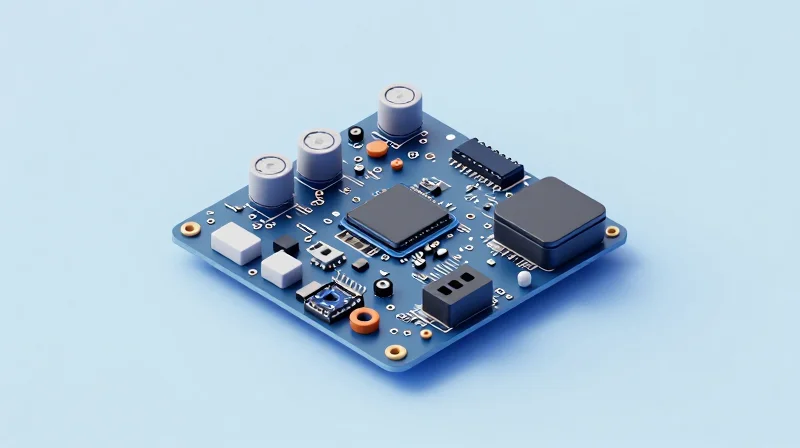
OEM and ODM solutions for BER testing provide a strategic advantage by allowing hardware manufacturers to embed high-precision diagnostic tools directly into their product architecture, ensuring that signal integrity is monitored according to specific, non-standard operational parameters. By bypassing the limitations of generic, off-the-shelf testing equipment, companies can achieve higher port density, specialized protocol support, and seamless software integration tailored to their unique network environments.
Comparing Generic vs. Custom BER Solutions
| Feature | Off-the-Shelf BER Testers | OEM/ODM Custom Modules |
|---|---|---|
| Integration | External/Standalone | Embedded/Proprietary |
| Form Factor | Standard Rack/Benchtop | Customized PCB/Mezzanine |
| Cost Efficiency | High per-unit cost | Lower per-unit in bulk |
| Protocol Support | Broad/Standardized | Niche/Application-Specific |
Engineering Edge: Specialized Hardware Alignment
Custom BER modules allow for the optimization of physical layer (PHY) testing at the board level. For instance, developers of 800G optical transceivers can request modules that prioritize specific PAM4 modulation analysis or custom error injection sequences that generic testers might not support. This level of granularity is essential for R&D phases where proprietary intellectual property requires specialized validation protocols that are not available in the public market. Furthermore, these modules can be designed with minimal power footprints, allowing them to remain active in field deployments for continuous performance monitoring.
OEM/ODM Procurement FAQ
- Can OEM BER modules support custom frequency ranges?
Yes, ODM partnerships allow for the specification of custom clock rates and frequency bands to match proprietary silicon requirements that fall outside standard Ethernet or Fibre Channel ranges. - Is white-labeling available for software interfaces?
Most OEM agreements include the option to rebrand the GUI and API, allowing the testing module to appear as a native part of the manufacturer's own management ecosystem. - What is the typical lead time for custom BER hardware?
Lead times vary by complexity but generally range from 12 to 24 weeks, encompassing initial design specifications, prototyping, and final validation before mass production.
Key Technical Specs: Sensitivity, Jitter, and Protocol Support
Procuring Bit Error Rate (BER) testing modules at a wholesale level requires a rigorous evaluation of technical performance metrics that go beyond basic connectivity; specifically, the interplay between receiver sensitivity and jitter tolerance defines the operational limit of high-speed data links. For data centers and manufacturers, these specs ensure that bulk-purchased hardware can validate the integrity of next-generation 400G and 800G infrastructures while maintaining a consistent margin of error.
Receiver Sensitivity and Optical Power Dynamics
In wholesale testing environments, receiver sensitivity is the lowest input signal power at which the BER tester can accurately identify data bits without exceeding a specified error threshold (typically 10^-12). High-performance modules must demonstrate superior sensitivity to accommodate the signal attenuation found in long-haul fiber or high-density patch panels. When requesting custom quotes, it is vital to specify sensitivity requirements across various wavelengths (850nm, 1310nm, 1550nm) to ensure the equipment remains versatile for different optical transceivers.
Jitter Analysis: Total, Random, and Deterministic
Jitter—the temporal deviation of a signal edge from its ideal position—is a primary driver of bit errors in multi-gigabit systems. Wholesale-grade BER testers must provide advanced jitter decomposition, allowing engineers to separate Random Jitter (RJ), which is typically Gaussian, from Deterministic Jitter (DJ), which is bounded. This level of granularity is essential for stress-testing SerDes components and high-speed backplanes, ensuring that the hardware can withstand the timing instabilities inherent in complex electrical environments.
| Protocol Type | Typical Data Rates | Key Wholesale Requirement | Primary Testing Focus |
|---|---|---|---|
| Ethernet | 10GbE to 800GbE | PAM4 Signaling Support | Frame Loss & Symbol Error Rate |
| Fibre Channel | 16G to 128G GFC | Low Latency Validation | Buffer-to-Buffer Credit Integrity |
| PCIe (SerDes) | Gen 4.0 / 5.0 / 6.0 | Clock Recovery Precision | System-on-Chip (SoC) Validation |
| OTN | OTU2 to OTU4 | FEC Characterization | Long-Haul Signal Robustness |
Protocol Versatility and Software-Defined Testing
Modern wholesale BER solutions leverage software-defined architectures to support multiple protocols on a single hardware chassis. This versatility is a major cost-saver for labs that need to pivot between testing Ethernet switches one day and Fibre Channel storage arrays the next. When negotiating bulk pricing for 2026, buyers should ensure that the licensing models allow for easy protocol upgrades, effectively future-proofing the investment against evolving IEEE and OIF standards.
- What is the importance of 'Eye Pattern' analysis in BER testing?
Eye pattern analysis provides a visual representation of signal quality, helping technicians identify noise, jitter, and inter-symbol interference that lead to bit errors. - Can wholesale testers handle both copper and optical interfaces?
Yes, high-end wholesale modules usually feature interchangeable SFP/QSFP ports to support both DAC copper cables and optical fiber testing. - How does Forward Error Correction (FEC) affect BER requirements?
FEC allows for a higher 'raw' BER (e.g., 10^-4) while still delivering a 'clean' post-FEC output, but testing equipment must be capable of measuring both pre-FEC and post-FEC performance.
Supply Chain Resilience: Why Ubytelink is the Preferred Partner
Partnering with Ubytelink for 'Buy Bit Error Rate (BER) Testing Wholesale: Custom Quotes & Bulk Pricing 2026' ensures that large-scale infrastructure projects maintain a resilient supply chain. By integrating specialized technical expertise with global logistics, Ubytelink mitigates the common risks of hardware inconsistency and prolonged lead times that often plague high-volume optical testing deployments.
Standardized Quality Control and Field Reliability
In the realm of high-speed data transmission, the accuracy of a Bit Error Rate tester is non-negotiable. Ubytelink enforces a multi-tier quality assurance protocol for every wholesale order. This includes per-unit calibration verification and stress testing against industry-standard protocols such as 400G Ethernet and Fibre Channel. By providing standardized test reports with each bulk shipment, we ensure that every module integrated into your proprietary hardware or lab environment performs with the highest level of sensitivity and precision.
Efficiency Metrics: Ubytelink vs. Traditional Distributors
| Service Metric | Ubytelink Wholesale Model | Standard Retail Distribution |
|---|---|---|
| Average Lead Time | 2-4 Weeks (Priority Allocation) | 8-12 Weeks (Stock Dependent) |
| Technical Support | Dedicated Field Application Engineer | General Helpdesk Tickets |
| Customization | OEM/ODM Firmware & Labeling | Off-the-shelf Only |
| Unit Costing | Tiered Bulk Discounting | Fixed MSRP |
Post-Sale Technical Support and RMA Protocols
Wholesale purchasing requires more than just low unit prices; it requires a partner that stands by the hardware long after the invoice is paid. Ubytelink provides an expedited RMA (Return Merchandise Authorization) process specifically designed for high-volume clients, ensuring that any faulty units are replaced immediately to prevent project bottlenecks. Our engineers are available to assist with remote troubleshooting for complex jitter and protocol support issues, ensuring your BER testing modules are optimized for your specific network topology.
- How does Ubytelink ensure consistency across 100+ units?
We utilize batch-synchronized manufacturing and rigorous outbound inspection (OBA) to ensure that performance parameters like clock recovery and sensitivity are identical across the entire lot. - Is technical documentation provided for custom wholesale orders?
Yes, every custom quote includes comprehensive datasheets, register maps for software integration, and compliance certificates for international standards. - Can Ubytelink manage global shipping for distributed data centers?
Our logistics team handles DDP (Delivered Duty Paid) shipping to multiple global locations, simplifying the import process for international enterprises.
Integrating Wholesale BER Modules into Production Lines
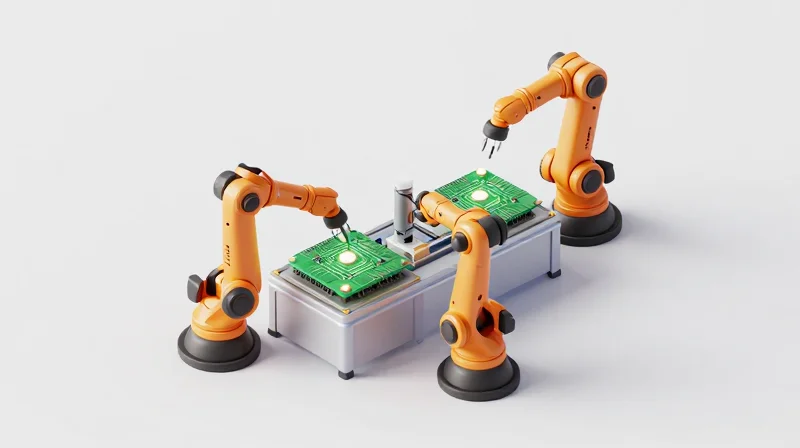
Integrating wholesale Bit Error Rate (BER) modules into production lines is a critical step for manufacturers aiming to transition from laboratory-scale verification to high-volume output without sacrificing signal integrity. By embedding these modules directly into the assembly and final-test stages, companies can perform 100% inspection of optical and electrical transceivers, cables, and active equipment. This seamless integration ensures that every unit meeting the shipping dock has been validated against specific BER thresholds, minimizing costly RMAs and maintaining brand reputation in high-stakes networking environments.
Key Considerations for Production-Scale Deployment
- Form Factor Efficiency
Utilize compact, rack-mountable, or pluggable BER modules (such as SFP-based testers) to minimize the footprint on the production floor. - API-Driven Automation
Wholesale modules should support standard SCPI commands or Python-based SDKs to allow for 'headless' operation within an automated test equipment (ATE) framework. - Thermal Management
Ensure that integrated modules are placed within environments that account for the heat generated during continuous, 24/7 high-speed data pattern generation. - Parallelism and Multi-Channel Testing
To match the speed of modern assembly lines, use modules that support multi-lane testing (e.g., 4x25G or 8x50G) to verify entire high-speed interfaces in a single cycle.
Comparing Integration Methods
| Feature | Benchtop Laboratory Setup | Integrated Wholesale Modules |
|---|---|---|
| Test Throughput | Low (Manual connection) | High (Automated/Parallel) |
| Cost Per Channel | High (Premium features) | Low (Bulk pricing/Essential specs) |
| Data Logging | Manual or semi-automated | Fully automated to MES/Cloud |
| Operator Skill | Engineer/Technician | Automated System/General Operator |
Software Integration and Data Management
The power of wholesale BER modules lies in their ability to communicate with Manufacturing Execution Systems (MES). By using standardized programming interfaces, test results can be automatically logged against a product's serial number. This creates a digital birth certificate for every component, which is essential for compliance in regulated industries like telecommunications and aerospace. Below is a conceptual example of a Python-based trigger used to initiate a BER test via a networked module.
import ber_module_api

# Initialize connection to wholesale module
tester = ber_module_api.Connect("192.168.1.50")

# Configure test parameters for 100G Ethernet
tester.set_pattern("PRBS31Q")
tester.set_data_rate(25.78125) # Gbps per lane

# Run automated 10-second gating period
results = tester.run_test(duration=10)

if results.bit_error_rate < 1e-12:
    print("PASS: Signal Integrity Verified")
else:
    print("FAIL: BER exceeds threshold")
Production Integration FAQ
- How do we handle calibration on the production line?
Most wholesale BER modules are designed for long-term stability. Annual calibration can be managed by rotating 'golden units' or using modules with field-replaceable self-test kits. - Can these modules be used for both optical and electrical testing?
Yes, many wholesale modules feature interchangeable ports or support external O/E converters, making them versatile for different product stages. - What is the typical ROI for switching to integrated BER testing?
Manufacturers typically see ROI within 6-12 months due to a 40-60% reduction in testing time and a significant decrease in post-shipment failures.
Future-Proofing Your Infrastructure with Scalable Testing Solutions

Future-proofing your infrastructure is not merely about purchasing the fastest equipment available today; it is about establishing a scalable testing ecosystem that can adapt to the exponential growth of data demands. By utilizing wholesale procurement strategies for Bit Error Rate (BER) testing modules, enterprises can secure the high-density testing capacity required for current 400G deployments while building a modular foundation capable of supporting the shift toward 800G and 1.6T Ethernet standards. This proactive approach ensures that signal integrity remains consistent even as modulation schemes like PAM4 become more complex.
Preparing for the 1.6T Horizon: Why Capacity Planning Matters
The industry is rapidly moving toward 1.6T Ethernet to support the massive bandwidth requirements of AI training clusters and hyperscale cloud environments. At these speeds, the margin for error in optical and electrical paths is virtually zero. Wholesale acquisition of BER testers allows for comprehensive coverage across all lanes in a production or R&D environment, ensuring that crosstalk and jitter are identified well before deployment.
| Network Standard | Data Rate per Lane | Modulation Type | Testing Priority |
|---|---|---|---|
| 400G Ethernet | 50G / 100G | PAM4 | FEC Analysis & Error Distribution |
| 800G Ethernet | 100G | PAM4 / Coherent | Signal Linearity & Noise Margins |
| 1.6T Ethernet | 200G | Advanced PAM4 | Extreme Signal Integrity & Path Loss |
The Economic Logic of Modular Scalability
One of the primary benefits of bulk BER testing quotes is the ability to standardize your testing hardware. Standardizing on a modular chassis allows for lower operational overhead, as technicians only need to be trained on a single interface. As technology advances, you can upgrade specific pluggable modules rather than replacing the entire testing infrastructure, significantly reducing long-term capital expenditure.
Scalable Testing FAQ
- How does wholesale purchasing protect against obsolescence?
By negotiating bulk pricing for modular chassis systems, you secure a long-term platform that supports multiple generations of line cards, from 100G to 800G and beyond. - What role does software play in future-proofing BER testers?
Modern BER testing modules purchased in bulk often come with flexible licensing, allowing for software-defined upgrades to support new FEC (Forward Error Correction) patterns as standards evolve. - Why is 1.6T testing different from previous generations?
At 1.6T, the signal degradation occurs much faster; wholesale testing solutions provide the high-port density required to monitor every lane simultaneously for synchronized performance metrics.
How to Request a Custom Quote and Technical Consultation
Obtaining a custom quote for wholesale Bit Error Rate (BER) testing solutions involves more than a simple price check; it is a collaborative engineering process designed to ensure that the hardware meets the specific signal integrity and protocol requirements of your high-speed network environment. By engaging in a formal technical consultation, organizations can align their long-term infrastructure goals with scalable pricing models that significantly reduce the total cost of ownership per test port.
The 4-Step Wholesale Procurement Workflow
To streamline the acquisition of high-volume testing assets, Ubytelink utilizes a structured methodology that prioritizes technical accuracy and logistical efficiency. This ensures that the equipment delivered is ready for immediate integration into production or laboratory environments.
- Technical Discovery & Requirement Mapping
The process begins with an in-depth analysis of your testing needs, focusing on data rates (e.g., 400G/800G), modulation types like PAM4 or NRZ, and the specific link budgets required for your DUT (Device Under Test). - Custom Configuration & Quote Generation
Based on the discovery phase, our engineers configure a tailored solution—balancing port density and software licensing—to generate a tiered wholesale quote reflecting the economies of scale. - Validation & Proof of Concept (PoC)
For large-scale deployments, we facilitate a validation phase where performance metrics are verified against your specific network profiles to ensure 100% compatibility before finalization. - Logistics Planning & Batch Delivery
The final stage involves coordinating global shipping and deployment schedules, ensuring that bulk hardware arrives in synchronized batches to match your facility's roll-out timeline.
Quote Comparison: Standard vs. Enterprise Custom Quotes
| Feature | Off-the-Shelf Purchase | Enterprise Custom Quote |
|---|---|---|
| Pricing Structure | Fixed Retail Price | Tiered Bulk Discounting |
| Technical Support | Standard Documentation | Dedicated Engineering Consultant |
| Configuration | Static Hardware Profiles | Customizable Modules & Firmware |
| Lead Times | Stock Dependent | Prioritized Manufacturing Slots |
Key Questions for the Technical Consultation
- What is the minimum order quantity (MOQ) for custom wholesale pricing?
Wholesale pricing typically begins at 5-10 units, but significant discounts are unlocked at larger thresholds tailored to specific project requirements. - Can firmware be customized for specific proprietary protocols?
Yes, our technical consultation includes discussions on custom FPGA/firmware loads to support non-standard testing vectors or legacy protocol analysis. - Is post-sale technical integration included?
Every custom wholesale quote includes a dedicated support period to assist your engineering team with the initial setup and automation of the BER testing modules.
To initiate this process, stakeholders should prepare a brief summary of their current testing bottleneck and desired port capacity. This data allows our technical team to provide a more accurate and competitive proposal during the initial discovery call.
Scaling your network capacity requires more than just high-speed components; it requires the certainty that those components are performing at their peak. By choosing Ubytelink for your wholesale Bit Error Rate (BER) testing needs, you gain access to industry-leading signal integrity tools at a fraction of the retail cost. Don't let testing bottlenecks slow your growth. Contact Ubytelink today for a custom quote and discover how our OEM/ODM expertise can transform your infrastructure.