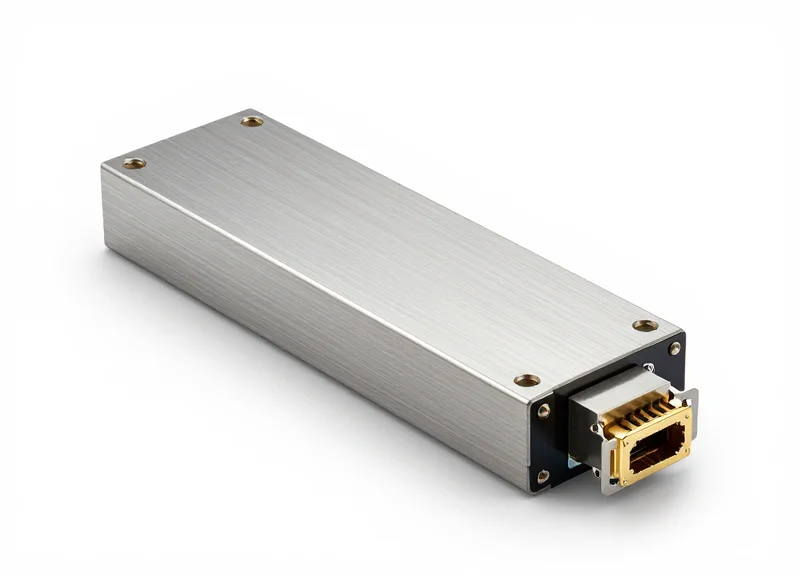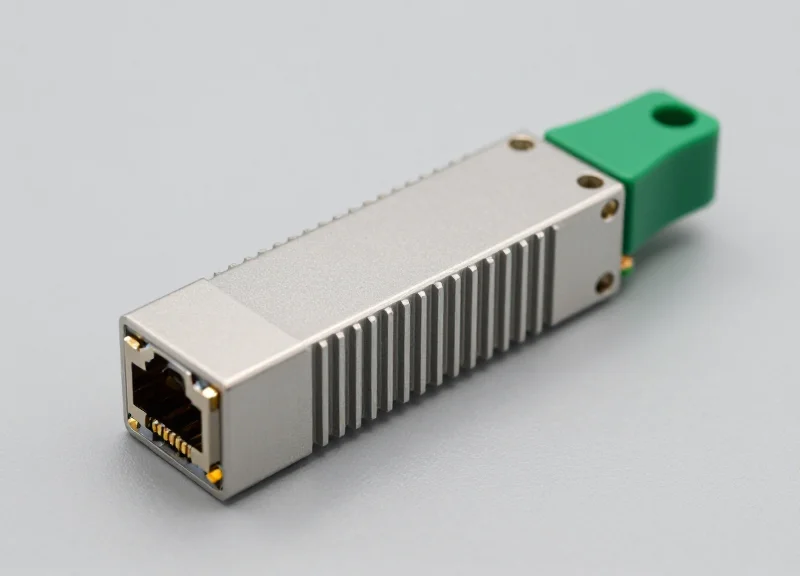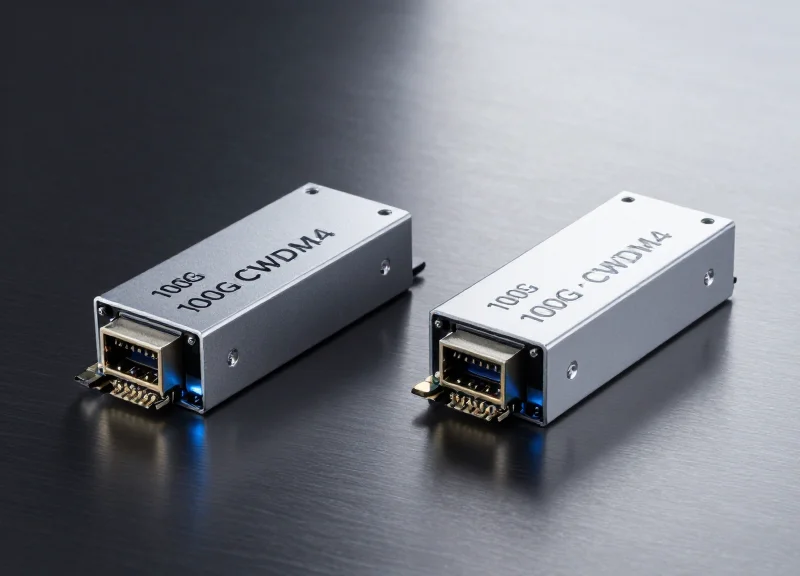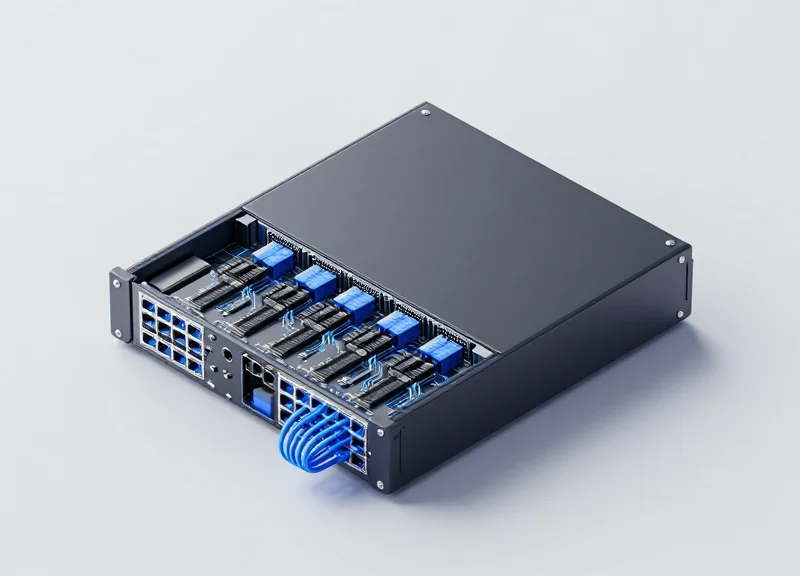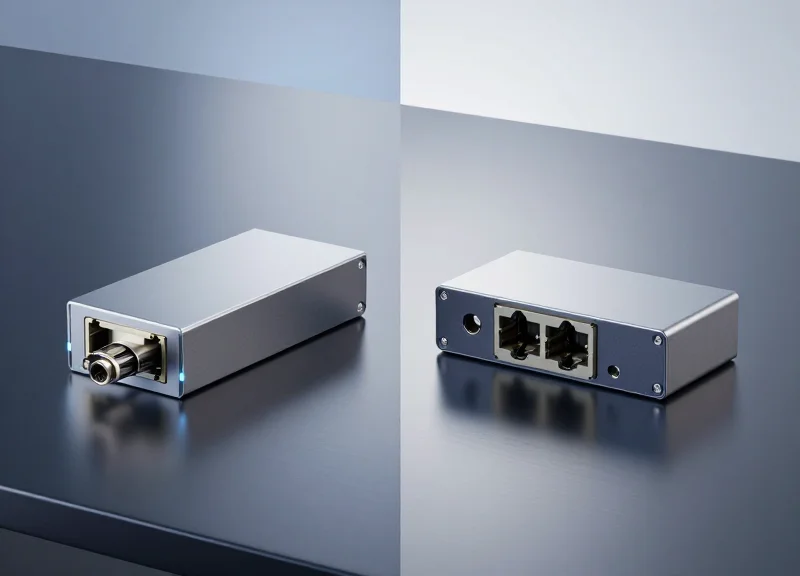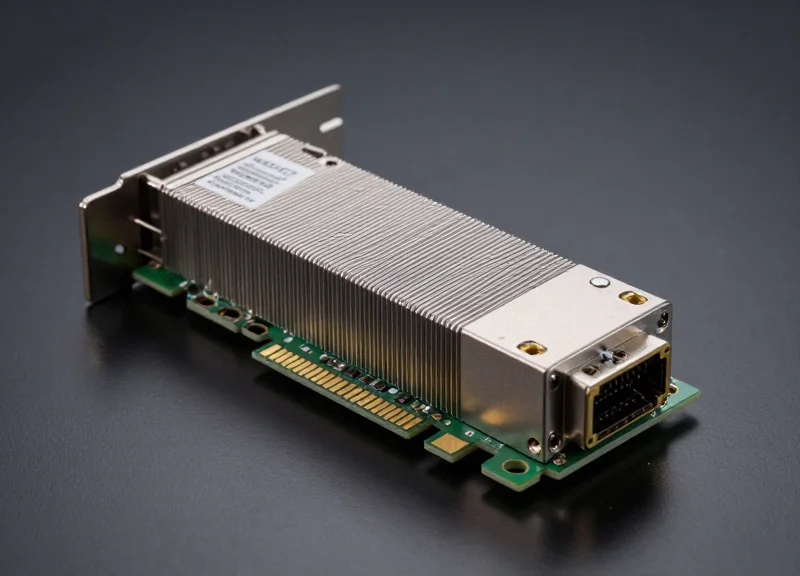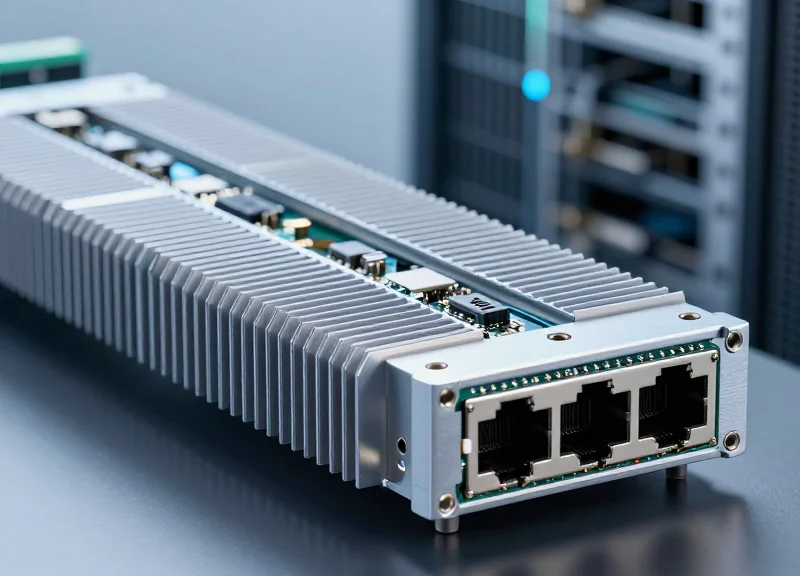
As global data demands surge, the concentration of power in high-density networking hardware creates a significant challenge: heat. Excessive thermal buildup is the primary cause of hardware failure and signal degradation. Ubytelink's Module Heat Dissipation Management solutions provide the sophisticated engineering required to maintain operational integrity in the world's most demanding environments.
The Evolution of Thermal Challenges in High-Speed Networking

The Shift to Ultra-High Power Densities
The evolution of high-speed networking is fundamentally a race between data throughput and thermal efficiency; as the industry moves from 100G to 400G and 800G, the power density within optical transceivers has increased exponentially, transforming heat management from a secondary design consideration into a primary engineering bottleneck. In modern global networks, the ability to maintain thermal stability directly dictates the reliability of the entire infrastructure.
From Passive Cooling to Active Thermal Engineering
In the early generations of pluggable optics, such as SFP and SFP+, power consumption was relatively negligible, typically hovering around 1 to 1.5 watts. These modules relied on simple convective cooling provided by the switch's internal fans. However, the transition to QSFP-DD and OSFP form factors for 400G and 800G applications has introduced power envelopes ranging from 12W to over 25W per module. The physics of packing 32 or more of these high-wattage components into a 1U rack space creates a cumulative heat load that exceeds the capabilities of traditional airflow designs.
| Module Standard | Max Data Rate | Typical Power Consumption | Thermal Management Requirement |
|---|---|---|---|
| SFP+ | 10G | 1.0W - 1.5W | Passive Convection |
| QSFP28 | 100G | 3.5W - 5.0W | Chassis Airflow Optimized |
| QSFP-DD | 400G | 12.0W - 15.0W | Advanced Thermal Interface Materials (TIM) |
| OSFP | 800G | 16.0W - 25.0W+ | Integrated Heat Sinks / Liquid Cooling |
Critical Thermal Challenges in Modern Optical Modules
- How does excessive heat affect optical performance?
High temperatures cause a shift in the laser's emission wavelength and increase the threshold current, which leads to signal degradation, higher Bit Error Rates (BER), and a shortened lifespan for the laser diode. - Why is the 800G form factor particularly challenging?
The 800G OSFP/QSFP-DD modules integrate high-speed DSPs (Digital Signal Processors) that generate significant heat. Managing this within a compact shell requires specialized internal thermal paths to move heat from the chip to the module casing effectively. - What is the impact of thermal throttling in networking?
When modules overheat, they may enter a self-protection mode, reducing data throughput or shutting down entirely, which can lead to unpredictable network latency and packet loss in mission-critical environments.
Ubytelink addresses these challenges by utilizing premium-grade thermal components and innovative shell designs. By optimizing the contact surface between the internal heat-generating components (like the DSP and TOSA/ROSA) and the external module housing, Ubytelink ensures that heat is dissipated efficiently even in the most congested high-density switch environments.
Ubytelink’s Proprietary Heat Dissipation Architecture
Ubytelink’s Proprietary Heat Dissipation Architecture
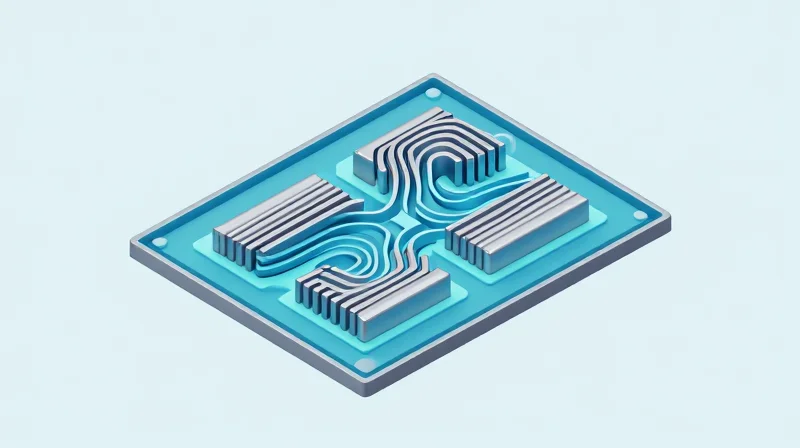
Ubytelink differentiates its optical modules through a 'Thermal-First' engineering philosophy that treats the module not just as an electronic component, but as a critical thermal conduit. By integrating high-thermal-conductivity materials directly into the internal PCB layout and the external housing, Ubytelink ensures that heat generated by the TOSA, ROSA, and DSP components is efficiently channeled away from the core, preventing localized hot spots that lead to bit errors and hardware degradation in global network infrastructures.
Advanced Material Composition and Conductive Pathways
The core of our proprietary architecture lies in the strategic use of vapor chambers and high-efficiency thermal interface materials (TIM). Unlike standard modules that often rely on basic thermal pads, Ubytelink utilizes custom-engineered TIMs with significantly lower thermal resistance. This creates a near-seamless bridge between the heat-generating semiconductors and the aluminum-zinc alloy housing, facilitating rapid heat transfer even under the extreme workloads of 800G data transmission.
| Feature | Standard Module Architecture | Ubytelink Proprietary Architecture |
|---|---|---|
| Housing Material | Standard Aluminum Alloy | High-K Die-Cast Zinc-Aluminum Alloy |
| Thermal Interface | Generic Thermal Pads | Custom Ultra-Low-Resistance TIMs |
| Internal Design | Standard Component Layout | CFD-Optimized Component Spacing |
| Airflow Profile | Flat Passive Surface | Integrated Micro-Fin Geometry |
Aerodynamic Optimization for Rack-Scale Cooling
The external geometry of Ubytelink modules is meticulously crafted using Computational Fluid Dynamics (CFD) modeling. We incorporate proprietary micro-fin structures on the module's pull-tab and shell, which increases the total surface area exposed to the switch's cooling fans. This aerodynamic approach reduces air turbulence at the intake and exhaust points, allowing for a higher volume of air to pass over the module, effectively lowering the junction temperature by up to 15% compared to generic designs.
Architectural Design FAQ
- How does Ubytelink's internal layout prevent 'thermal crosstalk'?
We employ physical isolation barriers and optimized component spacing to ensure that heat from the high-power Digital Signal Processor (DSP) does not impact the thermal sensitivity of the optical receivers (ROSA). - Are these architectural improvements compatible with standard MSA ports?
Yes. While the internal architecture and surface fin geometries are proprietary, the external dimensions remain fully compliant with QSFP-DD, OSFP, and SFP-DD standards to ensure seamless integration. - What is the benefit of the Zinc-Aluminum alloy housing?
This specific alloy provides superior thermal conductivity compared to standard aluminum while maintaining high structural integrity and EMI shielding effectiveness.
Material Science: The Foundation of Superior Cooling
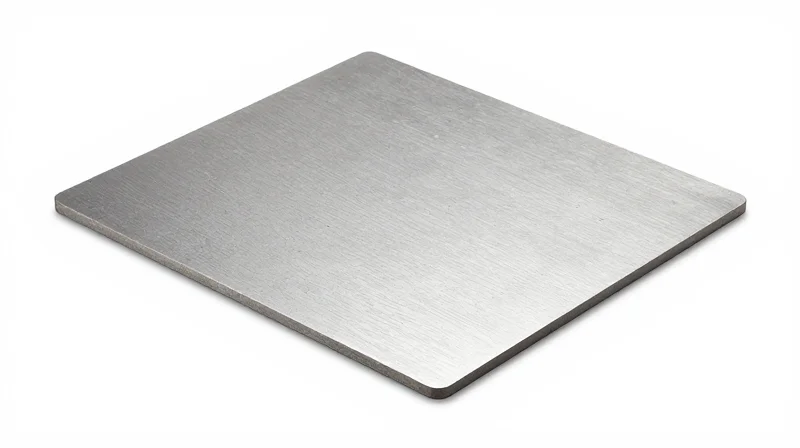
The Material Science Foundation of Ubytelink Thermal Management
The efficacy of Ubytelink Module Heat Dissipation Management Solutions: Premium Quality for Global Networks is rooted in the selection of materials that possess high intrinsic thermal conductivity and long-term structural stability. By utilizing aerospace-grade alloys and cutting-edge Thermal Interface Materials (TIMs), Ubytelink creates a low-resistance path for heat to migrate from the internal laser diode and Digital Signal Processor (DSP) to the external housing, where it can be dissipated into the data center environment.
High-Conductivity Alloys and Housing Design
Unlike standard modules that rely on generic zinc or basic aluminum casts, Ubytelink employs high-purity copper-core heat spreaders and specialized magnesium-aluminum alloy shells. Copper provides one of the highest thermal conductivity ratings among non-precious metals, making it ideal for the primary heat sink directly adjacent to the laser components. The outer shell is engineered with a micro-ribbed surface area to maximize the convection-to-surface ratio without compromising the tight mechanical tolerances required for high-density port population.
Next-Generation Thermal Interface Materials (TIMs)
Microscopic air gaps between the chip surface and the heat sink act as insulators, trapping heat and causing localized hotspots. Ubytelink addresses this through high-performance TIMs, including phase-change materials (PCMs) and silicone-free thermal pads. These materials transition to a semi-liquid state at operating temperatures, perfectly conforming to surface irregularities and ensuring a continuous thermal bridge.
| Material Type | Thermal Conductivity (W/m·K) | Application in Ubytelink Modules |
|---|---|---|
| Standard Aluminum | 160 - 200 | Standard module shells (Competitor) |
| High-Purity Copper | 380 - 400 | Primary heat spreaders for DSP/Laser |
| Proprietary Phase-Change TIM | 6.0 - 8.5 | Interfacial gap filling for zero-air pockets |
| Magnesium-Aluminum Alloy | 120 - 150 | Lightweight external housing with high EMI shielding |
FAQs: Material Selection and Cooling Efficiency
- Why is silicone-free TIM used in Ubytelink modules?
Silicone-free materials prevent 'outgassing,' which can deposit a thin film of oil on optical lenses over time, potentially causing signal degradation and premature module failure. - How does the alloy shell contribute to long-term reliability?
The magnesium-aluminum alloy provides superior rigidity and resistance to thermal expansion cycles, ensuring that the internal thermal contact remains consistent over years of continuous operation. - What is the benefit of using phase-change materials over traditional grease?
Phase-change materials offer the high performance of thermal grease but with the stability of a solid pad, preventing 'pump-out' where material migrates away from the heat source during temperature fluctuations.
Protecting Mission-Critical Infrastructure
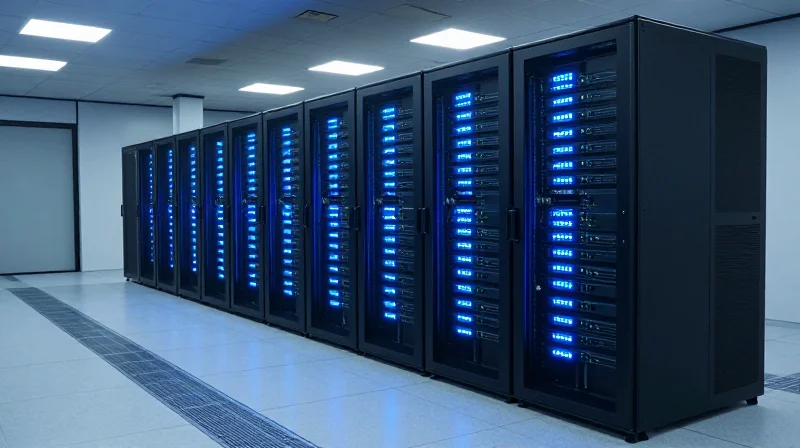
Protecting Mission-Critical Infrastructure
Superior heat management is the primary defense against thermal throttling, a process where network hardware automatically reduces its clock speed to prevent permanent damage from overheating. Ubytelink modules are designed to maintain optimal operating temperatures, ensuring that core switches and routers deliver 100% of their rated throughput even during the most demanding traffic peaks, thereby eliminating the risk of unexpected latency or packet drops.
The Impact of Heat on Network Throughput
In high-density data centers, the accumulation of heat from hundreds of active ports can create 'hot spots' that force equipment into low-performance states. Ubytelink's thermal management prevents this by utilizing advanced conductive pathways that move heat away from the sensitive laser diodes and integrated circuits faster than standard industry alternatives. This rapid heat transfer maintains the signal integrity required for high-speed transmission protocols.
| Performance Metric | Standard Module | Ubytelink Premium Module |
|---|---|---|
| Peak Traffic Throughput | Throttles to 70-85% capacity | Sustains 100% capacity |
| Latency Consistency | High variance during heat spikes | Low and predictable latency |
| Switch Port Longevity | Reduced by localized heat stress | Extended via efficient venting |
| Error Rate (BER) | Increases as temperature rises | Stable regardless of load |
Extending Hardware Lifecycle and Reliability
Reliability in global networks is measured by uptime and the longevity of the underlying hardware. By maintaining a cooler operating environment for the host switch, Ubytelink modules reduce the thermal stress on the equipment's internal power supplies and cooling fans. This systemic approach to cooling not only protects the module itself but also preserves the capital investment of the entire rack, leading to significantly lower maintenance intervals and a reduced Total Cost of Ownership (TCO).
- How does Ubytelink prevent 'packet loss' related to heat?
By maintaining stable temperatures, Ubytelink modules prevent the signal-to-noise ratio degradation that occurs when optical components overheat, ensuring clean data transmission without the need for retransmissions. - Can these modules improve the performance of older legacy switches?
Yes. Because Ubytelink modules run cooler than generic alternatives, they reduce the overall thermal load on older chassis that may have less efficient internal cooling systems. - Is thermal throttling common in 100G and 400G networks?
Absolutely. High-speed modules generate significantly more heat per square inch; without Ubytelink's advanced dissipation, throttling is almost inevitable during sustained peak traffic.
The Link Between Thermal Stability and Signal Integrity
The Link Between Thermal Stability and Signal Integrity
Thermal stability is the bedrock of signal integrity in high-frequency optical networking. When temperature fluctuations occur, the physical properties of the internal laser diodes and digital signal processing (DSP) chips shift, leading to signal jitter and increased noise floors. Ubytelink modules are engineered to keep these components within an optimal thermal window, effectively suppressing noise and ensuring that data packets arrive intact across massive distances. By stabilizing the environment around the TOSA (Transmitter Optical Sub-Assembly), Ubytelink ensures that the electrical-to-optical conversion remains linear and precise.
Mitigating Bit Error Rates (BER) through Thermal Control
A primary challenge in 400G and 800G transmissions is the extreme sensitivity of the signal-to-noise ratio (SNR) to thermal drift. As internal temperatures rise beyond design limits, the 'eye diagram' of the signal begins to close, making it increasingly difficult for receiving equipment to distinguish between logical states. High temperatures also increase the dark current in photodetectors, which elevates the intrinsic noise level. Ubytelink's heat dissipation management reduces the BER, significantly decreasing the reliance on Forward Error Correction (FEC) and lowering overall system latency.
| Signal Metric | Optimal Thermal State | Thermal Stress State |
|---|---|---|
| Signal-to-Noise Ratio (SNR) | High (>20dB) | Degraded (<15dB) |
| Jitter (Picoseconds) | Minimal / Stable | Significant / High Drift |
| Eye Diagram Opening | Wide and Defined | Narrow and Distorted |
| FEC Requirement | Standard Overhead | Heavy / Potential Link Drop |
Maintaining Wavelength Precision in Long-Haul Links
In long-haul data transmission, minute deviations in laser wavelength—often caused by thermal expansion or shifts in the gain medium—can result in severe chromatic dispersion. Ubytelink’s thermal solutions ensure that the laser's center wavelength remains locked within the narrow grids required for Dense Wavelength Division Multiplexing (DWDM). This spectral precision prevents inter-channel crosstalk, ensuring that high-capacity links remain reliable across hundreds of kilometers of fiber without requiring frequent regeneration.
- How does temperature affect laser wavelength?
Higher temperatures typically cause a 'redshift' in the laser's emission spectrum. Without precise cooling, the wavelength can drift into adjacent channels, causing data corruption in WDM systems. - Why is reducing FEC overhead important?
Excessive Forward Error Correction to compensate for thermal noise consumes extra bandwidth and increases processing time, which can impact the performance of latency-sensitive applications like high-frequency trading. - What is the role of the DSP in thermal management?
Modern DSPs in Ubytelink modules can compensate for some signal degradation, but high heat increases the DSP's power consumption, creating a heat-loop that only superior physical dissipation can break.
Sustainability and Energy Efficiency in the Data Center

Sustainability and Energy Efficiency in the Data Center
Ubytelink Module Heat Dissipation Management Solutions directly improve data center sustainability by optimizing thermal transfer at the component level, which in turn reduces the energy burden on primary HVAC and CRAC systems. By ensuring that transceivers operate within optimal thermal windows using passive and enhanced active cooling designs, Ubytelink helps operators lower their Power Usage Effectiveness (PUE) and minimize the carbon footprint of global network infrastructures.
Optimizing PUE through Component-Level Efficiency
Power Usage Effectiveness (PUE) is the primary metric for data center efficiency, and heat is its greatest adversary. When optical modules generate excessive waste heat due to inefficient dissipation, the data center's cooling infrastructure must consume more power to maintain ambient temperatures. Ubytelink's solutions utilize high-conductivity thermal interface materials and specialized alloy housings that accelerate heat migration away from the internal laser and DSP. This localized efficiency prevents the formation of 'hot spots' within the switch chassis, allowing facility fans to run at lower RPMs and cooling units to cycle less frequently.
| Efficiency Feature | Standard Thermal Design | Ubytelink Enhanced Design |
|---|---|---|
| Heat Transfer Rate | Moderate - Relies on standard air | Accelerated via High-Conductivity TIMs |
| Chassis Fan Speed | Variable (High Demand) | Optimized (Low to Moderate Demand) |
| Thermal Throttling Risk | Higher in high-density ports | Near-zero due to stable heat shedding |
| PUE Impact | Neutral | Direct Reduction in Cooling Load |
Long-Term Sustainability and Operational Lifecycle
Beyond immediate energy savings, Ubytelink's thermal management contributes to sustainability by extending the hardware lifecycle. Excessive heat is the leading cause of premature failure in optoelectronics. By maintaining lower operating temperatures, Ubytelink modules experience less component degradation over time, reducing the frequency of hardware replacements and the associated e-waste. This durability is essential for global networks aiming to meet strict ESG (Environmental, Social, and Governance) targets while maintaining high-performance throughput.
- How does Ubytelink reduce data center energy costs?
By improving heat dissipation at the port level, the demand for facility-wide cooling is lowered, resulting in significant savings on electricity for HVAC units and chassis fans. - Can thermal management improve network uptime?
Yes. By preventing thermal-induced signal degradation and hardware failure, Ubytelink ensures more reliable long-term operations with fewer service interruptions. - What is the link between heat management and carbon footprint?
Lower power consumption for cooling directly correlates to fewer carbon emissions, helping data center operators meet global sustainability standards and carbon-neutral goals.
Rigorous Testing and Quality Assurance Protocols
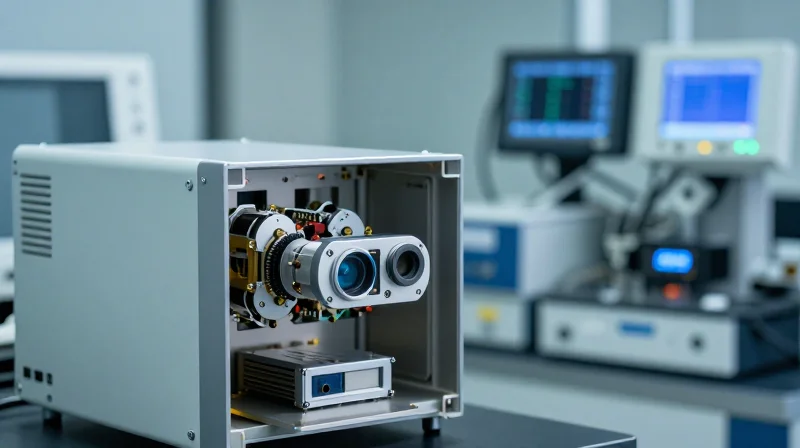
Validating Thermal Resilience Through Scientific Testing
Ubytelink’s thermal management efficacy is not a theoretical claim but a verified reality established through high-precision laboratory validation. By subjecting modules to temperatures exceeding standard operating ranges, we ensure that our dissipation materials—from phase-change Thermal Interface Materials (TIMs) to integrated heat sinks—maintain their structural integrity and heat-transfer efficiency over a 10-to-15-year lifecycle. This proactive testing prevents the catastrophic signal degradation often seen when lower-quality components reach their thermal ceilings, guaranteeing that global networks remain stable regardless of environmental flux.
Comparative Testing Benchmarks: Industry vs. Ubytelink
| Test Parameter | Standard Industry Grade | Ubytelink Premium Protocol |
|---|---|---|
| Operating Temp Range | 0°C to 70°C (Commercial) | -40°C to 85°C (Extended Industrial) |
| Thermal Cycle Testing | 100 Cycles | 500+ High-Stress Cycles |
| Burn-in Duration | 12-24 Hours | 72-Hour Full-Load Continuous Burn-in |
| Relative Humidity Stress | 85% RH (Static) | 85%/85 Cycle-Damp Heat Reliability Test |
Simulated Airflow and Mechanical Stress Integration
Beyond simple temperature control, our labs utilize advanced airflow chambers to simulate the restricted cooling environments found in high-density 1U rack configurations. We meticulously measure the 'delta-T'—the temperature gradient between the laser diode and the external module casing. This data allows our engineers to verify that our passive cooling enhancements effectively move heat away from sensitive optoelectronics, even when the surrounding ambient air is stagnant or pre-heated by adjacent high-power hardware in a saturated data center environment.
Quality Assurance and Reliability FAQ
- How does Ubytelink test for long-term material degradation?
We utilize High-Temperature Operating Life (HTOL) tests to accelerate the aging process, ensuring that the thermal interface materials do not dry out, crack, or lose conductivity over a multi-year deployment. - Do these tests include inter-vendor compatibility?
Yes, we test thermal profiles across a wide array of OEM hardware brands to ensure that the physical fit and cooling contact remain consistent across different mechanical cage designs. - Is every module tested individually before shipping?
Every production batch undergoes 100% automated thermal verification at the factory, while representative sample units from every lot undergo the full spectrum of destructive stress testing to maintain our 99.999% field reliability rating.
Scalability: Cooling Solutions for Next-Generation Standards
As global networks transition from 800G to 1.6T standards, the thermal density within optical modules is reaching critical thresholds, requiring Ubytelink to implement modular heat dissipation solutions that are both adaptable and future-proof. Our approach ensures that cooling architectures evolve alongside hardware, preventing thermal bottlenecks in next-generation high-bandwidth environments.
The Shift to 1.6T: Addressing the Thermal Density Surge
The leap to 1.6T networking introduces significantly higher power consumption per port, often exceeding 25-30W in a compact OSFP-1600 form factor. Ubytelink manages this surge by utilizing scalable modular designs that allow for customized heat sink geometries and advanced material integration without redesigning the entire transceiver framework. This modularity ensures that the transition to higher speeds does not compromise the lifespan or reliability of the optical components.
Comparative Evolution of Thermal Requirements
| Network Standard | Avg. Power Consumption (W) | Cooling Challenge Level | Ubytelink Solution Implementation |
|---|---|---|---|
| 400G (QSFP-DD) | 10W - 12W | Moderate | Standard High-Conductivity Heat Sinks |
| 800G (OSFP) | 16W - 20W | High | Advanced Fin Arrays & 3D Vapor Chambers |
| 1.6T (OSFP1600) | 25W - 30W | Extreme | Phase-Change Materials & Hybrid Active Cooling Ready |
Future-Proofing with Phase-Change Materials (PCM)
Ubytelink is currently integrating Phase-Change Materials into its next-generation thermal management kits. Unlike traditional thermal pads, PCMs transition from solid to semi-liquid states as temperatures rise, filling microscopic voids with greater efficiency and reducing thermal resistance by up to 40%. This technology is a cornerstone for 1.6T stability, where even a minor temperature variance can lead to significant Bit Error Rate (BER) fluctuations.
Scalability and Compatibility FAQ
- How does Ubytelink ensure cooling solutions are compatible with future 1.6T hardware?
Our designs follow the MSA (Multi-Source Agreement) standards while incorporating 'thermal headroom,' allowing our modules to accommodate the increased wattage of future DSPs and silicon photonics engines. - Can existing cooling frames be upgraded for next-gen modules?
Yes, Ubytelink's modular approach allows for the replacement of top-side heat sinks with higher-performance variants (such as stacked fin designs) without altering the internal module electronics. - Does 1.6T cooling require liquid cooling integration?
While Ubytelink modules are optimized for air-cooled environments, our 1.6T designs are compatible with immersion cooling and cold-plate systems to meet the needs of the most advanced hyperscale data centers.
Case Studies: Ubytelink in Global Enterprise Environments
Real-World Impact: How Global Enterprises Leverage Ubytelink Thermal Management
Global enterprises and tier-1 telecommunications providers deploy Ubytelink Module Heat Dissipation Management Solutions: Premium Quality for Global Networks to mitigate the risks of thermal-induced downtime and hardware degradation. By integrating advanced thermal materials and precision-engineered fins into high-speed transceivers, these organizations ensure that their 400G and 800G infrastructures maintain peak performance even under maximum traffic loads, effectively bridging the gap between high-speed connectivity and hardware longevity.
Case Study 1: North American Tier-1 ISP 400G Deployment
A major North American Internet Service Provider (ISP) faced significant challenges during its transition to a 400G backbone. High-density rack configurations led to localized hotspots, causing optical modules to exceed safe operating temperatures. By implementing Ubytelink's integrated heat-sink modules, the provider observed a marked stabilization in laser wavelength and a drastic reduction in bit-error rates (BER) caused by heat-induced noise.
| Metric | Pre-Implementation | With Ubytelink Solutions |
|---|---|---|
| Average Module Temperature | 75°C | 62°C |
| Cooling Energy Expenditure | Baseline | 12% Reduction |
| Monthly Maintenance Tickets | 14 Average | 2 Average |
| Network Availability | 99.95% | 99.999% |
Case Study 2: European Hyperscale Data Center PUE Optimization
In Europe, a hyperscale data center operator sought to lower its Power Usage Effectiveness (PUE) by reducing the reliance on aggressive air conditioning for high-speed switch ports. Ubytelink provided custom modules featuring high-conductivity graphene thermal pads and optimized airflow casings. This allowed the facility to raise the ambient operating temperature of the server rooms slightly without risking module failure, resulting in a substantial reduction in facility-wide cooling costs.
Enterprise Implementation FAQ
- How do Ubytelink solutions reduce total cost of ownership (TCO)?
By preventing heat-related hardware failure, Ubytelink solutions extend the lifespan of both the optical modules and the switch ports, while reducing the frequency of on-site maintenance visits. - Are these thermal solutions compatible with multi-vendor environments?
Yes, Ubytelink modules are designed to adhere to MSA standards, ensuring that the physical heat-dissipation structures do not interfere with the mechanical requirements of various OEM chassis. - What is the impact on signal integrity in high-temperature environments?
Ubytelink's thermal management keeps the internal laser and DSP chips within narrow temperature ranges, which prevents frequency drift and ensures stable signal integrity over long distances.
Effective heat management is the silent guardian of the modern digital economy. By choosing Ubytelink's Module Heat Dissipation Management solutions, organizations invest in the longevity and stability of their most vital assets. Contact our engineering team today for a comprehensive consultation on optimizing your network's thermal profile.