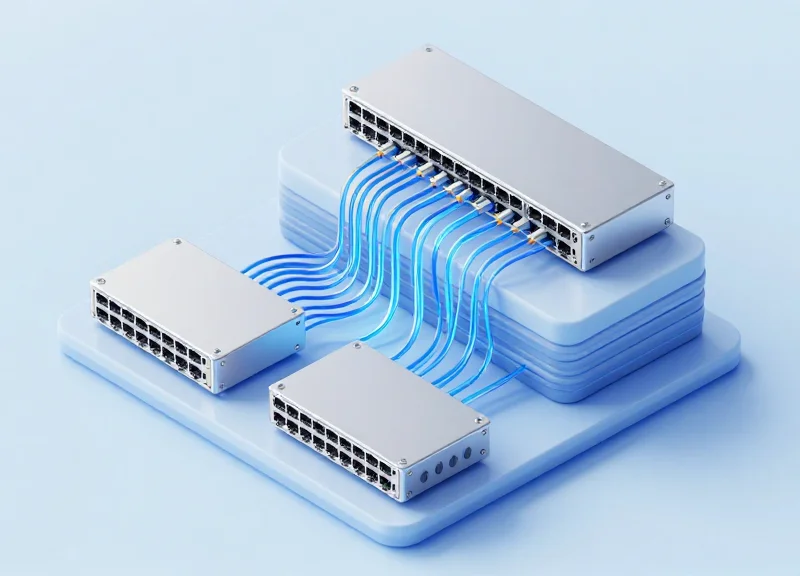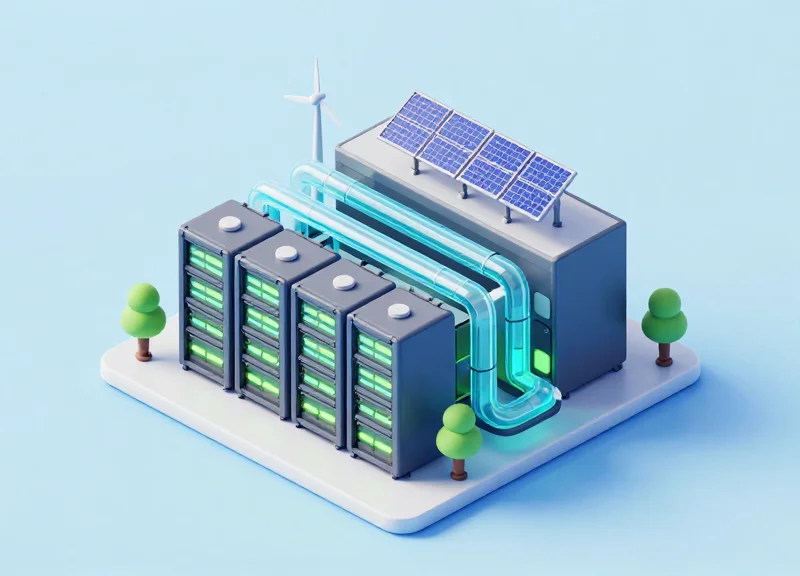
As global data consumption skyrockets, the environmental footprint of data centers has become a critical concern. This deep dive explores the technical innovations driving sustainability in modern infrastructures, focusing on the synergy between efficient hardware and high-speed optical networks to solve the industry's most pressing energy challenges.
Defining the Sustainable Green Data Center
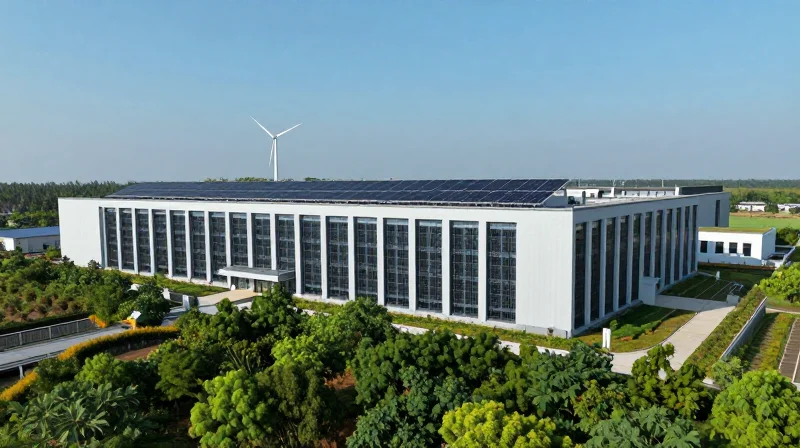
A sustainable green data center is a mission-critical facility designed to maximize computational performance while minimizing the ecological footprint through a holistic technical strategy. Unlike traditional facilities that focus primarily on Power Usage Effectiveness (PUE) to reduce operational costs, a truly sustainable data center addresses the entire resource chain, including Water Usage Effectiveness (WUE), Carbon Usage Effectiveness (CUE), and the embodied carbon of construction materials and hardware. It represents a shift from reactive energy saving to a proactive, circular architecture that integrates with local energy grids and ecosystems.
The Holistic Framework of Green Data Infrastructure
Modern sustainability in data centers is built upon three pillars: energy source, operational efficiency, and resource circularity. A facility is only as green as its energy supply; therefore, transitioning to 24/7 carbon-free energy (CFE) through on-site solar, wind, or long-term power purchase agreements (PPAs) is foundational. Operationally, this involves moving away from mechanical chillers toward liquid cooling or high-efficiency air cooling that leverages ambient temperatures. Finally, circularity ensures that hardware is designed for disassembly, reuse, and responsible recycling to mitigate the growing challenge of electronic waste.
Comparative Analysis: Traditional vs. Sustainable Metrics
| Metric/Feature | Traditional Data Center | Sustainable Green Data Center |
|---|---|---|
| Primary Efficiency Goal | PUE of 1.5 - 2.0 | PUE of 1.2 or lower |
| Cooling Methodology | Mechanical DX or Chilled Water | Liquid Immersion or Rear-Door Heat Exchangers |
| Water Management | High consumption via evaporative towers | Closed-loop or air-cooled (near zero WUE) |
| Energy Sourcing | Unspecified Grid Mix | 100% Renewable / Carbon-Free Energy |
| Hardware Strategy | Linear (Purchase to Landfill) | Circular (Modular and Recyclable) |
Defining Parameters and Standards
- Is a low PUE sufficient for a 'Green' designation?
No. While a low Power Usage Effectiveness indicates high electrical efficiency, it does not account for the carbon intensity of the power source or the volume of water consumed for cooling. A sustainable definition requires low CUE and WUE alongside a low PUE. - How does the Open Compute Project (OCP) contribute to definition?
The OCP provides standardized, open-source hardware designs that remove unnecessary plastic and metal components, improving airflow and reducing the embodied carbon and material waste of the server infrastructure. - What role does waste heat recovery play?
In a sustainable model, waste heat is viewed as a resource. Modern green centers often export thermal energy to local district heating systems or industrial processes, significantly improving the Energy Reuse Factor (ERF).
The Evolution of Efficiency Metrics: PUE, WUE, and CUE

The Shift from Single-Metric to Holistic Benchmarking
In the early days of green computing, efficiency was synonymous with energy conservation. Today, a sustainable green data center is defined by its ability to balance power consumption, water depletion, and carbon emissions. While Power Usage Effectiveness (PUE) remains the industry standard, it is no longer sufficient on its own. Modern facilities leverage a 'triad of effectiveness'—PUE, WUE, and CUE—to ensure that optimizing one resource does not inadvertently cause the degradation of another, such as reducing power at the cost of massive water evaporation in cooling towers.
Deconstructing the Core Sustainability Metrics
To achieve a comprehensive sustainability profile, operators must look at the specific formulas that govern resource utilization. PUE measures the ratio of total facility power to the power delivered to IT equipment. WUE addresses the growing concern of local water scarcity by measuring annual site water usage against IT energy consumption. Finally, CUE bridges the gap between energy use and actual environmental impact by calculating the total carbon dioxide equivalent (CO2e) emissions per unit of IT energy, reflecting the facility's reliance on fossil fuels versus renewable energy sources.
| Metric | Primary Focus | Calculation Formula | Ideal Target |
|---|---|---|---|
| PUE | Electrical Efficiency | Total Facility Energy / IT Equipment Energy | 1.0 |
| WUE | Water Consumption | Annual Water Usage / IT Equipment Energy (kWh) | 0.0 (L/kWh) |
| CUE | Carbon Footprint | Total CO2e Emissions / IT Equipment Energy (kWh) | 0.0 (kgCO2e/kWh) |
The Interdependence of Resource Metrics
Sustainable engineering requires navigating the 'Efficiency Paradox.' For instance, an air-cooled data center might have a higher PUE due to the energy required for fans, yet it may achieve a perfect WUE of 0.0 because it consumes no water for cooling. Conversely, evaporative cooling can drive PUE down significantly but results in high WUE scores. The evolution of these metrics allows architects to make data-driven decisions that align with local environmental constraints, such as prioritizing WUE in drought-prone regions or CUE in regions with carbon-intensive power grids.
Metrics Implementation FAQ
- Is a PUE of 1.0 truly achievable?
A PUE of 1.0 is the theoretical limit where all energy goes to IT equipment. While some hyperscale facilities reach 1.1 or lower, 1.0 remains unattainable as some power is always required for lighting and basic distribution losses. - Why is CUE becoming more relevant than PUE?
PUE only measures how much energy is used, not how 'clean' that energy is. A data center with a low PUE powered by coal is less sustainable than one with a higher PUE powered entirely by wind or solar. - How does server utilization affect these metrics?
Low server utilization (zombie servers) inflates the energy denominator. Improving IT Productivity (ITP) ensures that the energy measured in PUE is actually performing useful computational work.
High-Speed Optical Networking: The Efficiency Driver
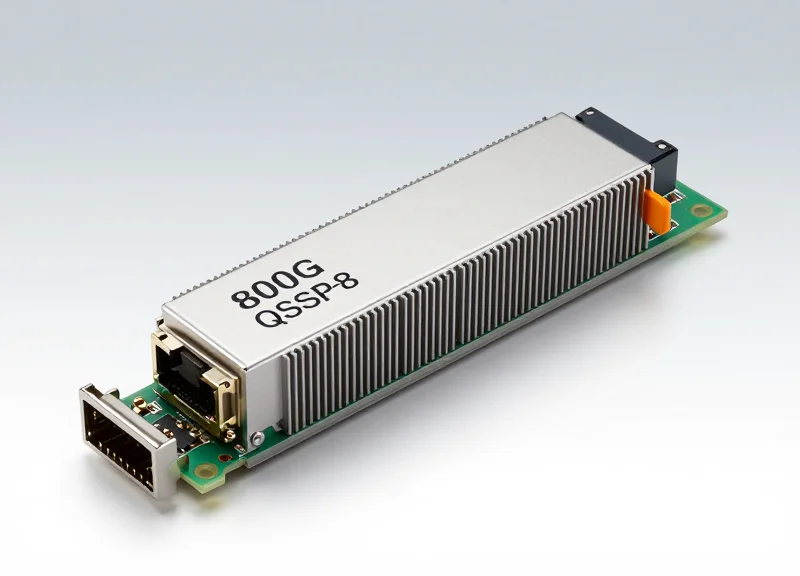
High-speed optical networking serves as a critical efficiency driver in sustainable data centers by minimizing the energy required for intra-cluster communication. As data volumes explode due to AI and machine learning workloads, the transition to 800G and 1.6T optical interconnects allows for higher throughput while significantly lowering the picojoules-per-bit (pJ/bit) metric. This shift from electrical to more efficient optical pathways reduces heat generation and the subsequent cooling load, directly improving the overall Power Usage Effectiveness (PUE) of the facility.
The Power-per-Bit Revolution: 800G and Beyond
The push for 800G and eventually 1.6T is not just about raw speed; it is about architectural efficiency. In traditional networking, a substantial portion of the power budget is consumed by the SerDes (Serializer/Deserializer) and the Digital Signal Processing (DSP) within the optical modules. Newer generations of transceivers leverage 100G or 200G per-lane optical signaling, which allows for denser data transmission with fewer hardware components, effectively halving the energy footprint per gigabit compared to legacy 100G or 400G infrastructures.
Enabling Technologies: SiPh, CPO, and LPO
To achieve sustainable scaling, the industry is moving toward integrated architectures that minimize signal degradation. Silicon Photonics (SiPh) integrates optical components onto silicon substrates, reducing manufacturing waste and improving thermal efficiency. Furthermore, the development of Co-Packaged Optics (CPO) and Linear-drive Pluggable Optics (LPO) aims to bring the optical engine closer to the switch ASIC. This proximity reduces signal loss and eliminates the need for high-power re-timers, which can save up to 25% of the total power consumption in the networking layer.
| Technology | Typical Data Rate | Power-per-Bit (Approx.) | Sustainability Impact |
|---|---|---|---|
| Legacy 400G (DSP-based) | 400 Gbps | ~30-35 pJ/bit | High energy overhead due to complex signal retiming. |
| 800G Pluggable | 800 Gbps | ~20-25 pJ/bit | 30% reduction in power consumption per gigabit vs 400G. |
| 800G LPO (Linear-drive) | 800 Gbps | ~15-18 pJ/bit | Elimination of DSP reduces module power by ~25%. |
| CPO (Co-Packaged Optics) | 1.6T+ | <10 pJ/bit | Shortest electrical path; maximum thermal efficiency. |
Sustainability FAQ: Optical Networking
- Why is 'Power-per-bit' the standard for green networking?
It measures efficiency relative to data output, ensuring that performance gains do not scale linearly with energy consumption, thus decoupling growth from carbon footprint. - How does 800G networking impact cooling requirements?
By generating less heat per unit of data transferred, it reduces the secondary energy load required for fans and liquid cooling systems in the rack. - What is the role of Silicon Photonics in sustainability?
It enables mass-production of high-efficiency optical circuits with higher yield and lower material waste compared to discrete, traditional optics.
Next-Gen Cooling Solutions: Liquid vs. Immersion Cooling
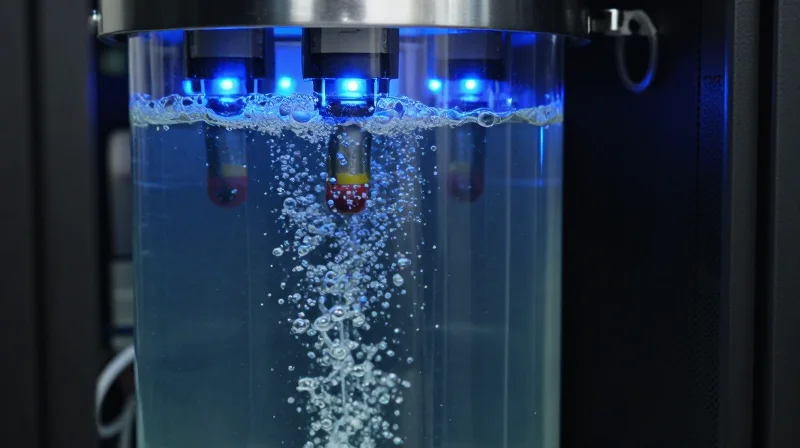
Next-generation cooling solutions, specifically Direct-to-Chip (DLC) and Immersion Cooling, are no longer optional for sustainable green data centers but are essential requirements to manage the extreme thermal densities of modern AI and HPC workloads that exceed 50kW to 100kW per rack. By utilizing liquids which have a heat-carrying capacity up to 3,500 times greater than air, these systems eliminate the massive energy overhead of traditional fans and air conditioning units, directly impacting the facility's Power Usage Effectiveness (PUE) and total carbon footprint.
Direct-to-Chip (Cold Plate) Cooling
Direct-to-Chip cooling, or liquid-to-chip, utilizes a cold plate mounted directly onto the processors (CPUs/GPUs). A dielectric fluid or water-glycol mixture circulates through the plate to absorb heat. This method is highly efficient for targeted thermal management, allowing for high-temperature chilled water loops that can often bypass mechanical chillers entirely, relying instead on free-air cooling through dry coolers.
Immersion Cooling: Single-Phase and Two-Phase
Immersion cooling involves submerging the entire server hardware in a non-conductive dielectric fluid. In single-phase immersion, the fluid remains in a liquid state and is circulated via pumps through a heat exchanger. Two-phase immersion utilizes the latent heat of vaporization; the fluid boils at a low temperature when in contact with hot components, creating vapor that rises to a condenser coil at the top of the tank, where it reverts to liquid and falls back into the bath.
| Feature | Air Cooling | Direct-to-Chip | Immersion Cooling |
|---|---|---|---|
| Heat Transfer Medium | Air | Liquid/Cold Plate | Dielectric Fluid |
| Max Rack Density | 15-25 kW | 50-100 kW | 100+ kW |
| Typical PUE | 1.3 - 1.6 | 1.1 - 1.2 | 1.02 - 1.05 |
| Water Usage | High (Evaporative) | Low/Closed Loop | Minimal |
Sustainability Impact and Waste Heat Recovery
Beyond reducing the energy required for cooling, liquid-based systems provide a high-grade thermal output. While air cooling results in low-grade waste heat that is difficult to capture, the warm liquid return in DLC and immersion systems (often 40°C to 60°C) is ideal for heat reuse. This allows data centers to integrate with district heating networks or industrial processes, further improving the Carbon Usage Effectiveness (CUE) of the facility.
Next-Gen Cooling FAQs
- Is liquid cooling safe for electronics?
Yes, when using dielectric fluids which are non-conductive and chemically inert, there is no risk of short-circuiting or corrosion to the sensitive electronic components. - How does immersion cooling reduce maintenance costs?
Immersion cooling protects hardware from dust, vibration, and thermal cycling, which often extends the lifecycle of the components and reduces the failure rate of fans and mechanical drives. - Can existing data centers retrofit for liquid cooling?
Yes, many facilities utilize 'Rear Door Heat Exchangers' (RDHx) or hybrid manifolds as a transitional step toward full liquid-to-chip or immersion setups.
Power Distribution Innovations: HVDC and Microgrids
The Shift to High-Voltage Direct Current (HVDC) Architecture
Sustainable green data centers are increasingly abandoning traditional power distribution models in favor of architectures that minimize the number of electrical conversion steps. By utilizing High-Voltage Direct Current (HVDC) and localized microgrids, operators can reduce energy waste by up to 15%, while simultaneously decoupling facility operations from the instabilities of the primary utility grid.
In a standard data center, electricity undergoes multiple conversions: from high-voltage AC at the utility level to low-voltage AC for the UPS, then to DC for the batteries, back to AC for distribution, and finally to DC at the server power supply. Each 'hop' incurs thermal losses. HVDC systems streamline this process by distributing power at 380V DC directly to the rack, eliminating the need for bulky transformers and reducing the complexity of the internal power supply units (PSUs).
| Feature | Traditional AC (UPS-based) | HVDC (380V DC) |
|---|---|---|
| Conversion Stages | 4-5 Stages | 2-3 Stages |
| Typical Efficiency | 90-94% | 97-99% |
| Equipment Footprint | Large (Heavy UPS/Transformers) | Compact (Rectifier-based) |
| Reliability | Moderate (Complex switching) | High (Simplified parallel battery connection) |
Onsite Microgrids and Energy Autonomy
A microgrid is a localized energy system that can operate independently or in parallel with the main grid. For green data centers, microgrids serve as the orchestration layer for onsite renewable sources like photovoltaic (PV) arrays, fuel cells, and wind turbines. By managing these resources locally, data centers can optimize for Carbon Usage Effectiveness (CUE) and ensure 'islanding' capability during grid outages.
Core Components of a Green Microgrid
- Battery Energy Storage Systems (BESS)
Utilizing Lithium-Iron Phosphate (LFP) or Flow batteries to buffer intermittent renewable supply and provide instantaneous frequency response. - Smart Power Controllers
AI-driven software that predicts grid pricing and weather patterns to determine when to consume, store, or sell energy back to the grid. - Direct Renewable Coupling
Connecting DC-generating solar panels directly to the HVDC bus to bypass inverter losses entirely, maximizing the yield of onsite generation.
HVDC and Microgrid Implementation FAQ
- Is HVDC safe for data center personnel?
Yes, through the use of specialized 380V DC connectors and advanced ground-fault detection systems that provide safety levels comparable to or better than standard AC distribution. - How does a microgrid impact PUE and CUE?
While a microgrid primarily improves Carbon Usage Effectiveness (CUE) by prioritizing clean energy, it also improves Power Usage Effectiveness (PUE) by reducing transmission and conversion losses within the facility. - What is the primary challenge of HVDC adoption?
The main hurdle is the existing ecosystem of AC-native hardware; however, the rise of Open Compute Project (OCP) standards is rapidly expanding the availability of DC-ready server chassis.
The Impact of Silicon Photonics on Energy Consumption
The Impact of Silicon Photonics on Energy Consumption
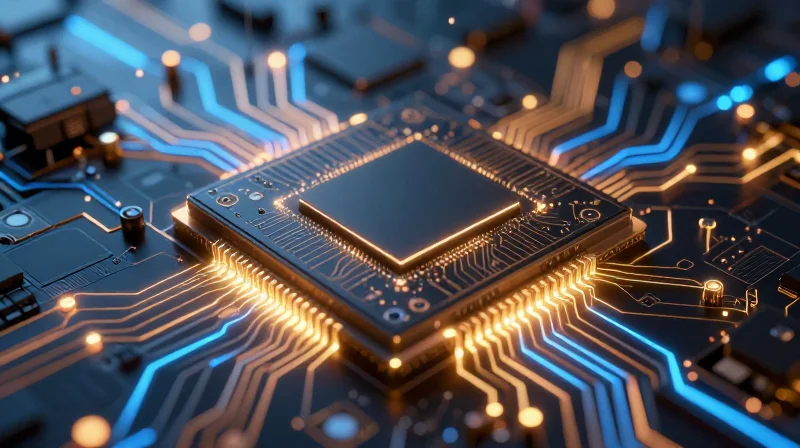
Silicon photonics is a transformative technology that addresses the growing 'interconnect bottleneck' in modern data centers by integrating laser-driven optical communication directly onto silicon chips. By utilizing photons instead of electrons for data transmission, this architecture drastically reduces the energy required to move massive datasets across networking fabrics, enabling a more sustainable path for high-scale computing.
Co-Packaged Optics (CPO): Eliminating the Electrical Tax
Traditional networking relies on pluggable transceivers connected to ASICs via long electrical traces. These traces suffer from significant signal attenuation, requiring high-power Serializer/Deserializer (SerDes) circuits to maintain data integrity. Co-Packaged Optics (CPO) moves the optical conversion process into the same package as the processor or switch ASIC. This proximity eliminates the need for power-intensive retimers and drive electronics, potentially reducing switch power consumption by up to 30% while increasing bandwidth density.
| Metric | Traditional Pluggable Optics | Silicon Photonics / CPO |
|---|---|---|
| Energy Efficiency | 15–30 pJ/bit | <5 pJ/bit |
| Signal Loss | High (Requires electrical boosting) | Minimal (Light-based transmission) |
| Thermal Impact | High localized heat at ports | Lower, distributed thermal profile |
| Bandwidth Density | Limited by physical port size | Extremely high (Integrated on-chip) |
Reduced Latency and Heat Dissipation
The physics of light allows for near-zero heat generation during transmission compared to the resistive heating inherent in copper wiring. By reducing the overall thermal load of the networking layer, silicon photonics indirectly lowers a facility's Power Usage Effectiveness (PUE). Smaller thermal footprints mean less energy is diverted to fans and liquid cooling systems for the networking stack, allowing more power to be allocated directly to computational workloads.
- How does silicon photonics contribute to 'Green' KPIs?
It lowers the total Watts per Terabit (W/Tbps) ratio, allowing data centers to scale throughput without a linear increase in carbon footprint. - Does this technology replace traditional fiber optics?
No, it enhances them by integrating the optical components onto the silicon chip itself, making the entire system more compact and energy-efficient. - What is the primary barrier to widespread adoption?
The initial manufacturing complexity and the transition toward new packaging standards like CPO are current hurdles, though energy savings are driving rapid commercialization.
AI and Machine Learning for Operational Optimization

AI and Machine Learning for Operational Optimization
In the architectural framework of sustainable green data centers, AI and Machine Learning (ML) function as the core infrastructure management engine, dynamically aligning physical cooling and power resources with fluctuating digital demands. By processing millions of telemetry data points from IoT sensors, these algorithms can predict thermal fluctuations, optimize server power states, and automate resource placement with a precision and speed that far exceed human capabilities, directly leading to a significant reduction in Power Usage Effectiveness (PUE) and operational overhead.
Predictive Thermal Management and Neural Networks
Traditional cooling systems often rely on static setpoints, which leads to over-cooling and significant energy waste. AI-driven cooling systems utilize Deep Learning models, such as Recurrent Neural Networks (RNNs), to forecast temperature trends based on historical workload patterns and external weather conditions. This allows the Facility Management System (FMS) to proactively adjust airflow and chilled water temperatures before a thermal spike occurs. By preventing localized hotspots while maintaining higher safe ambient temperatures, AI reduces the energy required for mechanical cooling by up to 40%.
Dynamic Workload Balancing and Carbon-Aware Scheduling
ML algorithms facilitate intelligent workload migration, consolidating tasks onto the minimum number of active physical servers required to maintain Service Level Agreements (SLAs). These systems evaluate real-time CPU and memory telemetry to power down underutilized hardware. Furthermore, advanced 'carbon-aware' scheduling engines can shift non-critical, latency-tolerant batch processing tasks to geographical regions or time windows where renewable energy availability on the grid is at its peak, effectively lowering the carbon intensity of every computation.
| Feature | Traditional Management | AI-Driven Optimization |
|---|---|---|
| Cooling Strategy | Reactive (Threshold-based) | Proactive (Predictive Analytics) |
| Resource Allocation | Static / Over-provisioned | Elastic / Just-in-time |
| Workload Handling | Manual / Rule-based | Autonomous / ML-based |
| Target PUE Range | 1.5 - 2.0 | 1.1 - 1.2 |
- How does AI specifically reduce PUE?
AI reduces PUE by optimizing the ratio of total facility power to IT equipment power, specifically by trimming the energy used for cooling and lighting through predictive load matching. - What is the role of Reinforcement Learning in data centers?
Reinforcement Learning (RL) agents are used to continuously experiment with cooling configurations in a digital twin environment, identifying the most energy-efficient settings without risking physical hardware. - Can AI assist in predictive maintenance?
Yes, ML models analyze vibration and acoustic data from fans and pumps to predict mechanical failures before they happen, preventing energy-intensive emergency cooling bypasses.
Sustainable Supply Chains and Circular Hardware Lifecycle
Sustainable Supply Chains and Circular Hardware Lifecycle
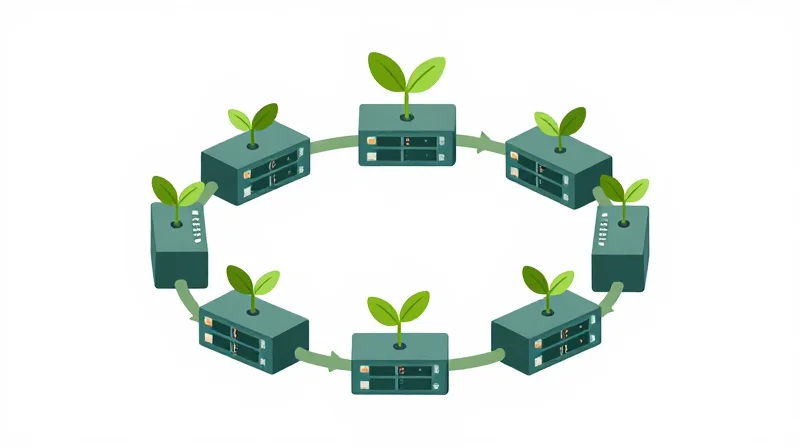
Achieving true sustainability in the data center requires looking beyond operational power usage (PUE) to the embodied carbon within the hardware itself. A sustainable green data center employs a circular economy model that prioritizes modularity, refurbishment, and high-recovery recycling. By transitioning from a linear 'take-make-dispose' approach to a circular 'Refurbish-First' strategy, operators can significantly mitigate the environmental impact associated with the manufacturing and disposal of IT assets.
Modular Design and Standardized Architectures
Modular server design, championed by frameworks like the Open Compute Project (OCP), decouples the various layers of IT infrastructure. By standardizing chassis, power supplies, and connectivity, data centers can upgrade specific compute or storage modules without discarding the entire rack. This granular approach prevents the unnecessary disposal of long-lived components like metal enclosures and power distribution units (PDUs) just to access newer processor technologies.
| Lifecycle Phase | Traditional Linear Model | Sustainable Circular Model |
|---|---|---|
| Sourcing | Raw virgin material extraction | Conflict-free and recycled material prioritization |
| Upgrades | Full server replacement (Rip-and-replace) | Modular component-level upgrades |
| End-of-Life | Electronic waste (e-waste) and shredding | Refurbishment, resale, or closed-loop recycling |
The 'Refurbish-First' Mentality and Material Recovery
Extending the operational life of hardware is the most effective way to amortize its embodied carbon. A 'Refurbish-First' policy involves cascading hardware from high-performance tiers to lower-tier workloads (such as dev-test environments) before seeking secondary market resale. When hardware finally reaches its functional end, advanced material recovery processes are employed to reclaim rare earth elements, gold, and copper, reintroducing them into the supply chain as raw materials for the next generation of silicon.
- What is embodied carbon in IT hardware?
Embodied carbon refers to the total greenhouse gas emissions generated during the extraction, refining, manufacturing, and transportation of server components before they ever reach the data center floor. - How does modularity contribute to a green data center?
Modularity allows for the isolated replacement of rapidly evolving components like CPUs and GPUs, while retaining static components like power supplies and chassis, reducing physical waste by up to 50% per refresh cycle. - What is the benefit of the secondary hardware market?
The secondary market prevents functional hardware from entering the waste stream prematurely, allowing other industries to utilize high-quality IT assets while reducing the global demand for new manufacturing.
Regulatory Standards and Global Compliance (LEED, ISO 50001)
Regulatory compliance and international certifications are the primary mechanisms for transforming environmental aspirations into measurable, auditable technical achievements within the data center industry. By adhering to rigorous standards like LEED and ISO 50001, operators can verify their energy performance, resource management, and overall carbon footprint, ensuring that 'green' claims are backed by standardized data and third-party validation.
Foundational Certifications: LEED and BREEAM
Leadership in Energy and Environmental Design (LEED) serves as the global gold standard for sustainable building practices. For data centers, LEED v4.1 introduces specific credits for cooling efficiency, UPS efficiency, and the use of renewable energy. BREEAM, its European counterpart, focuses on the lifecycle of the facility, awarding credits for everything from land use to the ecological impact of the construction materials. These certifications provide a holistic view of a facility's environmental impact beyond just energy consumption.
| Standard | Primary Focus Area | Key Metric | Technical Requirement |
|---|---|---|---|
| LEED | Holistic Building Design | PUE and Water Use Efficiency | Rigorous site selection and resource recovery |
| ISO 50001 | Energy Management Systems | Energy Performance Indicators (EnPIs) | Continuous improvement through PDCA cycles |
| BREEAM | Environmental Performance | Lifecycle Analysis (LCA) | Assessment of management and ecological impact |
| ISO 14001 | Environmental Management | Resource and Waste Stream | Reduction of operational environmental risks |
ISO 50001: Driving Continuous Energy Improvement
ISO 50001 is a management system standard that focuses specifically on optimizing energy performance. Unlike building-centric certifications, ISO 50001 requires the implementation of a Plan-Do-Check-Act (PDCA) framework. This technical approach forces data center operators to establish an energy baseline, deploy advanced metering infrastructure (AMI), and utilize real-time telemetry to identify inefficiencies in power distribution and thermal management. It is often the preferred standard for facilities aiming for peak operational efficiency over the long term.
Regional Compliance and Global Directives
Beyond voluntary certifications, regional mandates are increasingly defining the baseline for green data centers. In the European Union, the Energy Efficiency Directive (EED) now mandates detailed reporting for data centers with significant power loads. Similarly, the EU Code of Conduct for Data Centres Energy Efficiency provides a set of best practices that operators must adopt to be recognized as environmentally responsible. In the United States, state-level incentives in markets like Virginia and Illinois often require high LEED ratings as a prerequisite for tax abatements.
- Is LEED certification mandatory for all data centers?
No, it is a voluntary certification. However, it is frequently required by enterprise clients, government agencies, and institutional investors to validate a facility's sustainability credentials. - What is the main difference between ISO 14001 and ISO 50001?
ISO 14001 focuses broadly on environmental management, including waste and pollution, while ISO 50001 is strictly dedicated to improving energy performance and efficiency. - Can an existing data center become LEED certified?
Yes, through the LEED for Operations and Maintenance (O+M) certification, which evaluates the actual performance data of an existing building rather than its initial construction.
Transitioning to a green data center is no longer just a corporate social responsibility—it is a strategic necessity for operational efficiency and future-proofing in an energy-constrained world. By implementing advanced optical networking and liquid cooling, businesses can scale their performance without scaling their carbon footprint. Ready to optimize your infrastructure? Contact our engineering team today for a custom sustainability audit.