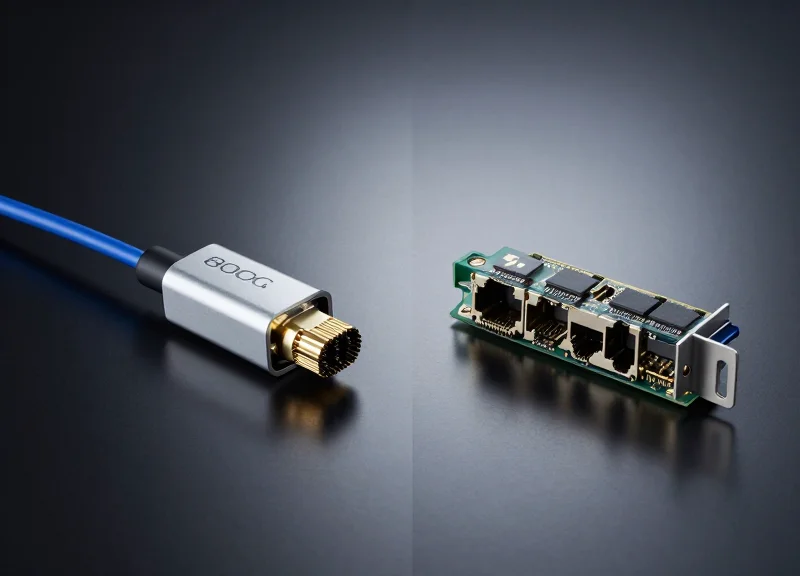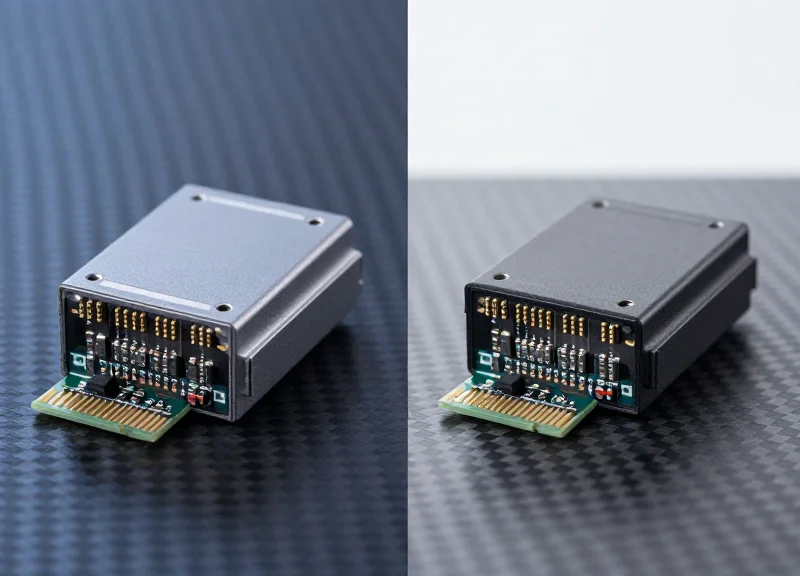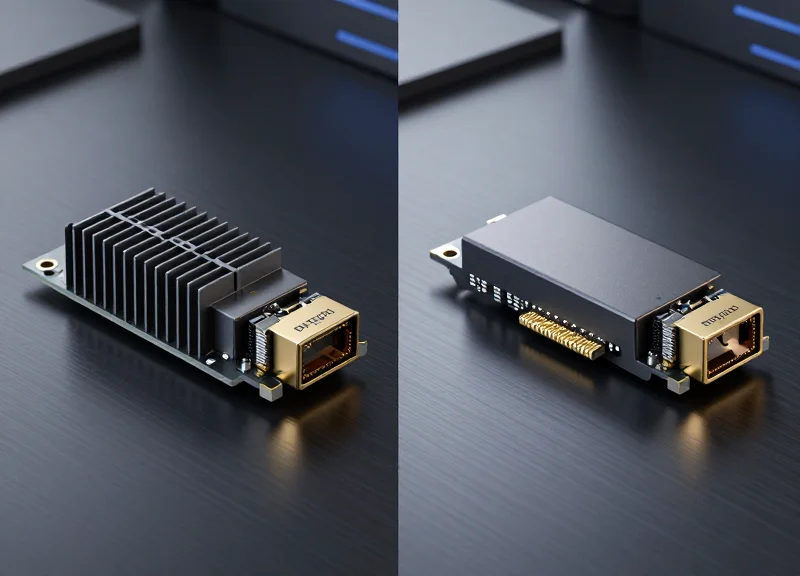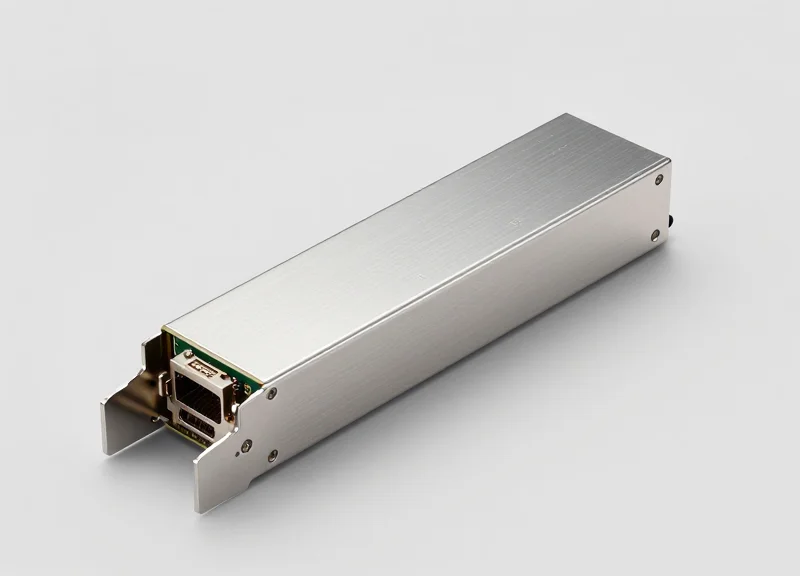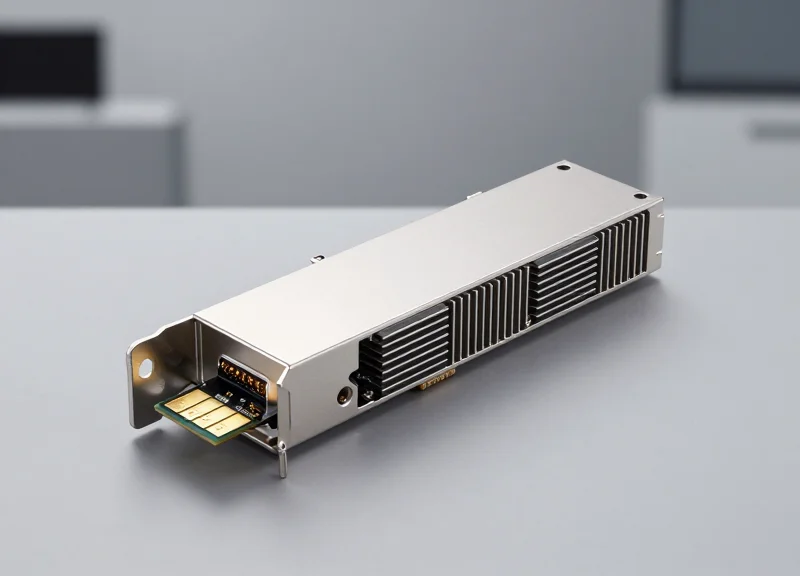
As data centers face unprecedented demand for bandwidth, selecting the right interconnect standard has become a high-stakes decision for network architects. While QSFP56 and QSFP56-DD are both built on the PAM4 foundation, their differences in lane count, density, and thermal management have significant implications for both immediate performance and long-term financial viability.
The Evolution of QSFP Form Factors
The Evolution of QSFP Form Factors
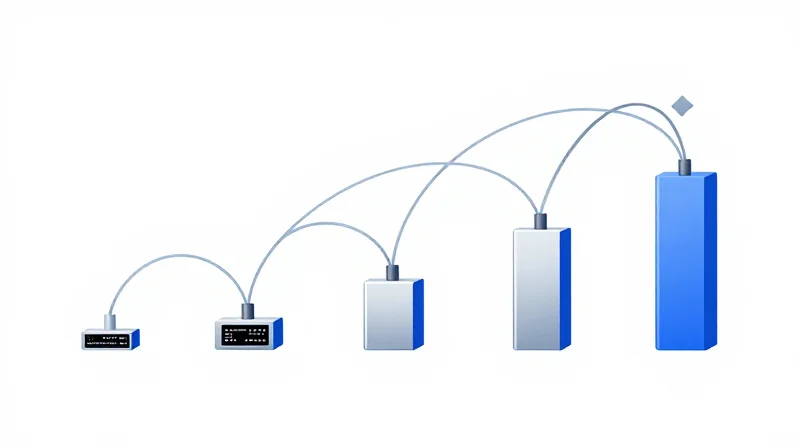
The trajectory of QSFP form factors is characterized by a strategic shift from increasing clock speeds to enhancing spectral efficiency and physical density. The journey began in earnest with QSFP28, which dominated the 100G market using four lanes of 25Gbps NRZ signaling. As bandwidth requirements scaled, the industry introduced QSFP56, which doubled throughput to 200G by adopting 50G PAM4 modulation while keeping the four-lane architecture. The most significant architectural change arrived with QSFP56-DD, which maintained the 50G PAM4 per-lane speed but doubled the electrical lane count to eight, effectively reaching 400G and establishing a high-density footprint for modern hyperscale data centers.
The Paradigm Shift: From NRZ to PAM4 Signaling
For years, Non-Return to Zero (NRZ) was the standard for optical communications, using two voltage levels to represent binary data. However, as per-lane speeds attempted to reach 50Gbps, signal integrity issues and power consumption made NRZ increasingly difficult to implement. The adoption of PAM4 (Four-Level Pulse Amplitude Modulation) in the QSFP56 standard allowed for four voltage levels, doubling the bits per symbol. This enabled 200G modules to operate at the same Baud rate as 100G modules, providing a path to higher speeds without requiring a complete overhaul of physical layer components or the doubling of fiber strands.
Architectural Innovation: QSFP-DD (Double Density)
While QSFP56 improved modulation, the QSFP56-DD standard addressed the physical limitations of the four-lane interface. By adding a second row of electrical contacts to the module connector, the Double Density specification expanded the interface to eight lanes. This innovation allows for 400G total throughput using 50G PAM4 per lane. Crucially, the physical cage design is backward compatible; a QSFP56-DD port can accept legacy QSFP28 or QSFP56 modules, ensuring that network operators can upgrade their hardware incrementally without losing support for existing fiber infrastructure.
| Specification | QSFP28 | QSFP56 | QSFP56-DD |
|---|---|---|---|
| Electrical Lanes | 4 x 25G | 4 x 50G | 8 x 50G |
| Modulation Type | NRZ | PAM4 | PAM4 |
| Max Aggregate Rate | 100 Gbps | 200 Gbps | 400 Gbps |
| Connector Pins | 38 Pins | 38 Pins | 76 Pins |
Form Factor Evolution FAQ
- Is QSFP56-DD compatible with legacy QSFP56 modules?
Yes, the QSFP56-DD cage is designed to be backward compatible with all previous QSFP modules. It uses a deeper connector with two rows of pins; the first row provides the legacy 4-lane connection, while the second row provides the additional 4 lanes for DD functionality. - Why didn't the industry simply increase the baud rate of NRZ?
Increasing NRZ baud rates to 50G or 100G causes extreme signal degradation and requires significantly more power. PAM4 was chosen because it transmits two bits per signal, effectively doubling bandwidth at the same symbol rate. - How does QSFP56-DD compare to OSFP?
OSFP (Octal Small Form-factor Pluggable) is a competing 400G standard that is slightly larger and offers better thermal management for higher-wattage optics, but unlike QSFP56-DD, it is not directly backward compatible with QSFP cages without an adapter.
Architectural Breakdown: QSFP56 vs. QSFP56-DD
Architectural Breakdown: QSFP56 vs. QSFP56-DD
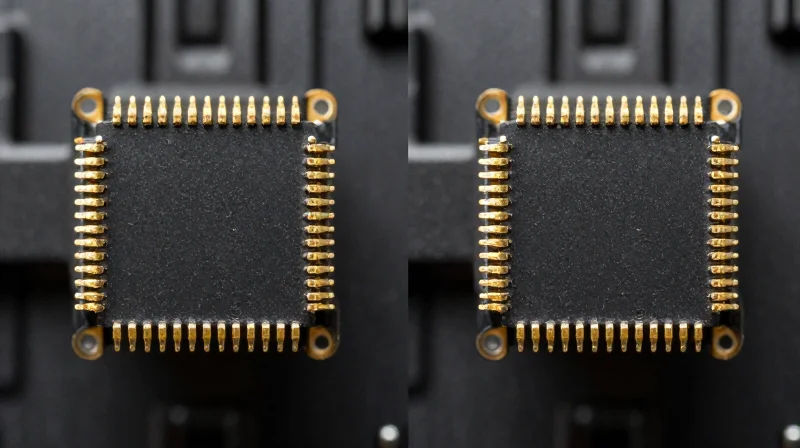
The fundamental architectural distinction between QSFP56 and QSFP56-DD lies in the electrical lane density: while the QSFP56 maintains the standard four-lane interface of the QSFP family to achieve 200G, the QSFP56-DD (Double Density) introduces a second row of electrical pins to support an eight-lane interface, effectively doubling the aggregate bandwidth to 400G within the same mechanical width.
Lane Configuration and Physical Layer Standards
Both QSFP56 and QSFP56-DD utilize 50Gbps PAM4 (4-level Pulse Amplitude Modulation) signaling per lane. However, the QSFP56 form factor is limited to four lanes (4x50G), resulting in a 200Gbps total capacity. In contrast, the QSFP56-DD architectural specification expands the electrical interface to eight lanes (8x50G). This expansion is achieved by adding a deeper connector structure that accommodates a second set of contacts, allowing for backwards compatibility with legacy 4-lane modules while providing the necessary paths for 400G transmission.
| Specification | QSFP56 | QSFP56-DD |
|---|---|---|
| Electrical Lanes | 4 Lanes | 8 Lanes |
| Modulation Type | 50G PAM4 | 50G PAM4 |
| Aggregate Bandwidth | 200 Gbps | 400 Gbps |
| Total Pin Count | 38 Pins | 76 Pins |
| Backward Compatibility | QSFP28 | QSFP56 / QSFP28 |
| Typical Power (W) | 5W - 8W | 7W - 14W |
Port Density and System Scaling
The double-density design allows network architects to maximize front-panel density without increasing the physical footprint of the switch ports. A standard 1U network switch can typically house 32 to 36 QSFP56-DD ports, yielding a total switching capacity of 14.4Tbps. While the mechanical width remains constant, the QSFP56-DD module is slightly longer to accommodate the additional pins and higher thermal dissipation requirements. This architectural choice necessitates more robust cooling strategies, as 400G modules generate significantly more heat than their 200G counterparts.
- Is QSFP56-DD backwards compatible with QSFP56?
Yes, the QSFP56-DD cage is specifically designed to be backwards compatible; a QSFP56 module can be plugged into a QSFP56-DD port and will operate using the first four electrical lanes. - What is the primary physical change in the connector?
The connector features two rows of pins instead of one. The first row maintains the traditional QSFP layout, while the second row provides the additional four lanes required for Double Density operation. - Do these modules use different fiber connectors?
Both form factors commonly use MPO-12 or LC connectors for optical interfaces, though QSFP56-DD may also utilize MPO-16 connectors for certain 8-lane parallel fiber applications.
Latency Analysis in High-Speed Interconnects

The Latency Trade-off in PAM4 Interconnects
In high-speed interconnects like QSFP56 and QSFP56-DD, latency is no longer just a factor of physical distance, but a product of the complex digital signal processing (DSP) and Forward Error Correction (FEC) required to maintain signal integrity over PAM4 modulation. While the transition from 25G NRZ to 50G PAM4 doubled the data rate per lane, it introduced a significant processing overhead, as the reduced signal-to-noise ratio (SNR) of four-level signaling necessitates active error correction that was largely optional or less intensive in previous generations.
Forward Error Correction (FEC) and DSP Overhead
The primary contributor to latency in QSFP56 (200G) and QSFP56-DD (400G) modules is the KP4 FEC (RS-FEC) algorithm. Because PAM4 signaling is highly sensitive to noise and inter-symbol interference, the system must buffer blocks of data to calculate parity and correct errors before the data is passed to the upper layers. For a standard 400G QSFP56-DD link, this FEC process typically adds between 100ns to 150ns of latency, which is a critical consideration for High-Frequency Trading (HFT) and ultra-low-latency AI training clusters.
| Feature | QSFP28 (100G) | QSFP56 (200G) | QSFP56-DD (400G) |
|---|---|---|---|
| Modulation | NRZ | PAM4 | PAM4 |
| Typical FEC | None / RS-FEC (528, 514) | KP4 FEC (544, 514) | KP4 FEC (544, 514) |
| Processing Latency | Minimal (<10ns) | Moderate (~100ns) | Moderate to High (~120ns+) |
| Lane Configuration | 4 x 25G | 4 x 50G | 8 x 50G |
Comparing 200G vs. 400G Processing Requirements
Comparing QSFP56 and QSFP56-DD reveals that while both utilize 50G PAM4 lanes, the 400G QSFP56-DD requires a more robust DSP to manage eight concurrent lanes within a similar thermal and physical envelope. This increased density can lead to slightly higher thermal throttling risks, which indirectly affects latency consistency (jitter). However, in terms of pure logic delay, the difference is marginal; the 400G standard primarily scales the width of the processing engine rather than the depth of the FEC algorithm, meaning the per-packet latency remains relatively stable across both form factors as long as the same FEC scheme is applied.
- Does QSFP56-DD always have higher latency than QSFP56?
Not necessarily. Both use 50G PAM4 lanes and typically employ KP4 FEC. The latency is generally determined by the host switch's ASIC and the specific DSP implementation rather than the form factor itself. - Can FEC be disabled to reduce latency?
For PAM4-based modules like QSFP56-DD, disabling FEC is usually not feasible for optical links, as the raw Bit Error Rate (BER) without correction would exceed the limits required for reliable data transmission. - What is the impact of DAC cables on latency in these standards?
Direct Attach Copper (DAC) cables provide the lowest latency because they avoid the O-E-O (Optical-Electrical-Optical) conversion and DSP processing found in optical transceivers, though they still require host-side FEC for 50G PAM4 lanes.
Power Consumption and Thermal Management
Power Consumption and Thermal Management
As data centers scale from 200G to 400G and beyond, power consumption per port becomes the primary limiting factor for rack density and operational expenditure. While the QSFP56-DD doubles the bandwidth of the standard QSFP56 by utilizing an 8-lane electrical interface, it also significantly increases the thermal load within a nearly identical physical footprint. Consequently, the industry has shifted its focus from raw speed to 'Watts per Gigabit' (W/Gb) as the critical metric for sustainable high-speed networking.
Quantitative Efficiency: Watts per Gigabit Comparison
The QSFP56-DD form factor typically consumes between 10W and 14W per module depending on the reach (DR4 vs. FR4/LR4). In contrast, the 200G QSFP56 generally stays within a 4W to 5W envelope. Although the QSFP56-DD is moving more data, the increased complexity of the DSP (Digital Signal Processor) required for 400G PAM4 modulation often leads to a slightly higher power-to-bandwidth ratio compared to optimized 200G legacy systems.
| Module Type | Max Power (Typical) | Bandwidth | Efficiency (mW/Gb) |
|---|---|---|---|
| QSFP56 (SR4/DR4) | 5.0W | 200 Gbps | 25.0 mW |
| QSFP56-DD (DR4) | 12.0W | 400 Gbps | 30.0 mW |
| QSFP56-DD (LR4) | 14.0W | 400 Gbps | 35.0 mW |
| OSFP (400G Alternative) | 15.0W | 400 Gbps | 37.5 mW |
Thermal Dissipation Challenges and Solutions
The primary challenge with the QSFP56-DD is its thermal density. Because the module maintains backward compatibility with QSFP cages, it does not feature the integrated heatsink found in the larger OSFP (Octal Small Form-factor Pluggable) design. This forces system designers to rely on advanced cooling strategies such as enhanced cage airflow, specialized thermal interface materials, and liquid cooling in extreme high-density scenarios. If not managed correctly, the heat generated by a fully populated 32-port 1U switch using QSFP56-DD can exceed 450W just for the optics, leading to signal degradation or shortened hardware lifespans.
- Does QSFP56-DD require different cooling than QSFP56?
Yes, while the physical slot is compatible, QSFP56-DD requires significantly more airflow and more efficient heatsinks on the switch chassis to handle the roughly 2.5x increase in heat per module. - How does OSFP compare to QSFP56-DD thermally?
OSFP is thermally superior because it is slightly larger and includes an integrated heatsink, allowing it to dissipate up to 15-18W more effectively than the QSFP56-DD form factor. - What role does the DSP play in power consumption?
The DSP is the largest power consumer in 400G optics. Newer 7nm and 5nm DSP chips are significantly more efficient than early 16nm designs, helping to lower the W/Gb ratio for modern QSFP56-DD modules.
Backward Compatibility and Legacy Support
The Mechanical and Electrical Synergy of QSFP56-DD
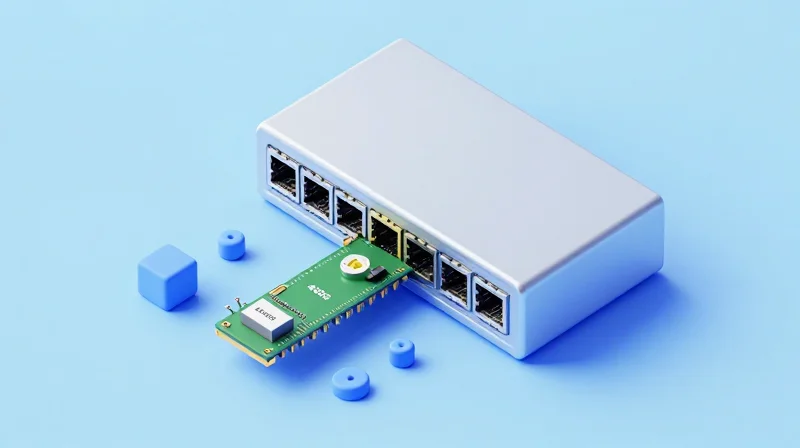
The primary advantage of the QSFP56-DD form factor lies in its 'Double Density' architecture, which incorporates an extra row of electrical contacts to double the number of high-speed lanes from four to eight. Crucially, the first row of these contacts is mechanically and electrically identical to the standard QSFP interface. This design allows a QSFP56-DD port to natively accept legacy modules such as QSFP28 (100G) and QSFP56 (200G) without the need for complex adapters. By contrast, alternative form factors like OSFP require a mechanical adapter to achieve similar backward compatibility, which adds physical depth and potential signal integrity challenges.
Form Factor Compatibility Matrix
| Host Port Type | Supported Legacy Modules | Lane Configuration | Upgrade Complexity |
|---|---|---|---|
| QSFP56-DD | QSFP+, QSFP28, QSFP56 | 8-lane (4x2 fallback) | Low (Native Support) |
| QSFP56 | QSFP+, QSFP28 | 4-lane | Medium (Limited to 200G) |
| OSFP | QSFP28, QSFP56 | 8-lane | High (Requires Adapter) |
Economic Implications for Incremental Upgrades
For enterprise and cloud service providers, the ability to perform incremental upgrades is a significant cost-saving measure. A 400G-capable switch populated with QSFP56-DD ports allows for a 'pay-as-you-grow' strategy. Organizations can deploy the latest switch silicon while reusing their existing inventory of 100G QSFP28 transceivers and fiber plants. This mitigates the massive capital expenditure (CAPEX) associated with a total 'rip-and-replace' of the interconnect layer. Furthermore, because the QSFP56-DD port can operate in legacy modes, it simplifies inventory management by standardizing on a single port type that serves multiple generations of hardware.
Key Considerations for Legacy Support
- Does a QSFP56-DD port require an adapter for QSFP28?
No. The mechanical cage and the first row of electrical contacts are designed to support standard QSFP modules natively. - Can I mix 100G and 400G modules in the same switch?
Yes, most modern NOS (Network Operating Systems) allow individual ports to be configured for different speeds, provided the hardware supports the specific modulation (NRZ vs PAM4). - What happens to the extra 4 lanes when using a legacy module?
The host system automatically detects the legacy module and disables the second row of contacts, operating the port as a standard 4-lane interface.
Alternative Standards: OSFP and Beyond
Beyond QSFP: Evaluating the OSFP Standard
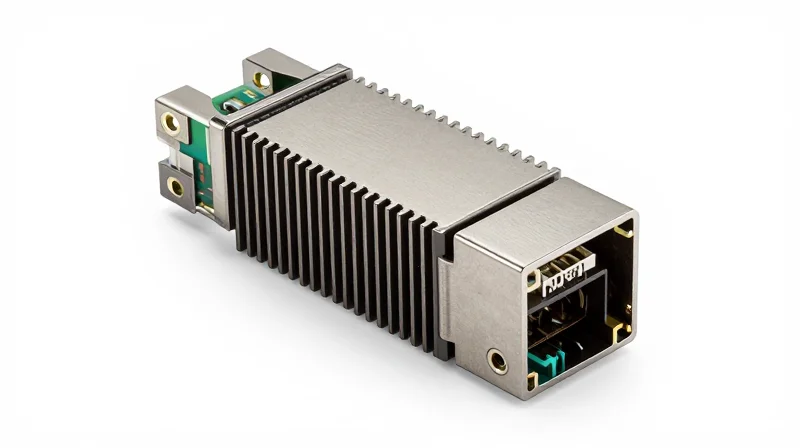
While the QSFP56-DD is the market leader for 400G due to its backward compatibility, the OSFP (Octal Small Form-factor Pluggable) stands as its most formidable alternative, offering a larger physical footprint designed specifically to address the thermal limitations of high-density interconnects. As data centers migrate from 400G to 800G and eventually 1.6T, the trade-off between the seamless legacy support of QSFP-DD and the superior cooling capabilities of OSFP becomes a critical architectural decision.
Thermal Management and Power Capacity
The OSFP module is slightly wider and deeper than the QSFP-DD. Crucially, it features an integrated heat sink, whereas the QSFP-DD relies on the cage for cooling. This design allows OSFP to support power envelopes exceeding 15W, and in some configurations, up to 30W. This makes OSFP particularly attractive for high-performance computing (HPC) and AI workloads where optics must run at peak performance without thermal throttling.
| Feature | QSFP56-DD | OSFP | ||||||||||||
|---|---|---|---|---|---|---|---|---|---|---|---|---|---|---|
| Backward Compatibility | Native (QSFP28/56) | Requires Adapter | Integrated Heat Sink | No (External Cage) | Yes (Internal) | Max Power (Approx) | 12W - 14W | 15W - 30W | 800G Readiness | Supported | Highly Optimized | Lane Count | 8 lanes (PAM4) | 8 lanes (PAM4) |
Scalability: The Path to 800G and 1.6T
The scalability of the OSFP standard is its strongest selling point for long-term infrastructure investment. While the QSFP-DD 800 (the 800G variant) exists and maintains compatibility, the OSFP 800 is often viewed as the more 'natural' fit for the next generation of 112G SerDes. The extra physical volume of OSFP provides the necessary space for the complex digital signal processors (DSPs) and laser components required for coherent optics and 1.6T speeds.
Alternative Standards FAQ
- Is OSFP compatible with QSFP ports?
OSFP is not natively compatible with QSFP ports due to its larger size. However, OSFP-to-QSFP adapters are available, allowing data centers to use legacy QSFP modules in OSFP-equipped switches. - Why choose QSFP-DD over OSFP for 400G?
Most operators choose QSFP-DD for 400G because of its backward compatibility with existing QSFP28 and QSFP56 infrastructure, which simplifies inventory management and reduces the need for adapter hardware. - Which standard is better for AI clusters?
OSFP is increasingly preferred for AI and ML clusters because its superior thermal characteristics allow for more stable performance under the heavy, sustained loads typical of GPU-to-GPU communication.
Total Cost of Ownership (TCO) Comparison
The Financial Dynamics of 400G Migration
Calculating the Total Cost of Ownership (TCO) for next-generation interconnects reveals that while QSFP56-DD hardware commands a higher initial price point than QSFP56, its superior port density and power efficiency per gigabit result in a 15-20% lower TCO over a standard five-year data center lifecycle. The primary financial drivers include capital expenditure (CAPEX) on transceivers and switches, and operational expenditure (OPEX) dominated by power consumption, thermal management, and floor space utilization.
CAPEX Comparison: Initial Investment Analysis
| Component | QSFP56 (200G) | QSFP56-DD (400G) | OSFP (400G/800G) |
|---|---|---|---|
| Transceiver Unit Cost | Baseline ($) | 1.8x Baseline | 2.2x Baseline |
| Port Density (per RU) | 32-48 Ports | 32-36 Ports (Double BW) | 32 Ports |
| Cabling Costs | Moderate | Low (Consolidated) | High (Specialized) |
| Backward Compatibility | Native (QSFP28) | Native (QSFP56/28) | Requires Adapters |
OPEX: Power, Cooling, and Efficiency
Operational costs are heavily influenced by the power envelope of the modules. A QSFP56-DD module typically consumes 12W to 14W to deliver 400G, whereas two QSFP56 modules require roughly 10W each (20W total) to achieve the same throughput. In large-scale deployments, this delta in power consumption translates to thousands of dollars in annual savings per rack when accounting for both electricity and the HVAC load required to dissipate the heat.
5-Year TCO Projection (Normalized to 400G Throughput)
| Cost Element | 2x QSFP56 (400G Total) | 1x QSFP56-DD (400G Total) | 1x OSFP (400G Total) |
|---|---|---|---|
| Initial CAPEX (Optics + Port) | $1,450 | $1,200 | $1,350 |
| Energy Consumption (5yr) | $620 | $380 | $410 |
| Maintenance & Support | $150 | $120 | $140 |
| Total 5-Year TCO | $2,220 | $1,700 | $1,900 |
Economic FAQ for Network Architects
- Is QSFP56-DD always the most cost-effective choice?
For greenfield 400G deployments, yes. However, for legacy 200G networks where switch infrastructure is already amortized, incremental QSFP56 upgrades may offer better short-term ROI. - What is the 'hidden cost' of OSFP?
The primary hidden cost is the lack of backward compatibility. Using OSFP in environments with legacy QSFP infrastructure requires expensive mechanical adapters that increase both CAPEX and physical complexity. - How does power-per-bit impact the bottom line?
By reducing the power-per-bit, QSFP56-DD allows for higher compute density within the same power footprint of a data center, delaying the need for costly facility expansions.
Reliability and Failure Rates in Enterprise Environments
In enterprise environments, the reliability of QSFP56-DD and QSFP56 modules is primarily dictated by manufacturing maturity and thermal management; while QSFP56 has reached a 'plateau of stability' with lower annualized failure rates (AFR), QSFP56-DD is rapidly closing the gap as its 7nm and 5nm DSP (Digital Signal Processor) components become more robust. Currently, QSFP56 offers higher field reliability for 200G deployments, but QSFP56-DD is the superior long-term choice for high-density 400G applications provided that cooling infrastructures are sufficiently optimized.
Manufacturing Maturity and Yield Stability
QSFP56 is an evolution of the highly mature QSFP28 architecture, utilizing 4-lane PAM4 modulation. Because it shares much of its physical and electrical heritage with the 100G standard, manufacturing yields are high and component defects are rare. In contrast, QSFP56-DD (Double Density) introduces an 8-lane interface and a secondary row of electrical contacts. This increased complexity initially led to higher defect rates during the early production cycles, though Tier-1 manufacturers have now achieved stability levels comparable to legacy form factors.
| Metric | QSFP56 (200G) | QSFP56-DD (400G) | OSFP (Alternatives) |
|---|---|---|---|
| Estimated AFR (First Year) | 0.5% - 1.0% | 1.5% - 2.5% | 1.2% - 2.0% |
| MTBF (Mean Time Between Failures) | ~2.5 Million Hours | ~1.8 Million Hours | ~2.0 Million Hours+ |
| Signal Integrity Complexity | Moderate | High (8 Lanes) | High (Integrated Heat Sink) |
| Manufacturing Maturity | Fully Mature | Stabilized / Growth | Stabilized |
Thermal Stress and Operational Lifespan
Heat is the primary enemy of optical reliability. QSFP56-DD modules consume significantly more power (up to 12W-15W for ZR/long-haul) compared to QSFP56 (typically <5W). In high-density switch environments, poor airflow can lead to 'thermal throttling' or permanent diode degradation in DD modules. Alternatives like OSFP provide better thermal performance due to their integrated heat sinks, often resulting in lower failure rates in environments where cooling is a bottleneck.
Reliability FAQ for Enterprise Architects
- Does the 'Double Density' connector affect physical reliability?
The secondary row of pins in QSFP56-DD requires tighter mechanical tolerances. Failure to properly seat the module can lead to intermittent CRC errors, though it does not typically result in permanent hardware damage. - Which standard has better interoperability reliability?
QSFP56 is often more 'plug-and-play' in legacy environments. QSFP56-DD may require specific firmware updates on older host platforms to correctly manage the 8-lane electrical mapping and power profiles. - Are third-party transceivers as reliable as OEM modules?
In the 200G/400G space, reliability depends on the quality of the DSP and laser source (EML vs SiPh). Reputable third-party vendors using the same component supply chains as OEMs offer near-identical MTBF ratings.
Decision Framework: Which Standard Fits Your Business?

Choosing the optimal transceiver standard requires a balanced evaluation of current bandwidth requirements against the long-term total cost of ownership (TCO). While QSFP56 offers a cost-effective path for 200G upgrades in existing infrastructures, QSFP56-DD is the definitive choice for high-density 400G environments that prioritize backward compatibility and rack space efficiency.
Strategic Selection Matrix
| Metric | QSFP56 | QSFP56-DD | OSFP |
|---|---|---|---|
| Primary Speed | 200G | 400G | 400G / 800G |
| Backward Compatibility | High (QSFP28) | High (QSFP28/56) | Low (Requires Adapter) |
| Thermal Efficiency | Moderate | Challenging | Excellent |
| Relative Cost | Lowest | Moderate | Highest |
| Port Density | High | Very High | High |
Deployment Scenarios: Matching Standard to Scale
For enterprise data centers operating on a 3-to-5-year hardware cycle, the QSFP56 remains a highly reliable and lower-risk investment. It utilizes the established 4-lane architecture, making it ideal for organizations that do not yet require the massive aggregate bandwidth of 400G but need more than the standard 100G. Conversely, hyperscale environments and AI-driven clouds should pivot toward QSFP56-DD to maximize throughput per rack unit, provided they have invested in advanced cooling solutions to manage the increased power density of 8-lane modules.
When to Consider Alternatives
If your roadmap involves a rapid transition to 800G, skipping the QSFP56-DD generation in favor of OSFP (Octal Small Form-factor Pluggable) may be the more sustainable choice. OSFP’s integrated heat sinks and larger physical profile allow for significantly higher power envelopes, reducing the failure rates associated with the thermal throttling often seen in overcrowded QSFP-DD switch configurations.
Implementation FAQ
- Can I use QSFP28 cables in a QSFP56-DD port?
Yes, QSFP56-DD ports are designed to be backward compatible with QSFP28 and QSFP56 modules, allowing for a phased migration of cabling infrastructure. - Is the power consumption difference between QSFP56 and DD significant?
Yes, QSFP56-DD modules typically consume 12W to 15W, nearly double that of 200G QSFP56 modules, requiring more robust HVAC planning. - Which standard has the lowest failure rate in the field?
QSFP56 currently shows higher manufacturing maturity and lower early-life failure rates compared to the more complex internal circuitry of early-generation QSFP56-DD modules.
Choosing between QSFP56 and QSFP56-DD isn't just about speed; it's about balancing power efficiency with a future-proof roadmap for your data center. By understanding the TCO and latency trade-offs, you can build a more resilient and cost-effective network. Ready to upgrade your infrastructure? Contact our specialists today for a detailed hardware audit and custom deployment plan.