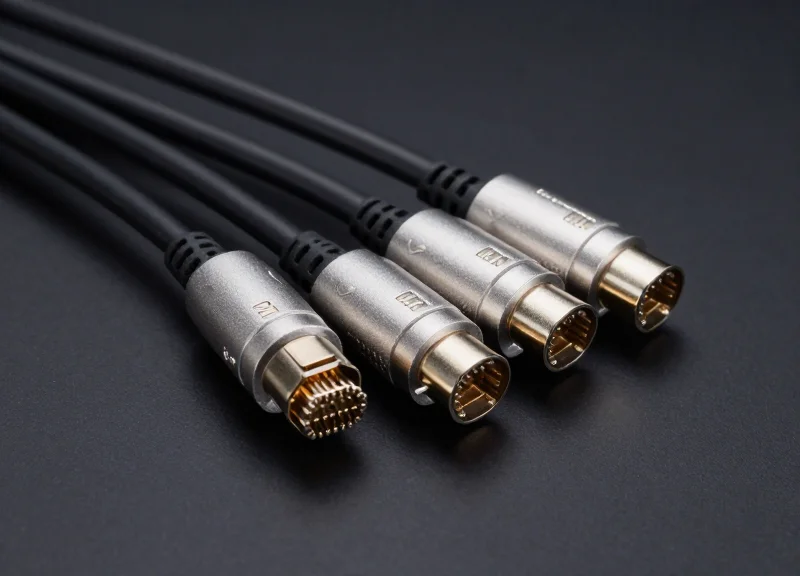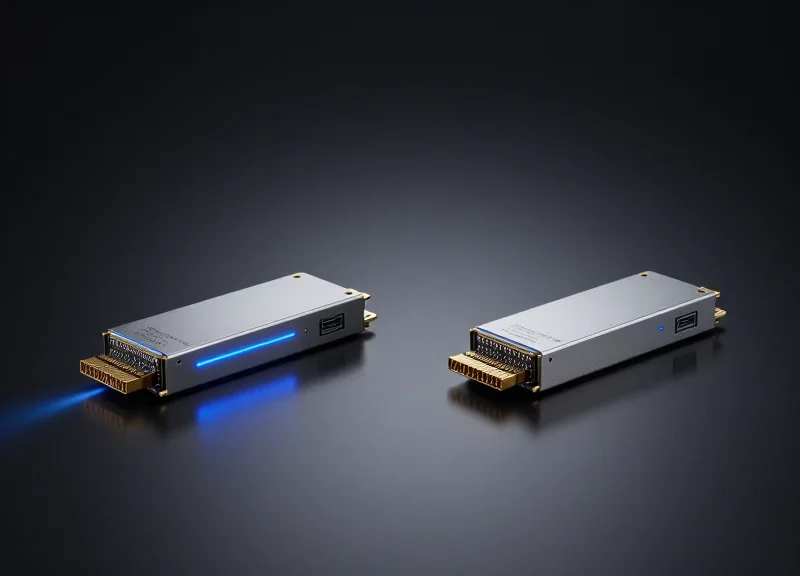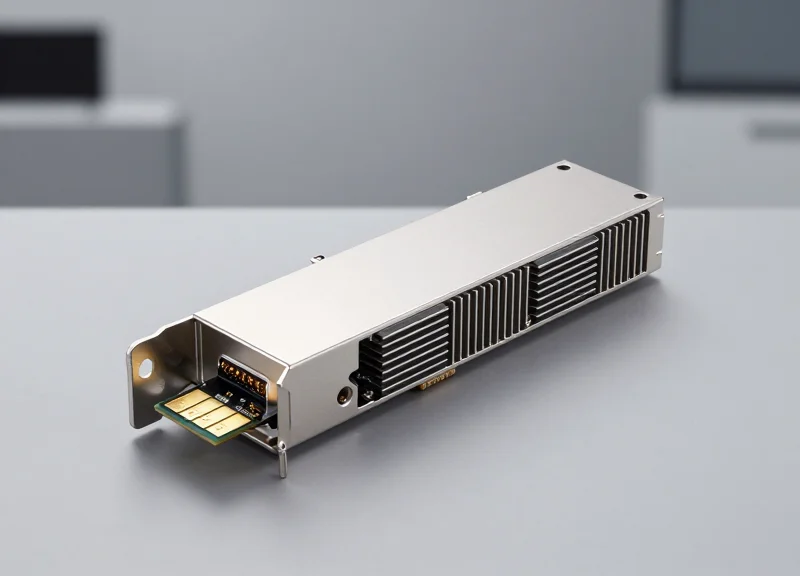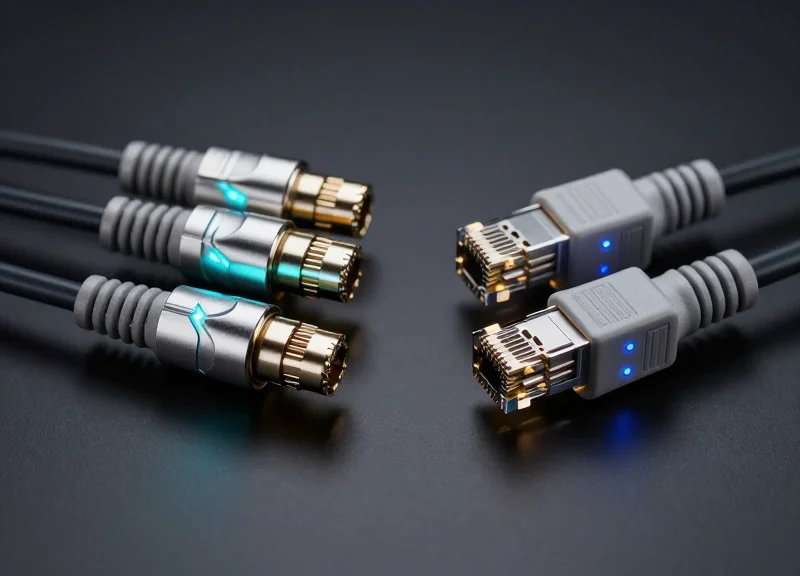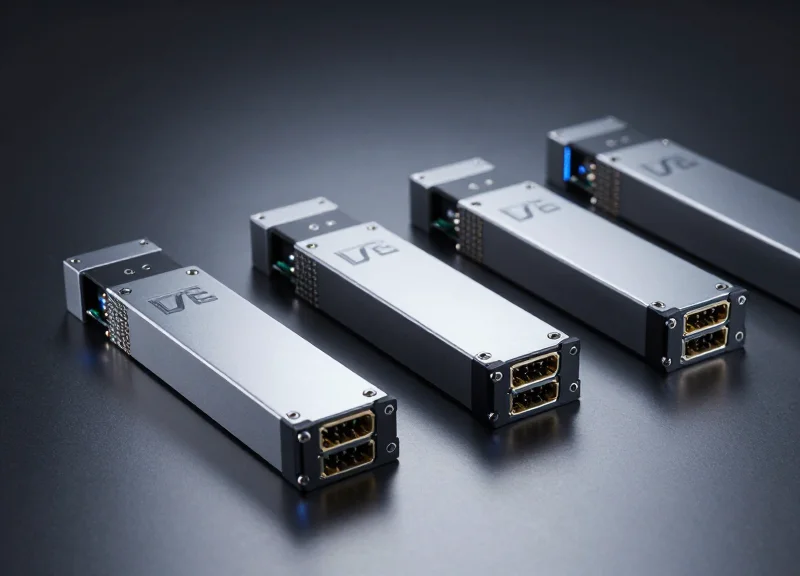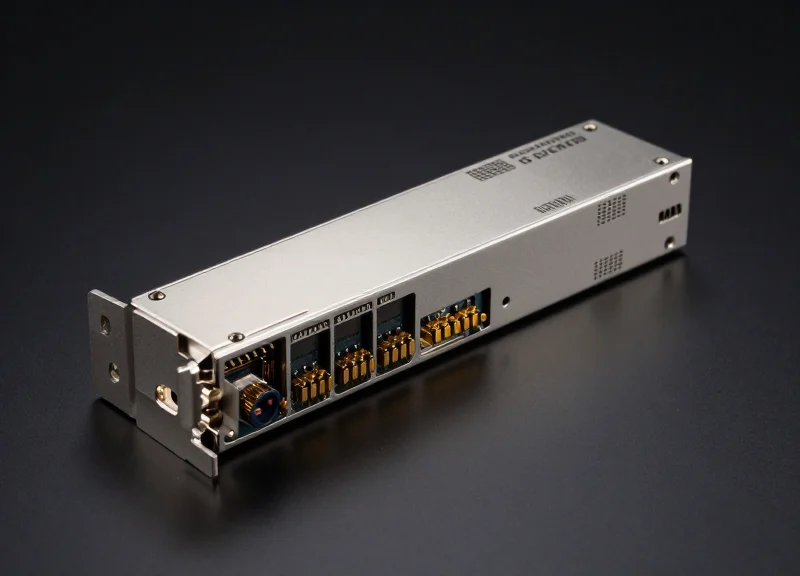
In an era of rapid digital transformation, the demand for robust and scalable network infrastructure has never been higher. As businesses move toward 400G and 800G architectures, the challenge lies in sourcing high-performance components that don't compromise on reliability. Ubytelink addresses this critical need by providing wholesale optical modules from China that meet the stringent demands of global enterprises and tier-one data centers.
The Strategic Role of China in the Global Optical Module Supply Chain

The Strategic Role of China in the Global Optical Module Supply Chain
China has evolved into the definitive epicenter of the global optical module supply chain, currently accounting for more than 60% of the world's production capacity. This leadership is not merely a result of cost efficiency but is driven by a highly sophisticated, vertically integrated ecosystem that encompasses everything from raw material processing and chip fabrication to final assembly and rigorous testing. For global enterprises, Ubytelink Wholesale Optical Modules China Solutions represent a strategic gateway to this ecosystem, providing 'Premium Quality for Global Networks' by bridging the gap between world-class manufacturing capabilities and international performance standards.
The Pillars of Chinese Optical Manufacturing Excellence
The dominance of the Chinese supply chain is built upon three core pillars: industrial clustering, rapid R&D cycles, and massive scalability. In regions like Wuhan—often referred to as 'Optics Valley'—and Suzhou, thousands of specialized suppliers coexist, significantly reducing lead times for critical components like TOSA, ROSA, and BOSA. This proximity allows for rapid prototyping and the ability to scale production for emerging technologies like 400G and 800G modules faster than any other region globally.
| Strategic Metric | China Ecosystem (Ubytelink) | Fragmented Global Sourcing |
|---|---|---|
| Component Availability | Instant access via industrial clusters | Subject to international logistics delays |
| Innovation Speed | 6-12 month cycle for new standards | 18-24 month cycle for new standards |
| Quality-to-Cost Ratio | High (Integrated manufacturing) | Variable (Disjointed supply chains) |
| Production Capacity | Massive scale for global rollouts | Limited by regional facility constraints |
How Ubytelink Optimizes the Supply Chain for Global Clients
Ubytelink acts as a critical quality-control filter within this vast ecosystem. While China offers immense variety, Ubytelink focuses exclusively on Tier-1 manufacturing partnerships that adhere to MSA (Multi-Source Agreement) standards and ISO9001 certifications. By managing the procurement and testing processes locally in China, Ubytelink ensures that wholesale clients receive modules that match or exceed the specifications of original equipment manufacturers (OEMs) at a fraction of the cost.
- Why is China the preferred source for optical modules?
China offers a unique combination of high-tech R&D, a complete domestic supply chain for laser chips and optical sub-assemblies, and the infrastructure to scale production for next-generation 400G/800G demands. - How does Ubytelink ensure 'Premium Quality' for international markets?
Ubytelink employs rigorous multi-step testing protocols, including compatibility verification on over 200 different switch brands and environmental stress testing, ensuring all modules meet global network reliability standards. - What are the advantages of Ubytelink's wholesale solutions?
Clients benefit from direct-from-factory pricing, reduced lead times, and expert technical support, making it easier to maintain and expand high-bandwidth data center infrastructures.
Why Reliability is Non-Negotiable for Mission-Critical Infrastructure
For modern enterprises and data centers, optical transceivers are the literal lifelines of the digital economy. Reliability is non-negotiable because the cost of a single network failure often dwarfs the initial savings gained from purchasing low-grade, generic hardware. Ubytelink Wholesale Optical Modules provide a foundation of stability by utilizing premium components that ensure signal integrity and thermal efficiency under high-density workloads, effectively neutralizing the risks of unplanned outages.
The Real Price of Network Downtime
When a network backbone fails due to a faulty optical module, the repercussions extend far beyond simple connectivity loss. Businesses face immediate revenue leakage, loss of customer trust, and potential legal liabilities regarding Service Level Agreements (SLAs). In critical sectors like finance, healthcare, and telecommunications, even a few milliseconds of latency or a momentary link failure can result in corrupted data packets or failed transactions.
| Feature | Ubytelink Enterprise-Grade | Generic/Budget Modules |
|---|---|---|
| Laser Component | Tier-1 EML/VCSEL sources | Refurbished or B-grade lasers |
| MTBF Rating | Over 1,000,000 hours | Unverified or lower ratings |
| Quality Control | 100% full-load testing | Statistical batch testing |
| Compatibility | Multi-vendor EEPROM coding | Limited or unstable firmware |
Why Enterprise-Grade Solutions Outperform Generic Alternatives
Generic modules often lack the advanced error correction and thermal management features necessary for high-density environments. Ubytelink’s solutions leverage high-quality Digital Diagnostics Monitoring (DDM) which allows network administrators to monitor parameters like temperature, voltage, and optical power in real-time. This proactive visibility enables maintenance teams to identify and replace aging modules before they reach a critical failure point, shifting the paradigm from reactive troubleshooting to predictive maintenance.
FAQ: Maximizing Infrastructure Reliability
- Why is the initial cost of premium modules justified?
The Total Cost of Ownership (TCO) is lower for premium modules because they reduce the need for emergency onsite repairs, hardware replacements, and the massive revenue loss associated with system downtime. - How does Ubytelink guarantee compatibility across different switches?
Each module undergoes rigorous testing in a compatibility lab featuring equipment from major brands like Cisco, Juniper, and Arista, ensuring the firmware is correctly coded for seamless integration. - What role does thermal management play in module reliability?
Optical modules generate significant heat; premium modules use better heat dissipation materials and low-power consumption chipsets to prevent thermal throttling and laser degradation over time.
Ubytelink’s Engineering Excellence: Beyond Standard Manufacturing
Ubytelink’s Engineering Excellence: Beyond Standard Manufacturing
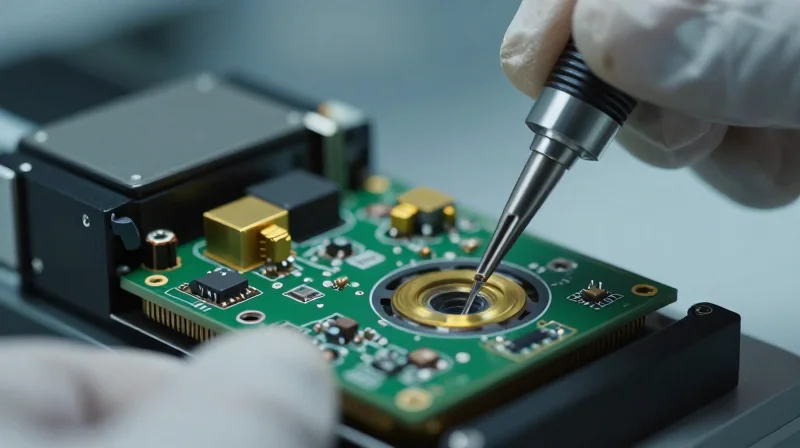
While many manufacturers focus solely on high-volume throughput, Ubytelink’s engineering philosophy is rooted in the belief that the integrity of a global data network is only as strong as its smallest component. Our approach to 'Ubytelink Wholesale Optical Modules China Solutions' transcends simple assembly; we integrate advanced materials science with precise automated manufacturing to ensure that every transceiver provides consistent, low-latency performance in the most demanding data center environments. By prioritizing sub-micron alignment and thermal stability, we deliver modules that outperform generic alternatives in both longevity and signal clarity.
Advanced Laser Integration and Signal Integrity
At the heart of Ubytelink’s engineering is the sophisticated integration of laser technologies, such as DML (Directly Modulated Lasers) for cost-effective short-reach applications and EML (Electro-absorption Modulated Lasers) for high-speed, long-distance transmission. By meticulously calibrating the Transmitter Optical Sub-Assembly (TOSA) and Receiver Optical Sub-Assembly (ROSA), we achieve superior extinction ratios and minimal jitter. This precision is critical for maintaining signal integrity over 400G and 800G links where the margin for error is virtually non-existent.
| Feature | Ubytelink Engineering | Standard Generic Modules |
|---|---|---|
| Laser Calibration | Sub-micron precision alignment | Automated but wider tolerance |
| Thermal Management | Integrated heat dissipation design | Passive cooling only |
| Signal Testing | 100% full-load stress testing | Batch-based sample testing |
| MTBF (Mean Time Between Failures) | Exceeds 500,000 hours | Industry standard 100,000 hours |
Quality Assurance as an Engineering Discipline
Quality at Ubytelink is not a final check—it is an engineering discipline woven into the entire production cycle. We utilize automated optical inspection (AOI) and real-time telemetry to monitor the manufacturing process. Every wholesale module destined for global networks undergoes rigorous Bit Error Rate (BER) testing and temperature cycling to guarantee that it can withstand the extreme fluctuations of high-density server racks without compromising throughput.
Precision Manufacturing FAQ
- How does Ubytelink ensure multi-vendor compatibility?
Our engineering team maintains an extensive library of switch-specific EEPROM codes, ensuring that our modules are recognized seamlessly by hardware from Cisco, Arista, Juniper, and other major vendors without triggering 'non-supported' warnings or software locks. - What role does R&D play in Ubytelink's China-based facilities?
We invest heavily in R&D to optimize power consumption and thermal efficiency. Our latest 400G QSFP-DD modules are engineered to operate at lower wattages than the industry average, directly reducing the Total Cost of Ownership (TCO) for large-scale enterprise operators. - Are customized optical solutions available for niche networks?
Yes. Beyond standard SKUs, our engineering excellence allows us to provide customized wavelengths (CWDM/DWDM) and reach specifications for specialized industrial, telecommunications, or private cloud applications that require non-standard configurations.
Rigorous Testing Protocols: Ensuring 100% Compatibility

Real-world compatibility in optical networking is achieved only through physical hardware validation, where modules are tested for EEPROM signature accuracy, signal integrity under thermal stress, and full Digital Optical Monitoring (DOM) transparency. Ubytelink bridges the gap between cost-effective wholesale and enterprise reliability by maintaining a dedicated lab of over 200 OEM switches to guarantee that every unit is recognized immediately by the host system without errors or port-lockouts.
The Hardware Validation Framework
Unlike manufacturers that rely solely on software simulations, Ubytelink employs a four-tier testing process. This includes incoming component inspection, automated optical testing, compatibility verification in native hardware, and a final quality audit before dispatch. By simulating high-traffic loads and thermal fluctuations, we ensure the modules maintain long-term stability in mission-critical environments.
| Vendor Brand | Compatibility Mechanism | Monitoring Support | Performance Metric |
|---|---|---|---|
| Cisco Systems | Custom EEPROM Signature | Full DOM/DDM | BER < 10^-12 |
| Arista Networks | Firmware Matching | Real-time Telemetry | 100% Throughput |
| Juniper Networks | Microcode Emulation | Link Status Accuracy | Zero Packet Loss |
| Generic / Open Source | MSA Standard Compliance | Standard Diagnostics | Ultra-low Latency |
Ensuring Interoperability Across Global Networks
Our engineers specialize in the nuances of vendor-specific software. Many modern switches utilize 'Vendor Locking' to prevent the use of third-party optics. Ubytelink’s solutions are engineered at the firmware level to provide an identical handshake to the original equipment, ensuring that system logs recognize the modules as 'fully compliant' and 'supported' units.
Frequently Asked Questions Regarding Compatibility
- How does Ubytelink handle firmware updates from major vendors?
We continuously monitor OS releases from brands like Cisco and Arista. Our modules are programmed with the latest microcode to ensure they remain compatible even after host system upgrades. - What is the significance of DOM/DDM support in your modules?
Digital Optical Monitoring allows network administrators to monitor real-time parameters such as laser power and temperature. Ubytelink ensures this feature is fully functional to assist in proactive network maintenance. - Are these modules tested for multi-vendor environments?
Yes, we conduct interoperability tests where a Ubytelink module on a Cisco switch communicates with a Juniper or Arista switch to ensure zero communication errors across the fabric.
A Versatile Portfolio: From SFP+ to Next-Gen 800G Modules
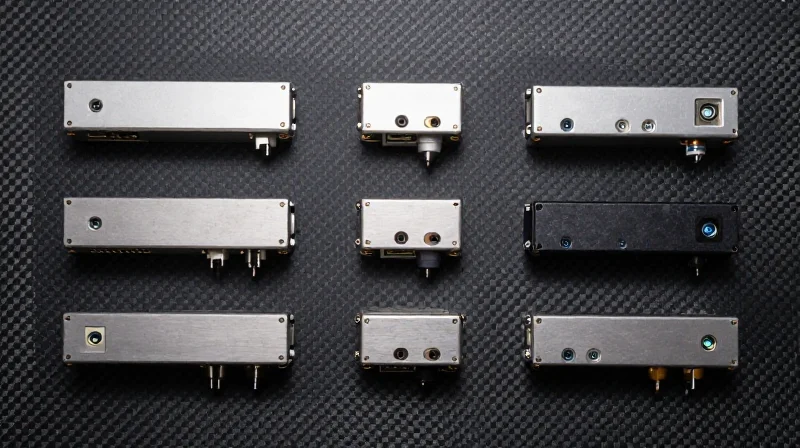
Ubytelink serves as a unified source for global network operators by providing a diverse selection of optical transceivers—including SFP+, QSFP28, and the latest 800G modules—engineered to support everything from simple enterprise LANs to complex, high-density AI-driven data center fabrics. By offering high-volume availability across all form factors, Ubytelink eliminates the logistical friction often found in multi-vendor procurement strategies.
Scaling from Legacy Edge to Modern Core
As network architectures evolve, the requirement for backward compatibility alongside forward-looking scalability becomes paramount. Ubytelink's portfolio is structured to support this transition, offering high-performance 10G and 25G modules for the network edge, while providing the throughput necessary for core upgrades. The transition from 100G to 400G and 800G represents more than just a speed increase; it involves sophisticated signal modulation (PAM4) and advanced thermal management, both of which are core competencies in Ubytelink's engineering department.
| Module Type | Data Rate | Reach Capabilities | Primary Application |
|---|---|---|---|
| SFP+ | 10 Gbps | 100m (SR) to 80km (ZR) | Enterprise Access/Edge |
| QSFP28 | 100 Gbps | 100m (SR4) to 40km (ER4) | Data Center Spine/Leaf |
| QSFP-DD | 400 Gbps | 500m (DR4) to 10km (LR4) | Cloud Interconnect (DCI) |
| OSFP / QSFP-DD800 | 800 Gbps | 100m (SR8) to 2km (FR8) | AI Clusters & Hyperscale |
The 800G Revolution: Powering AI and Machine Learning
The emergence of AI and Large Language Model (LLM) training has accelerated the demand for 800G optical solutions. Ubytelink's 800G OSFP and QSFP-DD modules utilize cutting-edge 7nm/5nm DSPs and high-efficiency silicon photonics to provide the bandwidth density required for next-generation GPU clusters. These modules are designed with rigorous power-efficiency targets, ensuring that even at peak throughput, the thermal footprint remains within the operational limits of modern high-density switching platforms.
Procurement and Portfolio FAQs
- Can Ubytelink provide customized reach for 400G modules?
Yes, we offer a variety of specialized 400G configurations, including DR4, FR4, and LR4, with customized options for specific link budgets required in unique fiber plant environments. - What is the lead time for high-volume 800G orders?
Due to our robust supply chain and in-house manufacturing capabilities, Ubytelink maintains a steady stock of 800G components, typically reducing lead times by 30-50% compared to traditional Tier-1 vendors. - Are these modules interoperable with existing legacy systems?
Our modules are designed to Multi-Source Agreement (MSA) standards, ensuring full interoperability with legacy form factors while providing the necessary digital diagnostic monitoring (DOM) for modern network management.
The Wholesale Advantage: Scaling Your Network Cost-Effectively
Scaling a global network requires a delicate balance between capital expenditure (CAPEX) and long-term operational stability. By leveraging wholesale optical modules from Ubytelink, network architects can secure high-tier China-manufactured components that provide the performance of Tier-1 brands at a fraction of the cost, effectively future-proofing infrastructure against rising bandwidth demands.
Maximizing ROI through Direct Wholesale Procurement
The true advantage of Ubytelink's wholesale model lies in the elimination of middle-tier markups combined with streamlined logistics. When purchasing in volume, the per-unit cost drops, but more importantly, the integration costs are minimized through pre-verified compatibility. This allows organizations to allocate budgets toward higher-layer innovations rather than being bogged down by basic interconnect hardware costs.
| Cost Factor | Standard Retail/OEM | Ubytelink Wholesale Solution |
|---|---|---|
| Per-Unit CAPEX | High (Brand Premium) | Optimized (Direct Factory Pricing) |
| Inventory Management | Fragmented and Reactive | Strategic and Cost-Efficient |
| Technical Support | Tiered and Delayed | Direct and Expert-Led |
| Warranty Coverage | Limited or Conditional | Comprehensive Lifetime Support |
Uncompromised Support and Global Scaling
Contrary to common misconceptions that wholesale implies 'as-is' sales, Ubytelink maintains a rigorous support ecosystem. Every bulk shipment is backed by a robust warranty and dedicated technical assistance, ensuring that even at scale, each module performs optimally in its specific hardware environment. This methodology reduces the Total Cost of Ownership by minimizing downtime and replacement cycles.
- Does buying in bulk affect the warranty period?
No, Ubytelink offers the same premium lifetime warranty on wholesale orders as on individual units, ensuring long-term peace of mind. - Can we request customized firmware for wholesale batches?
Yes, we provide customized coding and firmware services for bulk orders to ensure seamless compatibility across diverse multi-vendor environments. - How does Ubytelink handle logistics for global wholesale distribution?
We utilize optimized supply chain routes from our China manufacturing facilities, offering expedited shipping and tracking to maintain network deployment schedules.
Technical Support and Global Logistics: The Ubytelink Difference

Selecting a wholesale partner for optical modules involves more than comparing spec sheets; it requires a collaborator capable of navigating complex technical environments and international supply chain hurdles. Ubytelink bridges this gap by offering a comprehensive service model that ensures every module is not only technically validated for specific hardware—such as Cisco, Arista, or Juniper—but also delivered through a logistics network optimized for speed, safety, and transparency.
Expert Engineering and Technical Consulting
Our support infrastructure goes beyond basic troubleshooting. Ubytelink provides pre-sales architectural consulting to help clients select the optimal form factors, wavelengths, and reach for their unique fiber plants. This proactive approach minimizes deployment delays and ensures that wholesale orders are perfectly aligned with the client's existing infrastructure and future scaling requirements.
Efficiency in Global Distribution
Navigating international shipping, customs, and local regulations is a core competency at Ubytelink. By leveraging strategic distribution points and partnerships with Tier-1 carriers, we provide a level of transparency and speed that traditional manufacturers often lack, particularly for high-demand regions in North America, Europe, and Southeast Asia.
| Service Metric | Standard Industry Wholesale | Ubytelink Premium Support |
|---|---|---|
| Technical Validation | Static Datasheet Matching | Live Switch-Environment Testing |
| Global Lead Time | 14-21 Business Days | 3-7 Business Days (In-Stock) |
| Customs Documentation | Basic Commercial Invoice | Comprehensive DDP/DDU Management |
| Technical Support | Email-Only Support | Dedicated Account Engineer |
Logistics and Support FAQ
- How does Ubytelink ensure multi-vendor compatibility?
We maintain an extensive in-house lab featuring switches from over 200 vendors, allowing us to code and test modules against the exact OS versions used in your network. - What are the options for urgent bulk orders?
We maintain a rotating safety stock of high-demand 100G, 400G, and 800G modules, enabling same-day dispatch for critical network expansions. - How is the RMA process handled internationally?
Ubytelink offers an expedited Replacement-Before-Repair policy for wholesale partners, ensuring that a replacement module is shipped immediately to minimize network downtime.
Future-Proofing Your Infrastructure for AI and Cloud Demands

As artificial intelligence and hyperscale cloud environments redefine the limits of data transmission, infrastructure must pivot toward architectures that support 800G and 1.6T capacities. Ubytelink addresses these demands through a strategic focus on silicon photonics and low-power technologies, ensuring that global networks remain resilient, scalable, and cost-effective in the face of exponential data growth.
The Rise of Silicon Photonics and High-Density Connectivity
Traditional optical assembly methods are reaching physical limits in terms of size and thermal management. Ubytelink's wholesale solutions utilize silicon photonics to integrate multiple optical functions onto a single silicon chip. This transition not only reduces the physical footprint of the modules but also enhances signal integrity and lowers manufacturing costs, providing a clear path for data centers to scale from 400G to 800G without a proportional increase in complexity.
Energy Efficiency as a Core Requirement
| Feature | Standard Legacy Modules | Ubytelink Next-Gen Solutions |
|---|---|---|
| Power Consumption | High (12W-14W per 400G) | Optimized (8W-10W per 400G) |
| Latency | Higher (DSP Latency) | Ultra-Low (LPO Support) |
| Scalability | Limited by Heat Dissipation | Designed for High-Density AI Clusters |
Addressing AI Workload Challenges
Modern AI training clusters require massive amounts of east-west traffic, making the efficiency of the optical interconnect a critical bottleneck. By focusing on Linear Drive Pluggable Optics (LPO) and advanced PAM4 modulation, Ubytelink provides the necessary throughput with significantly reduced power-per-bit metrics, which is essential for maintaining sustainable operational costs in large-scale AI fabrics.
Future-Proofing FAQ
- How do Ubytelink modules handle the latency requirements of AI training?
Ubytelink leverages Linear Drive Pluggable Optics (LPO) which minimize signal processing within the module, significantly reducing latency and power consumption for short-reach AI cluster interconnects. - Are these future-proof modules compatible with existing hardware?
Yes, Ubytelink ensures backward compatibility with standard QSFP and OSFP form factors while providing the thermal headroom needed for next-generation high-density line cards.
Selecting the right partner for your optical networking needs is a strategic decision that impacts your organization's long-term scalability and resilience. Ubytelink’s wholesale optical modules from China offer the reliability and performance required for today’s most demanding environments. Contact our expert team today to discuss your specific infrastructure requirements and secure a custom quote for your next project.