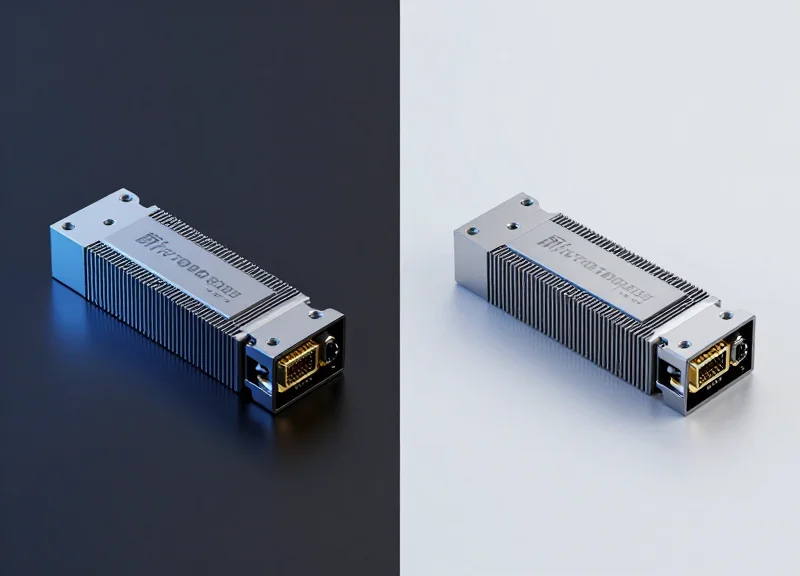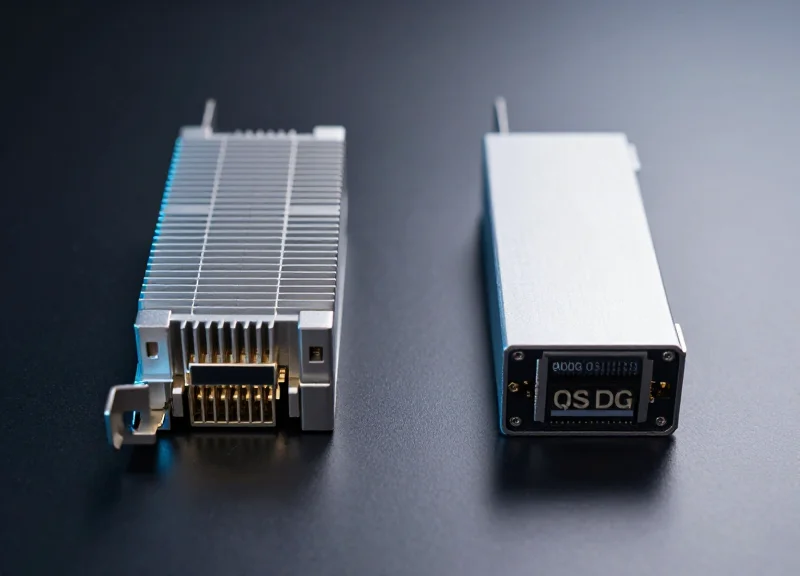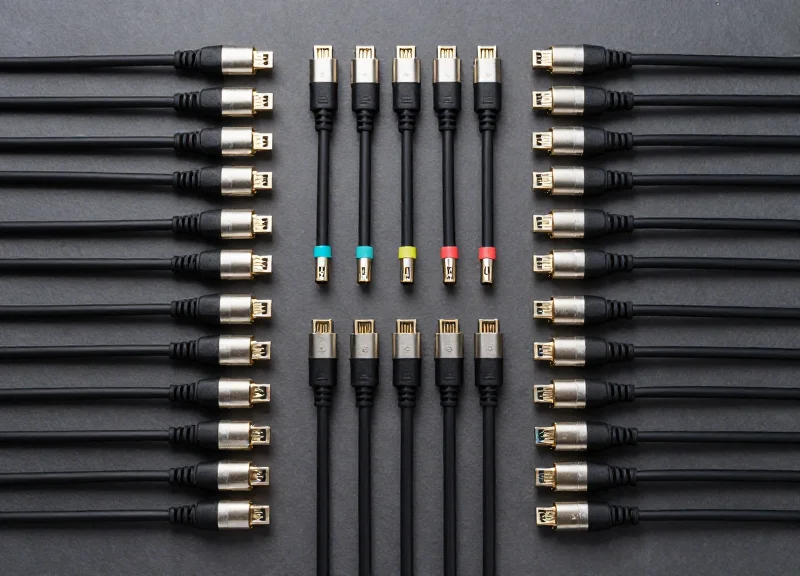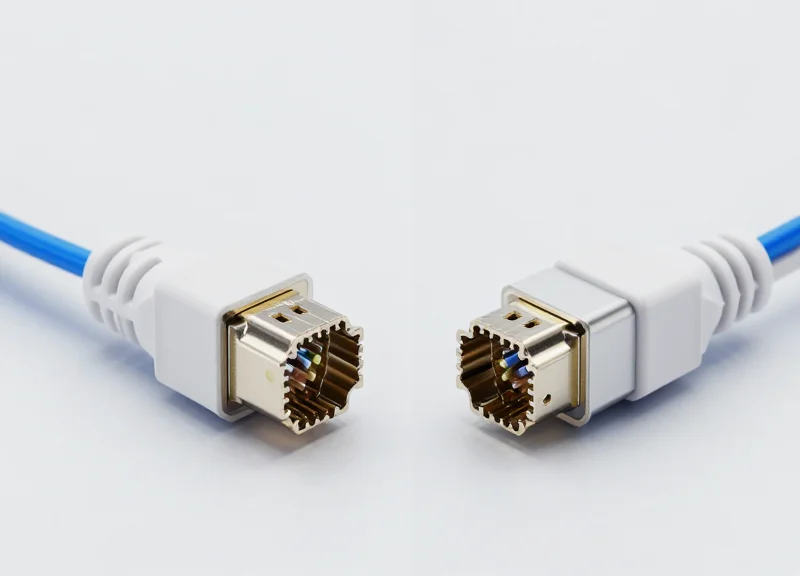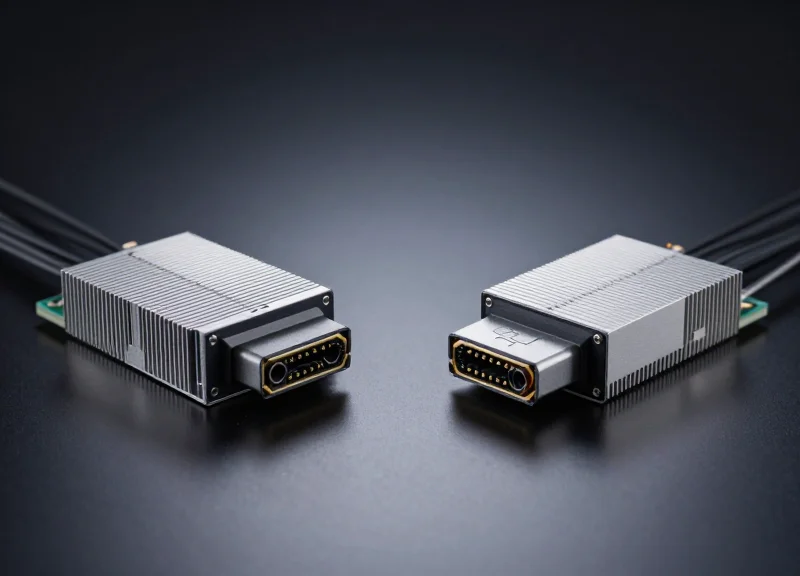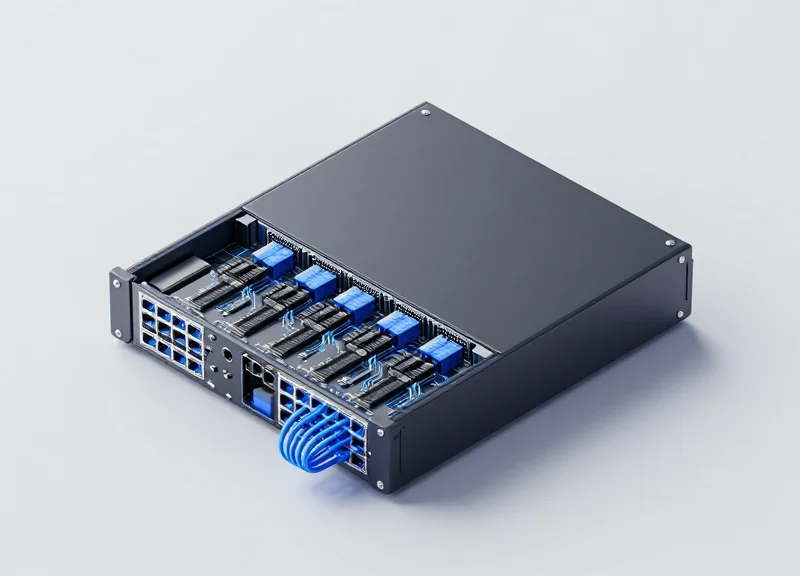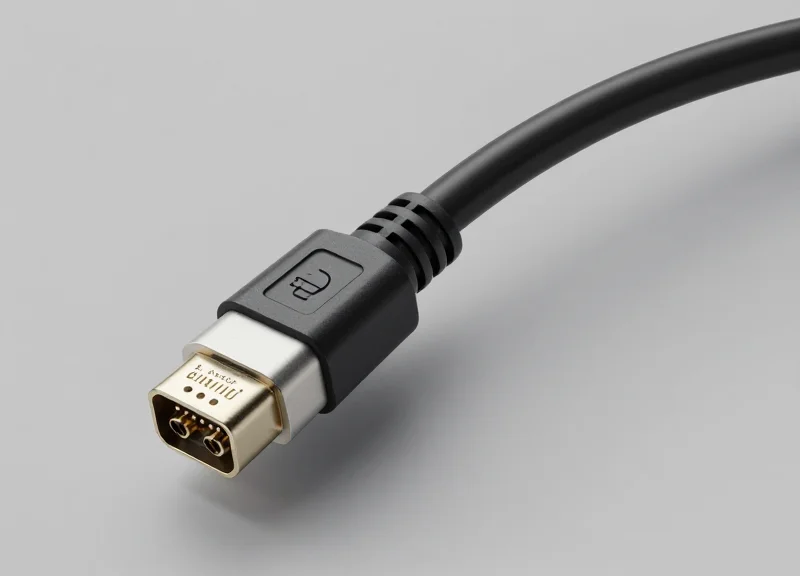
In the fast-paced world of global networking, standard 'one-size-fits-all' solutions often lead to inefficiency and physical clutter. Ubytelink’s custom length DAC/AOC cables solve the critical challenges of cable management and signal integrity in complex, high-density infrastructures.
The Evolution of Data Center Interconnects
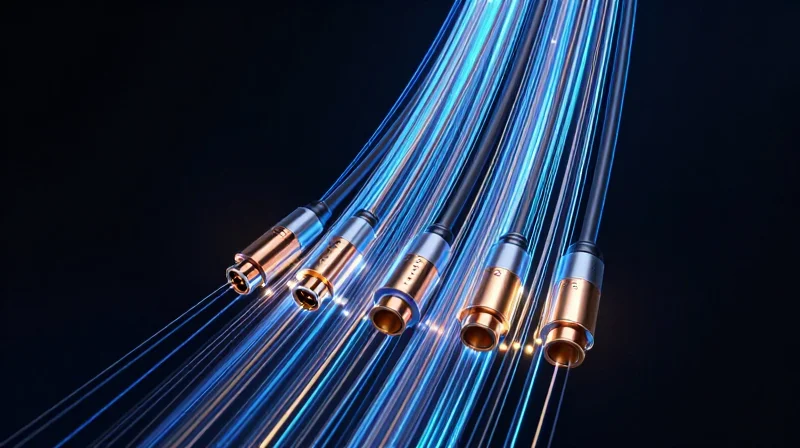
The Shift from Traditional Patching to High-Speed Interconnects
The evolution of data center interconnects represents a fundamental shift in how hardware components communicate across racks and facilities. Initially reliant on standard Category-rated copper or generic fiber patch cords, the industry has migrated toward integrated Direct Attach Cables (DAC) and Active Optical Cables (AOC) to overcome the physical limitations of signal attenuation and power consumption at 10G, 25G, 100G, and even 800G speeds. This transition was driven by the need for higher port densities and the realization that standard off-the-shelf lengths often resulted in excessive cable slack, which hindered airflow and increased thermal management costs.
Comparing Modern Interconnect Technologies
| Feature | Direct Attach Cable (DAC) | Active Optical Cable (AOC) | Traditional Transceiver + Fiber |
|---|---|---|---|
| Transmission Medium | Twinaxial Copper | Multimode Fiber | Discrete Fiber + Transceivers |
| Maximum Reach | Up to 7-10 meters | Up to 100 meters | Up to 10km or more |
| Power Consumption | Ultra-Low (<0.1W) | Low (~1-2W) | Moderate to High |
| Latency | Lowest (Passive) | Very Low | Variable |
| EMI Immunity | Low | High | High |
As hyperscale data centers and AI-driven workloads became the norm, the 'one size fits all' approach to cabling became a significant operational liability. High-speed signals are increasingly sensitive to distance and physical obstructions. Ubytelink custom-length DAC and AOC solutions address these challenges by providing factory-terminated, pre-tested interconnects that eliminate the clutter of excess cabling. By optimizing the physical layer, operators can achieve superior signal integrity and streamlined cable management that modular components often struggle to provide.
Evolution FAQ
- Why did DACs replace traditional copper for short-range links?
DACs utilize a shielded twinax construction that allows for much higher bandwidth and lower latency over short distances compared to traditional twisted-pair copper cables like Cat6a. - What role does length customization play in this evolution?
Custom lengths prevent 'cable spaghetti' in high-density racks, which is crucial for maintaining the airflow necessary to cool modern high-performance switches and servers. - Are AOCs more reliable than discrete transceivers?
Yes, because AOCs are factory-sealed units, they eliminate the risk of dust or contamination at the fiber-to-transceiver interface, which is the leading cause of link failures in data centers.
Why Custom Length Matters for Mission-Critical Infrastructure
In the realm of mission-critical infrastructure, precision is not a luxury—it is a functional requirement. Standardized cable lengths often result in 'cable slack' that must be coiled or tucked away, creating physical barriers that disrupt laminar airflow and introduce unnecessary signal attenuation. Ubytelink’s custom-length DAC and AOC solutions solve these challenges by providing exact-fit interconnects that streamline rack management and enhance the electrical performance of the entire network fabric.
Optimizing Thermal Dynamics through Airflow Management
The primary enemy of high-performance networking hardware is heat. When excess cabling accumulates at the rear of a server rack, it creates a 'thermal trap' that obstructs the exhaust of hot air from high-density switches and servers. By utilizing exact-length cables, operators can maintain clear air paths, significantly reducing the energy required for cooling and preventing the formation of hotspots that lead to premature hardware failure.
| Infrastructure Metric | Standard Length Cables | Ubytelink Custom Solutions |
|---|---|---|
| Airflow Resistance | High (due to cable coiling/bundling) | Low (direct, streamlined paths) |
| Rack Maintenance | Difficult; cables obscure ports | Simplified; clean port visibility |
| Signal Path Efficiency | Variable based on excess length | Optimized for minimal latency |
| Thermal Profile | Higher average rack temperatures | Consistent, predictable cooling |
Signal Integrity and Attenuation in High-Speed Links
As data rates climb toward 400G and 800G, the physical properties of the transmission medium become increasingly sensitive. In Direct Attach Copper (DAC) cables, signal attenuation is directly proportional to the length of the conductor. By eliminating even thirty centimeters of unnecessary copper, Ubytelink solutions can improve the Bit Error Rate (BER) and ensure a wider eye opening for the signal, which is critical for maintaining stable links in sensitive global networks.
Precision Engineering FAQ
- How does precise length affect Active Optical Cables (AOC)?
While fiber is less susceptible to attenuation over short distances than copper, custom lengths for AOCs prevent excessive bending and 'tight loops' that can cause macro-bending losses and physical stress on the fiber core. - Does custom length impact deployment time?
Actually, it accelerates it. Technicians spend less time managing slack and organizing cable bundles, allowing for faster 'rack and stack' operations during large-scale data center builds. - Why is this critical for 400G networks?
400G signals have much tighter link budgets. Reducing cable length to the absolute minimum required helps ensure that the signal stays within the acceptable power and noise thresholds for PAM4 modulation.
Direct Attach Cables (DAC) vs. Active Optical Cables (AOC): Choosing the Right Fit
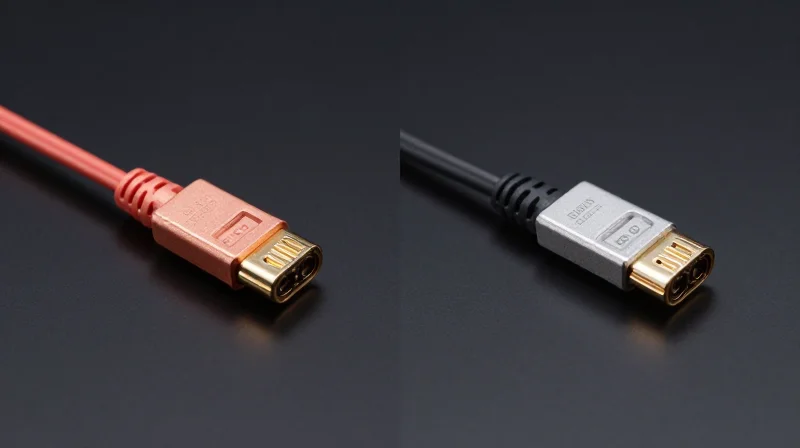
Analyzing Interconnect Technologies: DAC vs. AOC
Selecting the right interconnect is a critical decision that impacts both the CAPEX and OPEX of a modern network. While Direct Attach Cables (DAC) offer the lowest latency and power consumption for short-reach applications, Active Optical Cables (AOC) provide the necessary range and electromagnetic interference (EMI) immunity for high-density, long-distance deployments. Understanding the physical limitations and performance profiles of each is essential for maintaining Ubytelink's standard of premium quality in mission-critical environments.
Direct Attach Cables (DAC): High-Efficiency Copper
DACs are passive or active copper assemblies used for very short distances, typically within a single rack or between adjacent racks. Passive DACs consume nearly zero power at the cable level, making them the most energy-efficient solution available for Top-of-Rack (ToR) to server connections. However, their reach is limited by the physical properties of copper, usually maxing out at 5 to 7 meters at higher data rates like 100G or 400G due to signal attenuation.
Active Optical Cables (AOC): Light-Speed Reach
AOCs replace copper with multimode fiber optics, using internal transceivers to convert electrical signals into light. This allows for significantly longer distances—up to 100 meters or more—while maintaining a thinner, more flexible profile. AOCs are essential in environments where cable management is tight and EMI is a concern, as fiber is naturally immune to electrical noise and provides a cleaner signal over longer spans.
| Feature | Direct Attach Cable (DAC) | Active Optical Cable (AOC) |
|---|---|---|
| Medium | Twinax Copper | Multimode Fiber |
| Max Distance | Up to 7m (Passive) | Up to 100m+ |
| Power Consumption | Near Zero (<0.1W) | Approx. 0.6W - 2.0W |
| EMI Immunity | Low | High (Immune) |
| Flexibility/Weight | Stiff and Heavy | Flexible and Lightweight |
| Ideal Use Case | Intra-rack connections | Inter-rack / End-of-Row |
Strategic Selection Criteria
When building a mission-critical infrastructure, the deployment strategy usually follows a tiered approach based on distance and density. For server-to-switch connections within the same rack, custom-length DACs are preferred to minimize slack and maximize airflow. For switch-to-switch or end-of-row configurations where distances exceed 7 meters, AOCs become the mandatory choice to ensure signal integrity and ease of routing through overhead trays.
- Can I use DAC for distances over 10 meters?
At high speeds such as 25G and above, the signal loss in copper is too significant for reliable transmission over 10 meters; AOC is required for these lengths to maintain performance. - Is AOC compatible with standard DAC ports?
Yes, AOCs use the same standard form-factor connectors (e.g., SFP28, QSFP28, QSFP-DD) as DACs and are designed to be plug-and-play in the same physical ports. - How does weight impact data center design?
In large-scale deployments, the cumulative weight of copper DACs can exceed the load-bearing capacity of cable trays. AOCs are significantly lighter, reducing structural strain and improving airflow.
Ubytelink’s Engineering Excellence: Quality Standards and EEAT Compliance
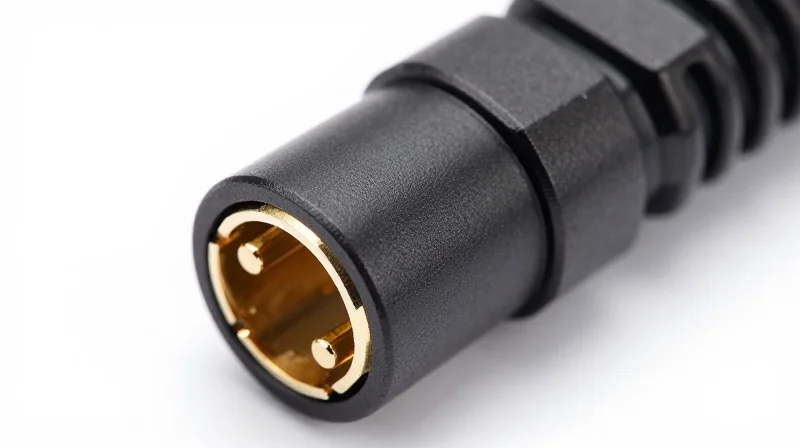
Engineering excellence at Ubytelink is defined by a holistic approach to quality, where custom-length interconnects undergo the same rigorous validation as standard modules to ensure zero-fail performance in high-density environments. By merging advanced manufacturing techniques with stringent EEAT (Experience, Expertise, Authoritativeness, and Trustworthiness) compliance, we provide networking components that act as the backbone for mission-critical infrastructure.
The Architecture of Quality: Rigorous Testing Protocols
Every Ubytelink DAC and AOC is subjected to a battery of tests that go beyond the industry baseline. This includes Bit Error Rate (BER) testing, where we target performance levels significantly higher than IEEE standards, and Eye Diagram analysis to ensure signal jitter is minimized across varying lengths. By simulating real-world data center conditions, we guarantee thermal stability and mechanical durability under heavy load.
| Feature | Generic Industry Standard | Ubytelink Quality Standard |
|---|---|---|
| BER (Bit Error Rate) Testing | 10^-12 (Standard) | 10^-15 or better (Premium) |
| Switch Compatibility | Sample-based validation | 100% Multi-vendor hardware verification |
| Signal Integrity (Eye Diagram) | Basic mask compliance | Optimized margin for long-term stability |
| EEPROM Coding | Standard coding | Custom serialized & vendor-specific tuning |
Compliance and Technical Authoritativeness
Ubytelink maintains technical authoritativeness by adhering strictly to Multi-Source Agreement (MSA) standards, ensuring that our custom-length solutions are interchangeable and interoperable. Our manufacturing facilities are ISO 9001 certified, and all products meet RoHS, CE, and FCC requirements. This commitment to compliance ensures that our clients receive products that are not only high-performing but also safe and environmentally responsible.
Quality Assurance & Engineering FAQ
- Does custom length affect signal integrity in DACs?
No. Our engineering process includes specific attenuation compensation for longer DAC lengths and precise impedance matching to ensure that custom-length cables perform identically to standard lengths. - How is multi-vendor compatibility verified?
We maintain an extensive in-house compatibility lab featuring the latest hardware from Cisco, Arista, Juniper, and Mellanox. Each cable's EEPROM is programmed and tested on the target hardware to ensure 'plug-and-play' functionality. - What measures are taken for AOC reliability?
Active Optical Cables undergo four-corner testing (voltage and temperature extremes) to ensure the integrated optical transceivers maintain a stable link even in hot-aisle containment environments.
The Technical Edge: Low Latency and Signal Integrity at Custom Lengths
The Technical Edge: Low Latency and Signal Integrity at Custom Lengths
Ubytelink custom length solutions provide a critical technical advantage by ensuring that signal transmission paths are as short and direct as possible, effectively eliminating the jitter and signal degradation caused by excess cable slack. By matching cable length to specific rack dimensions, these solutions maintain high Signal-to-Noise Ratios (SNR) and ensure that global networks operate at peak efficiency without the overhead of physical transmission delays.
Eliminating the 'Coiling Effect' and Signal Jitter
In traditional data center deployments, using standardized cable lengths often results in 'loops' or coils of excess material tucked into the sides of cabinets. This practice is more than just an aesthetic issue; it creates an inductive environment that increases the risk of Electromagnetic Interference (EMI). Ubytelink’s precision-cut DACs and AOCs prevent this coiling effect, maintaining a linear path that reduces crosstalk and ensures that high-speed data packets arrive without the timing variances known as jitter. This is particularly vital for InfiniBand and 400G/800G Ethernet environments where timing tolerances are razor-thin.
| Performance Metric | Standardized Cables | Ubytelink Custom Lengths |
|---|---|---|
| Transmission Latency | Variable (Length dependent) | Minimized (Direct path) |
| Signal Attenuation | Higher due to excess length | Optimized for distance |
| EMI Vulnerability | High (due to cable coiling) | Negligible (straight runs) |
| Airflow Efficiency | Obstructed by cable slack | Unobstructed and clean |
Maintaining Impedance Stability Across Global Networks
Every centimeter of copper or fiber adds a degree of resistance and potential signal loss. Ubytelink engineers custom solutions that maintain strict impedance control, ensuring that the electrical or optical properties of the cable remain consistent from the transceiver head through the entire length of the assembly. For global enterprises managing distributed PoPs (Points of Presence), this consistency means predictable performance across diverse geographic locations, regardless of the unique architectural constraints of each facility.
Frequently Asked Questions: Signal Integrity
- How does custom length improve Bit Error Rate (BER)?
By reducing the total distance the signal must travel and eliminating loops that cause interference, the Bit Error Rate is significantly lowered, leading to fewer retransmissions and higher effective throughput. - Does custom length affect the durability of DAC cables?
Yes, it improves it. Custom lengths prevent over-bending and mechanical stress often applied when trying to manage excess cable in tight spaces, thereby extending the physical lifespan of the cable. - Is there a latency difference between custom DAC and custom AOC?
DACs generally offer lower latency because they do not require optical conversion. However, at custom lengths over 7 meters, Ubytelink AOCs are preferred as they use light to maintain integrity over distances where copper would suffer from severe attenuation.
Solving the 'Cable Spaghetti' Problem: Aesthetic and Functional Benefits
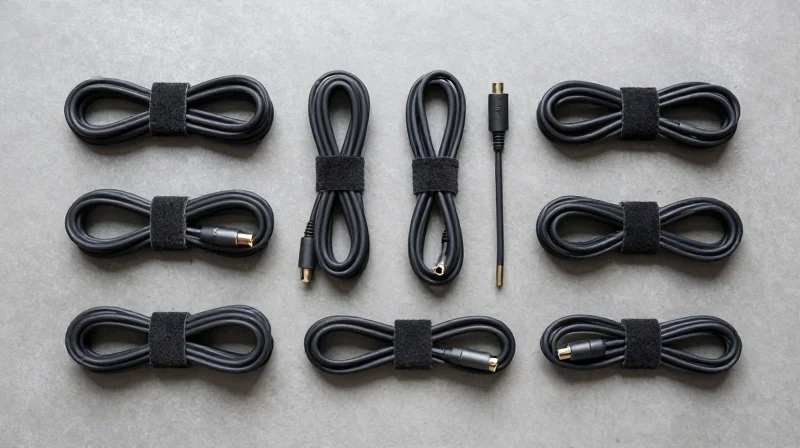
Managing a high-density network environment requires more than just high-speed connectivity; it requires physical organization to ensure long-term operational stability. The 'cable spaghetti' phenomenon—where excessive lengths of off-the-shelf cables create a tangled, unmanageable mess—is a leading cause of accidental disconnects, restricted airflow, and increased maintenance complexity. Ubytelink’s custom-length solutions address these challenges directly, providing cables that fit exactly between ports to create a streamlined, professional infrastructure that enhances both aesthetic appeal and functional reliability.
Thermal Management and Airflow Optimization
In modern data centers, thermal management is a critical factor in hardware longevity and energy efficiency. Standardized cable lengths often result in large loops of excess material that block the intake and exhaust paths of server chassis and switch fans. This obstruction forces cooling systems to work harder, leading to higher PUE (Power Usage Effectiveness) ratios and a greater risk of thermal throttling. By utilizing precision-cut DACs and AOCs, network architects can eliminate these 'heat traps,' allowing for unobstructed airflow and more consistent operating temperatures across the entire rack.
| Operational Metric | Standard Length Cables | Ubytelink Custom Solutions |
|---|---|---|
| Slack Management | Excessive; requires heavy management | Zero slack; direct point-to-point |
| Airflow Resistance | High (due to bundled loops) | Negligible (clean pathways) |
| Port Stress | High (weight of coiled cables) | Minimal (balanced tension) |
| Maintenance Speed | Slow; difficult to trace | Fast; instant link identification |
Reducing MTTR and Operational Risks
A cluttered rack is a high-risk environment. When technicians must navigate through a dense web of 'spaghetti' cabling to perform a simple swap or upgrade, the likelihood of accidentally dislodging an adjacent connection increases significantly. Ubytelink’s custom solutions facilitate 'at-a-glance' troubleshooting. By having cables that follow logical, straight paths without overlapping, the Mean Time to Repair (MTTR) is drastically reduced, and the risk of human error during routine maintenance is minimized.
- Does custom length impact the bend radius safety?
Actually, it improves it. Custom lengths prevent the need for tight coiling or stuffing excess cable into narrow side-panels, which often exceeds the manufacturer's recommended bend radius for AOCs and DACs. - How does clean cabling affect signal integrity?
Reduced congestion prevents 'cable weight' from pulling on the transceiver port, which can cause micro-misalignments in optical connections or intermittent signal loss in copper DACs. - Is the aesthetic benefit purely cosmetic?
No. While it looks professional, the aesthetic clarity is a functional indicator of a well-organized, low-risk network that is easier to document and audit.
Global Deployment: How Ubytelink Supports Large-Scale Network Rollouts
Large-scale network rollouts demand a synergy between custom engineering and mass production; Ubytelink bridges this gap by offering a localized supply chain approach that ensures tailored cabling solutions reach international data centers with minimal lead times and maximum reliability. By maintaining high-volume manufacturing capabilities alongside bespoke customization services, Ubytelink allows enterprises to execute massive infrastructure upgrades without the logistical bottlenecks associated with standard off-the-shelf components.
Scaling Custom Solutions for International Footprints
When deploying across multiple continents, consistency is the primary challenge. Ubytelink addresses this by implementing a 'blueprint' approach to manufacturing. Once a custom length and specification are validated for a client's specific rack architecture, that exact profile is locked into our global production system. This ensures that a cable delivered to a Singapore data center is identical in performance, signal integrity, and physical dimensions to one delivered to Frankfurt or New York.
| Deployment Feature | Conventional Suppliers | Ubytelink Global Support |
|---|---|---|
| Length Customization | Fixed Standard Increments | Precision Custom Lengths (0.1m steps) |
| Lead Times | 4-12 Weeks for Custom Orders | Expedited Global Distribution |
| Quality Certification | Varies by Regional Facility | Unified Global Testing Standards |
| Supply Chain Resilience | Single-source Vulnerability | Multi-hub Logistics Network |
Reliability and Logistics Management
Managing the rollout of thousands of DAC and AOC assemblies requires more than just manufacturing; it requires predictive logistics. Ubytelink utilizes advanced inventory management systems to buffer raw materials and critical components, insulating our clients from global semiconductor or raw copper fluctuations. Our logistics team works directly with data center site managers to coordinate deliveries in 'installation-ready' batches, reducing onsite sorting time and labor costs.
Global Deployment FAQ
- How does Ubytelink handle multi-site synchronization?
We assign a dedicated project lead to harmonize production and shipping schedules across different geographical zones, ensuring all sites receive their custom cabling in accordance with the master project timeline. - Are there minimum order requirements for global custom rollouts?
Ubytelink offers highly flexible MOQ (Minimum Order Quantity) structures specifically designed for hyperscale and enterprise clients, making it feasible to scale custom lengths even for specialized niche zones within a larger facility. - Do all custom cables meet international regulatory standards?
Yes, all Ubytelink DAC and AOC solutions are manufactured to meet CE, RoHS, and FCC standards globally, ensuring that custom-length products remain fully compliant regardless of where they are deployed.
Cost-Effectiveness of Tailored Solutions in Long-Term Maintenance
The financial argument for Ubytelink custom-length DAC/AOC solutions extends far beyond the initial procurement price. By investing in precision-engineered lengths, organizations transition from a reactive maintenance model to a proactive operational strategy. Excess cabling is a hidden cost driver, consuming valuable rack space and obstructing cooling paths; tailored solutions eliminate these inefficiencies, leading to a measurable reduction in cooling energy consumption and a marked increase in hardware reliability across global network infrastructures.
Quantifying the TCO: Standard vs. Custom Solutions
To understand the cost-effectiveness of Ubytelink's offerings, one must look at the variables of Total Cost of Ownership (TCO), including installation time, energy efficiency, and equipment lifespan.
| Cost Factor | Standard-Length Cables | Ubytelink Custom Solutions |
|---|---|---|
| Installation Time | High (Managing slack and routing) | Low (Direct point-to-point connection) |
| Airflow Efficiency | Obstructed (Leads to higher fan speeds) | Optimal (Lower cooling requirements) |
| Cable Lifespan | Medium (Prone to stress at connectors) | High (Precision fit reduces physical strain) |
| Maintenance Access | Difficult (Requires moving 'spaghetti' wiring) | Easy (Clear visibility and access to ports) |
| Long-term ROI | Decreases due to OpEx inflation | Increases through hardware longevity |
Extending Hardware Longevity Through Thermal Management
One of the most significant long-term savings associated with custom DAC/AOC solutions is the preservation of active hardware. In dense data center environments, even a small amount of redundant cabling can create micro-climates of stagnant heat. By using the exact length required, Ubytelink solutions ensure that airflow remains laminar, keeping switch and server components within their optimal thermal operating range. This prevents thermal throttling and reduces the frequency of component failure, which is a major contributor to unplanned downtime and emergency repair costs.
Frequently Asked Questions Regarding Long-Term Maintenance
- Does using custom lengths reduce the frequency of cable replacements?
Yes. Custom-length cables avoid the mechanical stress caused by coiling and heavy cable bundles, which can lead to internal fiber micro-bends or copper fatigue over time. - How does Ubytelink help in reducing troubleshooting labor costs?
Cleaner installations allow technicians to trace connections instantly. This reduces the Mean Time to Repair (MTTR) during network incidents, saving thousands in labor and potential revenue loss. - Is the initial premium for custom lengths justified by energy savings?
In large-scale deployments, the reduction in fan power requirements and cooling load often offsets the initial investment within the first 12 to 18 months of operation.
Future-Proofing Your Infrastructure with Ubytelink

Future-Proofing Your Infrastructure with Ubytelink
Ubytelink future-proofs global networks by aligning custom interconnect development with the rigorous demands of emerging 400G and 800G standards, ensuring that physical layer components do not become a bottleneck as bandwidth requirements scale. By combining precision manufacturing with advanced material science, Ubytelink provides the reliability and performance ceiling necessary for AI-driven data centers and high-frequency trading environments to evolve without massive infrastructure overhauls.
Preparing for 800G and Beyond
The transition to 800G and the eventual 1.6T roadmap introduces significant challenges for signal integrity, particularly regarding electromagnetic interference (EMI) and insertion loss. Ubytelink addresses these hurdles by utilizing enhanced shielding techniques and low-loss dielectrics in their custom-length DACs. This level of customization allows for the exact impedance matching required for PAM4 modulation, which is more sensitive to physical cable defects than previous NRZ signaling standards.
| Specification Factor | Standard Legacy Cables | Ubytelink Future-Proof Solutions |
|---|---|---|
| Bandwidth Capability | Limited to 100G/200G | Native support for 400G/800G+ |
| Signal Modulation | NRZ Optimized | PAM4 and Coherent Signaling Optimized |
| Physical Footprint | Fixed lengths, high bulk | Custom lengths, reduced cable diameter |
| Thermal Management | Restricted airflow from slack | Optimized airflow via precise fitment |
Sustainable Innovation in Interconnect Technology
Beyond raw speed, future-proofing involves sustainability and thermal efficiency. Ubytelink's custom AOC solutions utilize low-power Silicon Photonics and VCSEL technology to minimize the energy footprint of the interconnect layer. As data centers face increasing pressure to reduce Power Usage Effectiveness (PUE) scores, these energy-efficient custom solutions provide a dual benefit of high-speed performance and reduced operational costs over the long term.
Future-Proofing FAQ
- How does Ubytelink ensure compatibility with future switches?
We work closely with major chip and switch manufacturers to ensure our EEPROM coding and physical connectors meet the latest MSA standards and vendor-specific firmware requirements. - Are custom lengths viable for 800G copper connections?
Yes, though 800G DACs have shorter reach limits. Ubytelink provides millimeter-precise lengths to maximize the usable distance while staying within the strict signal loss budgets of 800G. - What is the benefit of custom AOCs for future AI clusters?
AI clusters require extreme density. Our custom-length AOCs allow for ultra-tight bend radiuses and zero-slack routing, which is essential for maintaining airflow in high-density GPU racks.
Optimizing your network infrastructure starts with the right connections. Ubytelink's custom length DAC and AOC solutions provide the precision and performance your mission-critical operations demand. Contact our engineering team today to build a tailored solution for your global network.