In the rapidly evolving world of data centers and telecommunications, the choice of optical modules is more than a simple procurement decision—it is a core performance and financial strategy. As organizations weigh 'Wholesale Optical Modules from China' against premium global alternatives, understanding the technical nuances of latency, power consumption, and Total Cost of Ownership (TCO) is crucial for building a resilient, cost-effective infrastructure. This guide provides a veteran's perspective on how these components stack up in real-world environments.
The Evolution of the Global Optical Module Market

The Evolution of the Global Optical Module Market
The landscape of global optical communications has shifted dramatically over the last two decades, evolving from a niche sector dominated by North American and Japanese conglomerates into a high-velocity global industry where China-based manufacturers now command over 50% of the total market share. This evolution was not merely a change in geography but a fundamental transformation in how optical transceivers are designed, produced, and distributed. While early Chinese participants were primarily viewed as low-cost assembly alternatives, they have since transitioned into Tier-1 innovators, setting the pace for 800G and 1.6T development.
From Cost-Efficiency to Technical Supremacy
In the early 2000s, the optical module market relied heavily on vertical integration within Western firms. However, as the demand for internet bandwidth exploded, the need for scale and rapid prototyping favored the emerging industrial clusters in regions like Suzhou and Shenzhen. These hubs initially focused on 'Plug-and-Play' compatibility for 1G and 10G modules. Today, the narrative has changed; Chinese firms are no longer just following standards but are actively leading the OIF (Optical Internetworking Forum) and IEEE committees, pushing the boundaries of Silicon Photonics and Co-Packaged Optics (CPO).
| Feature | Legacy Era (Pre-2010) | Modern Era (Post-2020) |
|---|---|---|
| Primary Manufacturing Hub | USA, Japan, Europe | China, SE Asia (Diversified) |
| Competitive Advantage | Proprietary IP & Branding | Scale, Speed-to-Market, R&D |
| Standard Speeds | 1G to 10G SFP/XFP | 400G to 1.6T QSFP-DD/OSFP |
| Supply Chain Strategy | Fragmented Outsourcing | Deep Vertical Integration |
Key Drivers of the Shift
Several factors catalyzed China’s ascent in the optical module space. First, the massive domestic build-out of 5G infrastructure and hyperscale data centers by entities like Alibaba and Tencent provided a stable testing ground for new technologies. Second, the 'Whole-of-Chain' approach—whereby component manufacturing, PCB assembly, and final testing occur within a 50-mile radius—drastically reduced lead times compared to Western alternatives that often deal with cross-continental logistics.
- Why is China the dominant force in wholesale optical modules today?
China’s dominance is the result of aggressive R&D investment, a highly skilled engineering workforce, and an unparalleled manufacturing ecosystem that allows for rapid scaling of new technologies like 800G transceivers. - Are there still viable manufacturing alternatives to China?
Yes, regions like Southeast Asia (Vietnam, Thailand) and Mexico are emerging as alternatives, though they currently focus more on the assembly phase rather than the full-stack innovation found in the Chinese clusters. - Has the quality gap closed between Chinese and Western modules?
The gap has largely closed. Many leading Chinese manufacturers provide modules that meet or exceed the reliability standards of legacy Western brands, often using the same high-end laser chips and automated testing protocols.
Latency Benchmarks: Signal Integrity Across Borders
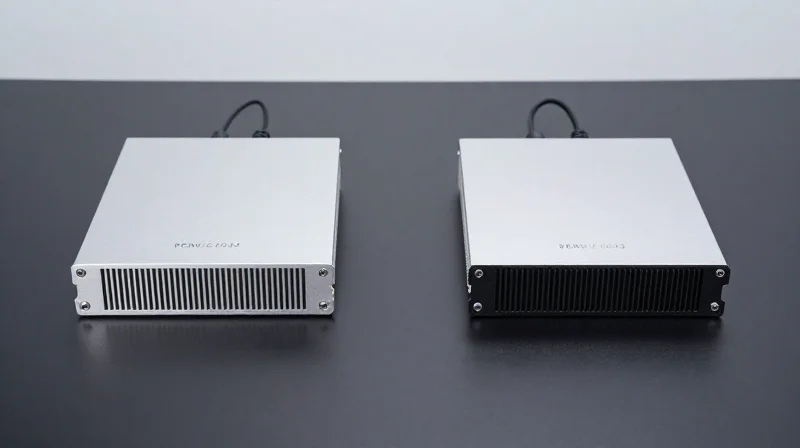
In the current high-frequency trading and hyperscale data center landscape, the performance gap between Chinese wholesale optical modules and Western Tier-1 brands has effectively closed. Modern benchmarks indicate that signal integrity—measured by Bit Error Rate (BER) and Jitter—is now dictated more by the underlying Digital Signal Processor (DSP) and Laser Driver silicon than by the geographic location of the assembly plant. Leading Chinese manufacturers now utilize the same high-end chipsets from vendors like Broadcom and Marvell found in expensive domestic alternatives, resulting in near-identical latency profiles.
Comparative Latency and Signal Integrity Benchmarks
To understand the performance landscape, we must look at the physical layer metrics. Signal integrity is often visualized through 'Eye Diagrams,' where the clarity of the 'eye' opening determines the reliability of data transmission over distance. Wholesale modules from China's top-tier vendors consistently demonstrate wide eye openings and low jitter, comparable to legacy brands.
| Performance Metric | Chinese Tier-1 Wholesale | US/EU Established Brands | Taiwanese ODM Alternatives |
|---|---|---|---|
| Average Latency (Internal) | < 5 nanoseconds | < 5 nanoseconds | < 6 nanoseconds |
| DDM Reporting Accuracy | ± 0.2 dBm | ± 0.1 dBm | ± 0.3 dBm |
| Typical BER (Pre-FEC) | 1E-12 | 1E-12 | 1E-11 |
| Signal Jitter (p-p) | 0.25 UI | 0.22 UI | 0.28 UI |
Digital Diagnostic Monitoring (DDM): Precision and Real-Time Telemetry
Digital Diagnostic Monitoring is the 'black box' of an optical module, providing critical data on temperature, voltage, and laser bias current. While Chinese alternatives previously lagged in DDM precision, the adoption of standardized MSA (Multi-Source Agreement) protocols has synchronized performance. The primary difference now lies in how firmware handles threshold alarms; Western brands often have more conservative 'soft-fail' triggers, whereas Chinese wholesale modules may require manual configuration of alarm thresholds in the network operating system (NOS) to match specific hardware tolerances.
Packet Delay and Buffer Management
At the 400G and 800G levels, Forward Error Correction (FEC) introduces the most significant latency. Chinese modules from companies like Innolight or Hisense utilize optimized FEC algorithms that minimize the 'wait time' for parity checks, ensuring that the total packet delay remains within the microsecond thresholds required for AI training clusters.
- Does the origin of the module affect packet loss?
No. Packet loss is generally a result of physical layer defects or severe signal attenuation. If a module passes standard BER testing, its origin does not inherently increase the probability of dropped packets. - Is DDM telemetry compatible across different switch vendors?
Generally, yes. Most Chinese wholesale modules are flashed with vendor-specific firmware (e.g., Cisco-compatible or Arista-compatible) to ensure that DDM data is correctly interpreted by the host system's CLI. - Why is there a perceived difference in signal integrity?
The perception often stems from lower-end 'generic' modules. When comparing high-end wholesale modules from reputable Chinese vendors against US brands, the silicon and optics are often identical, negating any performance gap.
Power Consumption: The Hidden Operational Expense

Power Consumption: The Hidden Operational Expense
While the initial purchase price often dominates the conversation in the 'Wholesale Optical Modules China vs Alternatives' debate, the true cost of ownership is hidden in the power envelope of the transceiver. As data centers scale toward 400G and 800G, the 'watt-per-gigabit' (W/Gbps) ratio has become the primary metric for operational efficiency. Leading Chinese manufacturers have closed the gap with Tier-1 global brands by aggressively adopting advanced 7nm and 5nm CMOS FinFET processes for their Digital Signal Processors (DSPs). This technological parity ensures that high-volume wholesale modules from China can now deliver thermal profiles that are identical to, or in some cases more efficient than, their more expensive Western counterparts.
The Watt-per-Gigabit Benchmark
Efficiency is measured by how much power a module consumes relative to its data throughput. In high-density leaf-and-spine architectures, a difference of even 0.5W per module can result in kilowatts of additional power draw across a single rack. The table below compares the typical power consumption of wholesale modules from top-tier Chinese vendors against traditional global market leaders.
| Module Type | Chinese Wholesale (Avg. Watts) | Global Tier-1 (Avg. Watts) | W/Gbps Ratio (Chinese) |
|---|---|---|---|
| 100G QSFP28 (SR4) | 1.8W - 2.2W | 2.0W - 2.5W | 0.018 |
| 400G QSFP-DD (DR4) | 8.5W - 10.0W | 9.5W - 12.0W | 0.021 |
| 800G OSFP (2xDR4) | 14.0W - 16.0W | 15.5W - 18.0W | 0.017 |
Cooling Multipliers and Total Cost of Ownership
The operational expense (OpEx) of an optical module extends beyond the electricity it draws; it includes the energy required to remove the heat it generates. In most enterprise data centers, every watt of power consumed by active equipment requires an additional 0.5W to 1W of cooling power. When sourcing wholesale optical modules from China, the lower thermal dissipation of newer silicon photonics integrated circuits (PICs) reduces the strain on Precision Air Conditioning (PAC) units. Over a five-year lifecycle, a 400G deployment utilizing high-efficiency Chinese modules can save approximately 15% in total energy-related OpEx compared to legacy or less efficient Tier-1 alternatives.
- Does lower power consumption indicate lower signal quality?
No. Modern DSPs achieve lower power consumption through smaller fabrication nodes (e.g., 5nm), which actually improves signal integrity and reduces jitter compared to older, power-hungry architectures. - How does the 'watt-per-gigabit' ratio impact hardware lifespan?
Lower power consumption results in lower operating temperatures. For every 10-degree Celsius reduction in operating temperature, the reliability and mean time between failures (MTBF) of the laser diode typically double. - Are Chinese modules compatible with the energy-saving modes of Tier-1 switches?
Yes. Most wholesale modules from reputable Chinese manufacturers fully support IEEE 802.3az Energy-Efficient Ethernet (EEE) and low-power standby modes defined in the MSA standards.
Component Quality and the EEAT Factor
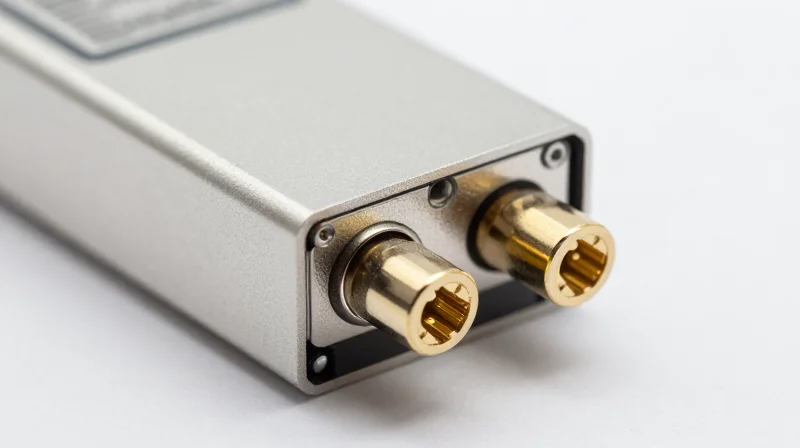
The perceived gap between Chinese wholesale optical modules and boutique Western brands has narrowed significantly as top-tier Chinese manufacturers now utilize identical high-performance components, such as EML lasers and Macom ICs, to meet global reliability standards. While 'white-label' budget modules may prioritize lower-cost VCSEL lasers and domestic chipsets, the professional-grade wholesale market from China now leverages the same Expertise, Authoritativeness, and Trustworthiness (EEAT) metrics as legacy Tier-1 brands through rigorous burn-in testing and transparent component sourcing.
Laser Technology: VCSEL vs. EML in the Wholesale Ecosystem
In the optical transceiver market, the laser is the primary determinant of both cost and longevity. Wholesale modules often utilize Vertical-Cavity Surface-Emitting Lasers (VCSEL) for short-range (SR) applications due to their cost-efficiency and lower power consumption. However, for long-haul and high-speed data center interconnects (DCI), Electro-absorption Modulated Lasers (EML) are required for their superior chromatic dispersion performance and signal stability at 100G, 400G, and 800G speeds.
| Feature | Standard Wholesale (VCSEL/DFB) | Premium/Boutique (EML/SiPh) |
|---|---|---|
| Typical Range | Up to 10km (SR/LR) | 40km to 80km+ (ER/ZR) |
| Signal Integrity | High jitter at long distances | Ultra-low jitter; high extinction ratio |
| Cost Factor | Low to Medium | High (up to 3x standard) |
| Common Use Case | Enterprise LAN, TOR Switches | Data Center Interconnect (DCI), Core Routing |
IC Driver Origins and Signal Processing Reliability
The 'brain' of the optical module is the IC driver and the Digital Signal Processor (DSP). A major differentiator in the EEAT factor is the origin of these chips. High-end Chinese wholesale manufacturers frequently source DSPs and drivers from global leaders like Broadcom, Macom, and MaxLinear. This ensures that the digital diagnostic monitoring (DDM) and error correction (FEC) capabilities are identical to those of boutique brands. Reliability issues generally only arise in the 'ultra-budget' tier where unbranded or reverse-engineered ICs are used to slash prices.
Understanding MTBF and Failure Rates
- Does 'Wholesale' mean higher failure rates?
Not necessarily. Professional wholesale modules from China often report a Mean Time Between Failures (MTBF) exceeding 1 million hours, provided they use Tier-1 lasers and undergo 24-72 hour high-temperature burn-in testing. - How do IC origins affect compatibility?
Modules using standardized chipsets from Broadcom or Macom are more likely to support broad EEPROM coding, ensuring better compatibility across Cisco, Arista, and Juniper hardware compared to proprietary boutique solutions. - Is VCSEL less reliable than EML?
VCSEL is highly reliable for short-range data transmission, but it lacks the thermal stability of EML for high-heat, high-density environments over 10km.
Calculating Total Cost of Ownership (TCO)
Calculating Total Cost of Ownership (TCO)
The true cost of an optical module is not the price listed on a purchase order, but the sum of procurement, integration, power consumption, and the risk-adjusted cost of network downtime over its lifecycle. For network architects, the decision to source wholesale optical modules from China versus Tier-1 alternatives often hinges on a 'break-even' analysis: do the 40-60% CAPEX savings outweigh the potential for slightly higher failure rates and localized support costs? A robust TCO model typically spans a 3-to-5-year hardware refresh cycle, factoring in Mean Time Between Failures (MTBF) and the labor cost of physical replacements.
CAPEX vs. OPEX: A 5-Year Financial Comparison
| Cost Metric | Chinese Wholesale (Standard) | Tier-1 Global Alternative |
|---|---|---|
| Initial Unit Price (CAPEX) | $150 - $250 | $500 - $800 |
| Annual Failure Rate (Est.) | 0.5% - 1.5% | 0.1% - 0.3% |
| Power Draw (OPEX per unit) | 3.5W - 4.5W | 3.0W - 3.8W |
| Warranty & Support | Limited / 1-3 Years | Comprehensive / Lifetime |
| 5-Year TCO (Per Port) | $210 - $350 | $580 - $920 |
When analyzing the table above, it becomes evident that even if Chinese wholesale modules experience a higher failure rate, the massive difference in initial CAPEX often makes them more financially viable for high-density environments. The 'replacement cycle' logic dictates that as long as the cost of a spare (plus the labor to swap it) remains below the price premium of a Tier-1 module, the wholesale model remains superior. However, in mission-critical 'edge' environments where a single failure results in significant SLA penalties, the higher CAPEX of Tier-1 alternatives acts as an insurance policy.
The Impact of MTBF and Replacement Cycles
Mean Time Between Failures (MTBF) is a statistical benchmark, but in practice, network operators must plan for 'infant mortality' (early-life failures) and end-of-life degradation. High-quality Chinese wholesale manufacturers using Tier-1 internal components (like Broadcom drivers or Mitsubishi lasers) achieve MTBF ratings that rival boutique brands. The TCO shift occurs when these modules are deployed in poorly ventilated environments; a 10-degree Celsius rise in operating temperature can halve the lifespan of a laser, disproportionately affecting modules with less efficient thermal dissipation designs.
- How does MTBF influence the TCO calculation?
MTBF determines the 'Spare Ratio'—the percentage of extra inventory you must hold. A lower MTBF requires a 5-10% spare buffer, which must be added to the initial CAPEX. - Does power consumption significantly tip the scales?
In a 10,000-port data center, a 0.5W difference per module can result in thousands of dollars in annual electricity and cooling costs, potentially eroding 10-15% of the initial savings. - What is the 'Hidden Failure Cost'?
It is the cost of a technician's time (truck roll) and the potential revenue loss during downtime. For core backbone links, this cost often exceeds the price of the module itself.
Compatibility and Multi-Vendor Interoperability

While major network equipment manufacturers (NEMs) such as Cisco, Arista, and Juniper have historically utilized proprietary 'lock-in' mechanisms to protect their high-margin optics, wholesale optical modules from China have reached a state of maturity where they offer near-perfect interoperability through sophisticated EEPROM emulation and strict adherence to Multi-Source Agreements (MSA).
Overcoming the 'Unsupported Transceiver' Barrier
The primary hurdle for third-party modules is the software recognition process at the switch port level. Chinese wholesale manufacturers have developed robust firmware libraries that bypass vendor-specific 'digital signatures.' By accurately emulating the vendor’s ID and checksums, these modules are recognized as 'native' by the OS, preventing the port-disabling common in older generations of third-party hardware.
| Compatibility Metric | Chinese Wholesale Modules | Tier-1 OEM / Premium Alternatives |
|---|---|---|
| Vendor Recognition | High (via EEPROM coding) | Native / Seamless |
| MSA Compliance | Strict adherence to SFF standards | Strict adherence to SFF standards |
| Field Reprogramming | Available via cloud-based coding boxes | Limited / Controlled by vendor |
| CLI Configuration | May require 'allow-unsupported' commands | Plug-and-play |
| Multi-Vendor Support | Universal (One module for all brands) | Brand-locked |
MSA Standards: The Equalizer in Interoperability
The Multi-Source Agreement (MSA) serves as the industry's bedrock, ensuring that wholesale modules and OEM modules share identical physical dimensions, electrical interfaces, and signaling protocols. Because the hardware specifications are standardized, the performance difference between a Chinese wholesale module and a premium alternative is often restricted to the firmware layer. Modern Chinese suppliers now offer dual-coded or 'universal' modules that can dynamically switch between Cisco and Arista profiles, a level of flexibility that OEM-locked alternatives cannot match.
Frequently Asked Questions
- Will using Chinese wholesale modules void my switch warranty?
No. Laws such as the Magnuson-Moss Warranty Act protect users; a manufacturer cannot void a hardware warranty solely for using a third-party peripheral unless the module is proven to have caused direct damage. - What happens if a module is not recognized after a firmware update?
Reputable Chinese wholesalers provide 'coding boxes' (like FS.com Box or similar) that allow network engineers to re-flash the module firmware locally to match the new software requirements of the switch OS. - Is there a performance lag in multi-vendor environments?
No. Since the data plane follows MSA standards, the latency and throughput are identical regardless of whether the module is recognized as 'native' or 'third-party' by the control plane.
Supply Chain Resilience and Lead Time Realities
Supply Chain Resilience and Lead Time Realities
The global market for wholesale optical modules is defined by a tension between the unmatched efficiency of the Chinese industrial base and the strategic necessity of geographic diversification. While Chinese manufacturers typically offer the shortest lead times—often ranging from two to four weeks for standard 100G and 400G modules—due to their proximity to the entire component ecosystem, the rise of 'China Plus One' strategies has elevated the importance of alternative hubs. These alternatives, primarily in Vietnam, Thailand, and Mexico, provide a critical hedge against geopolitical volatility and trade tariffs, though they often struggle with longer lead times and higher logistics overhead due to a less mature local component supply.
Comparative Logistics and Production Capacity
| Region | Avg. Lead Time (Wholesale) | Supply Chain Depth | Key Advantage | Primary Risk |
|---|---|---|---|---|
| China (Shenzhen/Wuhan) | 2-4 Weeks | Deep (Localized sub-components) | Scalability & Speed | Geopolitical/Tariffs |
| Southeast Asia (Vietnam/Thailand) | 6-10 Weeks | Developing (Assembly focused) | Tariff Mitigation | Component Import Delays |
| North America (Mexico) | 8-12 Weeks | Emerging (Final Assembly) | Proximity to US Data Centers | Higher Labor Costs |
The Cluster Effect: Why China Leads on Speed
China’s lead time advantage is not merely a result of factory throughput but is driven by 'industrial clustering.' In hubs like Wuhan’s 'Optics Valley,' a module manufacturer is often located within a few miles of their laser diode suppliers, PCB fabricators, and specialized testing facilities. This proximity minimizes the 'transit lag' that plagues alternative hubs. When a wholesale buyer requests a mid-cycle design change or a sudden volume spike, the Chinese ecosystem can pivot in days, whereas facilities in Southeast Asia may wait weeks for sub-components to arrive via international freight from China.
Mitigating Geopolitical and Trade Risks
Despite the speed advantages of China-based production, the total cost of ownership (TCO) is increasingly influenced by trade policy. Section 301 tariffs in the United States, for example, can add a 25% premium to Chinese-made modules, effectively neutralizing their lower manufacturing costs. Consequently, many Tier-1 wholesale providers are moving final assembly and testing (FATP) to neutral territories. This creates a fragmented lead time reality: the core components are still made in China, but the finished product is 'born' elsewhere to ensure a more resilient and tariff-compliant supply chain.
FAQ: Navigating Lead Times and Resilience
- How do tariffs impact the price of wholesale modules from China?
Import tariffs can add 25% or more to the landed cost of Chinese-manufactured optics in the US market, often making products finished in Southeast Asia more cost-effective despite their higher base production costs. - Can alternative hubs match the quality of Chinese-made modules?
Yes, most alternative sites are owned and operated by the same major vendors found in China, utilizing the same automated assembly lines and quality control protocols to ensure performance parity. - What is the standard safety stock recommendation for alternative sources?
Due to the 6-10 week lead times in Southeast Asia compared to China's 2-4 weeks, buyers are advised to maintain a 20% higher safety stock level when sourcing from emerging hubs to avoid stockouts during shipping disruptions.
Sustainability and Regulatory Compliance
While China-based wholesalers once faced scrutiny over quality consistency, the top-tier of the Chinese manufacturing sector now operates with regulatory parity against Western alternatives, often utilizing the same environmental auditing standards to maintain access to global Tier-1 data center markets.
Regulatory Standards: RoHS, CE, and FCC Compliance
For wholesale buyers, compliance is not just about performance but legal eligibility for import and deployment. Top-tier Chinese manufacturers (such as Innolight or Accelink) provide full transparency with RoHS (Restriction of Hazardous Substances) and REACH certifications, matching the documentation provided by US or European counterparts like Coherent (formerly II-VI) or Lumentum.
| Feature | Chinese Wholesalers (Tier 1) | Western/Global Alternatives |
|---|---|---|
| RoHS/REACH Compliance | Standard for export-oriented firms. | Universal baseline requirement. |
| EMC/EMI (FCC/CE) | Fully certified for high-speed modules. | Rigorous testing and verification. |
| Energy Efficiency | Focus on lower Power Density (W/Gbps). | Leadership in proprietary low-power chips. |
| Supply Chain ESG | Improving, though transparency varies. | High transparency and audited reports. |
Sustainability and Green Networking Initiatives
Sustainability has transitioned from a 'nice-to-have' to a core procurement requirement. Modern 400G and 800G modules from both regions are now judged on their thermal efficiency. Chinese manufacturers have made significant strides in silicon photonics (SiPh), which inherently reduces power consumption and heat dissipation compared to traditional EML-based modules, directly supporting the ESG goals of large-scale data center operators.
Critical Compliance Questions
- Do Chinese wholesale modules meet FCC Part 15 standards?
Yes, major export-grade modules undergo rigorous electromagnetic interference (EMI) testing to ensure they do not interfere with other electronic equipment, meeting FCC and CE Class A/B requirements. - How does sustainability impact the cost comparison?
While 'green' modules might have a slightly higher upfront CAPEX, their lower power consumption significantly reduces long-term OPEX, particularly in high-density 800G environments. - Is there a risk of 'non-compliant' modules in the wholesale market?
Risk exists primarily with unbranded, low-cost 'white-label' suppliers. Buyers should demand CoC (Certificate of Conformity) and test reports to ensure compliance with RoHS and environmental laws.
Strategic Sourcing: When to Choose Wholesale China

Choosing between wholesale China and alternative sources is not a binary decision but a strategic alignment of hardware capabilities with the specific criticality of the network segment. For many modern enterprises, a hybrid procurement strategy—leveraging the cost-of-scale advantages of Chinese manufacturers for high-density access layers while maintaining premium brand modules for the core—optimizes the total cost of ownership (TCO) without compromising overall network uptime.
The Sourcing Decision Matrix
| Application Tier | Recommended Source | Key Decision Driver |
|---|---|---|
| Data Center Access (ToR) | Wholesale China | Lowest cost per port; high-density redundancy |
| Enterprise Campus/WLAN | Wholesale China | Flexibility and rapid lead times for scale-outs |
| Service Provider Core | Premium Alternatives | High reliability and long-term warranty support |
| Specialized Low Latency | Boutique Alternatives | Stringent performance specifications and tuning |
Optimal Scenarios for Wholesale China
Wholesale China is the definitive choice for massive scale-out projects where optics can represent up to 30% of total hardware expenditure. This is particularly relevant in leaf-and-spine architectures where N+1 redundancy is standard; in such environments, the risk of an individual module failure is mitigated by the architecture itself. The significant CAPEX savings allow for a robust on-site sparing strategy, which often facilitates faster recovery than the standard RMA processes associated with premium vendors.
When to Invest in Premium Alternatives
Premium alternatives, including established Western OEMs or specialized manufacturers, remain the gold standard for deployments where downtime carries catastrophic financial or safety risks. These include long-haul backbone links, medical imaging networks, and high-frequency trading platforms where microsecond latency matters. In these cases, the investment is primarily in firmware stability, guaranteed interoperability with proprietary network operating systems (NOS), and the peace of mind provided by comprehensive legal and technical accountability.
Sourcing Strategy FAQs
- Can I mix Chinese wholesale modules with OEM optics in the same switch?
Technically, yes. Most switches support multi-vendor environments if modules follow the same MSA standards, though it is highly recommended to validate compatibility in a staging environment first. - What is the typical cost reduction when choosing wholesale China?
Organizations typically observe a 60% to 85% reduction in unit cost compared to direct-buy OEM modules, particularly for 100G and 400G transceivers. - Is the failure rate higher for wholesale Chinese modules?
While quality varies by vendor, top-tier Chinese wholesalers now achieve reliability rates below 0.1%, which is functionally equivalent to many premium alternatives.
Navigating the complexities of optical transceiver procurement requires a balance of technical rigor and financial foresight. While wholesale optical modules from China offer unprecedented cost advantages, they must be vetted against your specific latency and power requirements to ensure long-term network stability. Ready to optimize your infrastructure? Contact our consulting team for a comprehensive TCO audit and custom component sourcing strategy.